SEC’s Peirce Questions DeFi Developer Liability
Peirce says open-source DeFi code should not trigger securities registration, while SEC staff narrows relief for certain crypto interfaces.

Peirce says open-source DeFi code should not trigger securities registration.
On 5 June 2026, SEC Commissioner Hester Peirce argued that open-source blockchain developers should not face federal securities registration rules just because others use their software. Her remarks at the IC3 Blockchain Camp at Princeton University sharpen the SEC debate over where code ends and regulated conduct begins.
| 項目 | 數值 |
|---|---|
| Speech date | 5 June 2026 |
| SEC staff guidance date | 13 April 2026 |
| Venue | IC3 Blockchain Camp, Princeton University |
| Relief scope | Covered User Interface Providers |
What changed
Get the latest AI news in your inbox
Weekly picks of model releases, tools, and deep dives — no spam, unsubscribe anytime.
No spam. Unsubscribe at any time.
Peirce said the SEC should focus on the party that actually performs the regulated act, not on developers who publish public software. She argued that traditional securities categories fit brokers, dealers, exchanges, and clearinghouses, but can misfire when applied to decentralized systems.

She also repeated the view that open-source publication is protected speech and should not require regulatory approval simply because third parties later use the code. In her framing, blockchains are used for more than securities transactions, so the agency should avoid treating every on-chain tool as a market intermediary.
- Peirce said securities violations should fall on unlawful actors, not software authors.
- She warned against stretching old intermediary labels across decentralized networks.
- SEC staff guidance from 13 April 2026 addressed crypto user interfaces, not blockchain code alone.
- The guidance offered limited relief for certain interface providers that meet strict conditions.
The staff statement covered “Covered User Interface Providers” that create or operate interfaces used to prepare crypto asset securities transactions. It said the SEC would not object to broker-dealer registration relief in limited cases, but only if providers do not solicit specific transactions, do not take custody, and do not execute or settle trades.
Those interfaces may convert user-selected transaction details into blockchain-legible commands, show market data, and provide educational material. That narrower setup puts the liability question on interface behavior and transaction flow, not on the existence of open-source code itself.
Why it matters
For developers, the distinction matters because it could reduce the risk that writing or publishing DeFi software is treated like operating a regulated exchange. If regulators keep the line at conduct, not code, fewer builders may face pressure to register or redesign tools that never touch customer funds.
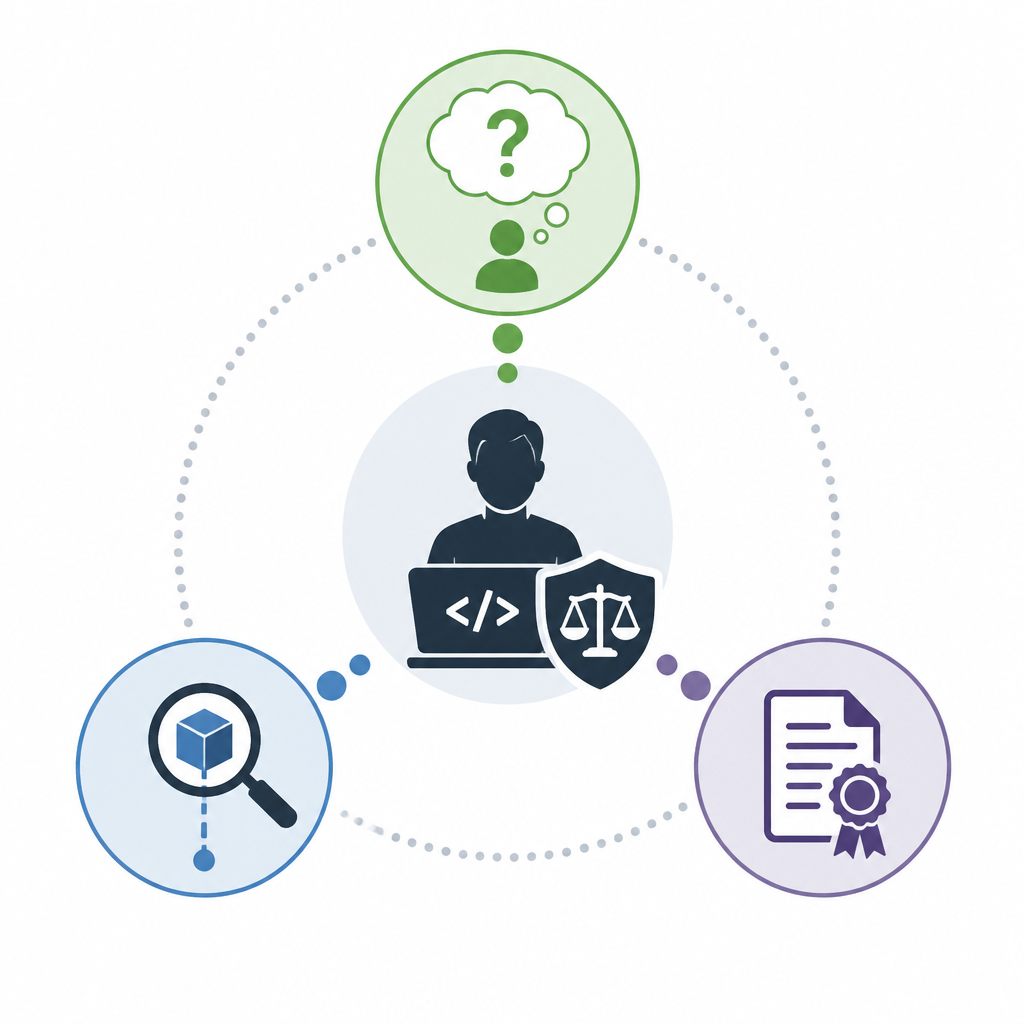
For the market, clearer boundaries could make compliance planning easier for wallet teams, interface providers, and protocol contributors. The SEC’s Crypto Task Force says it wants to clarify how federal securities laws apply to crypto assets, protocols, and market infrastructure, and Peirce’s comments show that the agency still has not settled the core question.
The real issue is now narrower than the public fight suggests: when does a DeFi tool become regulated market activity, and who should answer for that line?
// Related Articles
- [CHAIN]
Bitcoin’s price page explains the market in one view
- [CHAIN]
Web3 Banking Guide for Fintech Teams
- [CHAIN]
10 prediction market builders that can ship Polymarket-style apps
- [CHAIN]
Solana’s July 10 updates point to real adoption
- [CHAIN]
BYDFi Brings Crypto Trading Pitch to Lima
- [CHAIN]
Crypto exchanges should show up in LATAM, not just advertise there