Self-Explanation Training Still Tracks Model Behavior
Fixed explanation datasets can still teach models to describe their current behavior, even as that behavior changes.

Fixed explanation datasets can still teach models to describe their current behavior, even as that behavior changes.
- Research org: Unspecified in arXiv abstract
- Core data: No benchmark numbers in abstract
- Breakthrough: Counterfactual explanation training stays aligned with shifting behaviors
This paper asks a practical question for anyone building or fine-tuning language models: if you train a model to explain why it made a prediction, are you getting real introspection or just a polished imitation of the training labels? The authors argue that the answer can be more interesting than a simple yes or no.
What they find is a phenomenon they call introspective coupling. Even when the explanation targets come from earlier checkpoints of the same model, or from behaviorally similar models in different families, the trained model’s explanations often end up matching its current behavior better than the behavior those explanations were originally derived from.
What problem this paper is trying to fix
Get the latest AI news in your inbox
Weekly picks of model releases, tools, and deep dives — no spam, unsubscribe anytime.
No spam. Unsubscribe at any time.
Language models can generate convincing explanations without those explanations being truly tied to the model’s internal decision process. That matters because teams want explanations for debugging, safety work, and post-training analysis, but a model can easily learn to imitate explanation style instead of reporting what actually drove its output.

The paper focuses on a specific training setup: models are trained to explain which features of their inputs influenced their behavior, using counterfactual behavior on modified inputs as supervision. In plain English, the model sees examples of how its output changes when the input changes, and it learns to describe the features that mattered.
The catch is that the supervision can be fixed. If those explanation labels were generated earlier in training, or borrowed from a similar model, they may not perfectly reflect the model’s later behavior. The obvious worry is that the explanations will go stale and become less useful over time.
This paper shows that stale supervision is not always a deal-breaker. In the regimes they study, the explanation training signal can remain useful because it stays correlated with the model’s evolving behavior, even if the supervision itself is not updated at every step.
How the method works in plain English
The core idea is counterfactual explanation training. Instead of asking the model to explain itself in the abstract, the training data links behavior to input changes. That gives the system a target like: “these features mattered because when they changed, the model’s behavior changed too.”
The surprising part is where the supervision comes from. The paper studies fixed counterfactual explanations derived from earlier checkpoints of the same model, and also from models in different families that behave similarly. You would expect the model to learn those older explanations as frozen targets. Instead, the explanations often line up with the model’s current behavior.
That is what the authors mean by introspective coupling: the explanation head and the behavior of the model drift together. As long as the explanation dataset remains sufficiently correlated with the model’s present behavior during training, the explanations continue to track what the model is actually doing.
This is a useful framing for developers because it suggests a lower-maintenance path to explanation training. You may not need to regenerate explanation labels every time the base model changes, at least not for the kinds of shifts studied here.
What the paper actually shows
The abstract does not give benchmark numbers, so there are no accuracy tables or percentage gains to quote here. Instead, the evidence is qualitative and behavioral: the authors report that models trained on fixed counterfactual explanations frequently produce explanations more faithful to their own current behaviors than to the original training targets.
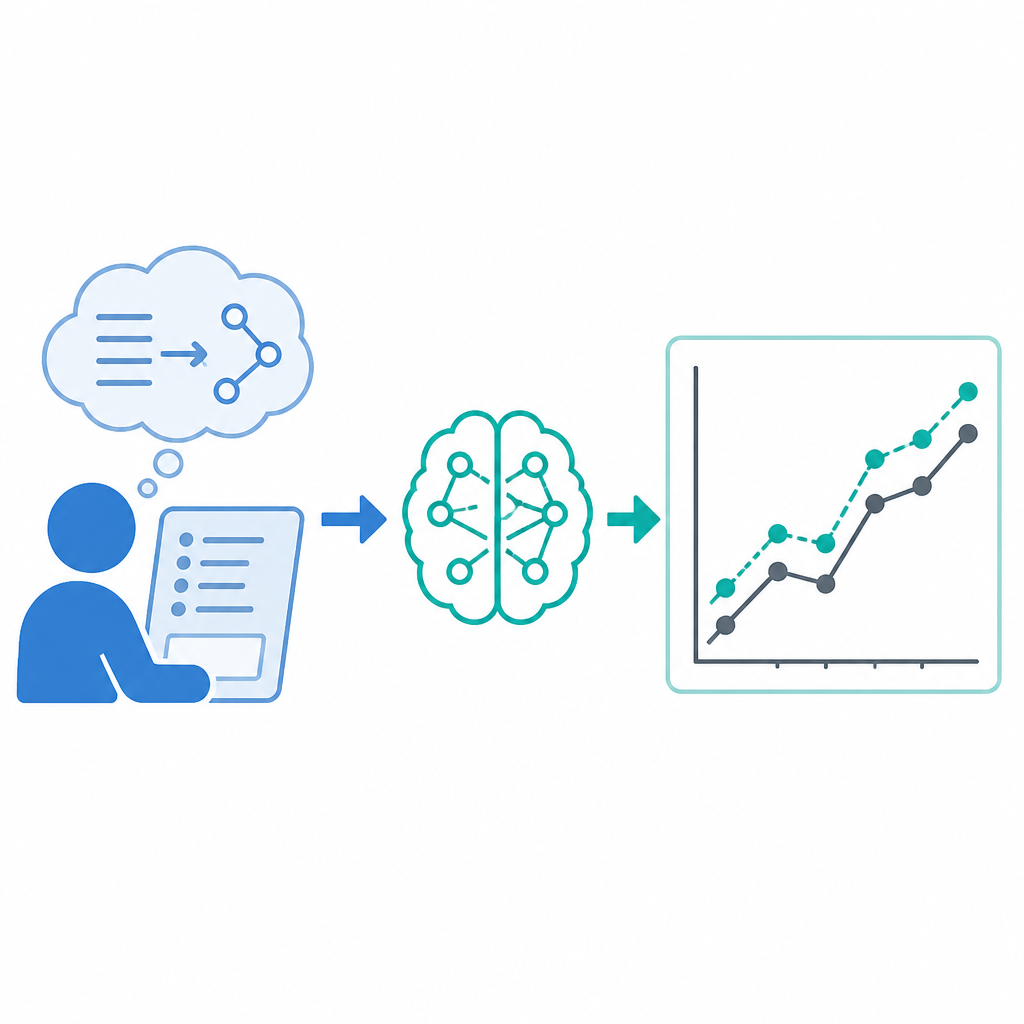
They also show that introspective coupling tracks behavior shifts. When explanation training happens alongside other post-training objectives, the explanations move with those changes without requiring updated supervision. That is important because post-training often changes model behavior in ways that are hard to predict ahead of time.
The phenomenon appears across multiple tasks, including sycophancy and refusal. That matters because those are not toy settings; they are exactly the kinds of behaviors developers worry about when they are tuning model honesty, compliance, or safety boundaries.
The paper also says the effect is robust to label noise. In other words, the method does not appear to collapse immediately when the explanation supervision is imperfect. For practical systems, that is a meaningful property, because real training data is rarely clean.
- Fixed counterfactual explanations can still support post-training introspection.
- Explanation quality can follow behavior changes without refreshed labels.
- The effect shows up in sycophancy and refusal, and survives label noise.
Why developers should care
If you are building model tooling, this paper suggests a cheaper way to get useful explanation signal. A fixed explanation dataset may remain relevant longer than you would expect, which could reduce the need for repeated labeling runs as a model is further tuned.
That said, the result is not a blank check. The key condition in the abstract is that explanation training remains sufficiently correlated with current behavior. If the model drifts too far from the data that generated the explanations, the coupling may weaken. The paper does not claim that any old explanation set will work forever.
There is also a subtle systems implication here: explanation training is not necessarily a separate, static layer bolted onto the model. It can become entangled with the model’s own learning dynamics. That is good news if you want scalable introspection, but it also means explanation behavior may change in ways that are hard to reason about independently.
For teams working on alignment, refusal behavior, or post-training analysis, the takeaway is simple: you may be able to use fixed counterfactual explanations as a scalable signal, but you still need to monitor whether those explanations remain correlated with the model you actually ship.
What this does not prove
The abstract is careful about scope, and so should we be. It does not provide benchmark numbers in the summary, so we cannot compare this method against a specific baseline on a named score. It also does not claim that introspective coupling is universal across all model families, all tasks, or all training setups.
Instead, the contribution is a behavioral finding: explanation training can stay aligned with changing model behavior more often than expected, even when supervision is fixed. That makes the paper interesting not because it solves interpretability outright, but because it shows a surprisingly durable path toward it.
For engineers, that is the useful part. If explanations can keep pace with model updates without constant relabeling, then introspection becomes more operationally realistic. If they cannot, the paper still gives you a warning sign: explanation datasets are only as good as their correlation with the system you are currently training.
In short, this work pushes explanation training from “static label imitation” toward a more dynamic view of model introspection. The model may be learning from old supervision, but the explanations it produces can still reflect what it does now.
// Related Articles
- [RSCH]
Long-horizon agents need harnesses first, not bigger models
- [RSCH]
Grok 4.6 puts frontier IQ on a budget
- [RSCH]
Anthropic's watermark fails the real dev workflow
- [RSCH]
HumanTracker fixes humanoid motion eval blind spots
- [RSCH]
OmniScientist aims for full-stack AI science
- [RSCH]
AutoDesign learns better poster-making harnesses