SORA chart turns loan timing into a clean choice
A plain-English breakdown of 1M vs 3M compounded SORA, plus a copy-ready way to explain the choice to borrowers.

This breaks down 1M and 3M compounded SORA into a borrower-friendly decision.
I've been looking at SORA charts for a while now, mostly because clients keep asking the same question in different clothes: “Should I go with 1M or 3M?” And honestly, the usual explanations are too polite and too vague. They say 3M is “more stable” and 1M is “more responsive,” which is technically true and practically useless if you're trying to decide what to do with a real mortgage. I’ve sat through enough rate conversations to know the pain point is not understanding the definition. It’s figuring out what the chart is actually telling you about timing, risk, and how fast your loan will react when rates move. The housingloansg.com chart gave me a cleaner way to frame it, but the site buries the useful bit under a lot of mortgage-site clutter. So I pulled the idea apart and turned it into something I’d actually use in a borrower conversation.
The source for this breakdown is the SORA Daily Chart for 1-Month and 3-Month Compounded SORA on housingloansg.com. The page pulls its rates from MAS and says the daily chart shows the past 1 year trend for 1-month and 3-month compounded SORA. The key detail is not the chart itself, but the way the page explains the difference in review timing and volatility.
Stop treating SORA like a single rate
Get the latest AI news in your inbox
Weekly picks of model releases, tools, and deep dives — no spam, unsubscribe anytime.
No spam. Unsubscribe at any time.
The SORA Daily Chart presents the past 1 year trend for 1-month Compounded SORA and 3-month Compounded SORA rates.
What this actually means is that you are not looking at one number. You are looking at two rolling averages built from the same underlying overnight benchmark, and they behave differently because of the time window they use. The page also reminds you that SORA is the volume-weighted average rate of borrowing transactions in the unsecured overnight interbank SGD cash market in Singapore, published by MAS since 1 July 2005.

I ran into this mistake early on: people would point at a chart and say “SORA is up” as if that settled the loan decision. It doesn’t. If you’re on a 1M SORA loan, your rate reacts faster. If you’re on 3M SORA, it reacts slower. Same market, different lag. That lag is the whole story.
How to apply it: when you explain SORA to someone, don’t start with the benchmark definition. Start with the review cycle. Ask: do they want faster relief when rates fall, or slower pain when rates rise? That question is more useful than the textbook definition every time.
- Use SORA as a timing tool, not just a benchmark label.
- Separate the underlying overnight rate from the compounded loan reference rate.
- Always tie the rate choice back to monthly cash flow and reset frequency.
1M SORA is the fast-reacting version
What is 1-Month Compounded SORA? The 1-Month Compounded SORA (1M SORA) is computed by compounding the daily published SORA rate over the historical 1-month period.
What this actually means is simple: 1M SORA is a rolling 30-day-ish average of the daily published rate, and your loan reprices monthly. It is the version that moves sooner when the market moves. If rates are climbing, you feel it earlier. If rates are dropping, you get the benefit earlier too.
I like this framing because it strips away the finance jargon. 1M SORA is basically the “faster feedback” option. That can be good if you want to catch falling rates quickly. It can be annoying if you hate surprises. And in mortgage conversations, most people absolutely hate surprises until they want upside from falling rates.
The housingloansg.com page is also clear that banks usually give a discounted spread in the first few years. That matters because the headline rate is never the full story. A loan priced at “1M SORA + 0.50%” can still be more attractive than a fixed-rate-looking product if the spread is decent and the reset timing works for you.
How to apply it: I’d use 1M SORA when the borrower cares more about immediate rate responsiveness than predictability. That usually fits people who watch rates closely, plan to refinance later, or expect the market to soften. It also fits borrowers who can tolerate a bit of month-to-month movement without panicking.
- Best for borrowers who want faster rate cuts to show up.
- Not ideal if a monthly rate change will wreck your budget planning.
- Useful when you expect rates to fall and want to feel it quickly.
3M SORA is the slower, less twitchy option
What is 3-Month Compounded SORA? The 3-Month Compounded SORA (3M SORA) is computed by compounding the daily published SORA rate over the historical 3-month period.
What this actually means is that 3M SORA smooths the daily noise across a longer window, so it doesn’t jump around as much. The page says it plainly: 3M SORA is less volatile than 1M SORA because of the smoothing effect over a longer interval. That’s not a marketing line. It’s just math doing what math does.
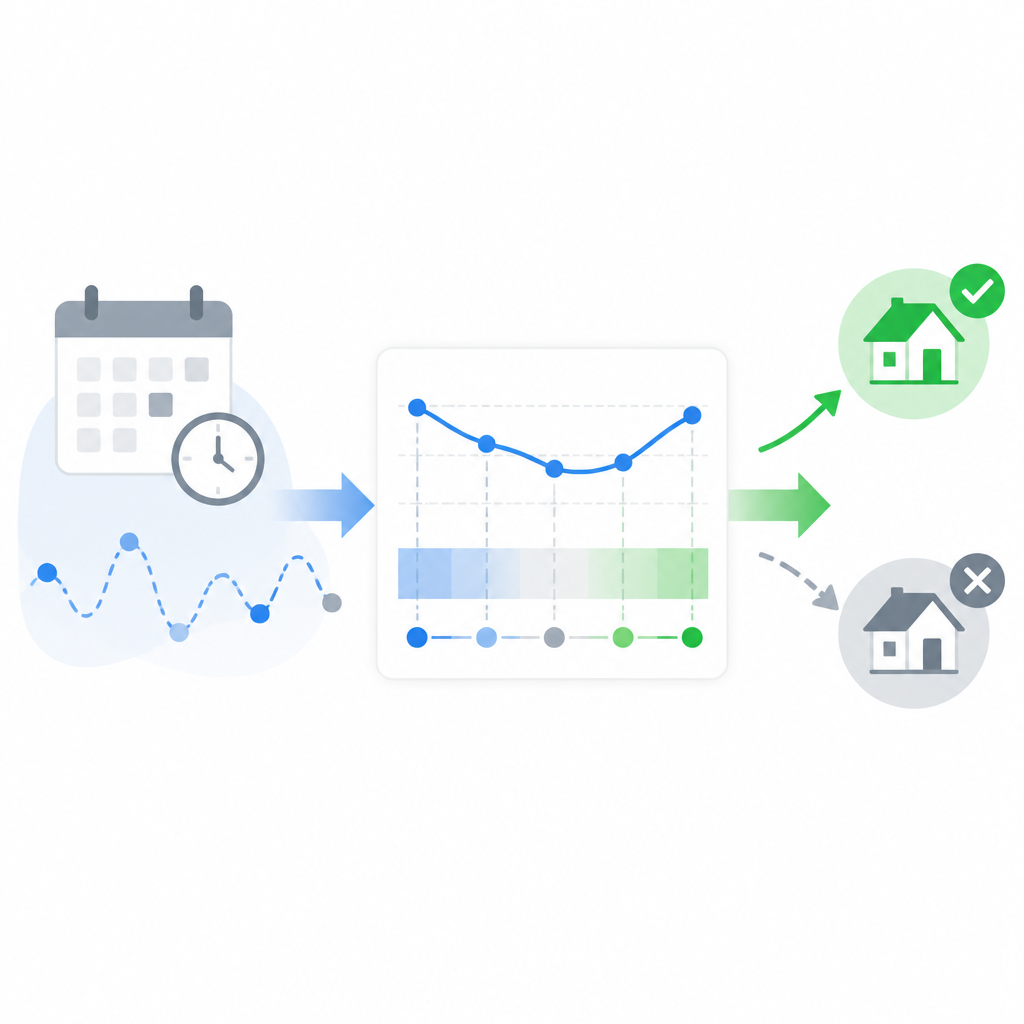
In practice, I think of 3M SORA as the “don’t make me look at this every month” choice. Banks reset it every three months, so the loan rate only gets recalibrated four times a year. That does not make it magically cheaper. It just means the changes arrive later. If rates are rising, that delay can feel nice for a while. If rates are falling, you wait longer to enjoy the lower cost.
I’ve seen borrowers assume slower means safer. Not quite. Slower means less frequent repricing. It can reduce the emotional whiplash, but it does not remove the underlying rate risk. If SORA trends up hard enough, 3M just delays the pain.
How to apply it: I’d push 3M SORA when the borrower values budgeting stability over speed. That includes people with tighter monthly cash flow, people who dislike frequent rate adjustments, and people who would rather accept delayed savings than live with monthly uncertainty.
- Best for borrowers who want fewer repricing events.
- Useful if monthly volatility makes planning annoying.
- Still exposed to rate movements, just on a slower clock.
The real difference is timing, not philosophy
When SORA is trending up, there is a tendency for 1M SORA to be higher than 3M SORA due to rising SORA rates in the past 30 days. Likewise, 1M SORA tends to be lower than 3M SORA when SORA is trending down.
What this actually means is that the chart is showing you a lag effect. 1M SORA moves with the recent month. 3M SORA carries more history. So when rates are rising, the newer 1M average catches the rise faster. When rates are falling, the 1M average catches the drop faster too. That’s the whole trade-off.
This is the part people usually overcomplicate. They start arguing about which one is “better” as if one of them is inherently superior. I don’t think that’s the right question. The right question is: do you want the loan to react quickly or slowly? That’s it. Everything else is just decoration around that choice.
The chart on housingloansg.com makes this easier to see because it places both lines together over a one-year period. You can visually spot the spread between them when the market is moving. That visual is more useful than a long explanation because it shows the lag instead of just talking about it.
How to apply it: use the chart to answer a timing question before you talk about loan packages. If the borrower expects rates to keep rising, 3M may buy time. If the borrower expects rates to ease, 1M may pass the benefit through sooner. If they don’t know, then they are really choosing between faster responsiveness and slower adjustment.
Loan pricing is spread plus benchmark, not magic
Home loans referencing SORA are priced at the prevailing base rate plus a fixed spread (eg. 3M SORA + 0.50%).
What this actually means is that the loan rate is not just the benchmark. The bank adds a spread on top. That spread is where the bank makes the deal work, and it’s also where the borrower’s real comparison starts. If you ignore the spread, you’re comparing half a product.
This matters because people often obsess over whether 1M or 3M is lower today, then forget the spread attached to the actual loan offer. A lower benchmark with a worse spread can still be a worse deal. The source page is right to keep the spread in the conversation, because it’s the part that turns a benchmark into a mortgage.
I’ve had to explain this to borrowers who thought the chart alone could tell them what to pick. It can’t. The chart helps with direction and timing. The spread tells you what you’ll actually pay. You need both.
How to apply it: when reviewing an offer, write down three things side by side: benchmark type, spread, and reset frequency. If you only compare the benchmark type, you’re likely to make a lazy decision and regret it later.
- Benchmark type tells you how the rate moves.
- Spread tells you the bank’s pricing on top.
- Reset frequency tells you how often the loan reprices.
Use the chart as a decision aid, not a decoration
Refer to MAS website for SORA Historical | Daily Rates Charts.
What this actually means is that the housingloansg.com page is a convenience layer, not the source of truth. MAS is the authority for the underlying data, and the chart is there to help you interpret it faster. That’s a healthy way to use it. Too many mortgage pages try to act like they are the source. This one mostly points back to MAS, which is the right move.
The page also notes that the latest SORA rates are published on the next business day, by 9am on the MAS website. That timing detail matters if you’re trying to explain why a loan rate doesn’t update instantly. I like that the source includes this because it keeps expectations realistic. Rates are published on a schedule. Loans follow a separate schedule. Those are not the same thing.
How to apply it: use the chart to prepare a borrower for what happens next, not to predict the market with false confidence. If you want the raw data, go to MAS. If you want a simple visual for a client conversation, use the chart. That separation keeps your explanation honest.
For reference, the related authoritative sources are the Monetary Authority of Singapore, the MAS interest rates page, and the chart page itself on housingloansg.com. If you want to understand the benchmark before comparing loan products, start there.
The template you can copy
# SORA loan decision template

## What I am comparing
- Loan type: [1M SORA / 3M SORA]
- Bank spread: [x.xx%]
- Reset frequency: [monthly / quarterly]
- Borrower priority: [faster savings / fewer repricings / budget stability]

## How I explain it
- 1M SORA reacts faster to recent rate changes.
- 3M SORA smooths more of the recent movement.
- If rates rise, 1M usually feels the increase sooner.
- If rates fall, 1M usually passes the savings sooner.
- 3M delays both the pain and the benefit.

## What the borrower should decide
Choose 1M SORA if:
- you want faster response to falling rates
- you can handle monthly repricing
- you expect to refinance or switch later

Choose 3M SORA if:
- you want fewer rate changes
- you prefer a steadier budget
- you would rather delay repricing noise

## What I check before recommending anything
- current benchmark trend
- spread offered by the bank
- lock-in period
- refinance exit options
- monthly cash flow tolerance

## One-line explanation for clients
"1M SORA moves faster, 3M SORA moves slower, and the better choice depends on how much rate timing you want to feel."

## Source note
- Benchmark data: MAS
- Chart reference: housingloansg.com SORA Daily Chart
This template is my own rewrite of the source page’s logic. The original idea comes from housingloansg.com, but the decision structure and client-facing wording here are mine. If you want the raw chart and benchmark definitions, use the source page and MAS directly; if you want a clean way to explain the choice, use this block.
Source: https://housingloansg.com/hl/charts/sibor-sor-daily-chart. The breakdown above is derivative of that page’s SORA explanation, with my own framing, examples, and copy-ready template layered on top.
// Related Articles
- [TOOLS]
Baidu Wenxin turns search into a free agent
- [TOOLS]
OpenCode now supports DeepSeek, GLM, Qwen, GPT
- [TOOLS]
DeepSeek in Codex Will Cut AI Coding Costs Hard
- [TOOLS]
Token vs. word: why Chinese tokenization still matters
- [TOOLS]
OpenAI API Pricing Hits $0.05 to $180/M Tokens
- [TOOLS]
Usage limits belong in ChatGPT Enterprise and Edu controls