Stablecoin rules now define how digital dollars work
2025 brought the first clear stablecoin rulebooks in the EU and U.S., changing how digital dollars are issued and used.

What are stablecoins, and why do the new rules matter now?
Stablecoins are digital assets tied to fiat money, and 2025 brought clearer rules for them.
1. What a stablecoin is
Get the latest AI news in your inbox
Weekly picks of model releases, tools, and deep dives — no spam, unsubscribe anytime.
No spam. Unsubscribe at any time.
A stablecoin is a digital asset designed to track the value of a real-world currency, most often the U.S. dollar. That link is meant to reduce the price swings seen in many other crypto assets, which makes stablecoins easier to use for payments, trading, and transfers.

They are not all built the same way. Some are backed by cash and short-term assets, some use crypto collateral, and others rely on algorithms. The core promise is the same: keep the token close to its target value.
- Common pegs: USD, EUR, and other fiat currencies
- Common uses: payments, remittances, trading pairs, treasury operations
- Common risk question: what backs the token and how quickly can it be redeemed?
2. Why stablecoins matter for payments
Stablecoins are attractive because they can move on blockchain networks with speed and programmable rules. For users, that can mean faster settlement than some traditional cross-border flows, especially when transfers must pass through several intermediaries.
They also matter because they sit between crypto and conventional finance. That makes them useful for businesses that want digital settlement without the full price volatility of assets like bitcoin or ether.
- Potential benefit: faster cross-border transfer
- Potential benefit: 24/7 transfer windows
- Potential benefit: easier on-chain settlement for digital commerce
3. The new rulebooks in Europe and the U.S.
In 2023, the European Union enacted its Markets in Crypto-Assets regime, or MiCA, which set a formal framework for crypto assets including stablecoins. On July 18, 2025, the U.S. took a major step too, when the GENIUS Act became law and created the first comprehensive federal framework for payment stablecoins.
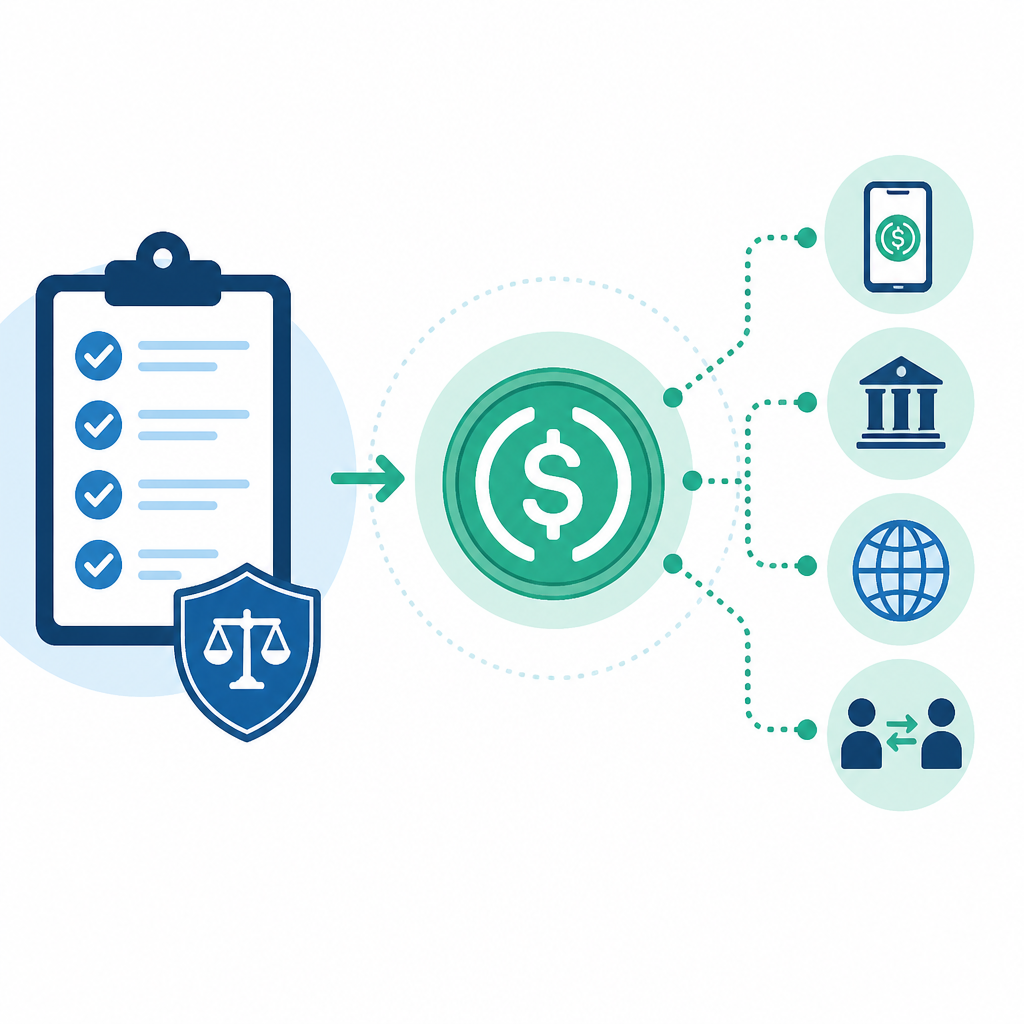
Those moves matter because stablecoins have moved from a niche crypto product to a policy issue for payments, consumer protection, and financial stability. Clearer rules can shape who may issue them, what reserves they must hold, and how they are supervised.
EU: MiCA framework in force since 2023
U.S.: GENIUS Act signed July 18, 2025
Focus: reserve rules, issuer oversight, payment use
4. What users should look for before trusting one
Not every stablecoin carries the same level of transparency. A careful user should ask how the token is backed, whether reserves are audited, and whether redemption is straightforward. The issuer’s reputation and the legal regime it operates under also matter.
For businesses, the questions get more specific: which chain does it run on, how fast can it settle, and what compliance checks are built in? Those details affect whether a stablecoin is useful for a treasury desk, a merchant, or a remittance service.
- Check reserve disclosures
- Check redemption terms
- Check issuer oversight and licensing
5. What stablecoins are not
Stablecoins are often described as cash-like, but they are not the same as bank deposits or government-insured money. They depend on the structure behind them, and that means their safety can vary by issuer and jurisdiction.
They are also not risk-free just because they aim for a stable price. If reserves are weak, governance fails, or market confidence drops, a token can lose its peg. That is why the policy push in 2025 is so important: it tries to make the backing and the rules easier to verify.
How to decide
If you are a consumer, focus on the peg, the redemption path, and the issuer’s transparency. If you are a business, add settlement speed, chain support, and compliance requirements to the list.
For readers tracking the bigger picture, the main takeaway is simple: stablecoins are becoming more practical because the legal framework around them is getting clearer in both Europe and the United States.
// Related Articles
- [CHAIN]
Four banks are building a 2027 stablecoin rival
- [CHAIN]
Solana’s institutional push is getting louder
- [CHAIN]
Layer 2 Is Ethereum’s Real Product, Not a Detour
- [CHAIN]
Ethereum’s price should be read as network demand, not just speculati…
- [CHAIN]
Ethereum’s shake-up turns ETH into a cleaner bet
- [CHAIN]
Bitcoin’s price page explains the market in one view