How $UCHN turns AI tools into token-gated infra
I break down Solana Unchained’s AI-plus-blockchain pitch and turn it into a copy-ready template for utility-first token infrastructure.
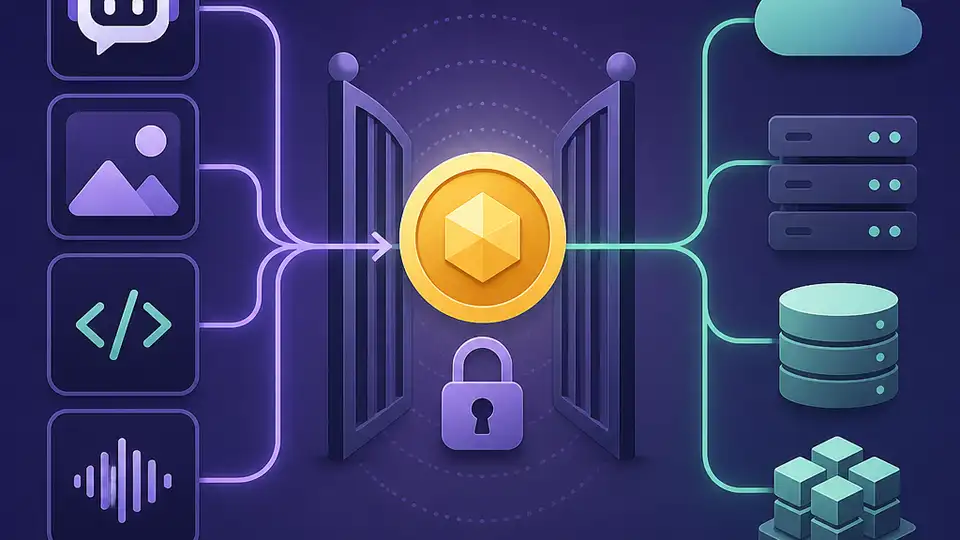
This breaks down a token-gated AI + blockchain infra pitch into a copy-ready template.
I've been reading token launch copy like this for a while, and the pattern keeps annoying me. The pitch always starts with “utility,” then it floods you with yield, tiers, security, and a shiny wallet. Half the time, it reads like three different projects stapled together: an AI product, a custody product, and a token sale trying to pretend it’s all one coherent system.
This one from Markets Insider / GlobeNewswire is a good example because it is unusually explicit about the architecture it wants you to believe in. It names the token, the wallet, the commerce layer, the recovery flow, and the tiered access model. That makes it easier to dissect, which is useful if you’re building anything that mixes AI access, wallet logic, and paid gates.
I’m not treating this as investment advice or a token endorsement. I’m treating it like a product brief wrapped in press-release language. That’s the useful part. Once I strip out the hype, there’s a real template here for how teams are trying to package on-chain software now.
They’re not selling a token first, they’re selling a usage loop
Get the latest AI news in your inbox
Weekly picks of model releases, tools, and deep dives — no spam, unsubscribe anytime.
No spam. Unsubscribe at any time.
The native $UCHN token acts as the required fuel for AI computation, consumer security protocols, and retail commerce tools.
What this actually means is simple: the project wants the token to be the thing users must hold or spend in order to do anything useful. That’s the old “token as fuel” idea, but this release is more direct than most. It’s not saying the token may appreciate. It’s saying the token is the access layer for compute, security, and commerce.

I’ve seen this pattern in a lot of crypto product decks, and it only works when the software is genuinely doing work. If the token is just sitting there as a badge, users ignore it. If the token gates a function they need every day, then the token has a reason to exist beyond speculation. That’s the pitch here.
The problem is that “required fuel” is doing a lot of heavy lifting. Required by whom? For which workflows? At what friction level? If every action needs a token balance check, you’ve created demand, sure, but you’ve also created a support burden. Users hate surprises when software asks them to buy something just to continue.
How to apply it: if you’re designing token-gated software, define one primary loop and one secondary loop. For example, AI credits as the primary loop, wallet recovery as the safety loop. Don’t make every feature a toll booth. If the product feels like a parking garage with a blockchain logo, you’ve already lost.
- Pick one user action that happens repeatedly.
- Make the token necessary for that action, not for everything.
- Write the access rule in plain English before you write the tokenomics.
That’s the first thing I’d steal from this release, and also the first thing I’d simplify hard.
The wallet is the real product, not the presale page
The Unchained Wallet ... allows for biometric security, token swapping, and multi-token management without ever requiring a connection to unverified third-party browser apps.
What this actually means is that the project is trying to own the user’s daily interface. The presale is just the entry point. The wallet is where behavior happens. That matters, because a wallet can become the control surface for everything else: buying, swapping, recovery, commerce, and eventually AI access.
I ran into this exact lesson building internal tools for teams that wanted “one dashboard” for too many things. If the dashboard is bad, nobody cares how good the backend is. Here, the wallet is the dashboard. If it feels sketchy or clunky, the rest of the stack doesn’t matter.
The release keeps emphasizing that the app avoids third-party browser connections. That’s a security story, but it’s also a UX story. Browser-wallet handoffs are where users get confused, phishing gets easier, and support tickets pile up. If you can keep the flow inside one app, you cut a lot of that mess out.
There’s still a catch. The more the wallet does, the more it becomes a single point of failure from a product standpoint. If the app breaks, everything breaks. So the design goal isn’t just “all-in-one.” It’s “all-in-one without becoming a trap.” That’s harder than it sounds.
How to apply it: if you’re building a wallet or a super-app, treat the wallet as the primary product surface and design it like one. Add clear states, recovery paths, and boring error handling. Boring is good here. Boring keeps people from rage-quitting.
- Keep the main action visible on every screen.
- Use native flows before browser redirects.
- Make the security model understandable in one paragraph.
That’s the difference between a wallet people use and a wallet people merely “have.”
Recovery is the part that feels real
Users designate 3 to 10 trusted guardian addresses to validate their identity... A strict 7-day security delay timelock activates upon initiation.
What this actually means is that the release understands one of the biggest reasons normal people avoid self-custody: if they lose the key, they are done. Social recovery is one of the few ideas in this space that feels like it was invented by someone who has actually watched a non-crypto user panic.
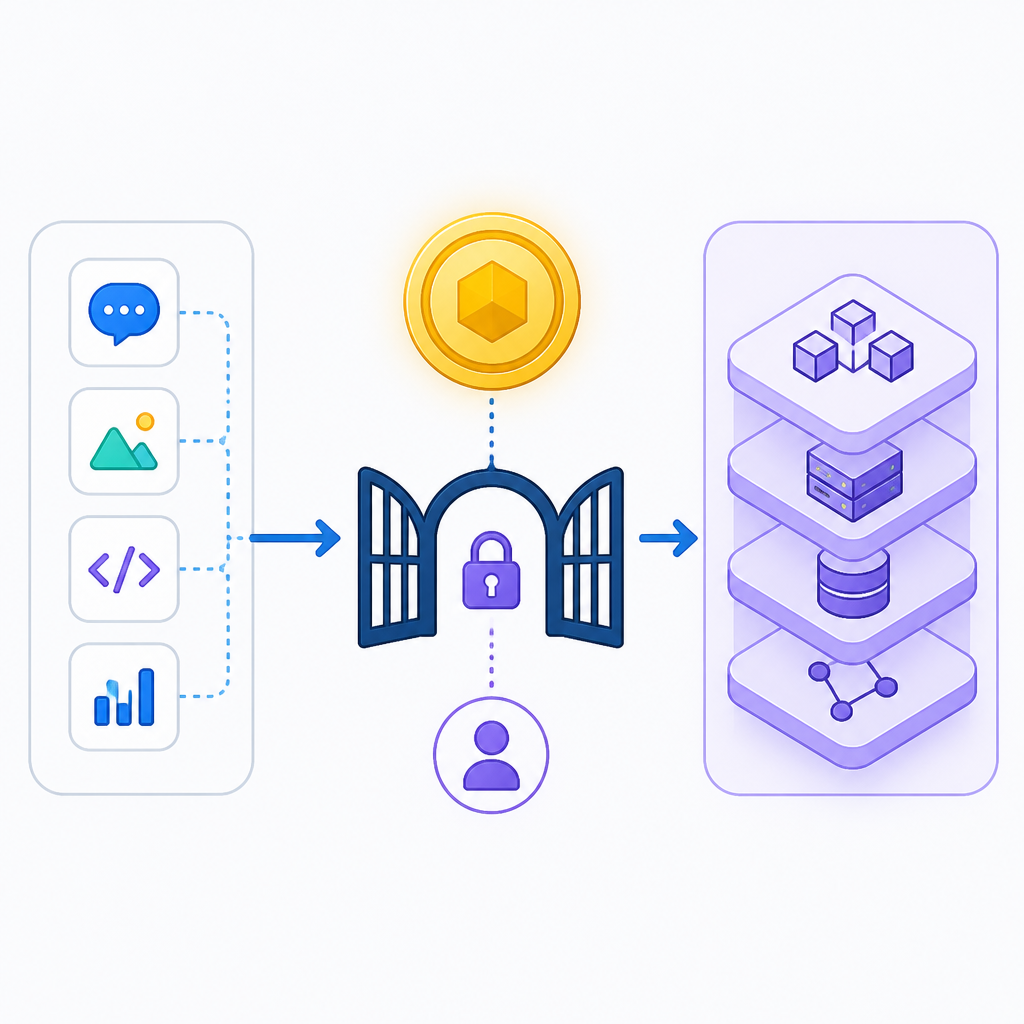
The guardian model is familiar if you’ve followed account abstraction work. The important detail here is not the number of guardians. It’s the separation of powers. Guardians can vote, but they can’t move funds. That’s the right shape. You want recovery without giving away custody.
The 7-day delay is also doing real product work. It creates a window for the owner to cancel a malicious recovery attempt. That’s a much better story than “trust us, we secured it.” It gives the user time, which is what most security systems forget to do.
I’ve seen teams try to bolt recovery onto a wallet after launch, and it usually turns into a mess of edge cases. If you want users to trust self-custody, recovery can’t be a footnote. It has to be part of the core flow from day one.
How to apply it: define your recovery system before you define your rewards. Security is the product feature users remember when something goes wrong. If you can’t explain who can recover access, how long it takes, and what can stop it, you’re not ready.
If you want to go deeper on this pattern, look at the broader account abstraction ecosystem around EIP-4337 and wallet security tooling from OpenZeppelin. Even if you’re not on Ethereum, the design lessons carry over.
Yield is the bait, but the revenue story matters more
During the active presale, deposits into the liquid yield account capture temporary rates of up to 150% APR, paid weekly. After the launch, the system shifts to a permanent 7% APR reward, distributed monthly and funded by organic fees from the AI hub and commerce storefront.
What this actually means is that the project is trying to separate promotional incentives from long-term economics. That’s the right instinct. A presale can use aggressive rewards to attract attention, but the post-launch model has to survive without constant token inflation.
The phrase I care about here is “funded by organic fees.” That is the whole argument. If the AI hub and commerce storefront actually generate fees, then the reward model has a source of cash flow. If they don’t, then the 7% APR is just a softer version of the same old token printing problem.
I’m always suspicious when a project says the yield is “backed by revenue” and then never tells me what the revenue drivers are in enough detail to audit the claim. Here, the drivers are named, which is better than usual. Still, naming a revenue source is not the same thing as proving it works at scale.
How to apply it: if you want a sustainable token economy, separate launch incentives from operating yield. Then write down the actual fee sources. Not “ecosystem activity.” Not “platform growth.” Actual fees. AI requests, commerce margin, SDK usage, recovery services. Name them.
- Use one reward rate for acquisition.
- Use a different reward rate for steady-state operation.
- Show the fee sources that pay for the steady-state rate.
Without that separation, your tokenomics are just a spreadsheet with better branding.
The tier system is a pricing model wearing tokenomics clothing
Basic Tier: 0 tokens, limited to 10 daily requests for free users... Whitelabel Tier: 500,000 tokens ($250,000 value), B2B SDK access for external dApps.
What this actually means is that the project is using token balances as a stand-in for product plans. That’s not new, but it is cleaner than a lot of crypto access models. Instead of vague “membership,” it spells out usage caps, premium access, governance rights, and white-label access.
This is where the release gets closest to normal software thinking. It’s basically saying: free users get a little, pros get more, enterprises get tooling. That’s a pricing ladder. The token is just the gatekeeper.
The part I’d challenge is the balance thresholds. Once you tie access to fixed token amounts, you’re also tying access to market price volatility. If the token price moves, your pricing model moves with it, and that can get ugly fast. A product plan should not whipsaw because the market woke up spicy.
I’ve had to untangle this before in internal systems that used credits as a proxy for usage. Credits are fine. Credits pegged to volatile market prices are annoying. Users want predictable access, not a miniature trading desk.
How to apply it: if you want tiered access, decide whether the tier is denominated in tokens, dollars, or usage units. If you insist on tokens, add a conversion layer so the product experience stays stable. Otherwise your “Pro Tier” becomes a moving target.
Also, don’t confuse governance with product value. Just because someone can vote doesn’t mean they should get more compute. Keep those permissions separate unless you enjoy support chaos.
The security claims need a sanity check, not applause
The project completed full security evaluations via Solidproof, Spywolf, and Cyberscope, alongside Spywolf KYC certification.
What this actually means is that the release is trying to borrow trust from third-party names. That’s normal in crypto PR, and it’s not useless. But I never treat audits as a substitute for understanding the system design.
Security reviews are only as good as their scope. Did they review the wallet contracts, the token logic, the recovery flow, the oracle assumptions, the commerce protocol, or all of it? The press release doesn’t say. It just stacks names. That’s better than nothing, but not enough for me to relax.
I’ve seen teams wave around audit badges while the real issue was operational, not technical. The bug wasn’t in the contract. It was in the onboarding flow, the key management, or the admin permissions. Audits help, but they don’t save a bad product model.
How to apply it: if you’re writing about or building a system with audits, always pair the audit name with the scope and date. If you can’t state what was reviewed, the badge is just decoration. And if you’re a builder, document the trust boundaries in the product itself, not just in a PDF.
For a better mental model, I’d point people to Cyberscope, SolidProof, and SpyWolf only as examples of the kinds of firms projects cite. The existence of a review is not the same as the absence of risk.
What this release is really teaching builders
This press release is less interesting as crypto news and more useful as a product pattern. It shows how teams are trying to package AI access, wallet custody, commerce, and token economics into one stack. That stack only works if each layer solves a real user problem and the token doesn’t become the only thing holding the story together.
When I strip away the hype, I see four design lessons worth keeping. First, make the token do one job well. Second, make the wallet the actual product surface. Third, treat recovery as core infrastructure. Fourth, separate launch incentives from operating revenue. That’s the part worth copying.
The rest needs skepticism. If a project says it has utility, I want to know where the utility shows up in the user journey. If it says it has revenue-backed yield, I want to know the revenue source. If it says it has security, I want to know the recovery model and the scope of the audits. Otherwise I’m just reading adjectives.
And honestly, that’s the bigger lesson here. Good infrastructure stories are boring when they’re real. They explain access, safety, pricing, and recovery without leaning on a giant pile of buzzwords. This release gets halfway there. That’s enough to learn from, not enough to trust blindly.
The template you can copy
# Utility-first AI + blockchain product template

## One-line pitch
We built [PROJECT] so users can access [AI/automation feature] through [wallet/app] while [token] powers usage, security, and commerce.

## Product layers
### 1) Core app
- Native wallet or app surface
- Biometric login
- Multi-asset management
- Token swap support
- No forced third-party browser handoff

### 2) Utility layer
- AI requests
- Commerce actions
- Security services
- Optional SDK for partners

### 3) Token role
- Token is required for one primary action
- Token also unlocks premium usage tiers
- Token may be used for governance, but governance is separate from access

## Access tiers
- Free: limited daily requests
- Pro: unlimited or expanded requests
- Elite: priority processing and lower fees
- Governance: voting rights only
- Whitelabel: SDK access for partners

## Recovery model
- User selects 3 to 10 guardians
- Guardians can validate recovery, but cannot move funds
- Recovery requires threshold approval
- Add a 7-day cancellation window
- Owner can cancel any unauthorized recovery attempt

## Revenue model
- Launch incentives are temporary
- Long-term rewards come from actual fees
- Fee sources:
  - AI usage fees
  - Commerce margin
  - SDK licensing
  - Recovery/service fees
- Never describe reward funding as "ecosystem growth"

## Security checklist
- Contract review completed
- Wallet flow reviewed
- Recovery flow reviewed
- Oracle assumptions reviewed
- Admin permissions documented
- Audit scope and date listed publicly

## Copy block for a product page
[PROJECT] combines [AI FEATURE], [WALLET FEATURE], and [COMMERCE FEATURE] into one utility-first application.

The [TOKEN] is used to:
- access premium AI usage
- enable security and recovery functions
- unlock commerce tools
- support partner SDK access

Recovery is handled through a guardian-based process with a time delay, so users keep control even if an account is compromised.

Long-term rewards are funded by platform fees rather than inflationary token issuance.

## Builder note
If the token does not change the user's daily workflow, it is not infrastructure. It is decoration.
That template is original to me, but the structure is derived from the Markets Insider / GlobeNewswire press release at https://markets.businessinsider.com/news/stocks/ai-blockchain-convergence-continues-as-emerging-token-projects-build-real-infrastructure-layers-1036229155. I’ve translated the pitch into a builder-friendly format, not verified the underlying project claims.
// Related Articles
- [CHAIN]
Bitcoin’s price page explains the market in one view
- [CHAIN]
Web3 Banking Guide for Fintech Teams
- [CHAIN]
10 prediction market builders that can ship Polymarket-style apps
- [CHAIN]
Solana’s July 10 updates point to real adoption
- [CHAIN]
BYDFi Brings Crypto Trading Pitch to Lima
- [CHAIN]
Crypto exchanges should show up in LATAM, not just advertise there