How to understand the CLARITY Act for crypto
The CLARITY Act could define how U.S. crypto assets are regulated.

The CLARITY Act could define how U.S. crypto assets are regulated.
If you follow crypto policy, build token products, or manage compliance for a blockchain company, this guide shows what the CLARITY Act is trying to do and what its Senate path means in practice. By the end, you will understand the bill’s main regulatory split, the votes it still needs, and how teams should prepare for either a fast-moving or delayed outcome.
We will use the bill’s current status, the agencies involved, and the market impact described in Startup Fortune’s coverage, then turn that into a clear step-by-step workflow you can apply to product planning, legal review, or investor updates.
Before you start
Get the latest AI news in your inbox
Weekly picks of model releases, tools, and deep dives — no spam, unsubscribe anytime.
No spam. Unsubscribe at any time.
- A U.S. Congress tracking account or reliable legislative tracker
- Access to the Senate Banking Committee and Senate calendar updates
- Basic familiarity with SEC and CFTC roles
- Knowledge of your token’s distribution, fundraising, and trading history
- Internal legal counsel or outside counsel for securities questions
- If you build in web3, a current stack such as Node 20+ and a wallet or chain analytics tool
Step 1: Map the bill’s regulatory split
Your first outcome is a plain-English read of what the CLARITY Act is supposed to decide. The bill aims to separate digital assets that should be treated like securities from those that should be treated more like commodities, while assigning the main oversight role to the SEC or the CFTC depending on the asset and activity.

Use the article’s framing as your starting point, then write a one-page internal note with three columns: fundraising, secondary trading, and network maturity. That gives your team a working model of where the bill could change obligations.
Verification: you should see a short memo that answers, for each major token or product, which agency would likely matter most and why.
Step 2: Check the bill’s Senate status
Your next outcome is a current legislative snapshot. The bill cleared the Senate Banking Committee by a 15-9 vote and was placed on the Senate calendar on June 1, which means it reached a real floor-stage queue but has not become law.
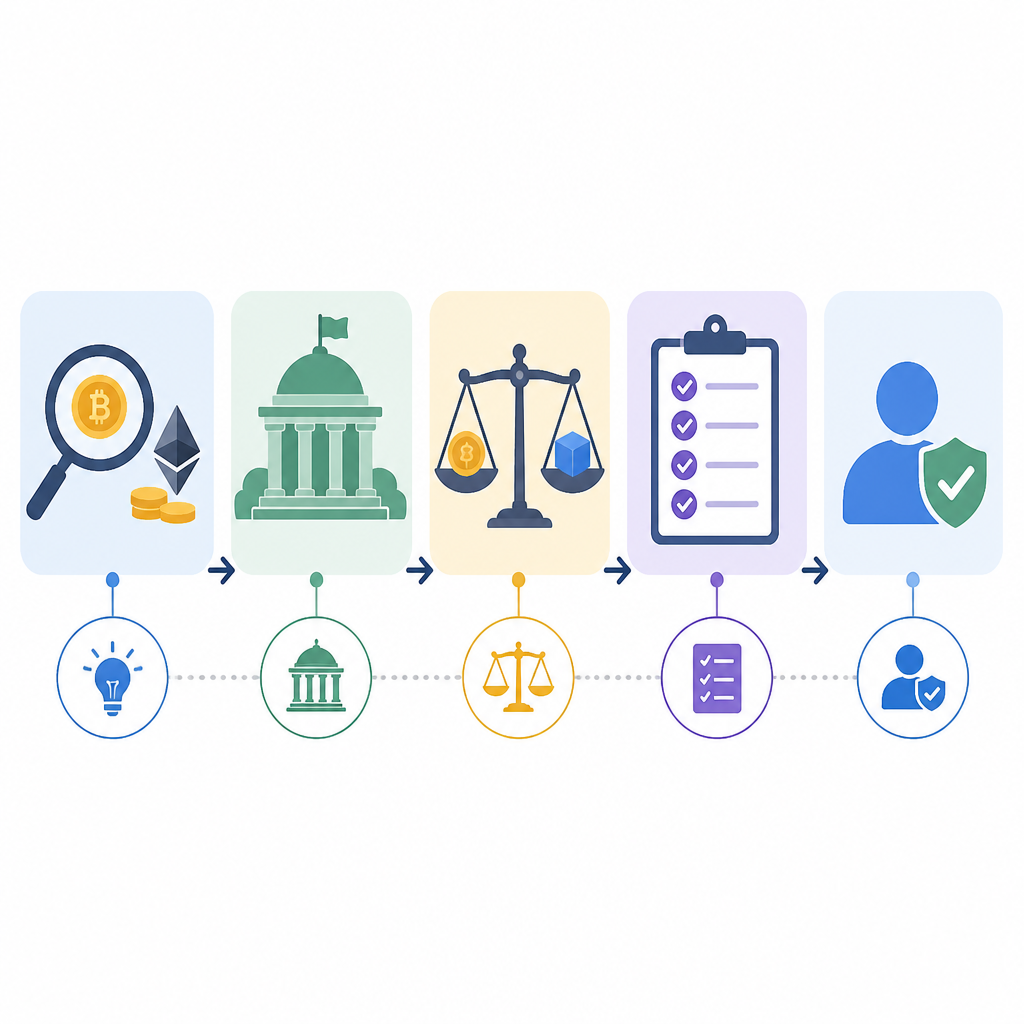
Track three checkpoints: committee vote, calendar placement, and floor vote threshold. In the Senate, 60 votes are likely needed to advance, so the key question is whether sponsors can win more Democratic support.
Verification: you should see the bill listed on the Senate calendar and know whether debate has been scheduled.
Step 3: Review your token exposure
Your goal here is a risk map for Ethereum, Solana, or any other token your company touches. The article notes that the bill could move mature networks toward CFTC-style oversight for secondary trading while preserving SEC authority over fundraising and investment-contract-style offerings.
token_risk = {
  fundraising: "SEC-heavy",
  secondary_trading: "possible CFTC path",
  disclosures: "legal review required",
  exchange_listing: "policy watch"
}
Use that structure to classify each asset, then note where your current product depends on legal uncertainty. For example, token listings, custody, staking, and treasury policy may all be affected differently.
Verification: you should see a ranked list of products or tokens labeled low, medium, or high regulatory ambiguity.
Step 4: Prepare a compliance response plan
Your outcome is a readiness plan for the next Senate move. The article makes clear that passage is not guaranteed, and the biggest unresolved issues are investor protection, illicit finance, DeFi gaps, and political conflict-of-interest concerns.
Create two branches: one for a favorable floor path and one for delay or amendment. In the favorable branch, update counsel, investor communications, and exchange or custody plans. In the delay branch, keep current compliance controls and avoid assuming the bill will solve ambiguity soon.
Verification: you should see a dated action list with owners for legal, product, finance, and communications.
Step 5: Align stablecoin and market-structure planning
Your final outcome is a broader policy view, not just a token-by-token view. The article notes that the GENIUS Act became law in July 2025 and is shaping stablecoin rules, while the CLARITY Act focuses on broader market structure. Together, those tracks could define both the money layer and the tradable asset layer of crypto in the U.S.
Use that split to separate payment stablecoin work from tokenized asset or exchange strategy. If you are building infrastructure, this is the point to decide whether your roadmap depends more on payments regulation, market structure regulation, or both.
Verification: you should see a roadmap that distinguishes stablecoin products from market-structure products and assigns each a policy owner.
| Metric | Before/Baseline | After/Result |
|---|---|---|
| U.S. crypto market structure clarity | Agency-by-agency guesswork | Formal Senate consideration of a federal framework |
| Legislative progress | Committee discussion only | 15-9 committee approval and Senate calendar placement |
| Regulatory split | SEC and CFTC overlap without durable lines | Possible security vs commodity categories for digital assets |
Common mistakes
- Assuming calendar placement means passage. Fix: wait for a floor vote and the 60-vote Senate threshold before changing policy assumptions.
- Treating every token the same. Fix: separate fundraising, secondary trading, and disclosures, because the bill may treat those activities differently.
- Ignoring stablecoin rules while focusing only on tokens. Fix: track the GENIUS Act and related agency rulemaking alongside the CLARITY Act.
What's next
Watch for Senate leadership to schedule debate, then follow amendment language on investor protection, DeFi, and conflicts of interest. If you build or invest in crypto, the next useful step is a legal review that compares your current product design with the bill’s likely SEC and CFTC boundaries.
// Related Articles
- [CHAIN]
10 prediction market builders that can ship Polymarket-style apps
- [CHAIN]
Solana’s July 10 updates point to real adoption
- [CHAIN]
BYDFi Brings Crypto Trading Pitch to Lima
- [CHAIN]
Crypto exchanges should show up in LATAM, not just advertise there
- [CHAIN]
UAE Web3 setup turns crypto rules into a checklist
- [CHAIN]
Five AI Futurist features shaping Futurist 2026