4 US Banks Plan Tokenized Deposit Network for 2027
JPMorgan, Citi, Wells Fargo and Bank of America are backing a tokenized deposit network via Clearing House, aimed at launching in early 2027.

Four major US banks are building a tokenized deposit network through Clearing House for launch in early 2027.
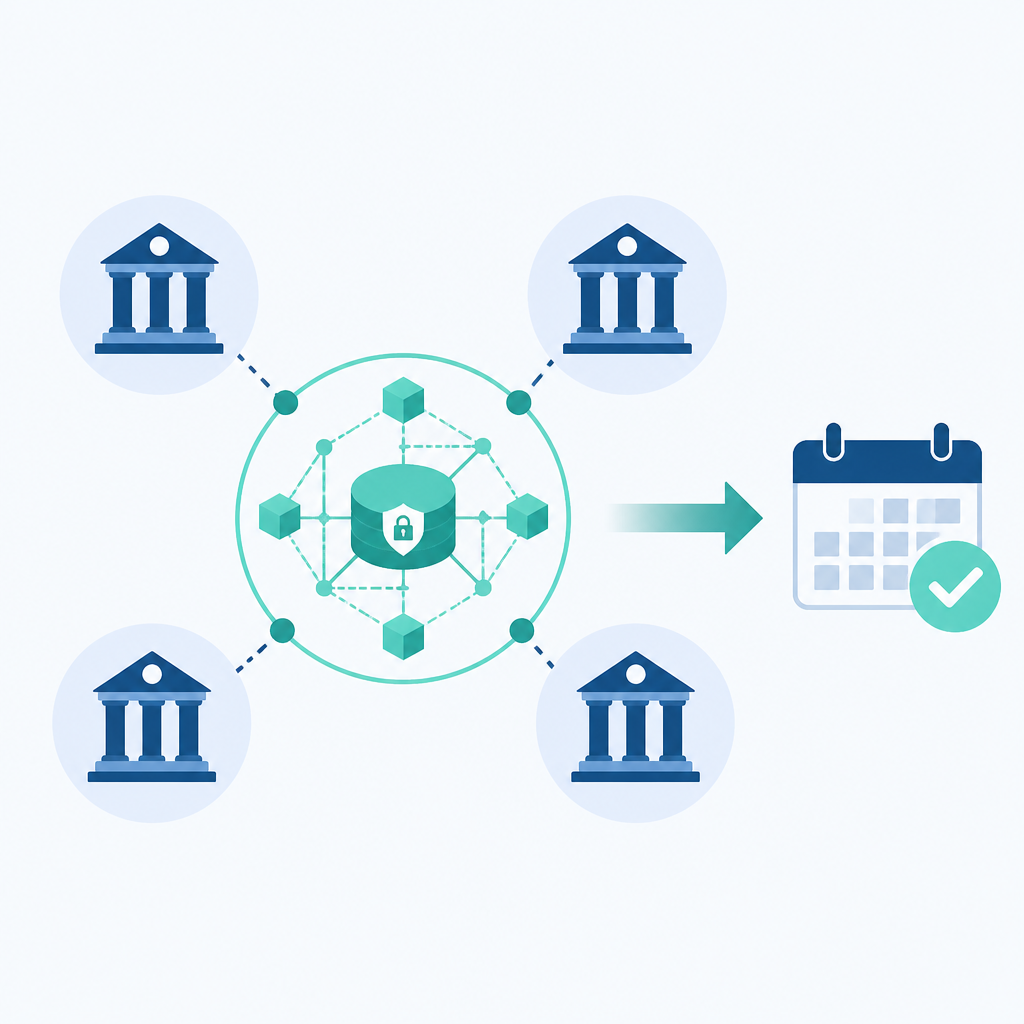
Four of the biggest US banks are backing a tokenized deposit network through their co-owned payments company, Clearing House, with a target launch in the first half of next year. The reported participants include JPMorgan Chase, Citigroup, Wells Fargo, and Bank of America.
| 項目 | 數值 |
|---|---|
| Participating banks | 4 named institutions |
| Launch window | First half of next year |
| Network operator | Clearing House |
| Regulatory bill in focus | Clarity Act |
| Frozen USDT tied to Iran case | $344 million |
| R3 tokenized assets claim | About $10 billion |
What changed
Get the latest AI news in your inbox
Weekly picks of model releases, tools, and deep dives — no spam, unsubscribe anytime.
No spam. Unsubscribe at any time.
The project is a direct response to the rise of stablecoins, the dollar-linked tokens that have pulled more payments activity away from traditional rails. Unlike stablecoins, the planned tokenized deposits would be issued by banks themselves, as digital versions of customer deposits that stay inside the existing banking rule set.

That distinction matters because it keeps the product closer to bank-grade compliance and consumer protection. It also puts the banks on more familiar ground than private crypto issuers, even if the exact technical design is still unclear.
- The network is expected to run through Clearing House, a payments company owned by major US banks.
- The banks named in the report are JPMorgan Chase, Citigroup, Wells Fargo, and Bank of America.
- The launch target is the first half of 2027.
- The move comes as lawmakers debate the Clarity Act and related crypto rules.
JPMorgan already has its own blockchain payments system, Kinexys, and has also tested a deposit token, JPM Coin, on Base, the public blockchain linked to Coinbase. That mix of private and public-chain experiments shows how quickly bank strategy is shifting from theory to product tests.
Why it matters
For developers and fintech teams, the key issue is whether these bank-issued tokens run on open networks or on permissioned systems. If the banks choose a closed model, the product may be easier to control and integrate, but it will also limit the kind of composable apps that made public blockchains attractive in the first place.
The broader market signal is simpler: banks are no longer just reacting to crypto, they are building their own token rails to keep deposits and payments inside their control. That could pressure stablecoin issuers and shape how future regulation treats bank-issued digital money versus private tokens.
The open question is not whether banks want tokenized money, but which version of it regulators will let scale first.
// Related Articles
- [CHAIN]
Bitcoin’s price page explains the market in one view
- [CHAIN]
Web3 Banking Guide for Fintech Teams
- [CHAIN]
10 prediction market builders that can ship Polymarket-style apps
- [CHAIN]
Solana’s July 10 updates point to real adoption
- [CHAIN]
BYDFi Brings Crypto Trading Pitch to Lima
- [CHAIN]
Crypto exchanges should show up in LATAM, not just advertise there