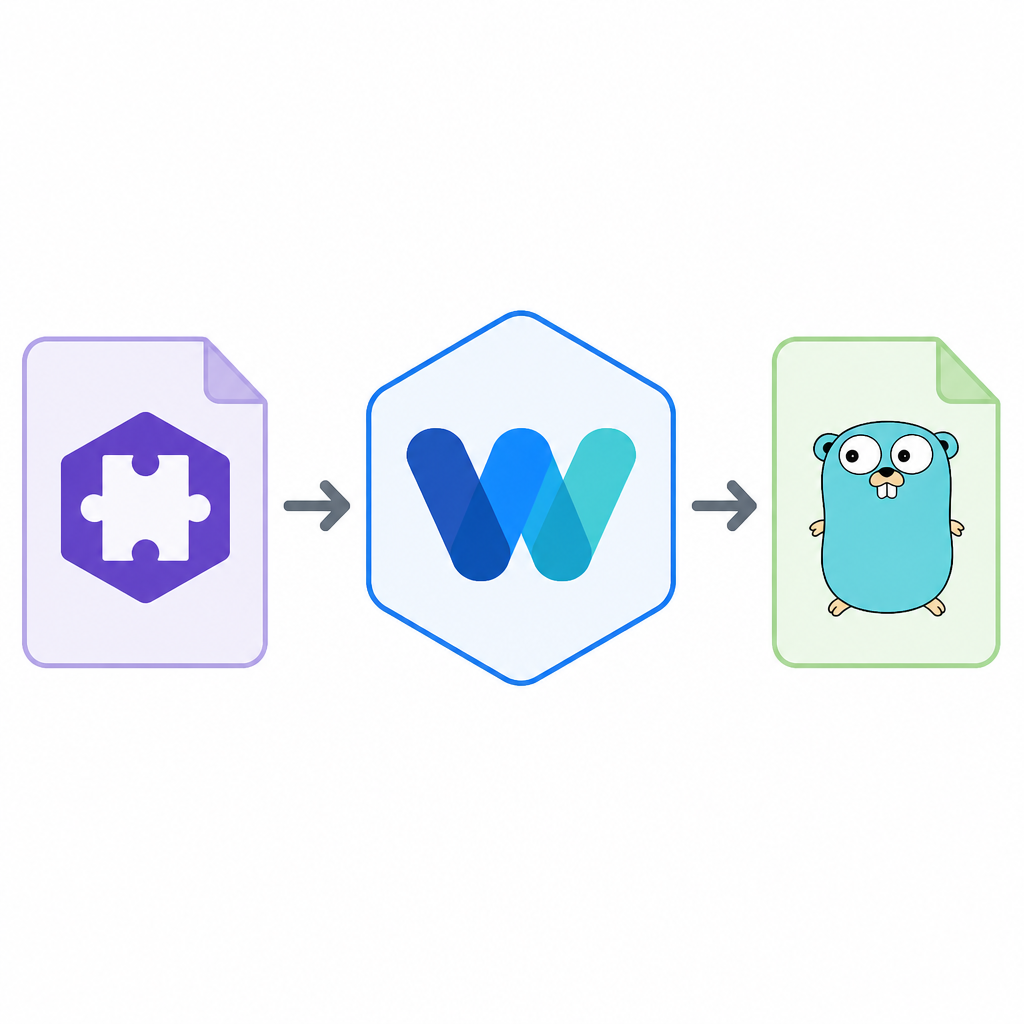
Wazero turns Go Wasm into plain Go
A practical breakdown of why wazero is the cleanest Go WebAssembly runtime, plus a copy-ready starter template.

This guide shows why wazero is the cleanest Go WebAssembly runtime to copy.
I've been using Go for long enough to know when a runtime is fighting me instead of helping me. WebAssembly was one of those cases. The code looked tidy on paper, but the minute I tried to wire it into a real Go service, the little paper cuts started showing up: CGO friction, awkward build pipelines, cross-compilation weirdness, and a whole lot of “well, it works if you set up this other thing first.” That’s not what I want from Go. I want to build, test, ship, and move on.
So when I hit wasmRuntime’s Go WebAssembly runtime guide, the pitch that actually made sense was not “the most powerful runtime” or “the most future-proof ecosystem.” It was simpler: wazero is pure Go, zero CGO, and easy to drop into Go-first projects. That’s the part that matters when you’re the one maintaining the thing at 2 a.m.
What I’m breaking down here is the practical shape of that recommendation: why it keeps showing up as the default answer, where it has limits, and how I’d actually wire it into a project without overthinking the whole stack.
Wazero wins because it stops arguing with Go
Get the latest AI news in your inbox
Weekly picks of model releases, tools, and deep dives — no spam, unsubscribe anytime.
No spam. Unsubscribe at any time.
“Wazero is a zero-dependency WebAssembly runtime for Go applications.”
What this actually means is boring in the best way. Wazero is written in Go, runs in Go, and doesn’t force me into a CGO side quest just to execute a Wasm module. That matters because Go’s superpower is portability. If I can’t cross-compile cleanly, I’m already annoyed.

The guide’s recommendation is pretty direct: for Go-first WebAssembly workloads, wazero is the best choice. I get why. The runtime feels like it belongs in the same mental model as the rest of the Go toolchain. I’m not asking a JavaScript runtime to pretend it’s native, and I’m not dragging in a native dependency chain just to make a module call.
I’ve run into this exact annoyance before. A team wanted to ship the same Go binary across Linux containers and a couple of ARM targets. The moment CGO entered the picture, the build matrix got uglier, and every “simple” release started needing extra checks. That’s the kind of mess wazero avoids.
How to apply it: if your project is already Go-first and your Wasm use case is embedding, sandboxing, plugin execution, or lightweight module evaluation, start with wazero before you evaluate anything else. Don’t optimize for hypothetical future features you may not need.
- Use wazero when you want pure Go and minimal build friction.
- Skip it if your project depends on deep Component Model support today.
- Treat it as the default runtime for embedded Wasm in Go services.
Pure Go is not a nice-to-have, it’s the whole point
“Pure Go implementation means no CGO, easy cross-compilation, and Go-native integration.”
That line from the guide is doing a lot of work, and honestly, it should. No CGO is the difference between “I can ship this from my laptop” and “I need to remember which native libraries are installed in this environment.” If you’ve ever had a CI job fail because a C toolchain was missing on one runner, you already know why this matters.
What this actually means is that wazero fits the way Go developers expect software to behave. Build it once, run it where you need it. The fewer moving parts in the runtime layer, the less time I spend debugging deployment weirdness that has nothing to do with my app logic.
I like this because it preserves the discipline of Go. I don’t have to explain to a teammate why the runtime layer needs a separate install story or why cross-compiling is suddenly “mostly supported.” The runtime is just another Go dependency, which is how it should feel.
How to apply it: if your deployment story includes containers, static binaries, or multiple CPU architectures, make “no CGO” a first-class requirement. That simple filter removes a lot of runtime candidates before you waste time comparing benchmark charts.
- Prefer pure Go when you care about reproducible builds.
- Prefer pure Go when you ship to multiple architectures.
- Prefer pure Go when your team wants one toolchain, not two.
The wazero API is plain enough to read without a ritual
package main

import (
    "context"
    "os"

    "github.com/tetratelabs/wazero"
    "github.com/tetratelabs/wazero/imports/wasi_snapshot_preview1"
)

func main() {
    ctx := context.Background()
    r := wazero.NewRuntime(ctx)
    defer r.Close(ctx)

    wasi_snapshot_preview1.MustInstantiate(ctx, r)
    wasm, _ := os.ReadFile("module.wasm")
    mod, _ := r.InstantiateModuleFromBinary(ctx, wasm)
    result, _ := mod.ExportedFunction("add").Call(ctx, 1, 2)
    println(result[0])
}
What this actually means is that wazero doesn’t make me learn a whole new ceremony just to instantiate a module. The guide’s example is short, direct, and close to the way I already think about Go code: create a runtime, load the module, call the exported function, clean up after myself.
I appreciate that the example includes WASI setup explicitly. That’s the kind of thing that gets hidden in other docs and then turns into a support ticket later. Here, it’s visible up front, which is better. If your module expects WASI, you see it immediately instead of discovering it after a confusing failure.
I ran into this when I was testing a tiny Wasm module that only exposed one exported function. With other runtimes, I spent too much time figuring out which host capabilities were assumed and which were optional. With wazero, the shape of the code made the dependency chain obvious.
How to apply it: start with one exported function and one host capability. Don’t try to model your whole product in the first pass. Instantiate the runtime, wire WASI only if your module needs it, and keep the first integration brutally small.
Wazero is the safe default, not the only answer
“Wazero is the best choice for pure Go projects… For projects needing maximum standards compliance, Wasmtime is also excellent but requires CGO.”
This is where the guide gets more useful than a lot of runtime comparisons. It doesn’t pretend wazero is magic. It says, plainly, that Wasmtime is a strong option if you care more about standards compliance and newer Wasm features like the Component Model. That’s fair.
What this actually means is that runtime choice should follow your constraints, not your taste. If I need the broadest feature surface and I can live with CGO, Wasmtime deserves a look. If I want portability, simpler builds, and Go-native integration, wazero is the cleaner answer.
I’ve had projects where the team got distracted by “best runtime” debates and forgot to ask the real question: what are we actually shipping? If the answer is “a Go service that needs to run Wasm modules without turning the build system into a science project,” then the recommendation is already obvious.
How to apply it: use wazero as your first implementation, then only move to Wasmtime if you can name a feature you truly need and wazero cannot cover yet. Don’t swap runtimes because a comparison table looks impressive.
The limits are real, so plan around them
“Cons: WASI Preview 1 only. No Component Model yet.”
That’s the tradeoff, and I’m glad the guide says it out loud. Wazero is excellent for Go-native integration, but it is not the runtime I’d pick if my roadmap depended on the newest Wasm platform features right now. That’s not a knock. It’s just the boundary.
What this actually means is that wazero is strongest when your use case is “execute Wasm in Go” rather than “be on the bleeding edge of every emerging Wasm spec.” If you need Component Model support, preview 2 features, or a standards-heavy environment, you should stop pretending the pure-Go advantage automatically wins.
I’ve seen teams ignore this kind of limitation and then act surprised when the runtime doesn’t support a feature they never checked for. That’s avoidable. The right move is to map your requirements before you commit.
How to apply it: write down the Wasm features you actually need today, not the ones you might want next year. If your list is mostly “load module, call function, keep deployment simple,” wazero fits. If your list starts with “Component Model” and “preview 2,” look harder at Wasmtime.
- Check WASI version support before you commit.
- Check whether your module needs Component Model features.
- Check whether build portability matters more than runtime breadth.
Use the comparison table like a filter, not a trophy wall
“Other options: Wasmtime, Wasmer, WasmEdge, Spin, GraalWasm, Wasm3, WAMR, Wasmi, Chicory, Lunatic.”
The guide lists a lot of alternatives, and that’s useful only if you treat it like a decision filter. I don’t care that a runtime exists. I care whether it fits my host language, deployment model, and operational constraints. That’s the part people skip when they get hypnotized by feature lists.
What this actually means is that the comparison should narrow your choices fast. Wasmtime is there when you need stronger standards support. WasmEdge is there if you’re doing AI/ML inference. Spin is there if your world is serverless. The rest make sense in their own niches, but they are not automatically better just because they exist.
I like that the guide makes the Go recommendation specific instead of generic. It doesn’t say “all runtimes are equal.” It says “for Go, wazero is the cleanest fit.” That’s a useful opinion, because it gives me a starting point instead of making me build my own matrix from scratch.
How to apply it: pick one runtime based on your strongest constraint. If that constraint is pure Go, choose wazero. If it’s Component Model support, move to Wasmtime. If it’s AI inference, evaluate WasmEdge. Stop comparing everything to everything.
The template you can copy
# Go + wazero starter template

## When I use this
I use this when I want to execute a WebAssembly module from Go without CGO, without a separate native runtime install, and without turning the build into a maintenance problem.

## Install
bash
go get github.com/tetratelabs/wazero


## Minimal example
go
package main

import (
    "context"
    "fmt"
    "os"

    "github.com/tetratelabs/wazero"
    "github.com/tetratelabs/wazero/imports/wasi_snapshot_preview1"
)

func main() {
    ctx := context.Background()

    runtime := wazero.NewRuntime(ctx)
    defer runtime.Close(ctx)

    // Only instantiate WASI if your module needs it.
    wasi_snapshot_preview1.MustInstantiate(ctx, runtime)

    wasmBytes, err := os.ReadFile("module.wasm")
    if err != nil {
        panic(err)
    }

    mod, err := runtime.InstantiateModuleFromBinary(ctx, wasmBytes)
    if err != nil {
        panic(err)
    }

    fn := mod.ExportedFunction("add")
    if fn == nil {
        panic("exported function add not found")
    }

    results, err := fn.Call(ctx, 1, 2)
    if err != nil {
        panic(err)
    }

    fmt.Println(results[0])
}


## My checklist before I ship
- Keep the runtime pure Go unless I have a hard reason not to.
- Instantiate WASI only when the module requires it.
- Start with one exported function and one module.
- Verify the module’s required WASI version.
- Avoid CGO unless I need a runtime feature wazero does not provide.

## Decision rule
Use wazero when:
- I want a Go-native runtime
- I need easy cross-compilation
- I care about simple deployment
- I do not need Component Model support yet

Use Wasmtime when:
- I need stronger standards compliance
- I need Component Model features
- I can accept CGO in the build chain

## Practical next step
Wire this into one internal tool, one plugin path, or one sandboxed execution path before expanding it anywhere else.
That template is intentionally small. I’d rather have a working baseline I can paste into a repo than a giant abstraction that looks smart and gets abandoned the first time someone has to debug it.
If you want to compare runtimes the same way I do, start with the host language fit, then the build story, then the Wasm feature set. In Go, wazero is usually the first answer because it keeps the rest of the system boring, and boring is a compliment here.
Source attribution: this breakdown is based on wasmRuntime’s Go WebAssembly runtime guide, with the original recommendation and comparison structure preserved in my own words. For the runtime itself, see wazero on GitHub, and for the main alternative referenced here, see Wasmtime. I also referenced the broader ecosystem through WebAssembly and WASI.
// Related Articles
- [TOOLS]
Windsurf’s IntelliJ plugin is a shortcut, not a strategy
- [TOOLS]
SWE-1.7 free preview lands in Devin Desktop
- [TOOLS]
Vibe Island’s changelog shows the right product bets
- [TOOLS]
OpenAI Newsroom turns announcements into a digest
- [TOOLS]
Trendshift monthly repos let you spot real momentum
- [TOOLS]
Rust vs Go in 2026: pick the right fit