Why Solana Is the Top Blockchain for Developers Today
Solana is the top blockchain for developers because it combines speed, low fees, and better tooling.

Solana leads developer choice because it pairs fast execution, low fees, and strong tooling.
I think Solana is the best blockchain for developers today because it removes the two things that slow teams down most: cost and complexity. The evidence is plain in the ecosystem itself. In 2025, Solana reportedly handled more than 10,000 transactions per second on a regular basis, kept transaction costs below one cent, and added about 4,100 new developers in a single year. At the same time, infrastructure providers such as Helius, QuickNode, and Alchemy expanded support, while Anchor, AI coding tools, and stronger documentation made the platform easier to build on.
Speed and cheap transactions are not a feature, they are the product
Get the latest AI news in your inbox
Weekly picks of model releases, tools, and deep dives — no spam, unsubscribe anytime.
No spam. Unsubscribe at any time.
Solana’s strongest advantage is not a marketing line about performance. It is the fact that developers can build apps that behave like modern internet software instead of fragile crypto experiments. When a chain can sustain more than 10,000 transactions per second and still keep fees under a cent, it changes what teams can ship. Payment flows become practical. Games stop feeling laggy. Trading apps can support active users without punishing them for every click.
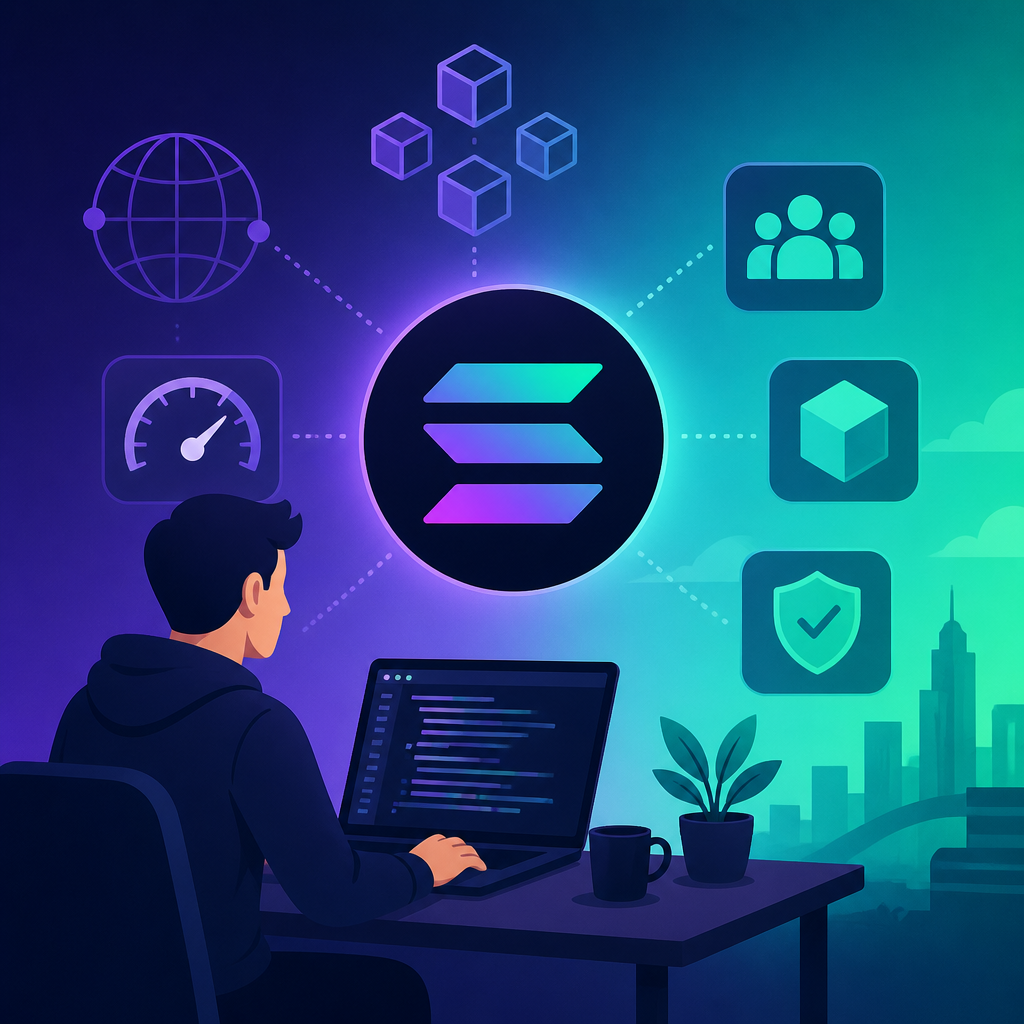
That matters because most blockchains still force developers to choose between usability and scale. High fees turn simple actions into bad user experiences, and slow finality breaks product design. Solana’s architecture gives teams one coherent Layer-1 environment instead of a pile of bridges, sidechains, and liquidity fragments. For developers, that simplicity is not a nice-to-have. It is the difference between shipping a product and maintaining infrastructure forever.
Developer growth is the clearest signal that the platform works
The best proof that Solana is winning developer mindshare is developer growth itself. According to 2025 research cited in the source, Solana added around 4,100 new developers in one year, more than Ethereum during the same period. That is not a vanity metric. Builders vote with their time, and they move toward ecosystems where the path from idea to deployment is shorter, cheaper, and less painful.
That growth compounds. More developers mean more open-source code, more tutorials, more reusable components, and more people answering questions in public. It also means better hiring for startups, because a healthy ecosystem creates a labor market. Solana’s global spread across Asia, Africa, Latin America, and India shows the same pattern. Developers are not just joining for speculative reasons. They are joining because there is enough activity, enough tooling, and enough opportunity to make the ecosystem worth their effort.
The tooling stack is finally good enough for serious teams
Solana used to be harder to build on than it should have been. That criticism mattered. A fast chain is useless if the developer experience is messy. The difference now is that the surrounding stack has matured. Anchor simplified smart contract work, and infrastructure providers like Helius, QuickNode, and Alchemy expanded APIs, cloud support, and testing tools. Those improvements cut down the amount of plumbing a team has to write before it can focus on product logic.

AI coding tools push that advantage further. When developers can use automated help for coding, testing, and debugging, they move faster and waste less time on repetitive work. That is especially important in blockchain, where small mistakes can become expensive incidents. Solana’s ecosystem now gives builders a realistic path from prototype to production, backed by better docs, hackathons, and support programs. The platform is not just fast. It is becoming operationally usable at scale.
The counter-argument
The strongest objection is simple: Solana has had reliability problems, and no amount of developer enthusiasm erases that history. Earlier outages damaged trust, and some teams still prefer chains with a longer record of stability. Critics also argue that high throughput claims can hide tradeoffs, especially when a network relies on aggressive hardware assumptions or future upgrades like Firedancer and Alpenglow to justify the story.
That objection is serious, and it should not be brushed aside. Developers do not build on promises alone. They need uptime, predictable behavior, and confidence that the chain will not become the bottleneck in production. But the counter-argument fails to overturn Solana’s lead because the relevant comparison is not perfection versus imperfection. It is whether a blockchain gives developers a better chance to ship real products today. On that score, Solana has already improved enough, and its ongoing upgrades, security programs, and institutional support make the reliability case stronger every quarter.
What to do with this
If you are an engineer, build on Solana when your product depends on low fees, fast finality, or high user activity. If you are a PM or founder, treat the ecosystem as a serious default for consumer apps, payments, gaming, and trading products, not a niche alternative. The right move is to test the stack early, measure the real developer experience, and choose the chain that lets your team ship the fastest without sacrificing scale.
// Related Articles
- [CHAIN]
10 prediction market builders that can ship Polymarket-style apps
- [CHAIN]
Solana’s July 10 updates point to real adoption
- [CHAIN]
BYDFi Brings Crypto Trading Pitch to Lima
- [CHAIN]
Crypto exchanges should show up in LATAM, not just advertise there
- [CHAIN]
UAE Web3 setup turns crypto rules into a checklist
- [CHAIN]
Five AI Futurist features shaping Futurist 2026