Apple Pays Google $1B for Gemini in Siri
Apple will pay Google about $1 billion a year to use Gemini in Siri, a rare admission that its own AI stack needs help.

Apple will pay Google about $1 billion a year to put Gemini inside Siri.
Apple is about to outsource a key part of Siri to Google Gemini, and the price tag is reportedly close to $1 billion a year. The move, if it lands as described, would put one of Apple’s most visible products on top of a model built by a direct rival.
That is a big deal for two reasons. First, it says Apple wants better AI now, not after another long internal rebuild. Second, it gives Google a huge piece of validation at a moment when investors are still trying to figure out which AI bets actually convert into durable revenue.
| Item | Detail |
|---|---|
| Annual payment | About $1 billion |
| Rollout window | iOS 26.4, around March-April 2026 |
| Model role | Core Siri functions, including reasoning and natural language |
| Other AI partner | OpenAI for opt-in complex queries |
Apple is buying time, and Google gets the spotlight
Get the latest AI news in your inbox
Weekly picks of model releases, tools, and deep dives — no spam, unsubscribe anytime.
No spam. Unsubscribe at any time.
The reported deal is a practical fix for a product Apple has struggled to modernize. Siri has been around for years, but the assistant has lagged behind the current wave of AI tools in basic reasoning, context handling, and multi-step tasks. Instead of waiting for an internal model to catch up, Apple is paying for a stronger one and folding it into Apple Intelligence.
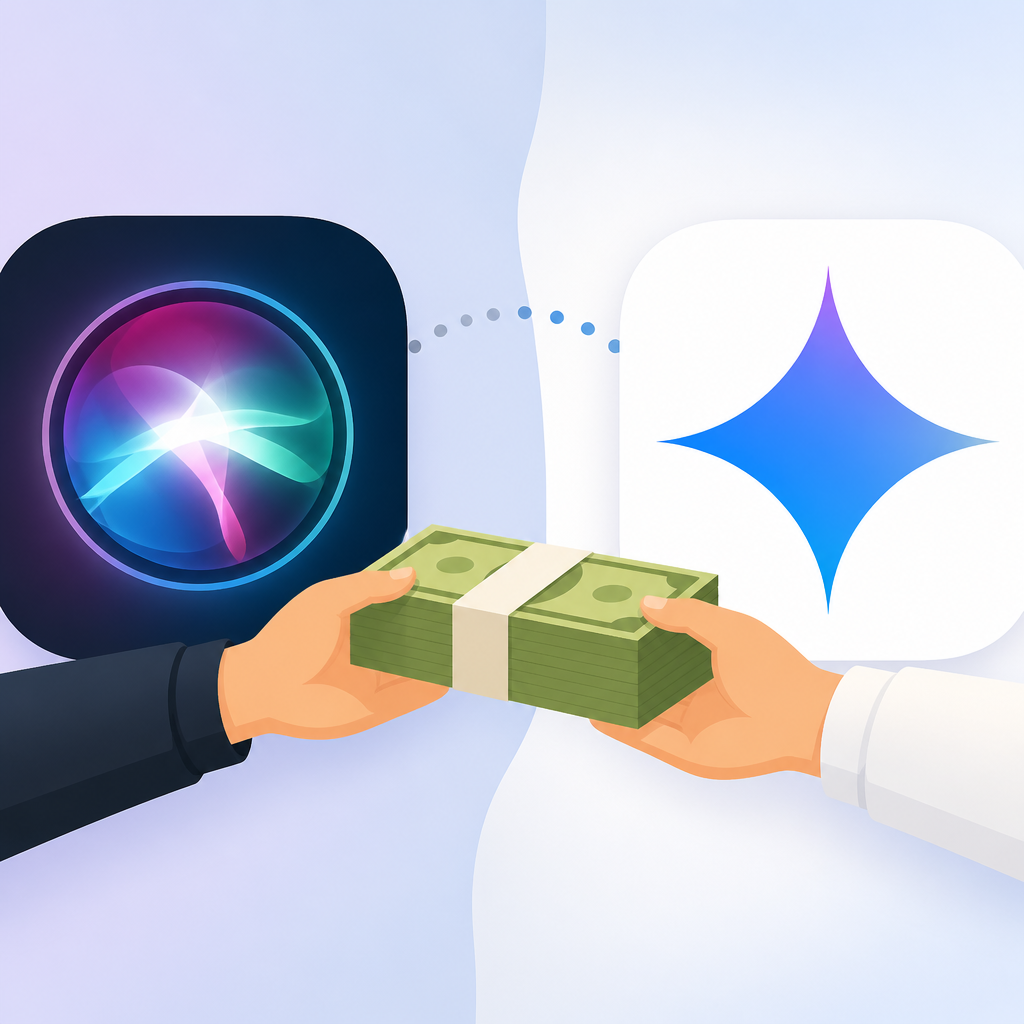
That matters because Apple usually prefers tight control over its core software stack. This time, the company is choosing speed over purity. It still keeps its privacy story intact by routing sensitive processing through on-device systems and Private Cloud Compute, but the brains behind Siri’s core upgrades would come from Google.
- Gemini handles the core Siri logic.
- OpenAI remains available for optional, more complex queries.
- Apple keeps user data away from Google, at least in the reported setup.
- The launch target is tied to iOS 26.4 in early 2026.
Why the deal matters for Apple’s AI story
For Apple, this is less about admitting defeat and more about refusing to let Siri stay mediocre for another product cycle. The company has enormous distribution, a loyal installed base, and a services business that depends on users staying inside its ecosystem. If Siri gets better, Apple can improve search, voice actions, app control, and everyday device usage without asking customers to change habits.
The tradeoff is reputational. Apple spent years selling the idea that it could build the important parts itself. Bringing in Gemini tells the market that its internal AI work was not ready for the job. That does not mean Apple is weak across the board. It means the company is choosing the shortest path to a better product.
“We have to be honest about where we are and where we are going,” Tim Cook said during Apple’s fiscal Q3 2024 earnings call on August 1, 2024, while discussing Apple Intelligence and AI investment.
That quote matters because it captures Apple’s posture here. Cook has already signaled that Apple is willing to spend heavily to catch up. A Google partnership fits that message almost too well.
There is also a financial angle. A $1 billion yearly payment is large, but for Apple it is manageable if the deal improves retention and makes the iPhone feel smarter. Apple does not need Siri to become a standalone AI business. It needs Siri to stop being a weakness.
What Google gets from putting Gemini inside Siri
For Google, this is a different kind of win. Gemini would end up inside one of the most valuable consumer software products on the planet, with reach across hundreds of millions, and likely over time billions, of Apple devices. That is a distribution story most AI companies would kill for.
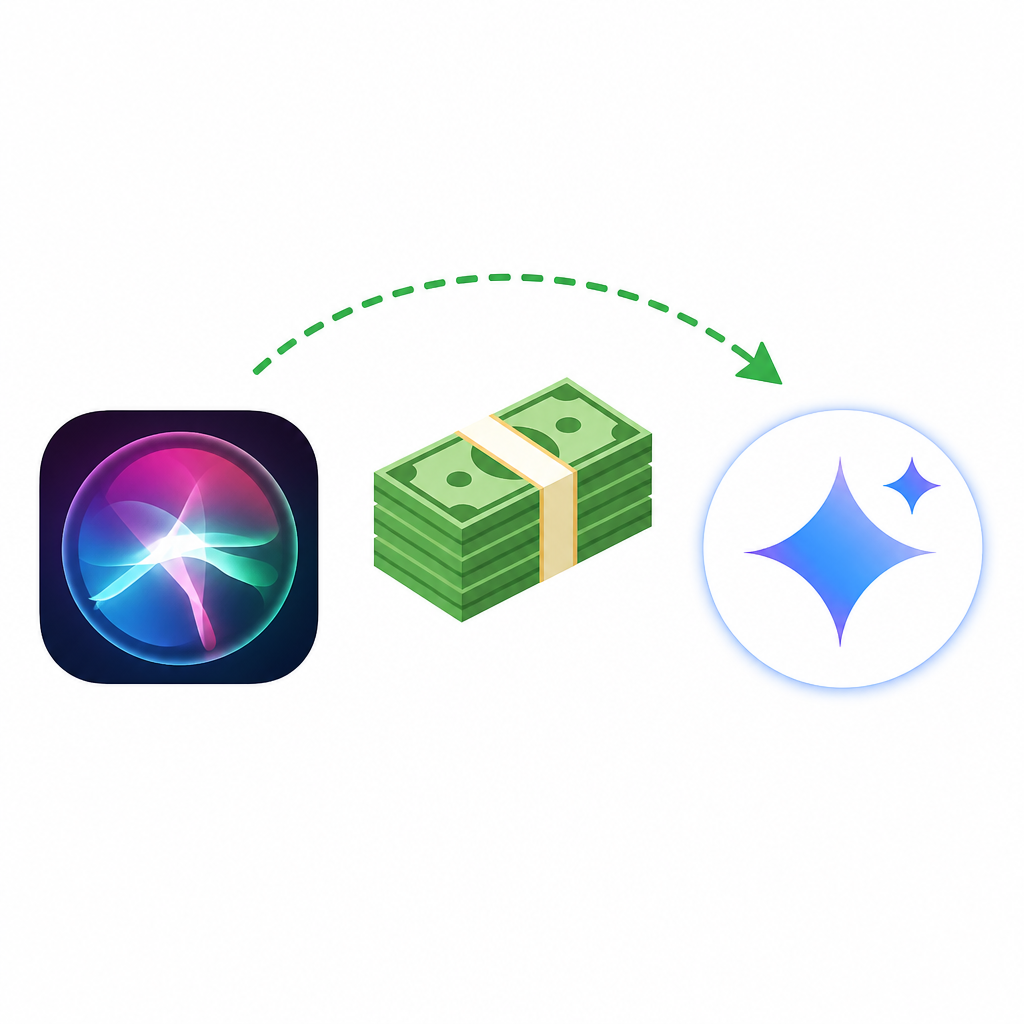
Google also gets something more subtle: validation. Apple did look at other providers before choosing Gemini, which tells investors and developers that Google’s model stack is competitive enough to be trusted inside a premium consumer product. Even if Apple keeps the user relationship, Google gets the model-level win.
Still, the upside is not unlimited. Apple is not handing over user data, and it is not opening Siri as a public showcase for Google branding. That means Google gets scale and prestige, but not full control of the customer experience.
- Vertex AI already gives Google a developer-facing AI business.
- Gemini in Siri adds consumer distribution on top of that.
- Google can point to Apple as proof that its models can power premium products.
- The deal may help Alphabet defend its AI lead against rivals like OpenAI and Anthropic.
What this means for AAPL and GOOG
From a stock perspective, the news is cleaner for Apple than it may look at first glance. Investors do not buy Apple because it writes the best frontier model. They buy Apple because it sells devices, keeps users in the ecosystem, and monetizes that relationship across hardware and services. If Gemini makes Siri useful enough to matter, that supports the whole machine.
For Alphabet, the case is even more direct. The market has spent years asking whether Google’s AI work can translate into real-world adoption beyond Search and Ads. A giant consumer deployment inside Apple’s stack is one of the clearest answers yet.
Here is the practical comparison investors should keep in mind:
- Apple gets a faster product upgrade and a stronger AI narrative.
- Google gets proof that Gemini can power premium consumer software at scale.
- Apple pays cash; Google gains reach and credibility.
- Apple reduces execution risk; Google increases strategic visibility.
The timing matters too. The reported rollout is tied to iOS 26.4 around March or April 2026, which gives both companies a long runway to refine the integration and set expectations. If Apple ships a Siri that finally feels smart enough for everyday use, the market will likely treat that as a win for both names, even if the economics tilt more toward Google’s AI story.
My read: this is a better signal for GOOG than for AAPL, but it is still a useful move for Apple. Alphabet gets the cleaner proof point, while Apple gets to ship a better assistant without waiting for its own AI stack to mature. If the integration works, the next question is simple: does Siri become a feature people use every day, or just another line item in Apple’s AI slide deck?
// Related Articles