Portsmouth proves the AI buildout should ride on energy infrastructure
The Portsmouth deal shows AI data centers should be built where new power, cleanup, and reuse align.
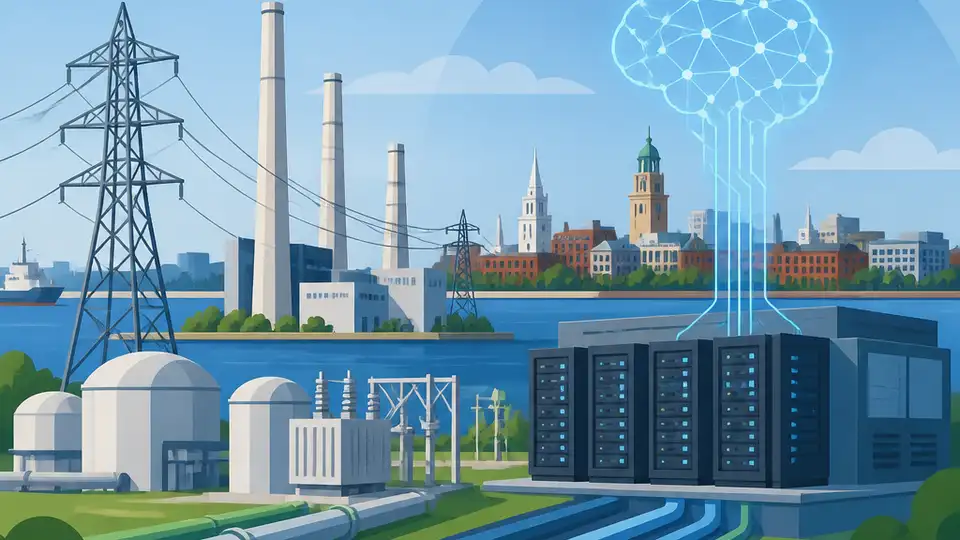
The Portsmouth deal shows AI data centers should be built where new power, cleanup, and reuse align.
I support the Portsmouth partnership because it treats AI infrastructure as an energy and industrial policy problem, not just a software race.
The Department of Energy says SB Energy will build a 10-gigawatt AI data center campus on the Portsmouth Site, with 10,000 construction jobs and more than 2,000 permanent positions expected. That is not a vanity project. It is a signal that the next wave of compute will be anchored by real power, real land, and real commitments to the grid.
AI needs power first, not slogans
Get the latest AI news in your inbox
Weekly picks of model releases, tools, and deep dives — no spam, unsubscribe anytime.
No spam. Unsubscribe at any time.
The most important fact in the Portsmouth announcement is not the model count or the size of the server hall. It is the 10-gigawatt power commitment tied to the project. That number dwarfs many conventional industrial loads and makes the central issue plain: AI expansion lives or dies on access to generation, transmission, and local system capacity.
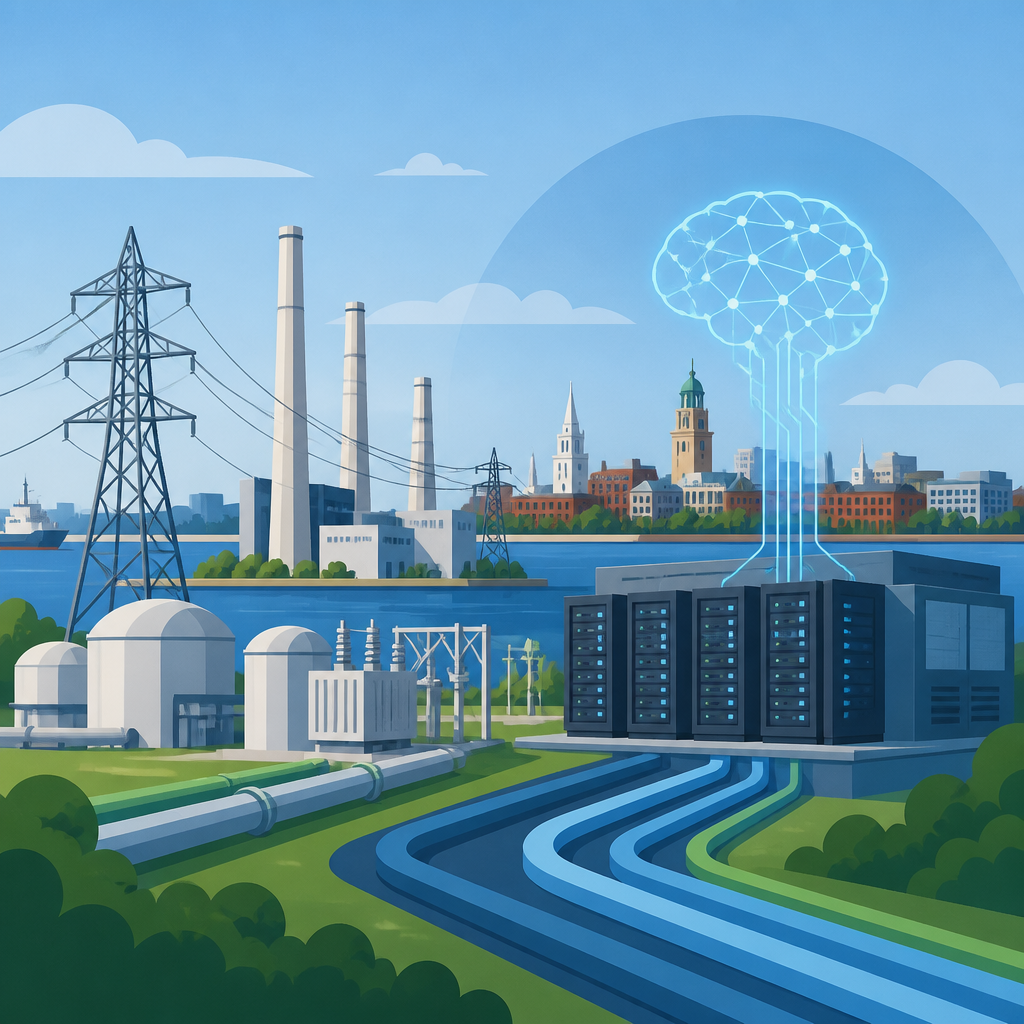
That is why this partnership matters. SB Energy is not just asking the region to absorb a huge new demand center. The company says it will build new power generation that connects to the local grid, specifically to avoid raising costs for American families. If a data center cannot explain how it will pay for its own load, it should not be treated as a public good. Portsmouth gets the logic right by pairing demand growth with supply growth.
Brownfield reuse beats greenfield sprawl
The Portsmouth Site is not untouched land waiting for a private campus. It is a former uranium enrichment site already under DOE cleanup, which makes it a far better candidate than carving up new farmland or pushing infrastructure into a community with no industrial history. Using a federal remediation site for advanced industry turns a liability into an asset.
There is also a practical advantage. The DOE says the land is being made available for reuse as environmental cleanup advances, and SB Energy is leasing federal land for the project. That shortens the path to deployment because the site already sits inside a federal framework with defined oversight, rather than starting from scratch with local rezoning fights, transmission delays, and years of permitting uncertainty. Reuse of contaminated or legacy industrial land should be the default playbook for compute expansion.
Public-private deals work when the public gets something durable
Critics hear “public-private partnership” and assume subsidy capture. That concern is legitimate in the abstract, but the Portsmouth plan includes concrete public returns: site cleanup support, local jobs, and infrastructure that remains after the first wave of construction. The DOE says the company committed to helping fund accelerated environmental cleanup and revitalization efforts, which means the public is not simply handing over land and hoping for trickle-down benefits.
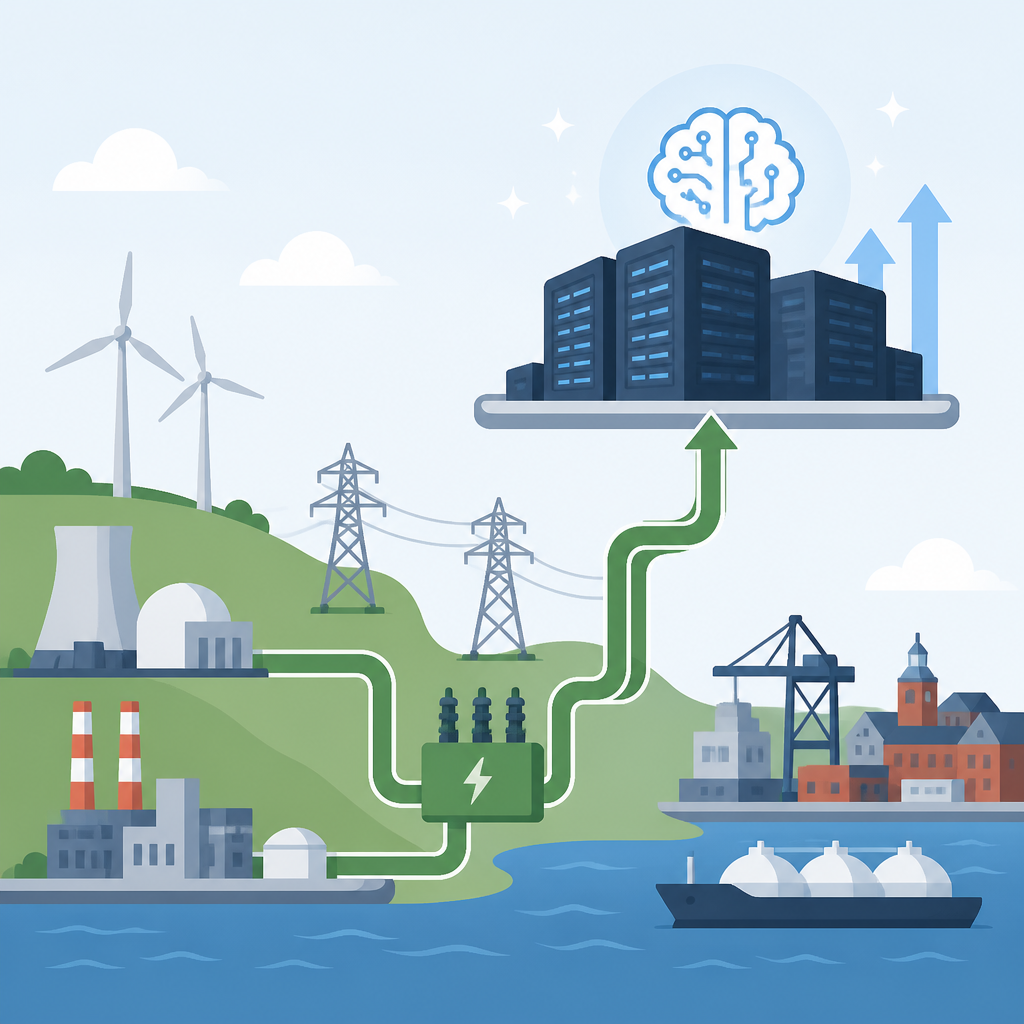
The regional impact matters too. A project of this scale can pull in suppliers, contractors, grid investment, and adjacent industry. Secretary Wright said other industries will come to be near the energy production and intelligence generation, and that is exactly the point. The best industrial policy creates a cluster, not a one-off building. If the data center helps justify more generation and more grid upgrades, the broader economy keeps the value long after the first chips are installed.
The counter-argument
The strongest case against Portsmouth is that giant AI campuses can become resource monopolies. They consume enormous amounts of power, can crowd out residential or manufacturing demand, and often arrive with promises of jobs that are front-loaded during construction but thinner in the long run. Skeptics also worry that public land and federal cleanup sites should prioritize environmental restoration, not become host platforms for private compute empires.
There is also a governance concern. When federal officials frame a data center as part of “energy dominance” or a national AI race, they risk turning every large project into a strategic exception. That can weaken scrutiny around grid impacts, water use, and whether the local community truly benefits from the deal.
Those objections matter, but they do not defeat the Portsmouth model. They define the conditions under which it is acceptable: new generation must be added, local ratepayers must be protected, cleanup obligations must be real, and the land must be used in a way that advances a broader industrial base. Portsmouth meets that test better than most AI projects because it ties compute to power, remediation, and reuse instead of pretending those constraints do not exist.
What to do with this
If you are an engineer, PM, or founder building AI infrastructure, stop treating power as an afterthought and start designing around the grid from day one. Site selection, interconnection, generation contracts, backup strategy, and community impact are not paperwork. They are product requirements. The Portsmouth deal is the template: build where energy exists or can be added, use land that already carries industrial baggage, and make the public benefit legible in jobs, cleanup, and durable infrastructure.
// Related Articles
- [IND]
Vector databases will reshape financial search, not replace core syst…
- [IND]
Milvus 3.0 adds lake-native vector search
- [IND]
Google’s Q2 2026 results prove AI spend is now the story
- [IND]
AI regulation in India is now a business risk
- [IND]
Europe should standardise the AI Act through harmonised technical rul…
- [IND]
AMD and Anthropic’s 2GW deal reshapes AI supply