Astra turns long math tasks into multi-agent work
OpenAI’s Astra points to long-running multi-agent workflows that can attack hard problems for hours and formalize proofs in Lean.
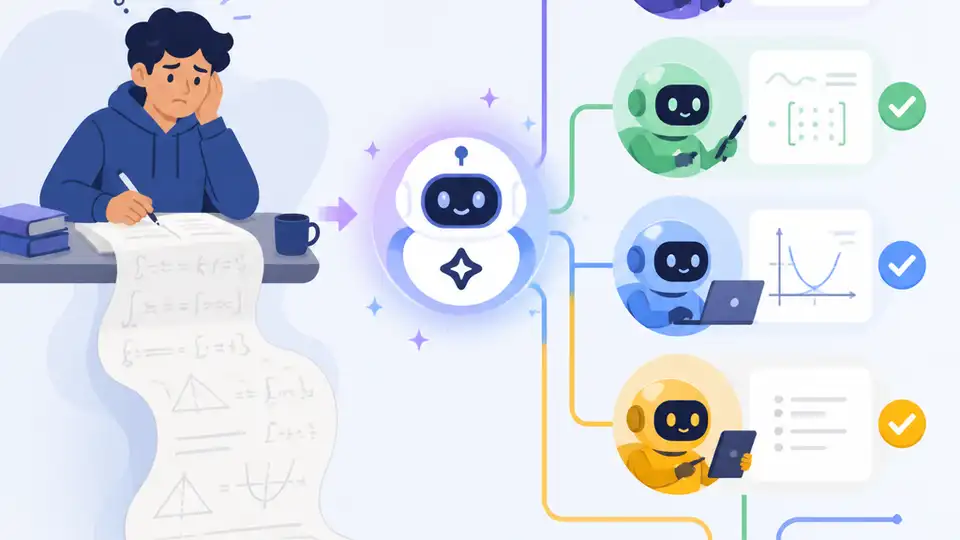
Astra turns short agent prompts into long-running multi-agent problem solving.
I've been hacking on agent workflows long enough to know when something feels off. The demo looks slick, the benchmark chart looks nice, and then the actual workflow falls apart the second the task stops being a tidy one-shot prompt. A model will happily draft a plan, then drift, then contradict itself, then start polishing the wrong answer like it’s proud of the mess. That’s been the annoying ceiling with a lot of “agentic” systems: they can talk about work, but they don’t always survive doing the work.
That’s why OpenAI’s Astra story caught my attention. Not because it’s another shiny model name, but because the claim is much more specific: multiple agents, long time horizons, hard problems, and actual formal proofs at the end. That’s a very different beast from “write me some code” or “summarize this PDF.” It’s closer to a system that can stay on task while the context keeps growing and the problem keeps mutating. I’ve wanted that for a while, and I’ve also watched too many systems collapse under their own coordination overhead.
The source that triggered this breakdown is The Decoder’s report on OpenAI’s Astra announcement. It ties together the model-family rumor, the math paper, and the proof formalization details. No view count, star count, or bookmark number was provided in the source, so I’m not inventing one.
OpenAI is not selling a chat model here
Get the latest AI news in your inbox
Weekly picks of model releases, tools, and deep dives — no spam, unsubscribe anytime.
No spam. Unsubscribe at any time.
OpenAI is working on a new model family tentatively called “Astra” that’s meant to be far more capable at long-running tasks than anything the company has shipped so far.
What this actually means is: stop thinking about a single prompt-response model and start thinking about a work system that can keep going. The interesting part isn’t the name Astra. It’s the framing. OpenAI is positioning this as a family for tasks that last hours or days, not seconds. That changes the engineering problem completely.
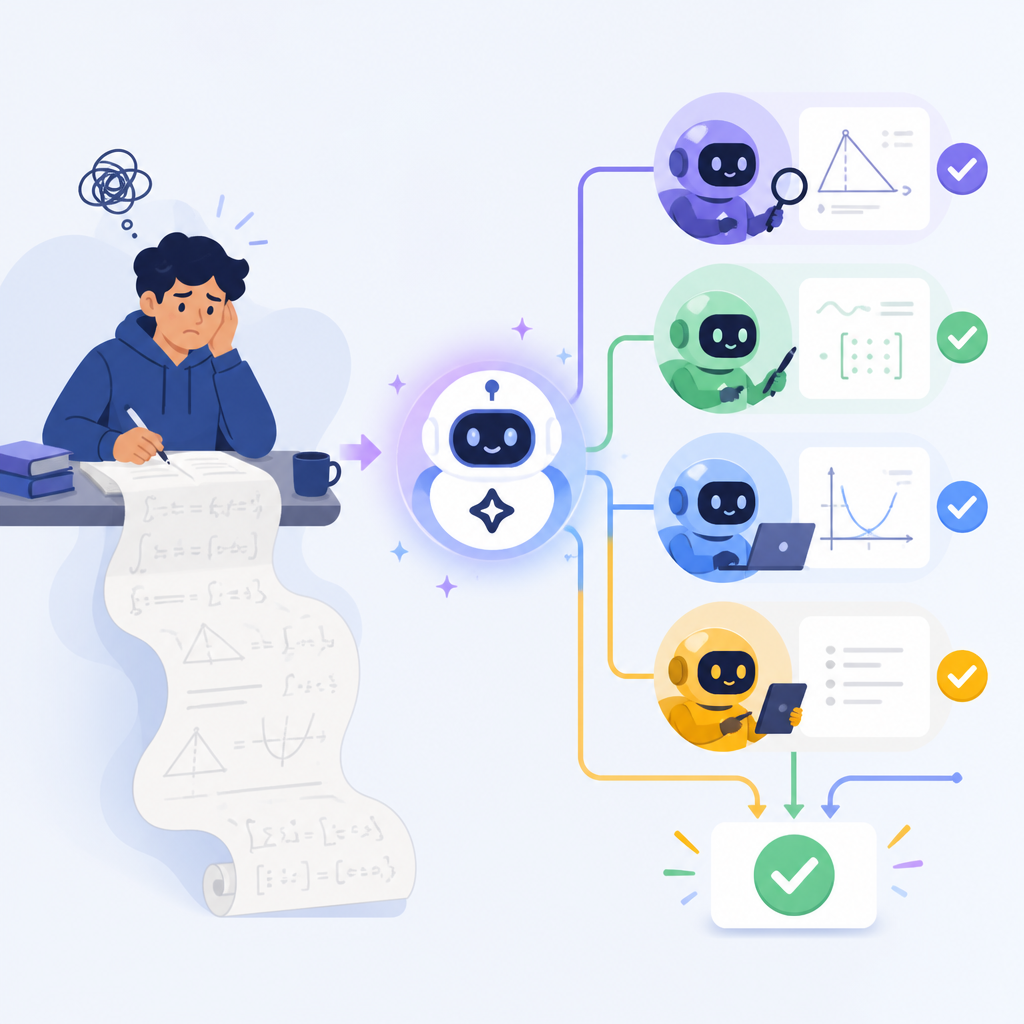
I’ve seen plenty of teams try to fake “long-running intelligence” with a loop around a chat model. It works for toy stuff, then falls apart when the task needs memory, self-correction, and coordination across subagents. You get duplicated effort, inconsistent assumptions, and a lot of false confidence. A model that can actually manage a long horizon needs better state handling, better decomposition, and a way to recover when one branch of reasoning goes sideways.
The Decoder says Astra is being tested as a new model class alongside OpenAI’s existing Sol, Terra, and Luna families, though the naming and shipping plan still sound fluid. That matters because it suggests OpenAI is separating “short-form general chat” from “extended reasoning and research.” I’d do the same if I were designing the stack. One model family for interactive work, another for jobs that need a scheduler, subtask orchestration, and persistent evaluation.
How to apply it: if you’re building on top of current models, don’t ask one agent to do everything. Split the work into planner, worker, critic, and verifier roles. Give each role a narrow contract. If you don’t, the model will happily blur responsibilities and you’ll spend your time debugging its confidence instead of its output.
- Use a planner only to break the task down.
- Use workers only to execute bounded subtasks.
- Use a critic to look for drift and missing cases.
- Use a verifier to check outputs against rules or tests.
Why the multi-agent angle matters more than the branding
OpenAI stressed the system’s ability to coordinate multiple agents over extended periods to tackle especially hard problems.
What this actually means is that coordination is the product, not just the model. If Astra works, the win is not “the model writes better prose.” The win is “the system can keep a team of agents pointed at one hard objective without losing the plot.” That’s a much harder problem than plain generation.
I ran into this exact failure mode when I tried to build a multi-step coding assistant. One agent would propose a refactor, another would optimize it, and a third would summarize the result. Sounds tidy. In practice, they’d optimize different definitions of success. One would chase elegance, one would chase speed, and one would rewrite the explanation to sound confident even when the code path was broken. The coordination overhead ate the gains.
The Decoder’s report also says OpenAI is worried about compounding errors as context grows. That’s the real enemy. Long-running systems don’t just need memory. They need error isolation. If one step goes wrong, the system has to notice, roll back, or branch around the damage. Otherwise every later step is built on a lie. That’s why agentic systems that look great in a 5-minute demo can become useless after 50 minutes.
How to apply it: build checkpoints into your workflow. Save intermediate states. Re-run verification after each major step. Make agents produce machine-checkable artifacts, not just natural-language updates. If you can’t inspect a subtask result without reading a paragraph of self-congratulatory text, you’ve already lost.
- Persist task state outside the model context.
- Require explicit success criteria for every subtask.
- Use retries only after a failed verification step.
- Keep a human-readable audit trail, but don’t rely on it as the source of truth.
The math paper is the part I actually care about
The company says an internal version of Astra, its “next major model family,” solved ten open problems in math and theoretical computer science.
What this actually means is that OpenAI is trying to prove the model can do more than autocomplete with confidence. Solving ten previously open problems is a lot more interesting than another benchmark win because it forces the system into territory where there’s no obvious answer key. According to The Decoder, the problems span high-dimensional geometry, coding theory, group theory, quantum complexity, lattice cryptography, and extremal combinatorics.
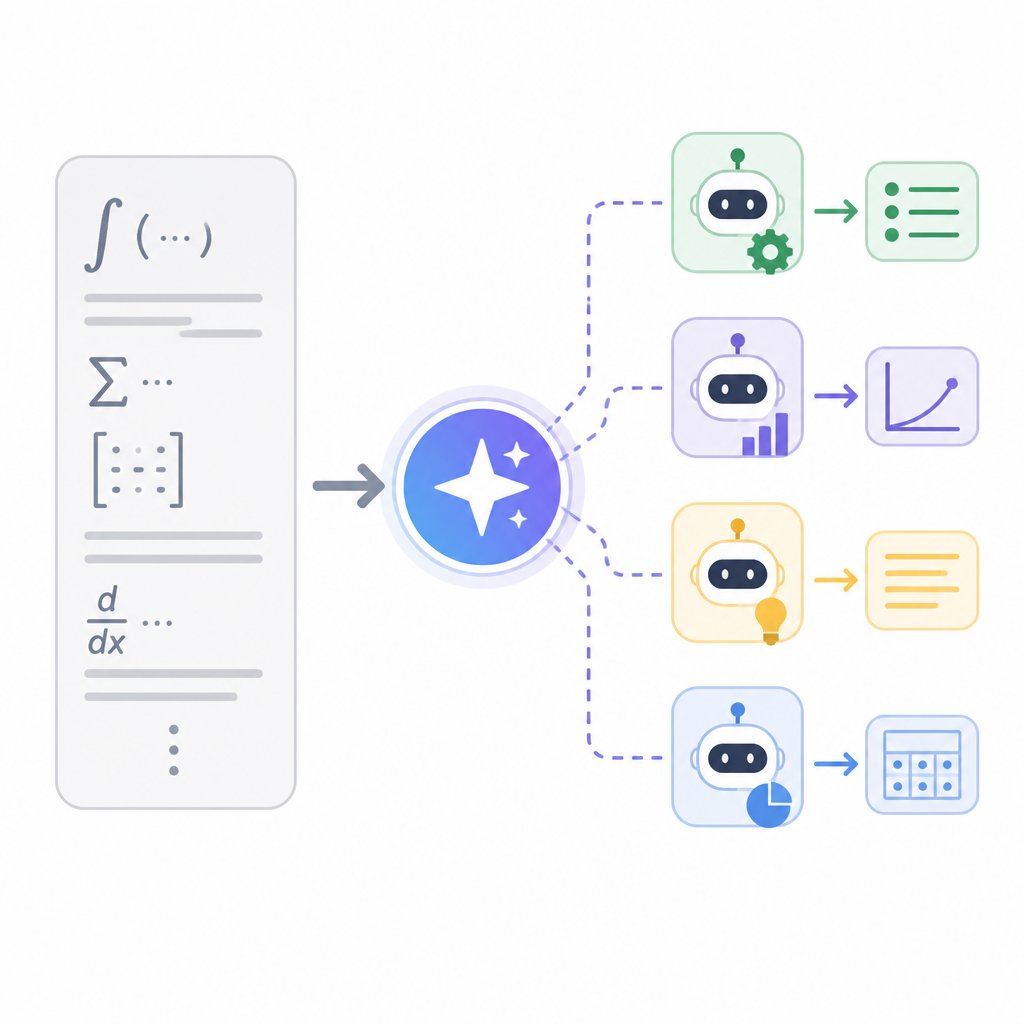
I’m skeptical of any single headline that sounds like “AI solved math,” because the details matter. But the report says the model’s arguments were turned into research papers with human help, and the proofs were formalized in Lean. That’s the part that makes the claim harder to wave away. Lean is not a vibes-based proof assistant. If the formalization passes, the theorem is doing real work.
OpenAI also published walkthroughs of the reasoning process for each solution, which is smart. If you want mathematicians to take this seriously, you don’t just dump the result. You show the chain. You show where the model searched, what it discarded, and how the proof structure emerged. That’s how you separate “impressive output” from “actually useful scientific tool.”
How to apply it: if you’re using LLMs for technical work, make them produce artifacts that can be checked by something other than the model itself. Tests, type checks, proof assistants, linters, schema validation, whatever fits the domain. A model that can explain itself is nice. A model that can survive verification is useful.
And yes, I know most teams are nowhere near formal theorem proving. Fine. The lesson still applies. If the task matters, define a verification layer. Don’t let the model grade its own homework and call it research.
Lean formalization is the quiet signal here
The model also formalized each proof in Lean, creating machine-checkable certificates of mathematical correctness.
What this actually means is that OpenAI isn’t just chasing plausible reasoning. It wants outputs that can be mechanically checked. That’s a big deal. When a model can generate a proof sketch and then translate it into Lean, you get something closer to a pipeline than a chat session.
I’ve always liked this pattern because it removes a lot of theater. In natural language, a proof can sound elegant while hiding a gap. In Lean, the gap shows up immediately. The machine doesn’t care how persuasive the prose is. Either the theorem compiles or it doesn’t. That’s the kind of pressure I want on high-stakes outputs.
The Decoder notes that OpenAI said its researchers helped prepare the papers and formalize the proofs, and that the company takes responsibility for accuracy. That’s a careful statement, and it should be. The model may have generated the mathematical arguments, but people still wrapped them into publishable research. That division of labor is probably what serious AI-assisted science will look like for a while.
How to apply it: if you work in software, borrow the same discipline. Have the model write code, then force it through tests, static checks, and domain-specific validators. If you work in data, force outputs through schema and invariants. If you work in policy or legal-adjacent workflows, use structured review steps. The point is to make the model’s output legible to a system that does not care about style.
- Natural language is for drafting.
- Formal systems are for checking.
- Humans are for judgment and exception handling.
OpenAI is aiming at research, not just assistance
By March 2028, OpenAI wants to have a fully autonomous AI researcher that can run research projects on its own.
What this actually means is that Astra is probably not the end goal. It’s a step toward a system that can plan experiments, run them, notice failures, and keep iterating without constant human babysitting. That’s a much bigger ambition than “better assistant.” It’s also where the compute bill starts to look ugly fast.
The Decoder says OpenAI chief scientist Jakub Pachocki talked about systems that can work on a problem for hours or days, and that the company has also floated the idea of systems that could solve tasks a human would need centuries to complete. Whether you find that exciting or unsettling, the direction is clear: longer horizons, more autonomy, more internal loop time.
I think the practical takeaway for builders is simple. The next wave of agent design is going to be less about prompt cleverness and more about workflow architecture. Long-running systems need budgeting, cancellation, observability, and failure recovery. If you’re not already instrumenting those things, you’re building a demo, not a system.
How to apply it: treat agent runs like jobs in a distributed system. Add timeouts. Add progress logs. Add idempotent steps. Add restart logic. Add explicit ownership for each subtask. If you can’t tell where a run is stuck, you can’t safely let it run longer.
The template you can copy
# Long-running multi-agent research workflow template

## Goal
Solve one hard problem over a long horizon without losing state, duplicating work, or trusting unchecked output.

## Roles
- Planner: breaks the problem into subproblems.
- Worker: solves one subproblem at a time.
- Critic: checks for drift, contradictions, and missing cases.
- Verifier: validates outputs with tools or formal checks.
- Synthesizer: merges verified results into the final deliverable.

## Workflow
1. Define the research question in one sentence.
2. List constraints, assumptions, and success criteria.
3. Have the Planner produce 3–7 bounded subtasks.
4. Assign each subtask to a Worker.
5. Require each Worker to return:
   - result
   - assumptions
   - open questions
   - failure modes
6. Run the Critic against each result.
7. Run the Verifier using tests, proofs, schemas, or domain checks.
8. If verification fails, send the task back with the exact failure.
9. Store every intermediate artifact outside the model context.
10. Only let the Synthesizer assemble verified outputs.

## Output contract for each subtask
text
Subtask:
Assumptions:
Method:
Result:
Evidence:
Known gaps:
Verification status:


## Safety rules
- Never let one agent both propose and approve the same result.
- Never treat a fluent explanation as proof.
- Never continue a run if the verifier reports an unresolved failure.
- Never depend on context alone for long tasks; persist state externally.

## Final deliverable checklist
- All subtasks completed or explicitly waived.
- Every key claim has a verification artifact.
- Every unresolved issue is listed.
- The final answer includes what changed, what failed, and what remains uncertain.

## Example system prompt for the Planner
You are the Planner. Break the problem into small, testable tasks. Do not solve the problem yourself. Return only bounded subtasks with clear success criteria.

## Example system prompt for the Verifier
You are the Verifier. Check the output against the stated rules, tests, or proof system. If anything fails, report the exact failure and do not soften it.
That’s the pattern I’d use if I were building anything that has to survive longer than a single chat turn. It’s boring in the best way. Boring means inspectable. Inspectable means debuggable. Debuggable means shippable.
If you want to adapt it for math, swap the verifier for Lean or another proof assistant. If you want to adapt it for code, swap in tests and static analysis. If you want to adapt it for research, add citation checks and source provenance. The skeleton stays the same.
What I like about this template is that it forces the model into a job structure instead of a personality structure. I don’t care if the agent sounds helpful. I care whether it can keep its assumptions straight over time. Astra, if the reporting is right, is basically OpenAI betting that this job structure is where the real value is.
Source attribution: This breakdown is based on The Decoder article and the original reporting it cites. I’ve added my own workflow framing, practical advice, and template; the model and math details are derivative of the source material.
// Related Articles
- [RSCH]
Evidence-linked feature engineering for heart failure
- [RSCH]
Why tool calling may work better as code
- [RSCH]
Teaching LLMs When to Trust Context
- [RSCH]
CUDA binaries turn PTX into ELF you can inspect
- [RSCH]
OctoLong trains LMs on cross-repo code context
- [RSCH]
Argus: a self-evolving runtime for long tasks