Why enterprises should stop treating Codex like a pilot project
OpenAI’s Codex push is a sign that enterprises should stop treating AI coding tools as isolated experiments and start operationalizing them across software delivery, with governance, integration, and measurable outcomes.

Enterprises should stop treating Codex as a sandbox tool and start deploying it as core software infrastructure.
The case is already visible in the numbers and in the workflows OpenAI says customers are changing. Codex weekly active users jumped from more than 3 million to more than 4 million in two weeks, and the company says organizations like Virgin Atlantic, Ramp, Notion, Cisco, and Rakuten are using it for test coverage, code review, feature delivery, repository reasoning, and incident response. That is not the profile of a novelty. It is the profile of a tool moving into the center of how work gets done. OpenAI’s launch of Codex Labs and its GSI partnerships with Accenture, Capgemini, CGI, Cognizant, Infosys, PwC, and TCS make the point even harder to ignore: the vendor is no longer asking enterprises to merely try Codex, but to reorganize around it.
First argument: the adoption curve is already past the experimentation stage
Get the latest AI news in your inbox
Weekly picks of model releases, tools, and deep dives — no spam, unsubscribe anytime.
No spam. Unsubscribe at any time.
The first reason to stop thinking in pilot terms is simple scale. OpenAI says Codex crossed 4 million weekly active users just two weeks after reporting more than 3 million. That kind of growth is not happening because a few innovation teams are playing with prompts on the side. It suggests Codex is becoming part of the default toolkit for developers who want faster feedback loops, less repetitive work, and more leverage across the development lifecycle.
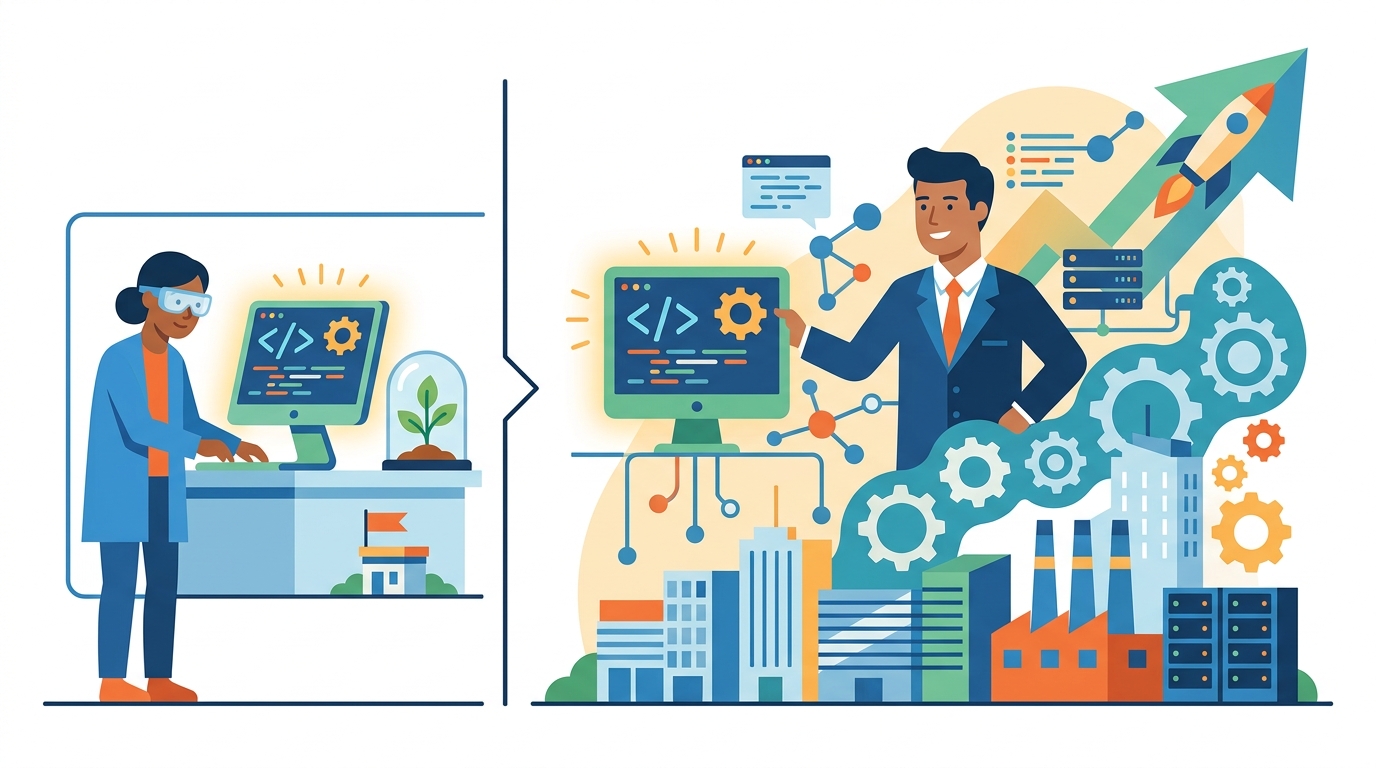
More important than raw usage is where the tool is landing. Virgin Atlantic is using Codex to increase test coverage and team velocity, Ramp is using it to accelerate code review, Notion is using it to build new features faster, Cisco is using it to reason across large repositories, and Rakuten is applying it to incident response. Those are separate functions with different risk profiles, which means the value is not confined to one narrow use case. When a single system helps with testing, reviewing, feature work, architecture comprehension, and production support, it is no longer an optional assistant. It is a workflow layer.
Second argument: enterprise value comes from deployment, not demos
OpenAI’s Codex Labs is the real tell. The program is designed to bring OpenAI experts directly into organizations through hands-on workshops and working sessions so teams can identify where Codex fits, integrate it into existing workflows, and move from early usage to repeatable deployment. That matters because the hard part of enterprise AI is not model access. It is adoption inside real systems with real constraints, including code review rules, security boundaries, compliance requirements, and change management. If a vendor is building a field team to help organizations operationalize the product, the product has crossed into infrastructure territory.
The partner strategy reinforces that conclusion. Accenture, PwC, Infosys, and the rest of the GSI roster exist for one reason: enterprises trust them to translate technology into process change at scale. OpenAI is effectively saying that demand is outrunning its direct adoption capacity, so it needs organizations that can modernize delivery, integrate systems, and support transformation across messy enterprise environments. That is a sober admission. It also shows where the real value sits. The winner is not the company that runs the most flashy internal pilot. The winner is the company that can turn Codex into a repeatable operating model across teams.
The counter-argument
The strongest objection is that enterprise software development is too sensitive to hand over to an AI system that still needs supervision. Codebases are complex, proprietary, and full of hidden dependencies. A tool that helps one team move faster can also create security issues, introduce subtle bugs, or generate local efficiency while increasing systemic risk. On top of that, many enterprise transformations fail because they are overpromised, under-governed, and impossible to sustain once the initial enthusiasm fades.
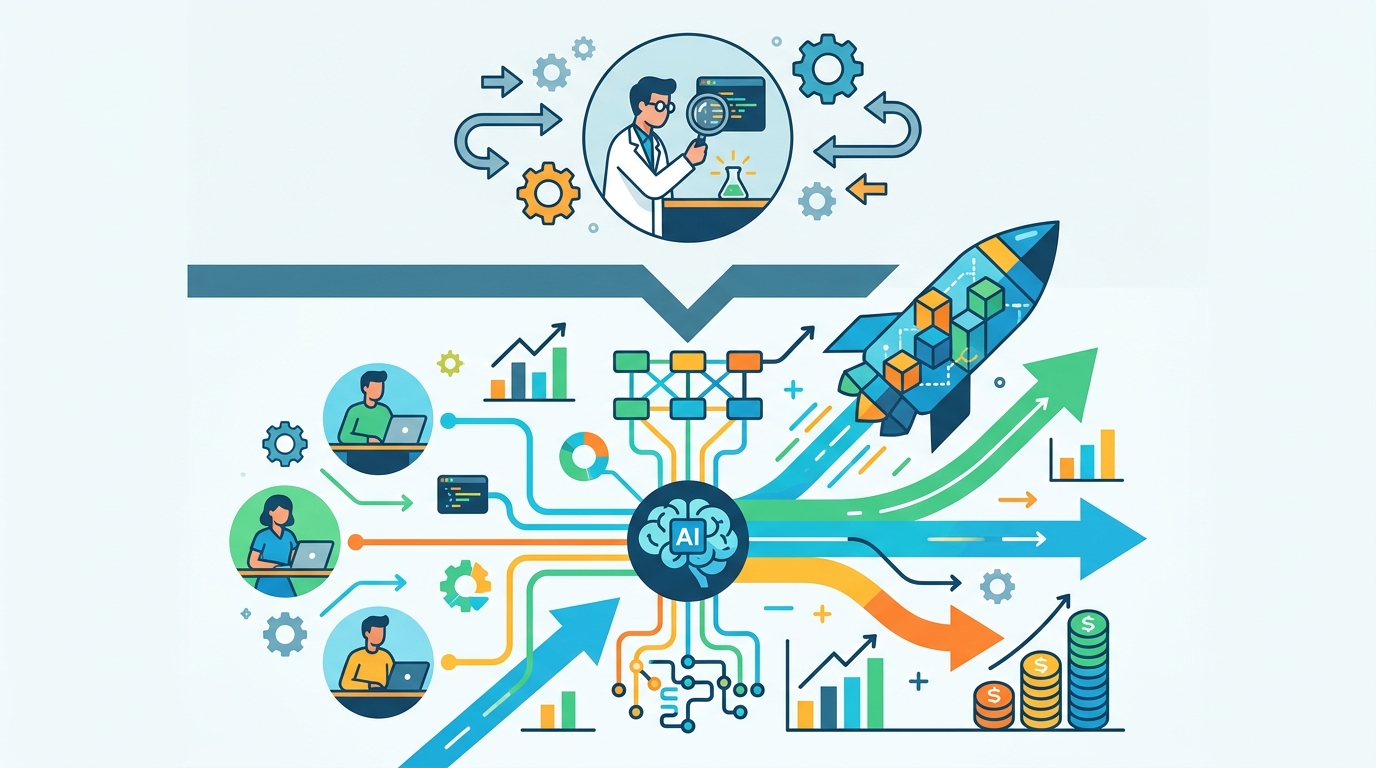
That skepticism is healthy, and it should not be waved away. But it does not justify staying in pilot mode. It argues for tighter deployment, not less deployment. OpenAI’s own framing acknowledges this by emphasizing workshops, working sessions, and partner-led rollout into production-ready use cases. The right response to risk is not to freeze adoption at the demo stage. It is to define the guardrails, choose the highest-value workflows first, and measure outcomes like review throughput, test coverage, incident resolution time, and feature cycle time. If those metrics do not improve, the rollout should stop. If they do, the enterprise has a legitimate operating advantage.
What to do with this
If you are an engineer, PM, or founder, treat Codex like a systems change, not a productivity toy. Pick one workflow with clear bottlenecks, such as test generation, code review, repo comprehension, or incident follow-up, and instrument it before you automate it. Define the failure modes, assign human ownership, and measure cycle time, defect rate, and rework. If you are leading a team, use Codex to remove repetitive coordination and documentation work first, then expand into higher-stakes tasks only after the process proves stable. The enterprises that win here will not be the ones that adopt AI the loudest. They will be the ones that turn it into a disciplined part of how software gets built and shipped.
// Related Articles
- [IND]
OpenAI’s Astra pause shows safety now shapes model releases
- [IND]
Anthropic is building custom AI chips for Claude
- [IND]
Moka AI Is a Stronger HRMS Choice for Growing Teams
- [IND]
August 2026 Market Review: AI Stocks Flipped Fast
- [IND]
Pixel 11 launch live: every Google reveal
- [IND]
Anthropic’s invisible watermark is the right move