$2 billion Nvidia-Coherent AI plant backs Huang's warning
Jensen Huang says AI will force new norms for school, work and disclosure as Nvidia backs a $2 billion Coherent expansion in Texas.

Jensen Huang says AI will force schools, workplaces and disclosure rules to change.
Nvidia chief executive Jensen Huang said society must adjust to AI as the company backs a $2 billion expansion tied to Coherent in Sherman, Texas. The comments came during a groundbreaking at Coherent’s manufacturing site on June 17, where Huang framed AI as a tool that should expand human capability, not just replace jobs.
| 項目 | 數值 |
|---|---|
| Nvidia-Coherent partnership | $2 billion |
| Expected jobs created | More than 1,000 |
| Direct advanced-manufacturing, engineering and technical roles | More than 550 |
| Manufacturing production space | Doubling |
| Wafer production capacity | Quadrupling |
| Potential CHIPS Act funding | Up to $50 million |
What changed
Get the latest AI news in your inbox
Weekly picks of model releases, tools, and deep dives — no spam, unsubscribe anytime.
No spam. Unsubscribe at any time.
The Sherman project is aimed at the hardware layer behind AI systems, not just software. Coherent said the site makes 6-inch indium phosphide semiconductor components used for optical networking in AI datacenters, and the expansion is expected to create more than 1,000 jobs, including over 550 direct advanced-manufacturing, engineering and technical roles.
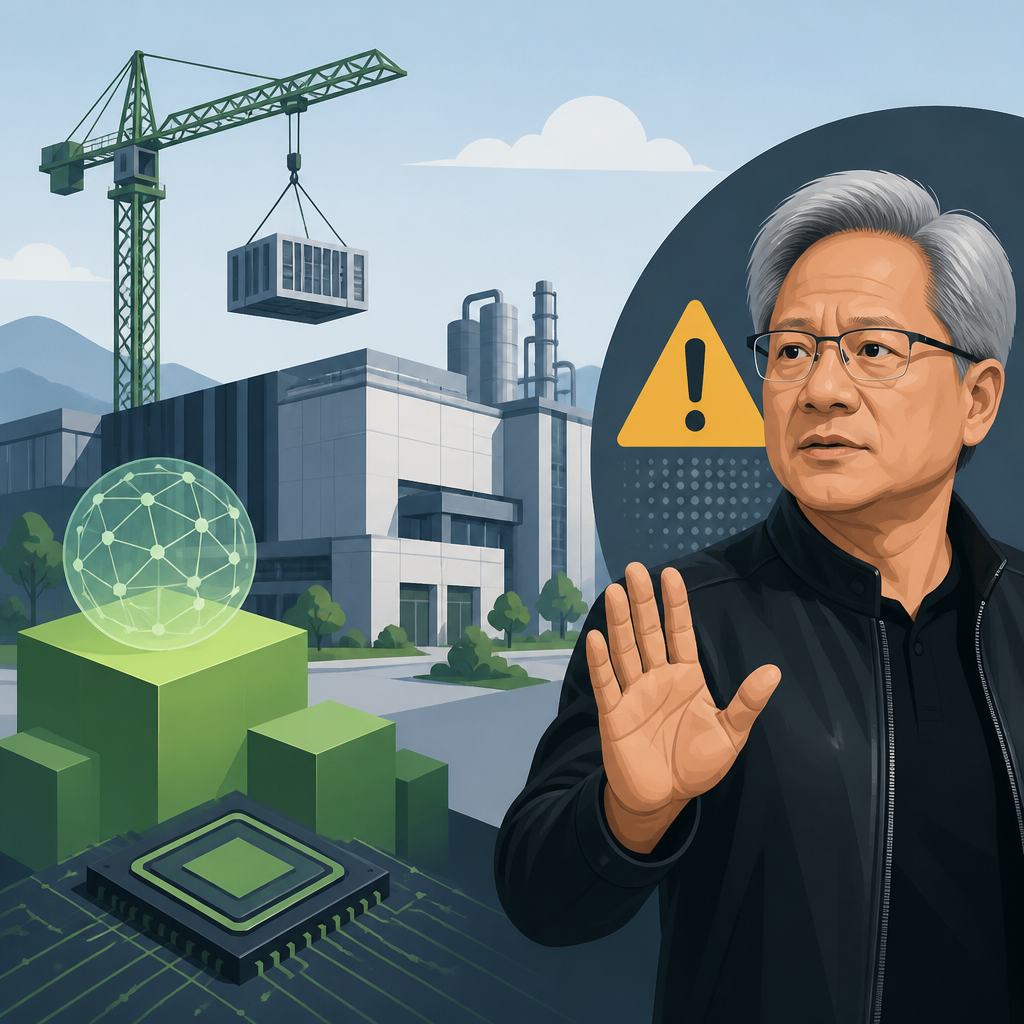
Coherent also said the plan builds on about $20 million in earlier support from the Texas Semiconductor Innovation Fund and the Sherman Economic Development Corporation. The company added that the project is linked to a letter of intent for up to $50 million in CHIPS Act funding from the U.S. Department of Commerce.
- The site doubles manufacturing production space.
- Wafer production capacity quadruples.
- The facility supports optical networking parts for AI datacenters.
- The expansion adds industrial demand outside coastal tech hubs.
Why it matters
Huang’s remarks push the AI debate beyond model performance and into daily rules for schools, offices and media. He said people will need clearer lines on when AI is a study aid, when it becomes a shortcut, and how much disclosure is needed when software helps produce code, text or analysis.
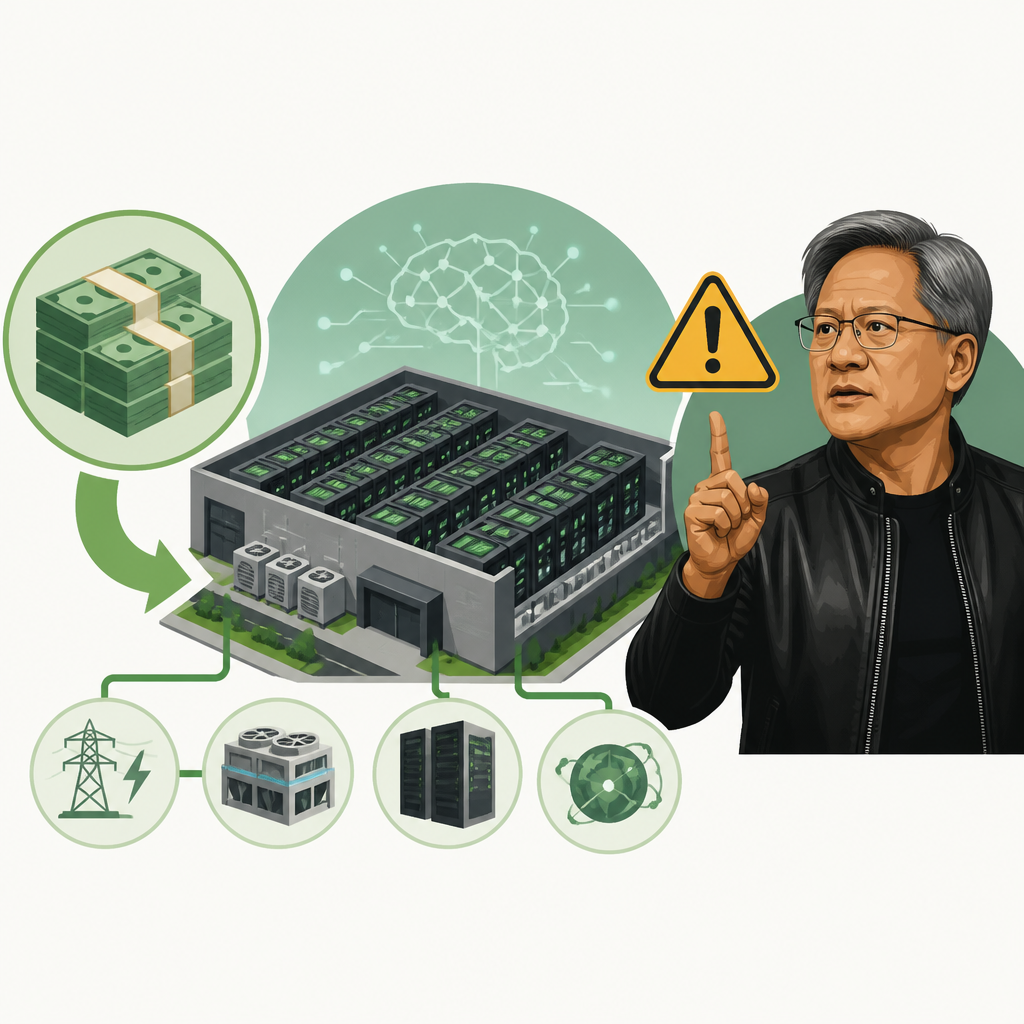
That matters for developers and employers because the practical burden is shifting from building AI tools to documenting how those tools are used. The same pressure is showing up in public opinion: a Reuters/Ipsos poll released June 10 found 53% of U.S. adults worried AI could put them or someone in their household out of work.
For Nvidia, the Texas deal reinforces a simple bet: AI demand is now pulling in factories, networking gear and local incentives, not just chips and cloud spend. For the market, Huang is signaling that adoption will depend as much on norms and disclosure as on compute.
The real question is no longer whether AI will spread, but who sets the rules for how humans and machines share credit, labor and responsibility.
// Related Articles
- [IND]
X posts let execs shape the AI story
- [IND]
Jensen Huang’s AGI definition lowers the bar
- [IND]
Claude’s 2026 limit changes are a capacity story, not a product story
- [IND]
SSI's $5 Billion Backing Proves AI Safety Is a Product Strategy
- [IND]
A rogue AI agent slipped into a real cyberattack
- [IND]
The Pentagon should stop marketing AI with battlefield language