5 takeaways from Alphabet’s $80B AI funding plan
5 takeaways explain how Alphabet’s $80 billion stock plan will fund AI compute, shape capex, and signal demand.

Alphabet plans to raise $80 billion to expand the AI infrastructure behind Google’s products.
Alphabet’s plan to raise $80 billion in stock sales gives readers a fast read on how the company is funding its AI push, why demand is forcing the move, and what it could mean for capex, financing, and investors. One key figure: Alphabet raised its 2026 capital expenditure outlook to as much as $190 billion.
| Item | Amount | Timing / Notes |
|---|---|---|
| Alphabet stock sales | $80 billion | Includes private placement, underwritten offerings, and at-the-market sales |
| Berkshire Hathaway investment | $10 billion | Part of the total raise |
| 2026 capex outlook | $180 billion to $190 billion | Raised in April |
| Prior global bond issuance | More than $30 billion | Issued in February |
| Prior bond sale | $25 billion | Completed in November |
1. Alphabet is funding AI compute at scale
Get the latest AI news in your inbox
Weekly picks of model releases, tools, and deep dives — no spam, unsubscribe anytime.
No spam. Unsubscribe at any time.
The company said the proceeds will go toward its AI compute infrastructure, which is the backbone for training and running models across Search, cloud, ads, and consumer tools. Alphabet says demand for AI products is already running above available supply, so the company is trying to widen capacity before the bottleneck gets worse.

That matters because AI growth is no longer just a product story. It is also a power, land, chips, and data center story. Alphabet’s move shows how much cash and capital planning now sit behind every major AI feature launch.
- Primary use: compute infrastructure
- Pressure points: power, land, supply chain
- Business goal: meet enterprise and consumer demand
2. The raise mixes several financing channels
Alphabet is not relying on one mechanism. The plan includes a $10 billion Berkshire Hathaway investment, $30 billion in underwritten offerings, and another $40 billion from an at-the-market program. The blend gives the company flexibility on timing and pricing while spreading the financing load across different investor groups.
Goldman Sachs, JPMorgan Chase, and Morgan Stanley are involved in the underwritten pieces, which signals a large, coordinated capital raise rather than a one-off transaction. For readers tracking corporate finance, this is a useful template for how a giant tech company can fund growth without pausing operations.
- $10 billion private placement from Berkshire Hathaway
- $15 billion in mandatory convertible preferred stock
- $40 billion via at-the-market sales of Class A and Class C shares
3. The spending level keeps climbing
Alphabet lifted its 2026 capex outlook to $180 billion to $190 billion, up from a prior range of $175 billion to $185 billion. That is an unusually high spend level even for a megacap company, and it places Alphabet among the biggest AI infrastructure investors in the market.
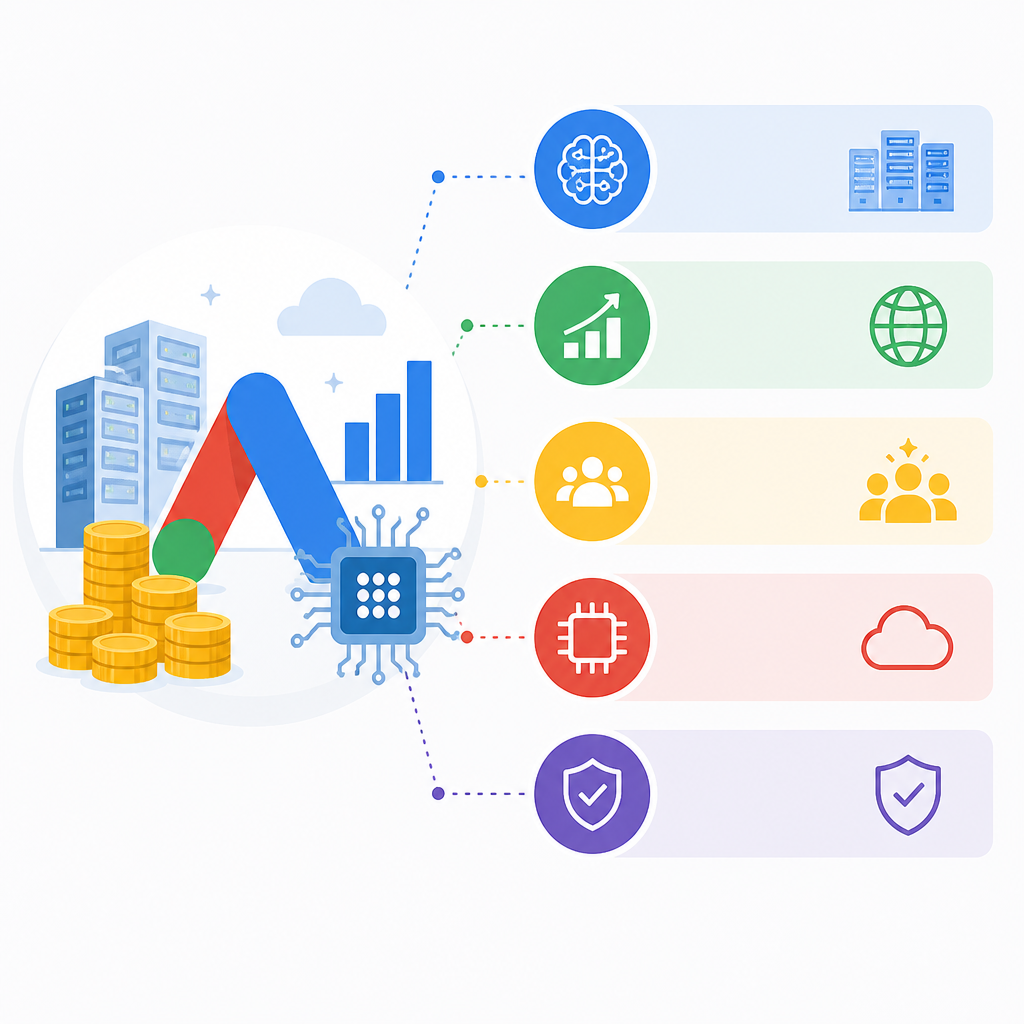
The broader backdrop is a race among hyperscalers. Alphabet, Microsoft, Meta, and Amazon are expected to spend more than $700 billion combined this year on capex. Wall Street analysts think total AI capex could top $1 trillion in 2027, which shows how quickly the cost of staying competitive is rising.
4. Berkshire’s stake adds a notable vote of confidence
Berkshire Hathaway has been building its Alphabet position since the third quarter of last year, and the company’s stake was worth about $20 billion before this announcement. That makes Alphabet one of Berkshire’s top holdings and gives the raise an extra layer of market signal beyond the capital itself.
The investment is also notable because Berkshire’s technology bets have historically been selective. Its earlier $4.3 billion Alphabet position in November was already a meaningful move, and this $10 billion commitment deepens that exposure at a time when Alphabet is pushing harder into AI.
- Prior Berkshire Alphabet stake: about $20 billion
- Earlier disclosed bet: $4.3 billion in November
- Largest Berkshire holding: Apple
5. Investors are watching returns as much as spending
Alphabet’s stock has more than doubled over the past year, helped by investor approval of its AI investments and the gains tied to Gemini upgrades. That means the market is not just penalizing spending; it is also rewarding signs that the spending is translating into product momentum and revenue potential.
Still, the stock slipped in extended trading after the announcement, which suggests investors are weighing dilution, higher capital intensity, and the scale of the AI bill against the company’s growth outlook. For shareholders, the key question is whether the spending pace leads to durable gains in usage, cloud demand, and ad performance.
How to decide what matters most
If you track AI infrastructure, the biggest signal here is the size of the capital plan and the mix of financing tools. If you follow Alphabet as a stock, the key issue is whether rising capex keeps paying off in product strength and earnings growth. If you watch Berkshire, the story is about a large tech bet getting even larger.
For most readers, the simplest takeaway is this: Alphabet is spending aggressively because demand is already outpacing supply, and it is using multiple funding channels to keep building while the AI race accelerates.
// Related Articles
- [IND]
Vector databases will reshape financial search, not replace core syst…
- [IND]
Milvus 3.0 adds lake-native vector search
- [IND]
Google’s Q2 2026 results prove AI spend is now the story
- [IND]
AI regulation in India is now a business risk
- [IND]
Europe should standardise the AI Act through harmonised technical rul…
- [IND]
AMD and Anthropic’s 2GW deal reshapes AI supply