AI bootlegs are already draining streaming royalties
5 ways Stick Figure’s fake hit shows how AI bootlegs can spread, earn royalties, and slip past streaming checks.
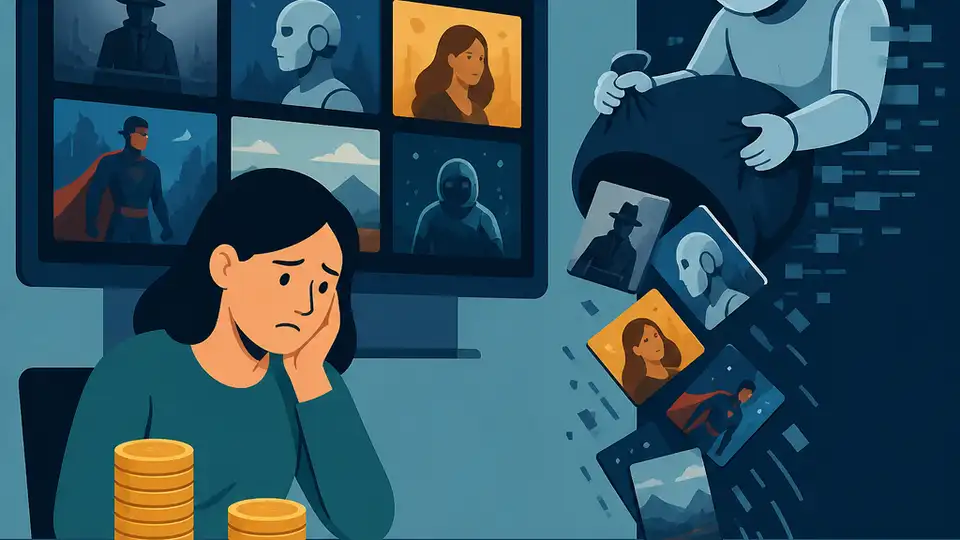
Stick Figure’s fake hit shows how AI bootlegs can spread and drain royalties on streaming platforms.
Stick Figure’s fight over “Run Run River” shows how fast AI-edited songs can spread: Deezer says 75,000 AI tracks are uploaded every day, and 85% of those it flags are fraudulent.
| Item | What happened | Why it matters |
|---|---|---|
| Run Run River | AI-tweaked clone of “Angels Above Me” | Shows how fake edits can go viral without credit |
| Deezer | 75,000 AI tracks/day; 44% of uploads | Signals scale of the upload flood |
| Spotify | 75 million spam AI songs removed | Shows enforcement is already a major task |
| Michael Smith case | $8 million in fake streaming royalties | Proves the fraud can be profitable |
1. The fake hit that made the problem visible
Get the latest AI news in your inbox
Weekly picks of model releases, tools, and deep dives — no spam, unsubscribe anytime.
No spam. Unsubscribe at any time.
“Run Run River” looked like a breakout track, but it was an AI-manipulated version of Stick Figure’s 2019 song “Angels Above Me.” The edit sped up the track, changed the lead vocal, and added a dance-style kick drum, then spread across streaming and social platforms without crediting the band.
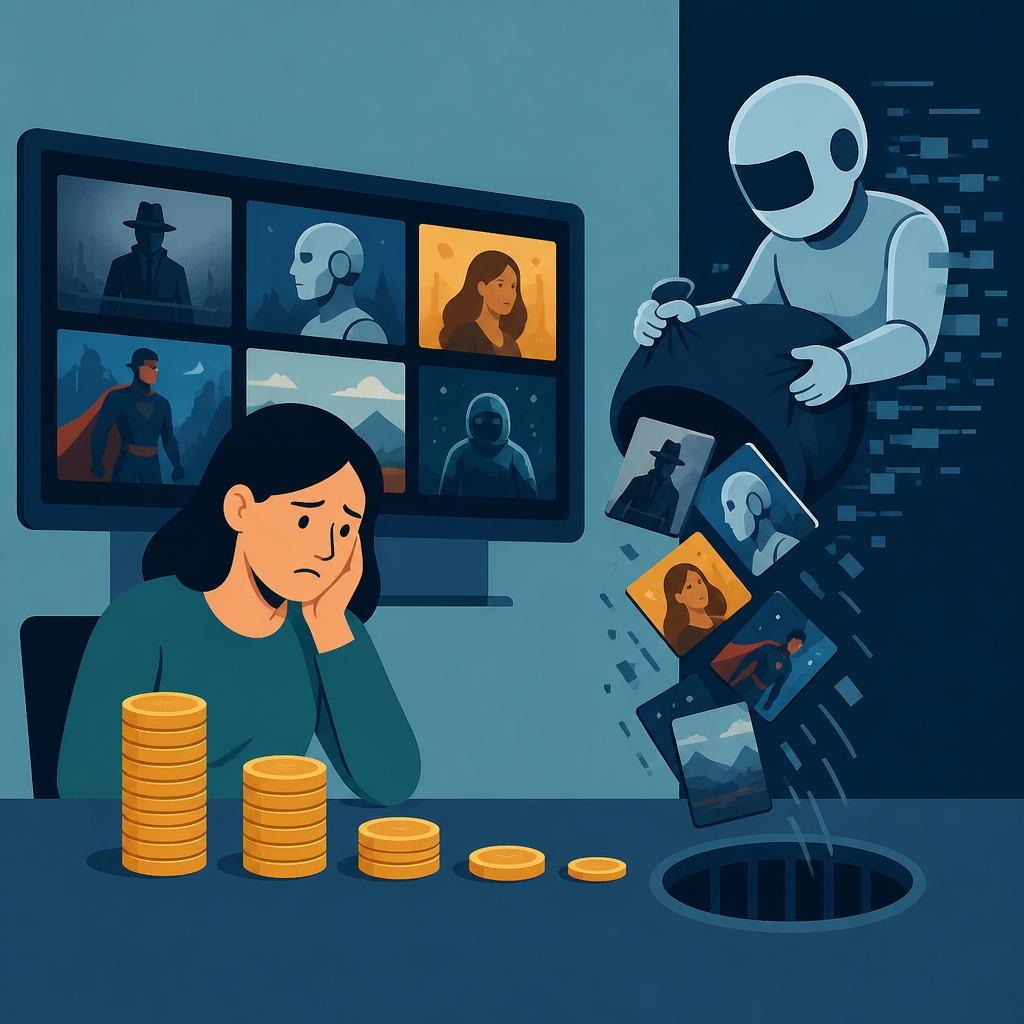
The twist is that the fake version worked. It hit No. 2 on Shazam and pulled in tens of millions of plays, which is exactly why this story matters to the music business: a convincing clone can attract real listeners, real attention, and real money before anyone catches it.
- Original song: “Angels Above Me”
- Fake title: “Run Run River”
- Discovery signal: No. 2 on Shazam
- Outcome: viral traction without authorization
2. The upload flood is already here
The Stick Figure case is not an isolated oddity. It sits inside a much larger stream of AI-made music flooding services like YouTube, Spotify, and social apps. Deezer estimated in April that 75,000 AI-created tracks are uploaded every day, and that they make up 44% of all music added to its platform.
That volume changes the economics of moderation. Platforms are no longer dealing with one bad upload at a time. They are trying to sort legitimate fan activity from mass-produced spam, while bad actors keep re-uploading altered versions with tiny changes meant to dodge detection.
- Upload source tools: Suno, Udio
- Distribution routes: Tunecore, DistroKid
- Deezer estimate: 75,000 AI tracks a day
- Share of uploads: 44%
3. The money trail is real
What makes these bootlegs more than a nuisance is the payout. Spotify said it removed 75 million spam AI songs from its service, and federal prosecutors say the fraud can scale into millions of dollars. In one March case, Michael Smith of North Carolina pleaded guilty to wire fraud after building more than a thousand accounts to stream 100,000 AI-generated tracks and collect $8 million in royalties.
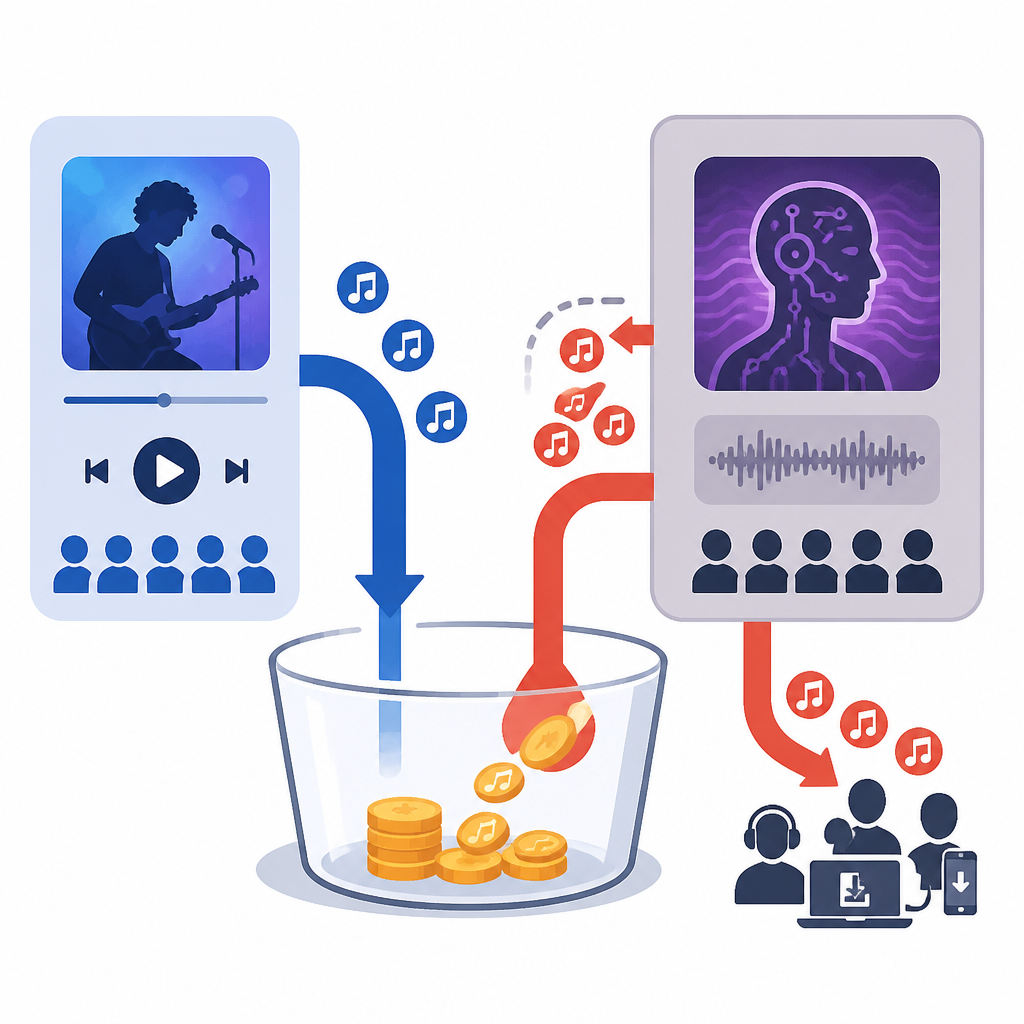
That case matters because it shows the incentive structure in plain terms. If a fake song can earn even a tiny payout at enormous scale, the model becomes attractive to scammers who treat music platforms like automated cash machines.
Fraud pattern:
1. Generate many tracks with AI
2. Upload them through distribution services
3. Automate streams through fake accounts
4. Collect royalties before detection
4. The guardrails are weak and the rules are blurry
Stick Figure’s managers had to push distributors and streaming services to treat “Run Run River” as fraud rather than a cover or remix. That distinction matters, because a cover is a legal interpretation of a song, while an AI clone made without permission is a copied work dressed up as something new.
Thomas Cussins of Ineffable Music said the track was built to bypass “very weak guardrails” in AI tools. That is the core policy problem for streaming: the systems are being asked to distinguish between fan edits, parody, licensed remixing, and theft, often after the upload has already spread.
- Legit category: cover song
- Disputed category: unauthorized AI clone
- Problem: weak detection and unclear attribution
- Result: takedown work happens after virality
5. Artists are losing control of meaning, not just money
For Scott Woodruff, the issue was not only lost royalties. “Angels Above Me” had emotional weight for the band and for listeners who connected it to grief and healing, so seeing it mangled and re-released as a fake dance track felt like a theft of meaning as much as a theft of income.
That emotional damage is easy to miss when the conversation stays focused on platform policy. But for artists, a song is not just an asset file. It is memory, authorship, and identity, and AI bootlegs can strip away all three while still looking popular on the surface.
- Artist concern: reputation
- Artist concern: lost royalties
- Artist concern: loss of context
- Listener effect: confusion over what is official
How to decide
If you want the clearest example of what AI bootlegs mean for streaming, start with Stick Figure. It combines every pressure point in one case: viral reach, missing credit, royalty theft, and a platform system that struggled to keep up.
If you are an artist or label, the takeaway is to watch attribution and distribution pipelines more closely. If you are a listener, the practical move is to check whether a suspiciously familiar track is actually official before sharing it. The future of streaming may not be one giant AI takeover, but a steady fight over who gets credited when software can fake a hit fast.
// Related Articles
- [IND]
Korea’s Nvidia talks point to an AI factory push
- [IND]
OpenAI should not rush its IPO just to win the AI race
- [IND]
OpenAI updates its Europe privacy policy
- [IND]
OpenAI is right to keep ads out of sensitive chats
- [IND]
AMD and Microsoft push Windows ML on GPU and NPU
- [IND]
OpenAI’s IPO filing turns hype into scrutiny