AMD and Microsoft push Windows ML on GPU and NPU
AMD and Microsoft are tightening Windows ML support with DxCGC graph compilation, GPU execution, and better NPU tooling.

AMD and Microsoft are expanding Windows ML acceleration across GPU and NPU paths.
AMD’s latest Microsoft Build 2026 update is about plumbing, not hype. The company says its work spans the Windows AI stack and Microsoft’s new DirectX Compute Graph Compiler, with the goal of moving full model graphs into the DirectX pipeline for execution on AMD hardware.
That matters because the compiler is meant to do more than pass tensors around. It uses MLIR-based representations to optimize graphs, plan memory, fuse operators, and send work to the GPU, while AMD’s NPU work focuses on inference performance, developer tools, benchmarking, and web integration.
| Area | What AMD says is improving | Why it matters |
|---|---|---|
| DirectX Compute Graph Compiler | MLIR-based full-graph compilation | Lets more of the model be optimized before execution |
| GPU path | Graph optimization, memory planning, operator fusion | Can reduce overhead and improve throughput on AMD GPUs |
| NPU path | Inference performance, tooling, benchmarking, web support | Makes on-device AI easier to build and measure |
DxCGC is the real story here
Get the latest AI news in your inbox
Weekly picks of model releases, tools, and deep dives — no spam, unsubscribe anytime.
No spam. Unsubscribe at any time.
The biggest technical shift in this update is Microsoft’s DirectX Compute Graph Compiler, often shortened to DxCGC. Instead of treating AI workloads as isolated operators, it brings full model graphs into the DirectX pipeline. That gives the compiler room to make decisions about graph layout, memory movement, and operator fusion before execution starts.

For developers, that is a practical change. AI inference on Windows has often meant juggling multiple layers of abstraction, each with its own constraints. A graph compiler can reduce some of that friction by making the runtime smarter about how it schedules work on the GPU.
AMD’s role is straightforward: get its hardware working well with this compiler path. The company says the pipeline uses MLIR-based representations, which is a strong signal that Microsoft wants a compiler stack that can reason about models at a higher level than hand-tuned kernels alone.
That approach also fits the direction the industry has been moving in for years. The more the compiler understands the model, the more room it has to optimize around bottlenecks that would otherwise be hidden until runtime.
- Full model graphs move into the DirectX pipeline
- Compiler passes handle graph optimization and memory planning
- Operator fusion can reduce extra work between layers
- GPU execution happens on AMD hardware through the DirectX path
The NPU side is about developer experience
AMD’s second focus is the NPU path, where the company says the newest work improves inference performance, developer tooling, benchmarking, and web platform integration. That is a broad list, but it makes sense. NPUs are only useful if developers can measure them, target them, and get predictable results across devices.
One reason this matters is that NPU support on Windows has often felt fragmented. If a model runs well on one machine but needs extra tuning on another, adoption slows down fast. Better tooling and benchmarking help developers see where the bottlenecks are before shipping code to users.
“The Windows platform is becoming the place where developers can build AI experiences that run locally, efficiently and privately,” said Pavan Davuluri, Microsoft corporate vice president of Windows and Devices, in Microsoft’s Build 2024 keynote.
That quote is from Microsoft’s own Build stage, and it lines up with the direction here. Local AI on Windows only works when the GPU, NPU, and compiler stack all speak the same language well enough to keep latency down and portability up.
AMD’s update suggests the company is trying to make that language less painful to use. The emphasis on web platform integration is especially interesting, because browser-based AI and on-device AI are starting to overlap more than they used to.
Why this matters for AMD hardware
AMD has been trying to make its Windows AI story more coherent across Ryzen, Radeon, and its broader software stack. This Build update helps because it ties the company’s hardware story to Microsoft’s compiler work instead of leaving developers to piece together support on their own.
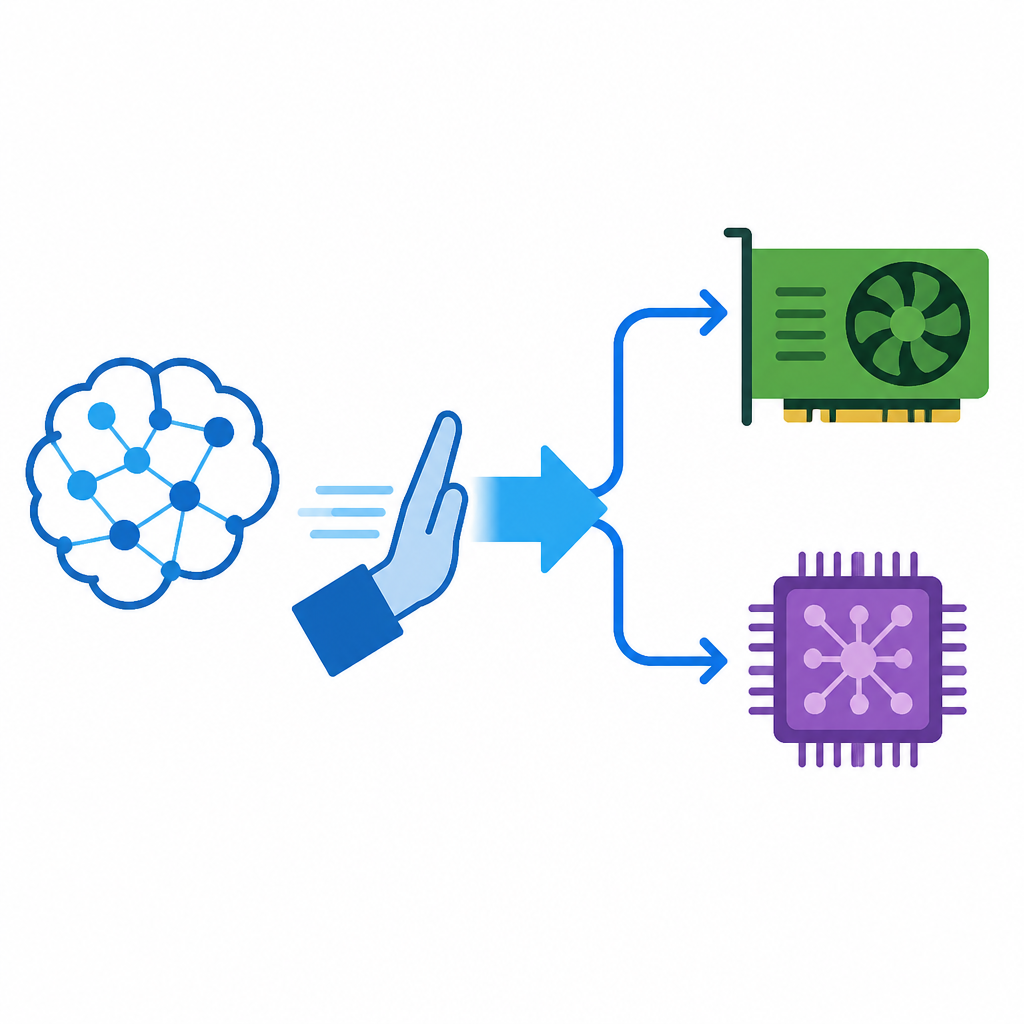
If you are building for Windows, the comparison is simple: a GPU path gives you more raw parallel compute, while an NPU path can offer better efficiency for supported workloads. The compiler layer sits above both and decides how much of the model can be shaped for the target device.
- AMD Ryzen AI targets client devices with local AI acceleration
- AMD Radeon covers GPU acceleration for heavier workloads
- Windows is becoming the common runtime layer for both paths
- Windows ML is the abstraction developers will care about most
The practical question is whether this actually reduces the amount of device-specific tuning developers need to do. If DxCGC can reliably optimize graphs across AMD GPUs and NPUs, Windows ML gets a lot easier to ship against.
That would also help AMD compete on more than just silicon. In AI PC markets, software support now matters almost as much as peak TOPS, because buyers want models that run well without a week of porting work.
What developers should watch next
The next thing to watch is whether Microsoft expands DxCGC coverage beyond a narrow set of model shapes and operators. Compiler stacks become useful when they handle enough real workloads to matter in production, not when they only look good in demos.
Developers should also watch for benchmark transparency. If AMD and Microsoft publish clearer before-and-after numbers for graph compilation, NPU inference, and web integration, it will be easier to judge whether this is a meaningful step or just another platform announcement.
For now, the direction is clear: Windows AI is moving toward a compiler-centric model, and AMD wants its hardware to benefit from that shift on both GPU and NPU paths. If Microsoft keeps widening DxCGC support, the next big question is simple: which common model families will run faster with less code change on AMD-powered Windows PCs?
// Related Articles
- [IND]
Invisible AI watermarks are the right move for Claude
- [IND]
pgvector is enough for small datasets, not your default
- [IND]
OpenAI’s Astra pause shows safety now shapes model releases
- [IND]
Anthropic is building custom AI chips for Claude
- [IND]
Moka AI Is a Stronger HRMS Choice for Growing Teams
- [IND]
August 2026 Market Review: AI Stocks Flipped Fast