AI code review is beating human teammates
AI code review is turning style rules into consistent feedback, and tools like CodeRabbit are pushing teams to codify them.

AI code review is turning team style rules into consistent feedback on every pull request.
Code review has always depended on taste, attention, and whoever happened to be online that day. A new wave of AI tools is changing that by checking pull requests against written rules, spotting patterns humans miss, and applying the same standards every time.
The New Stack’s latest take on AI-assisted review centers on a simple idea: if a team can write down its preferences, software can enforce them better than a tired teammate can. That matters because the bottleneck in review is often consistency, not intelligence.
| Signal | What the article highlights | Why it matters |
|---|---|---|
| Tool example | CodeRabbit | Automates review comments from team rules |
| Style rules | Use early returns, prefer composition over inheritance, keep functions under 50 lines | Turns preferences into repeatable checks |
| Review model | AI-augmented pull request review | Reduces variance between reviewers |
Why teams are turning review into policy
Get the latest AI news in your inbox
Weekly picks of model releases, tools, and deep dives — no spam, unsubscribe anytime.
No spam. Unsubscribe at any time.
The core shift is cultural as much as technical. Instead of hoping every reviewer remembers the same house style, teams can encode those preferences once and let the tool apply them to every pull request.
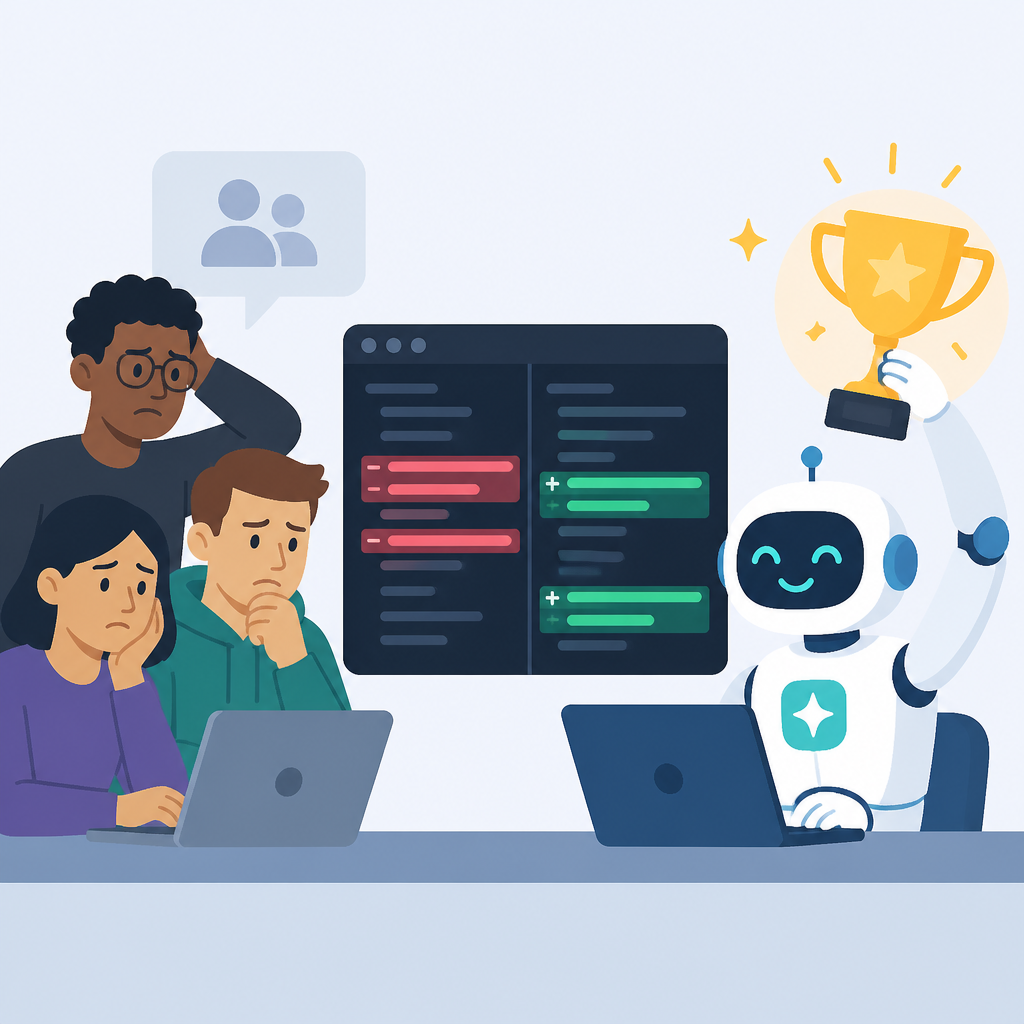
That is especially useful for conventions that are easy to forget during a busy sprint. A reviewer may miss a long function, tolerate a messy abstraction, or let a naming issue slide because the change is otherwise fine. AI review tools are built to catch that kind of drift.
The article points to rules like early returns, composition over inheritance, and function length limits because they are concrete, machine-checkable, and easy to debate in the open. Once a team agrees on them, the review system can enforce them with far less friction than a human reviewer repeating the same comments all week.
- Rules become explicit instead of tribal knowledge.
- Feedback arrives on every pull request, not only when a picky reviewer is available.
- Teams get a more uniform standard across projects and contributors.
What AI review does better than a sleepy human
AI does well at the boring part of review: scanning for repeated patterns, style violations, and policy mismatches. That does not mean it understands architecture the way a senior engineer does, but it can keep a team honest about the basics.
That distinction matters. Human reviewers are best when the question is about product intent, tradeoffs, and whether a change fits the system. AI review is best when the question is whether the code follows the rules everyone already agreed on.
The New Stack frames this as a reaction to the messiness of real teams, where review quality varies with load, mood, and familiarity with the codebase. AI does not get tired, and it does not skip the comment about a 120-line function because it wants to get to lunch.
"The next step in software development is not just writing code faster. It is making sure the code you write is correct." — Anthropic CEO Dario Amodei, in an Anthropic interview about AI coding assistants
That quote lands because it captures the same pressure behind AI code review. Teams are not just trying to ship more code. They are trying to stop low-value mistakes from entering the review queue in the first place.
The real comparison is consistency, not genius
The strongest argument for AI review is not that it is smarter than engineers. It is that it is more consistent than humans under normal working conditions. That is a different claim, and a more believable one.
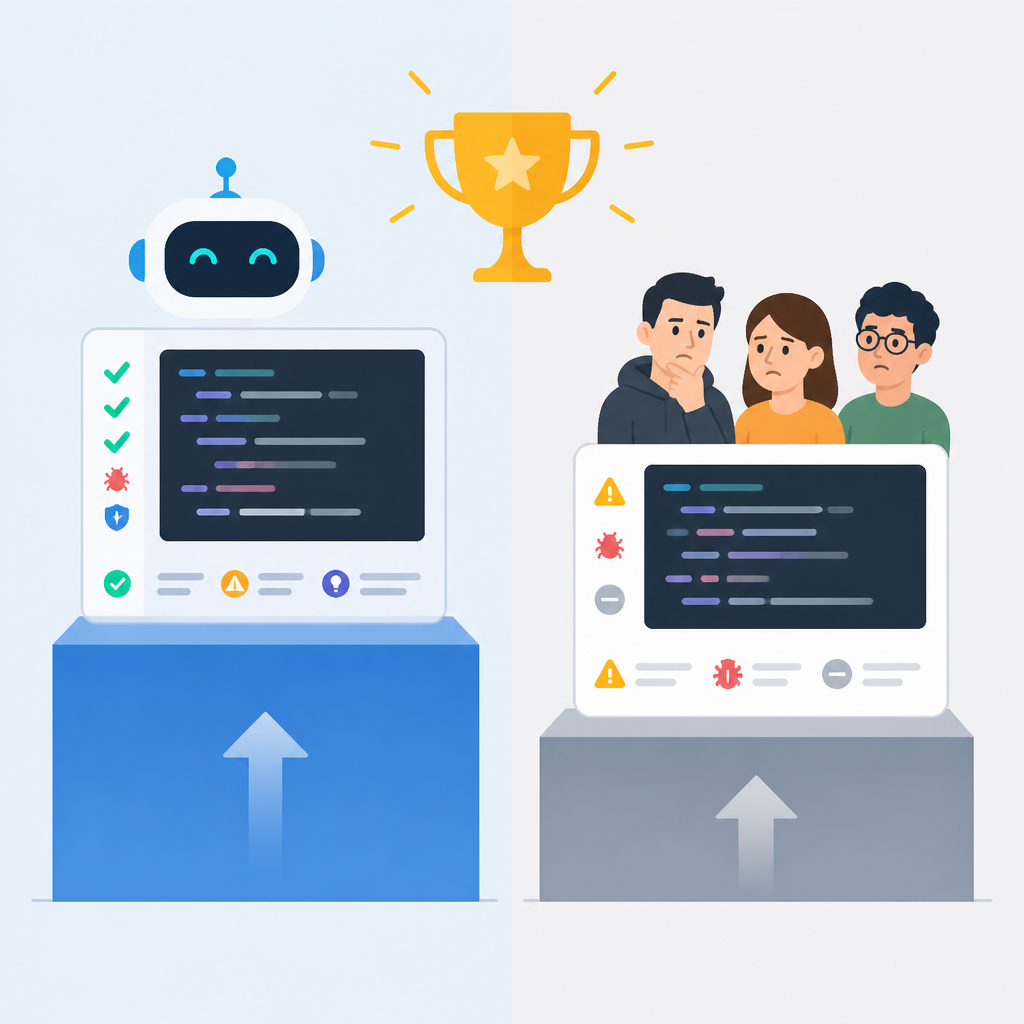
Think about the typical review cycle. One reviewer cares deeply about function size, another cares about naming, and a third only comments when something breaks tests. AI can keep all of those checks active at once, which makes the process feel less random.
That also changes how teams scale. A small group can get away with informal review habits because everyone knows everyone else’s preferences. A larger org cannot. Once the number of contributors grows, written rules and automated checks become cheaper than repeated debate.
- Humans are better at intent, tradeoffs, and architecture.
- AI is better at repetitive policy checks and style enforcement.
- Large teams benefit most because inconsistency costs more as contributor count rises.
There is also a subtle social effect here. When a tool points out the same issue every time, the team stops arguing about whether that issue matters. The rule either stays, gets changed, or gets removed. That is healthier than letting review comments depend on who happened to click approve.
What this means for developers using CodeRabbit and similar tools
CodeRabbit is the clearest example in the piece, but it is part of a wider move toward AI that sits inside the development workflow instead of outside it. These tools are most useful when they are configured with actual team policy, not generic advice.
That means the real work is still human. Teams have to decide what they care about, write it down, and keep the rules from becoming a junk drawer of contradictory preferences. If the rules are sloppy, the AI will be too.
For developers, the practical takeaway is simple: treat AI review like a strict junior reviewer with perfect memory. It can catch the obvious stuff, surface patterns early, and reduce review fatigue, but it still needs humans for judgment calls.
There is a good reason this story is landing now. As AI coding tools generate more code, review has to keep up. The teams that win here will be the ones that treat review as an enforced policy layer, not a polite conversation. The question is whether your team wants code review to depend on memory, or on rules that actually fire every time.
// Related Articles
- [TOOLS]
AWS Continuum turns AI coding into safer fixes
- [TOOLS]
Open-Generative-AI turns GitHub into a studio
- [TOOLS]
Why benchmark scores don’t predict your bill
- [TOOLS]
MCP Servers for Developers: 8 workflow gains in 2026
- [TOOLS]
Doubao turns a game prompt into a mini arcade
- [TOOLS]
Coding Plan turns Alibaba Cloud into IDE billing