3 AI papers on code, music, and diagnosis
A Zhihu roundup highlights three 2026.06.24 AI papers on code generation, real-time music, and rare-disease diagnosis.

A Zhihu roundup highlights three AI papers on code generation, real-time music, and rare-disease diagnosis.
On 2026.06.24, a Zhihu post on zhuanlan.zhihu.com collected several arXiv cs.AI papers, with three topics drawing the most attention: code generation beyond pure autoregression, streaming music generation, and a reasoning model aimed at rare-disease diagnosis.
| 項目 | 數值 |
|---|---|
| 发布日期 | 2026.06.24 |
| 平台 | 知乎专栏 |
| 重点论文数 | 3 |
| 主题覆盖 | 代码、音乐、医疗诊断 |
What changed
Get the latest AI news in your inbox
Weekly picks of model releases, tools, and deep dives — no spam, unsubscribe anytime.
No spam. Unsubscribe at any time.
The roundup points to a broader shift in AI research: teams are moving beyond next-token text generation and testing other sequence models for tasks where structure, timing, and long-range state matter more.
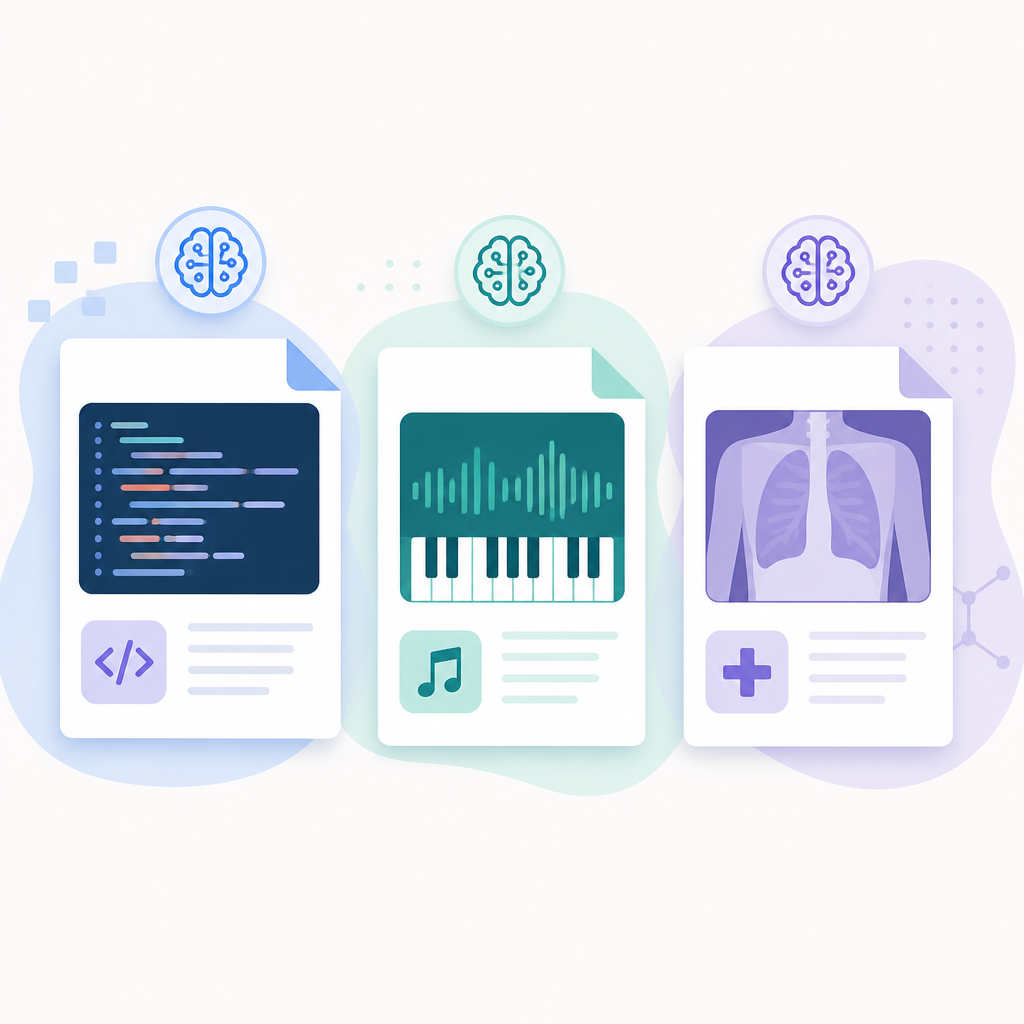
Three papers capture that shift:
- arXiv work on code explores diffusion models, world models, and state space models as alternatives to standard autoregressive coding systems.
- Another paper looks at real-time interactive music generation using data-free streaming consistency distillation, a setup built for low-latency output.
- A third study proposes a specialized reasoning large language model to speed up rare-disease diagnosis with AI physician assistance.
- Together, the papers span software, creative tools, and clinical decision support.
The code paper is especially notable for developers because it treats code as more than text completion. By comparing model families, it asks which architectures better handle planning, global constraints, and iterative edits in programming workflows.
Why it matters
For developers, the code research matters most because it could shape the next wave of coding assistants. If diffusion or state-space methods outperform pure autoregressive models on code, tool builders may get better long-context editing, more stable generation, and fewer brittle completions.
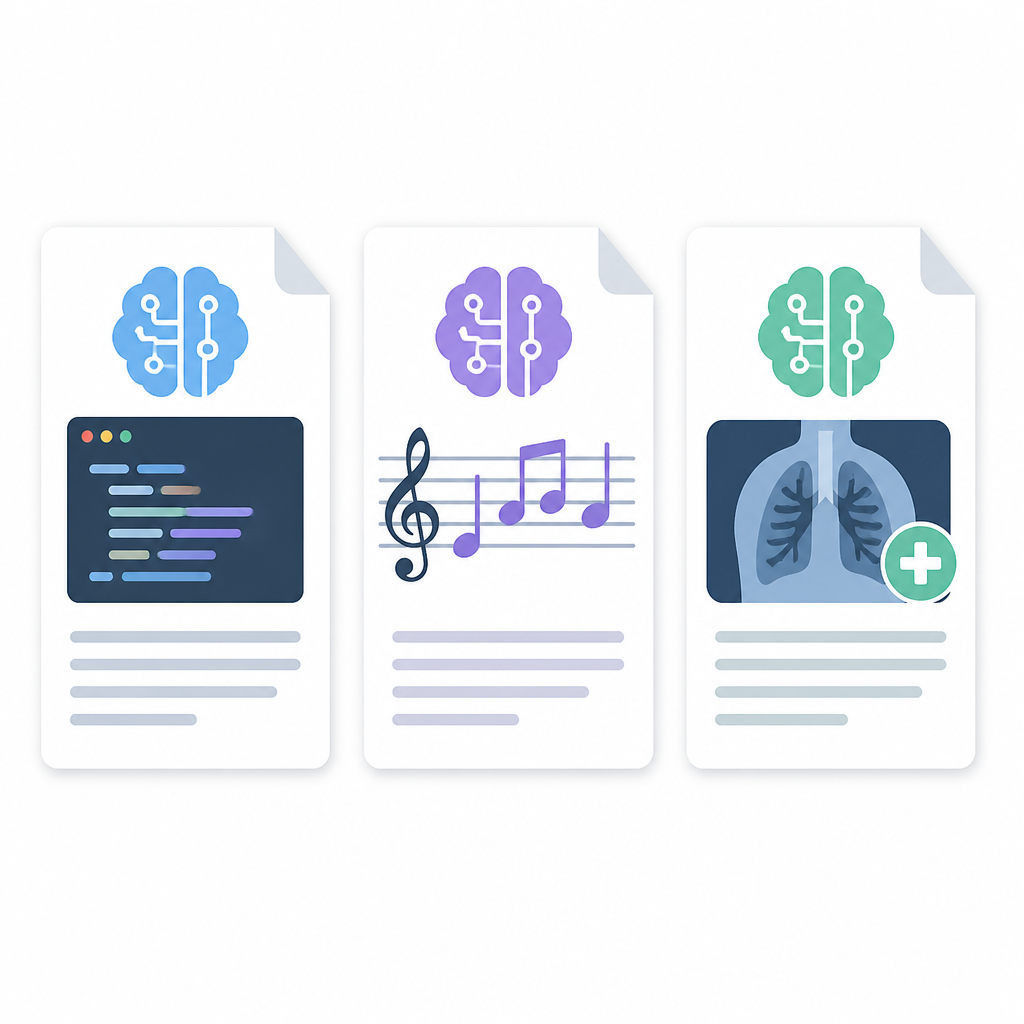
The music paper matters for product teams working on live creative tools, where latency is often the difference between a usable instrument and a demo. The medical paper matters on the market side: specialized reasoning models are moving into narrow, high-stakes domains where accuracy, speed, and workflow fit matter more than broad chat ability.
The common thread is specialization. These papers suggest AI progress is splitting into task-specific systems tuned for structure, speed, or expert reasoning rather than one model trying to do everything.
The open question is no longer whether large models can write text, but which architecture works best when the output has to be code, music, or a clinical recommendation.
// Related Articles
- [RSCH]
Rust should be a serious GPU programming language, not a side project
- [RSCH]
CoinRAG Reuses Fine-Grained KV Caches for RAG
- [RSCH]
CreativeInstruct teaches LLMs to stay creative
- [RSCH]
MirrorWorld makes mirror reflections consistent in video
- [RSCH]
Claude 4.5 proves AI progress is still accelerating
- [RSCH]
Mage-VL Cuts Visual Tokens by Reading Codecs