Anthropic’s chip move is a necessary break from GPU dependence
Anthropic should pursue a custom AI chip because control over compute now matters more than vendor convenience.

Anthropic’s chip effort is the right move because compute control now matters more than vendor convenience.
Anthropic beginning early work on a custom AI chip is not a vanity project; it is a direct response to the economics of frontier model training and inference, where the biggest constraint is no longer ideas but access to enough cheap, reliable compute.
Control over compute is now a strategic advantage
Get the latest AI news in your inbox
Weekly picks of model releases, tools, and deep dives — no spam, unsubscribe anytime.
No spam. Unsubscribe at any time.
Frontier labs live or die on their ability to secure accelerators, memory bandwidth, and networking at scale. When a company depends entirely on third-party GPUs, it inherits someone else’s roadmap, pricing, and allocation rules. That is fine when you are a normal software vendor. It is a liability when your product quality and release cadence are tied to the cheapest available FLOPs.

OpenAI has already pushed in this direction, and that precedent matters. The lesson is simple: if the model layer is becoming a long-term platform, then the compute layer cannot remain an afterthought. A custom chip does not need to beat Nvidia on day one to be valuable. It only needs to reduce cost per token, improve power efficiency, or give Anthropic leverage in supply negotiations.
The economics justify the engineering risk
Training and serving large models consume staggering amounts of capital. Even modest efficiency gains compound fast when multiplied across thousands of GPUs and billions of inference requests. A custom chip can target the exact bottlenecks Anthropic cares about, such as attention-heavy workloads, memory movement, or inference latency, instead of paying for general-purpose flexibility it may never use.
Samsung as a manufacturing partner also signals that this is not fantasy labware. It shows Anthropic is thinking in terms of real production capacity, not just a whiteboard design. The first version of a chip can be narrow, specialized, and imperfect. That still matters if it trims enough cost to widen margins or unlock more model usage without forcing constant fundraising.
Owning silicon changes bargaining power
The real prize is leverage. A company that can credibly say it has a custom path away from off-the-shelf GPUs is a better buyer, a better planner, and a harder customer to squeeze. That matters in a market where supply is tight and the best hardware is rationed by hyperscalers and chip vendors with their own priorities.
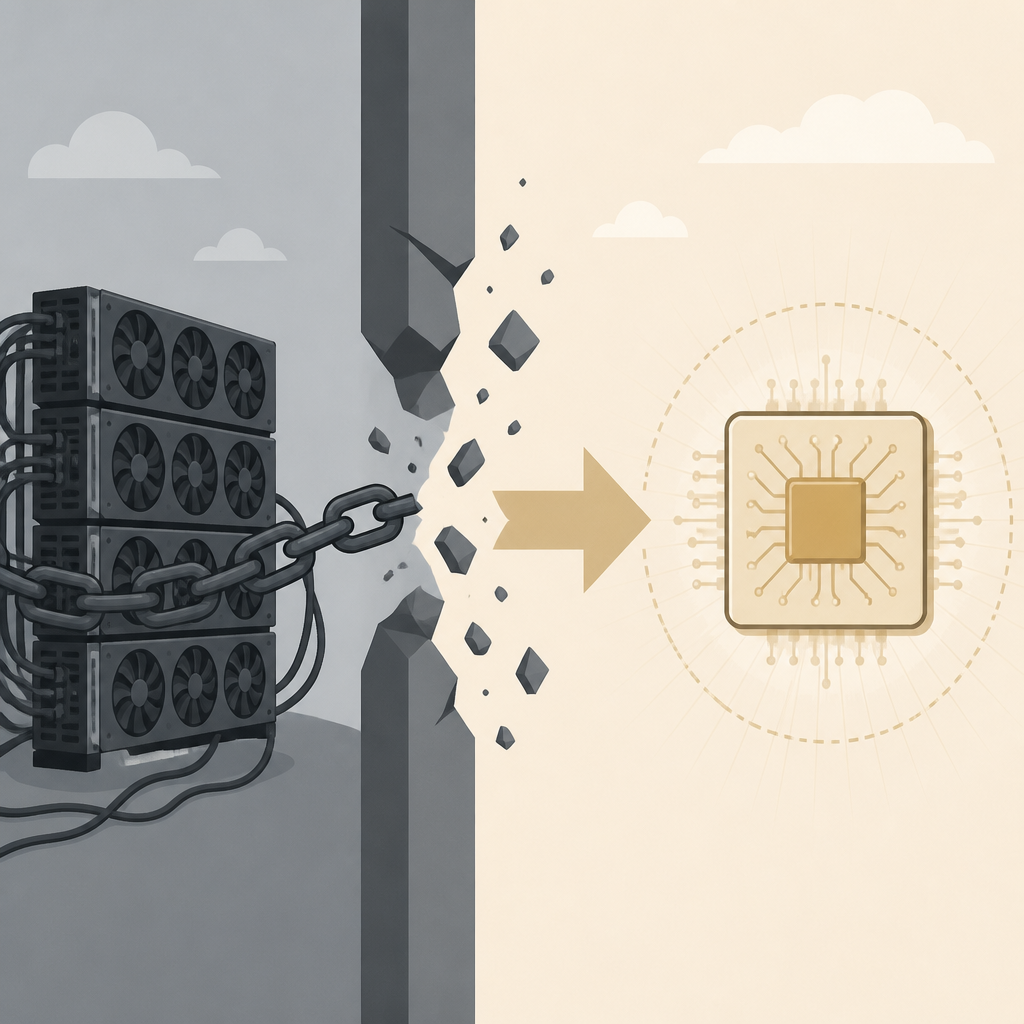
It also changes how Anthropic thinks about product strategy. If inference becomes cheaper and more predictable, the company can ship more ambitious features without treating every request as a direct hit to gross margin. The chip is not just a cost play. It is a way to make the business less fragile and the roadmap less hostage to external capacity shocks.
The counter-argument
The strongest objection is that Anthropic is a model company, not a semiconductor company. Chip design is brutally expensive, slow, and full of execution risk. Nvidia already dominates the ecosystem, and the software stack around its hardware is mature. A custom chip can easily become a distraction that burns cash, consumes leadership attention, and delivers little advantage if the design misses key workloads or arrives too late.
There is also a real opportunity cost. Every dollar and engineer sent toward silicon is a dollar and engineer not improving Claude, safety tooling, or developer products. If Anthropic’s core moat is model quality and trust, then a hardware side quest can look like self-inflicted complexity.
That criticism is valid, but it does not defeat the strategy. Anthropic does not need to replace GPUs wholesale to justify the effort. It needs a focused chip program that targets the highest-volume inference paths and the most expensive training bottlenecks. If the company keeps the scope narrow and treats the chip as a leverage tool rather than a moonshot, the risk is manageable and the upside is structural.
What to do with this
If you are a founder or PM, stop treating compute as a vendor decision and start treating it as a product decision. Map your cost drivers, identify the workloads that dominate spend, and ask whether your roadmap depends on hardware you do not control. If you are an engineer, optimize for portability now, because custom silicon only pays off when your systems can move across back ends without major rewrites. The lesson from Anthropic is blunt: in frontier AI, owning the bottleneck is becoming as important as owning the model.
// Related Articles
- [IND]
Anthropic cuts Claude price for California workers
- [IND]
Rust’s top-10 Tiobe jump changes language choices
- [IND]
Anthropic’s Mythos and Fable got pulled back
- [IND]
AWS’s 2026 story is OpenAI, chips, and layoffs
- [IND]
This GitHub repo publishes one AI deep dive a day
- [IND]
OpenAI’s 5% deal turns policy into equity