OpenAI’s 5% deal turns policy into equity
OpenAI’s reported 5% offer shows how frontier AI is becoming a strategic asset tied to government power.

OpenAI’s reported 5% offer shows how frontier AI is becoming a strategic asset tied to government power.
I've been watching AI companies talk about policy like it was just another compliance checkbox, and honestly, that framing has felt off for a while. The models get bigger, the contracts get stranger, and then suddenly the conversation is no longer about product quality or developer experience. It becomes about national interest, procurement, subsidies, export controls, and who gets to sit closest to the money.
This piece is based on a post on Zhihu that summarizes reporting about OpenAI and the Trump administration. The core claim is simple and weird in the best/worst way: OpenAI reportedly discussed giving the U.S. government or a U.S. sovereign wealth fund a 5% equity stake in exchange for policy support. I’m treating that as a reported proposal, not a done deal, because that’s the only honest way to talk about it.
Policy is no longer outside the cap table
Get the latest AI news in your inbox
Weekly picks of model releases, tools, and deep dives — no spam, unsubscribe anytime.
No spam. Unsubscribe at any time.
OpenAI and the Trump administration are in talks about offering the U.S. government or a sovereign wealth fund 5% equity, in exchange for policy support.
What this actually means is that policy is getting priced like ownership. That’s the part people keep skimming past. I’m used to companies lobbying for favorable rules, maybe funding research, maybe making a donation to a PAC if they’re feeling blunt about it. But equity is different. Equity says: you are not just a regulator, you are a stakeholder.
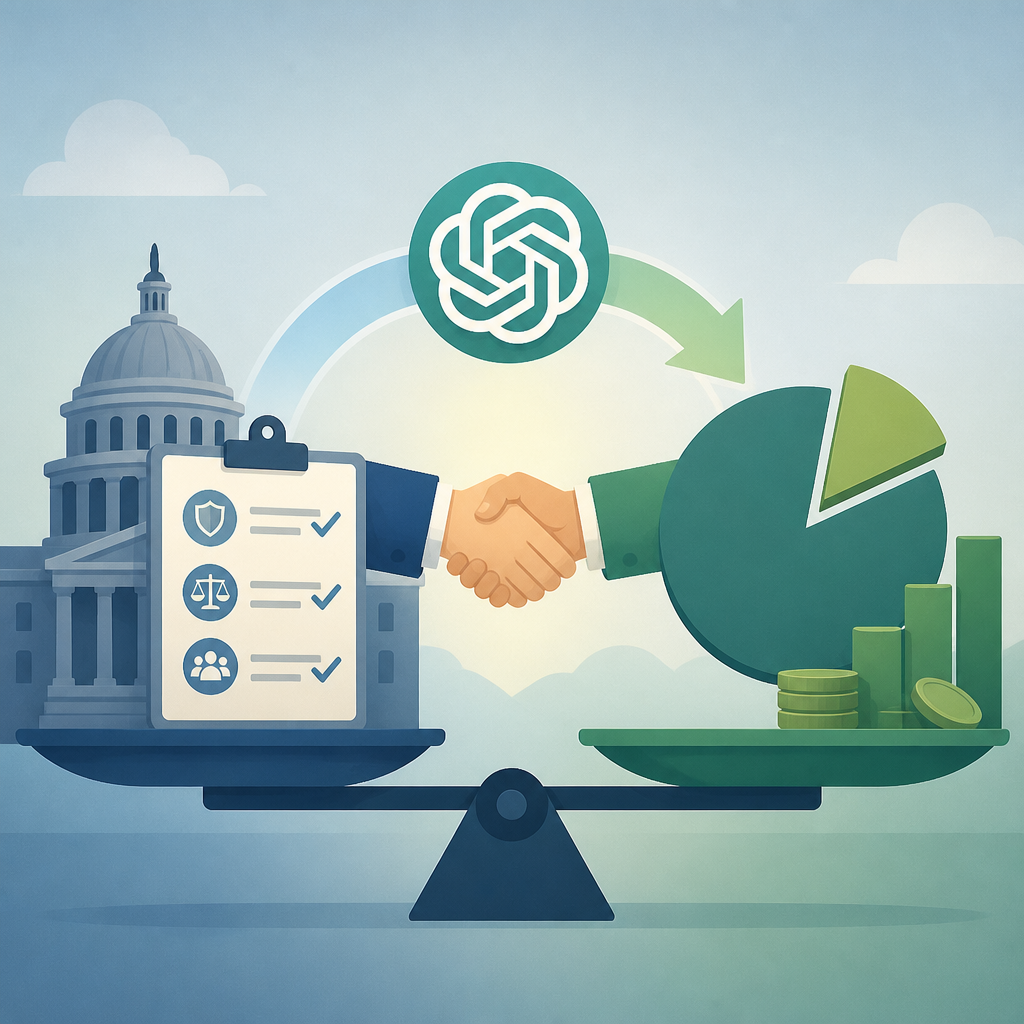
That shift matters because it changes incentives on both sides. If a government owns part of the upside, it may see the company less like a vendor and more like an asset to protect. If the company thinks it can trade shares for policy breathing room, then the line between public interest and private valuation gets muddy fast.
I ran into this same logic when working with enterprise AI procurement. The deal stopped being about latency and accuracy and started being about who could bless the deployment. Once the buyer has political weight, technical merit is only half the story. This OpenAI proposal pushes that dynamic all the way up to the national level.
How to apply it: stop treating regulation as something that happens after product design. If your AI system is likely to touch government, defense, healthcare, education, or infrastructure, assume the policy conversation will shape your business model early. Build a plan for that now. Who can approve you? Who can block you? Who benefits if you scale?
- Map the government bodies that can affect your product, not just the ones that can fine you.
- Track whether your business depends on subsidies, procurement, or export permissions.
- Write down which parts of your roadmap would change if policy became a source of revenue, not just risk.
Frontier AI is being treated like infrastructure, not software
The summary attached to the source makes the bigger point plainly: even if the deal never lands, it shows frontier AI is being treated as a strategic asset with public-infrastructure characteristics. That is not me being dramatic. That is exactly how these systems are starting to behave in practice.
Software used to be sold as a tool. AI at this level is being discussed more like electricity, telecom, or cloud capacity. You do not just buy it and move on. You negotiate access, reliability, jurisdiction, and political alignment. That is infrastructure thinking, and once a technology gets framed that way, the people around it change too.
I’ve seen this in cloud contracts where one vendor becomes so central that the buyer starts asking for exit rights, audit rights, and continuity guarantees. The product is still code, but the relationship is now strategic. OpenAI’s reported equity proposal suggests the same thing, only with a government instead of a procurement team.
If you’re building in AI, this should change how you write your internal docs. You should not describe the system only in terms of features. Describe the dependency graph. Who hosts it? Who funds it? Who can restrict it? Who gets blamed when it fails? That is the language infrastructure forces on you.
How to apply it: when you pitch or document your AI product, add one section called “public dependency.” Keep it blunt. List every external actor that can affect uptime, distribution, model access, or legal exposure. If the answer is “none,” I would double-check that, because in 2026 that answer is usually fantasy.
- Classify your AI dependency as vendor, platform, or infrastructure.
- For each dependency, note what happens if access is limited or priced differently.
- Make sure leadership understands that political risk is now product risk.
Government as regulator is old news; government as owner is the real twist
There’s a huge difference between a government setting rules and a government taking a piece of the upside. I keep coming back to that because it changes the moral math. Regulation says, “follow these constraints.” Ownership says, “we have skin in the game.” Those are not the same thing, and pretending they are is how you end up with conflicts you can’t cleanly explain later.
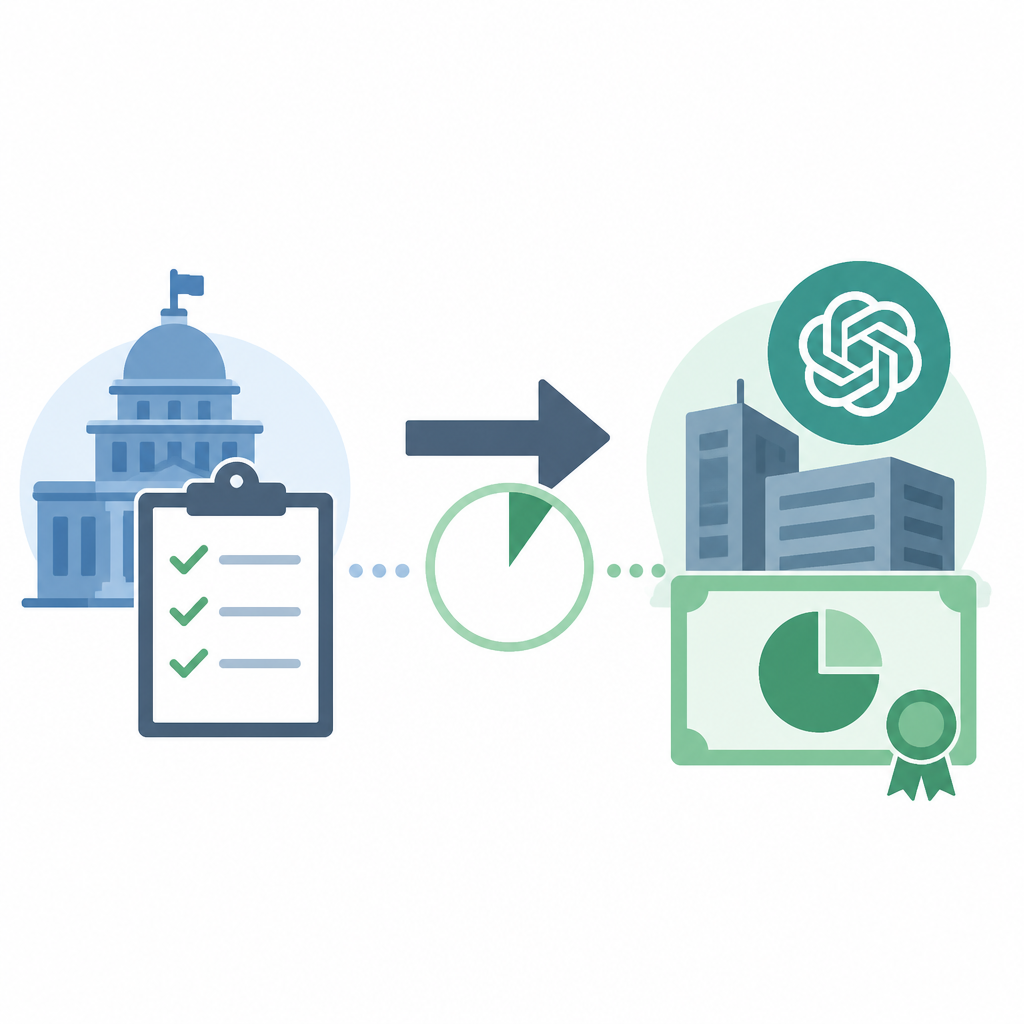
The source material frames this as a way for the public to share in AI prosperity. That sounds tidy, but I’m skeptical of tidy language when equity is involved. If the state owns part of a frontier AI company, does it act as a neutral referee when that company is investigated? When procurement is decided? When antitrust questions come up? Those are not theoretical questions. They are the exact questions ownership creates.
I’ve watched enough platform companies get cozy with regulators to know how fast “public benefit” talk can become a cover for special access. If a government wants a stake because it believes AI is a strategic national asset, fine, at least that’s honest. But then we should call it what it is: state participation in private capital, not just policy support.
How to apply it: if you work on AI governance, write down the conflict scenarios before they happen. Ask what changes if the government is a customer, investor, or shareholder. Then ask who inside your company gets to decide when those roles collide. If nobody has that answer, you do not have governance, you have hope.
Useful references here include the U.S. government’s own framing around AI policy, which you can track through the White House Office of Science and Technology Policy, plus the company itself at OpenAI. If you’re comparing this to other sovereign-style capital structures, look at sovereign wealth fund basics and how they differ from ordinary public investment.
The public-sharing story sounds nice, but incentives do the real talking
The reported justification here is that the public should share in AI gains. I get why that line lands. If AI creates outsized wealth, people will ask why only private investors get paid. That question is fair. But the mechanism matters more than the slogan, and equity is a blunt instrument for a problem that is mostly about distribution, taxation, and power.
If the goal is public benefit, there are cleaner ways to do it: taxation, public R&D, procurement rules, compute access programs, workforce investment, and targeted regulation. Equity can work, but it also drags the state into a role it usually tries to avoid. Once the government owns part of a company, every future decision gets read through that lens.
I’ve seen teams confuse “aligning incentives” with “making everyone an owner.” It sounds elegant until you have to resolve a dispute. Then the ownership structure becomes the dispute. The same risk shows up here, except the scale is much larger and the political temperature is way higher.
How to apply it: when you hear “public benefit” in an AI deal, ask for the mechanism, not the slogan. Is the benefit coming from direct ownership, revenue sharing, tax policy, or access commitments? If the answer is fuzzy, the deal is probably doing more signaling than actual distribution.
- Separate distribution goals from control goals.
- Prefer mechanisms that are easy to audit and hard to politicize.
- Do not assume equity is the cleanest way to spread gains.
This is a warning for every AI company chasing state-scale relevance
There’s a temptation, especially among AI founders, to treat government attention as validation. I understand that temptation. It feels like you’ve crossed from startup weirdness into systemic importance. But once you are important enough for governments to want a stake, you are also important enough to become a political object.
That means your roadmap is no longer just a roadmap. Your model behavior is no longer just a model issue. Your pricing, export policy, safety posture, and corporate structure all become part of a larger negotiation. I don’t think a lot of teams are ready for that, because most teams still think like software companies. This is bigger than software-company politics.
I’ve had to explain to engineers that “can we ship it?” and “should we ship it?” are different questions. This story adds a third one: “who gets paid, and who gets to decide?” Once government ownership is on the table, that third question is unavoidable.
How to apply it: if your company is moving into regulated or strategic domains, create a policy readiness checklist. It should cover shareholder structure, government contracts, export exposure, data residency, safety commitments, and crisis communications. Not because you expect a 5% equity deal tomorrow, but because the logic behind that deal is already spreading.
If you want a broader policy backdrop, I’d also keep an eye on the NIST AI Risk Management Framework and the OECD AI policy work. They’re not the same thing as a government equity stake, but they show how quickly AI moves from product discussion into statecraft.
The template you can copy
# AI policy ownership memo template

## 1. What happened
A short, plain summary of the policy or ownership proposal.

## 2. What this changes
- Does the government become a regulator, customer, investor, or owner?
- Which incentives change if the state has equity?
- Which decisions become politically sensitive?

## 3. Public-interest claim
State the claimed public benefit in one sentence.
Then list the actual mechanism:
- tax
- procurement
- equity
- grants
- access commitments
- regulation

## 4. Conflict check
Answer these directly:
- Who benefits financially?
- Who can approve or block the deal?
- What happens if the government changes its position later?
- What happens if the company is investigated?
- Who owns the upside, and who carries the downside?

## 5. Infrastructure dependency map
List every external dependency:
- model provider
- cloud provider
- data provider
- regulator
- procurement office
- export-control authority
- legal jurisdiction

For each one, write:
- failure mode
- cost impact
- policy impact
- exit option

## 6. Decision rule
Choose one:
- proceed
- negotiate
- pause
- reject

Explain why in three bullets.

## 7. Internal next steps
- assign policy owner
- assign legal owner
- assign engineering owner
- assign communications owner
- set a review date
That template is mine, but the trigger for it came from the Zhihu post summarizing the OpenAI report. The original source is https://zhuanlan.zhihu.com/p/2056294273901917264, and the reporting it references should be treated as the primary factual basis. What I added here is the breakdown, the framing, and the copy-ready memo structure.
// Related Articles
- [IND]
Rust’s top-10 Tiobe jump changes language choices
- [IND]
Anthropic’s Mythos and Fable got pulled back
- [IND]
AWS’s 2026 story is OpenAI, chips, and layoffs
- [IND]
This GitHub repo publishes one AI deep dive a day
- [IND]
OpenCode vs Cursor: Open-Source CLI vs AI Editor 2026
- [IND]
Rust Adoption Is Moving Into Production