Anthropic’s export ban shows AI sovereignty now matters
5 ways Anthropic’s export ban is pushing allies toward AI self-reliance and exposing how quickly US tech access can be cut off.

Anthropic’s export ban is forcing allies to rethink dependence on US AI systems.
The US order to cut off foreign access to Anthropic’s Mythos 5 and Claude Fable 5 models affects allies as well as adversaries, and it is already pushing governments toward AI self-reliance. Here are five takeaways from the fallout, including the scale of Anthropic’s test access across 15 countries.
| Item | Access scope | Policy signal |
|---|---|---|
| Anthropic Mythos 5 / Claude Fable 5 | Foreign access cut off | AI controls now reach allies |
| Anthropic test access | 200 institutions in 15 countries | Model access can change overnight |
| G7 trusted partner idea | Under discussion | Tiered AI access may spread |
| EU domestic alternatives | Growing interest | AI sovereignty is becoming policy |
1. Anthropic’s ban changed the target
Get the latest AI news in your inbox
Weekly picks of model releases, tools, and deep dives — no spam, unsubscribe anytime.
No spam. Unsubscribe at any time.
The most striking part of the order is not that the US restricted an AI model, but that it applied the restriction to allies. The Trump administration told Anthropic to cut off foreign access to Mythos 5 and Claude Fable 5, which means the policy was aimed at trusted partners as well as rivals.
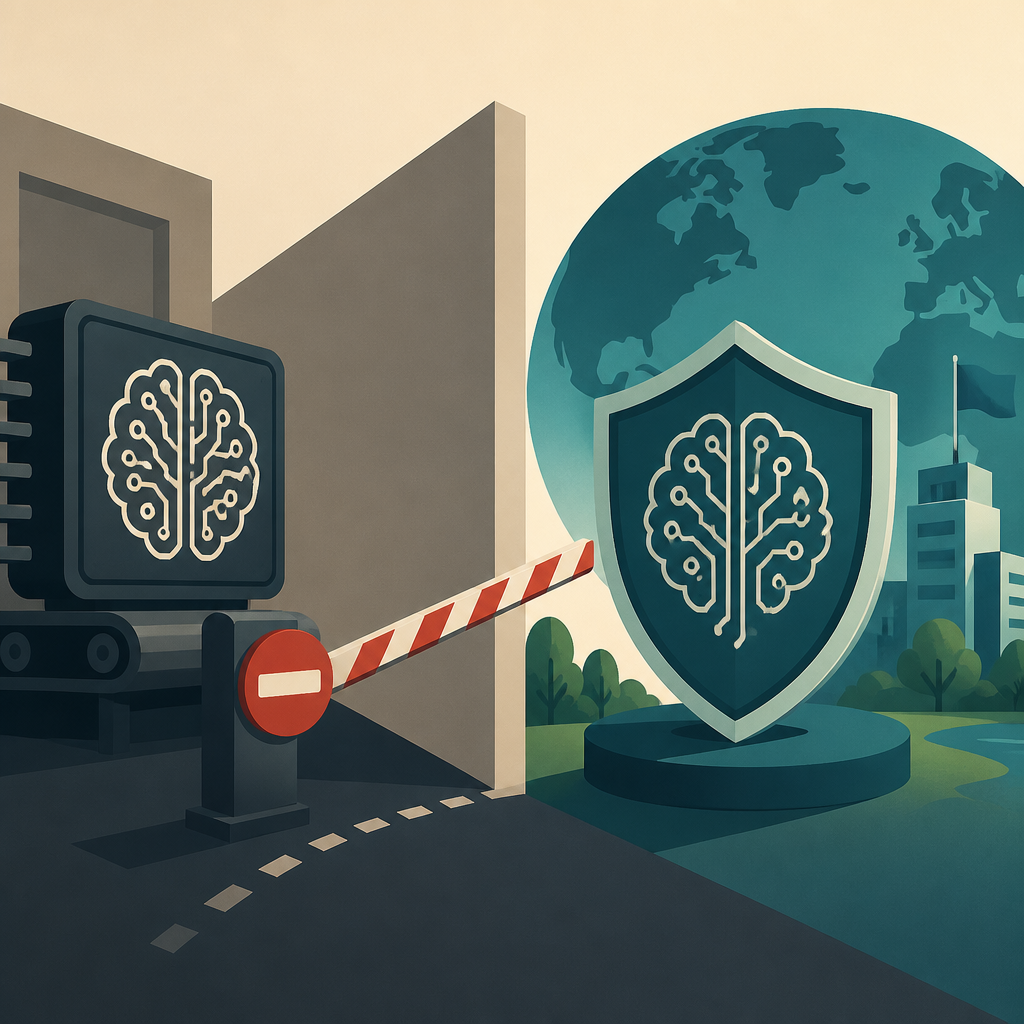
That is a sharp break from the usual logic of export controls, which have mostly focused on China, Russia, and other adversaries. In this case, the message is that access to frontier AI can be withdrawn for national security reasons even when the buyer is friendly.
- Mythos 5 and Claude Fable 5 were due for public release in early June.
- Anthropic said the government did not explain the order.
- The company had to take both models offline to comply.
2. Europe got the clearest warning
European leaders reacted fast because much of the continent depends on US-built AI infrastructure. French President Emmanuel Macron called the move a “wake-up call,” while also saying the limits were a bad sign for cooperation among democracies.
That anxiety is not abstract. European officials are now talking more openly about the risk of being too dependent on a single US supplier for strategic technology, especially when that supplier can be cut off by policy overnight.
- Macron said the reaction was partly “strictly nationalist.”
- Thomas Regnier of the European Commission called security a shared challenge.
- Bruno Retailleau warned that a country dependent on others for tech can be “unplugged overnight.”
3. The G7 is testing a trusted-partner model
At the G7, leaders discussed a “trusted partner” scheme for access to advanced AI models. The idea is still vague, but it points to a future in which the most powerful systems are not simply open or closed; they may be tiered by relationship, security review, and use case.
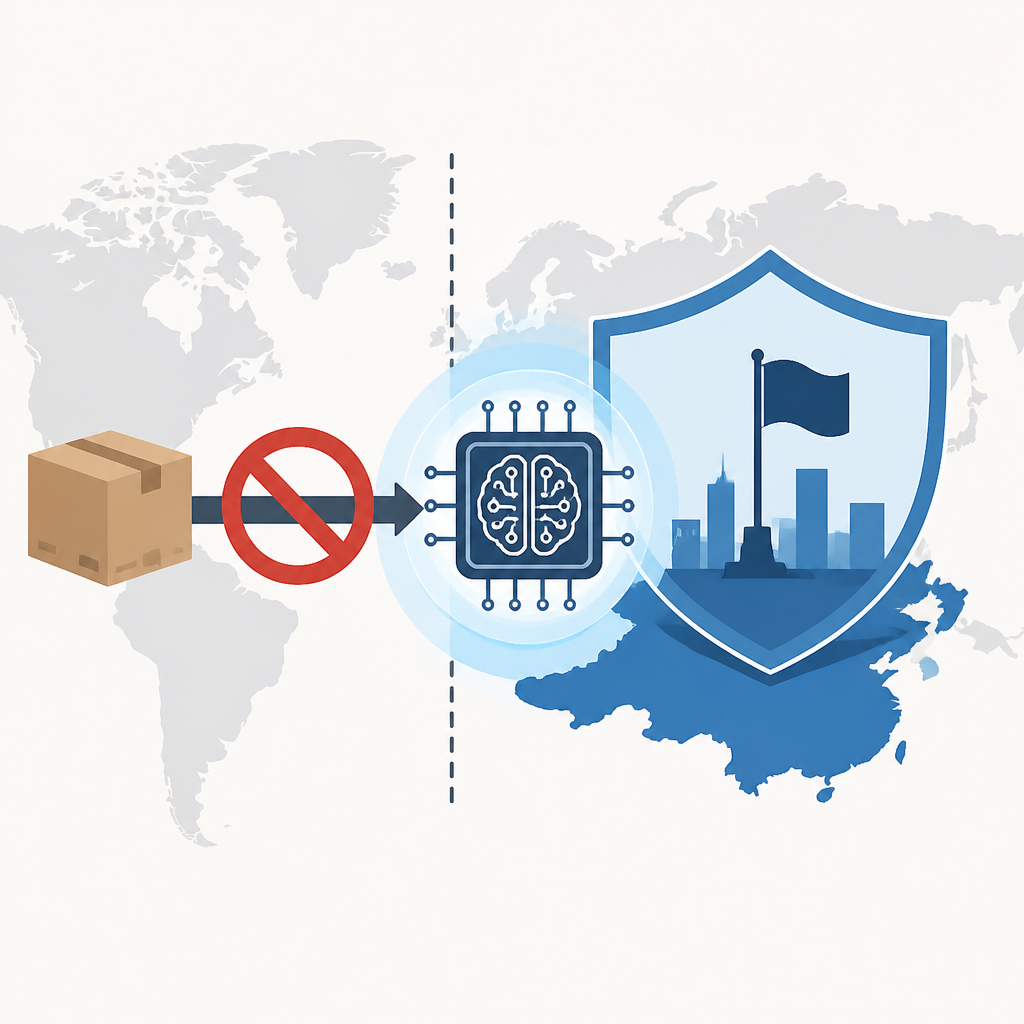
That matters because the US has already experimented with a similar tiered approach in semiconductors. Even though chips are not the same as models, the policy logic is similar: keep sensitive technology close, and decide who can use it, where, and for what purpose.
Possible policy pattern:
- Tier 1: domestic access
- Tier 2: trusted allies
- Tier 3: restricted or denied
4. The chip fight set the template
This is not the first time allies have felt squeezed by US tech policy. The earlier semiconductor rules, often described as a “small yard, high fence” approach, aimed to block advanced chips from adversaries while also limiting what allies could do with them in commercial and trade settings.
That earlier policy was controversial because it extended beyond direct military use. The Anthropic case now pushes the same idea into AI models themselves, which are increasingly treated as strategic assets rather than ordinary software products.
- The chip scheme was introduced in early 2025 under the Biden administration.
- It was scrapped in May 2025 by the Trump administration.
- Trump later cleared Nvidia’s H200 chip for limited sale to Chinese firms.
5. Europe’s answer may be homegrown AI
The ban is also giving momentum to European companies that want to reduce dependence on US-controlled systems. Analysts say firms such as Paris-based Mistral could benefit if governments and buyers decide that having a domestic frontier-model option is now a strategic necessity.
That shift is already visible in procurement and defense circles. Germany’s armed forces reportedly passed on Palantir, and German and French spy agencies have looked for European partners instead. The pattern is clear: when access can be cut, buyers start shopping for alternatives.
- Marcin Jerzewski called Mistral the EU’s only major homegrown frontier-model competitor.
- Germany’s military reportedly avoided a Palantir contract over data concerns.
- European governments are weighing diversification as a security measure.
How to decide
If you are a policymaker, the Anthropic case is a warning that AI access can be politicized as quickly as chips or weapons systems. If you are a company, it is a reminder to avoid building critical workflows around a single foreign model provider.
If you are in Europe, the clearest lesson is that AI sovereignty is no longer a slogan. It is becoming a procurement, defense, and industrial policy issue, and the buyers who move first may gain the most room to maneuver.
// Related Articles