Anthropic’s overseas data-center push is the right move
Anthropic should expand AI compute overseas because domestic capacity alone cannot support its growth.

Anthropic is right to build AI data centers in Australia and Japan to meet demand.
Anthropic is hiring for compute roles in Australia and Japan because its growth has outstripped the infrastructure it can rely on at home. That is not a side quest. It is the clearest signal yet that frontier AI is no longer just a model race; it is a power, land, supply-chain, and geopolitics race. The company’s own April note said growth was placing “an inevitable strain” on infrastructure, and by June it was already recruiting for overseas data center engineers, electrical specialists, and deal sourcers. If a lab with Anthropic’s scale is moving this fast, the market has already decided that compute capacity is now a strategic asset, not a back-office expense.
Anthropic’s growth makes overseas capacity unavoidable
Get the latest AI news in your inbox
Weekly picks of model releases, tools, and deep dives — no spam, unsubscribe anytime.
No spam. Unsubscribe at any time.
The first reason this push is correct is simple: demand is outrunning domestic supply. Anthropic said in May that its revenue run-rate crossed $47 billion, after saying in late 2025 it was around $9 billion. That kind of jump does not leave room for leisurely infrastructure planning. When usage rises that quickly, reliability becomes a product feature, not an ops metric, and the only way to protect it is to add capacity wherever the constraints are loosest.
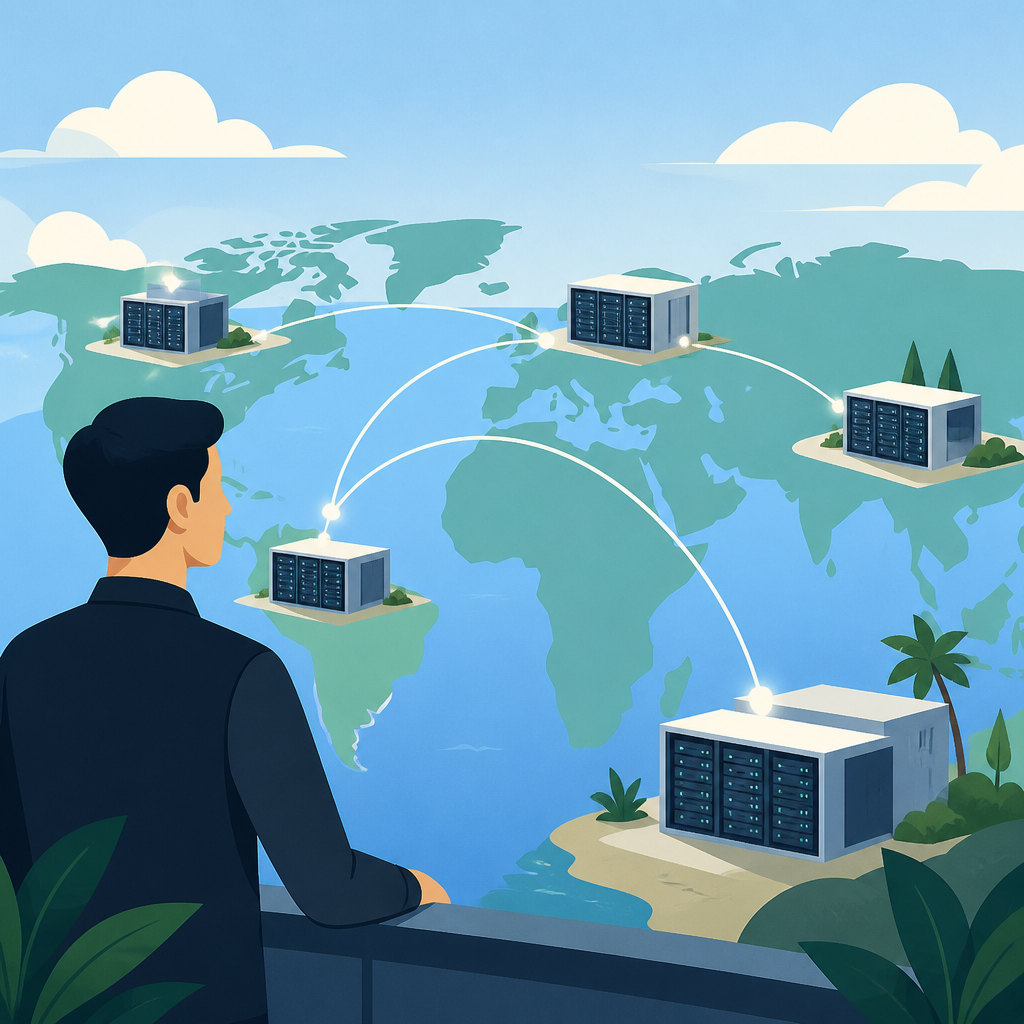
That is why the hiring pattern matters more than the press release language. Eight of the company’s 13 open compute roles are based in Australia or Japan, and the job mix is telling: data center engineers, operators, electrical engineers, and deal sourcing. This is not speculative scouting. It is the staffing footprint of a company preparing to sign power, land, and facility agreements in markets that can actually absorb the load. Anthropic is behaving like a business that understands the bottleneck is physical infrastructure, not model architecture.
Australia and Japan are better bets than waiting for perfect U.S. conditions
Australia offers something the AI sector now prizes above almost everything else: room to build. Analysts cited by CNBC pointed to excess land, abundant renewable energy potential, and a stable political environment. That combination matters because data centers are no longer small server rooms. Anthropic’s job listing for an Australia-based energy role explicitly mentions “multi-hundred megawatt procurement efforts,” which means the company is shopping for industrial-scale power, not incremental expansion. Markets with space, renewables, and predictable regulation deserve priority when the alternative is congestion and delay.
Japan is equally compelling for a different reason: it is already an infrastructure heavyweight. The country has a highly developed internet backbone, subsea cable connectivity, a technically skilled workforce, and strong government interest in domestic AI capacity. Microsoft’s announced $10 billion Japan investment and GMI Cloud’s $12 billion sovereign AI project show that Anthropic is not chasing a fringe market. It is moving into one of the few regions in Asia where the ecosystem can support serious compute buildout. In other words, Anthropic is not exporting risk; it is importing resilience.
Global diversification is now a security strategy, not just a cost strategy
There is also a national-security argument that cannot be ignored. Anthropic said it is being “very intentional” about partnering with democratic countries whose legal and regulatory frameworks support investments of this scale, and where the supply chain for hardware, networking, and facilities is secure. That is exactly the right filter. Frontier models are becoming more sensitive strategic assets, and the places that host them need to be politically stable, physically secure, and aligned with the company’s operating assumptions. Australia’s Five Eyes status and distance from military threats make it a stronger choice than flashier but riskier regions.
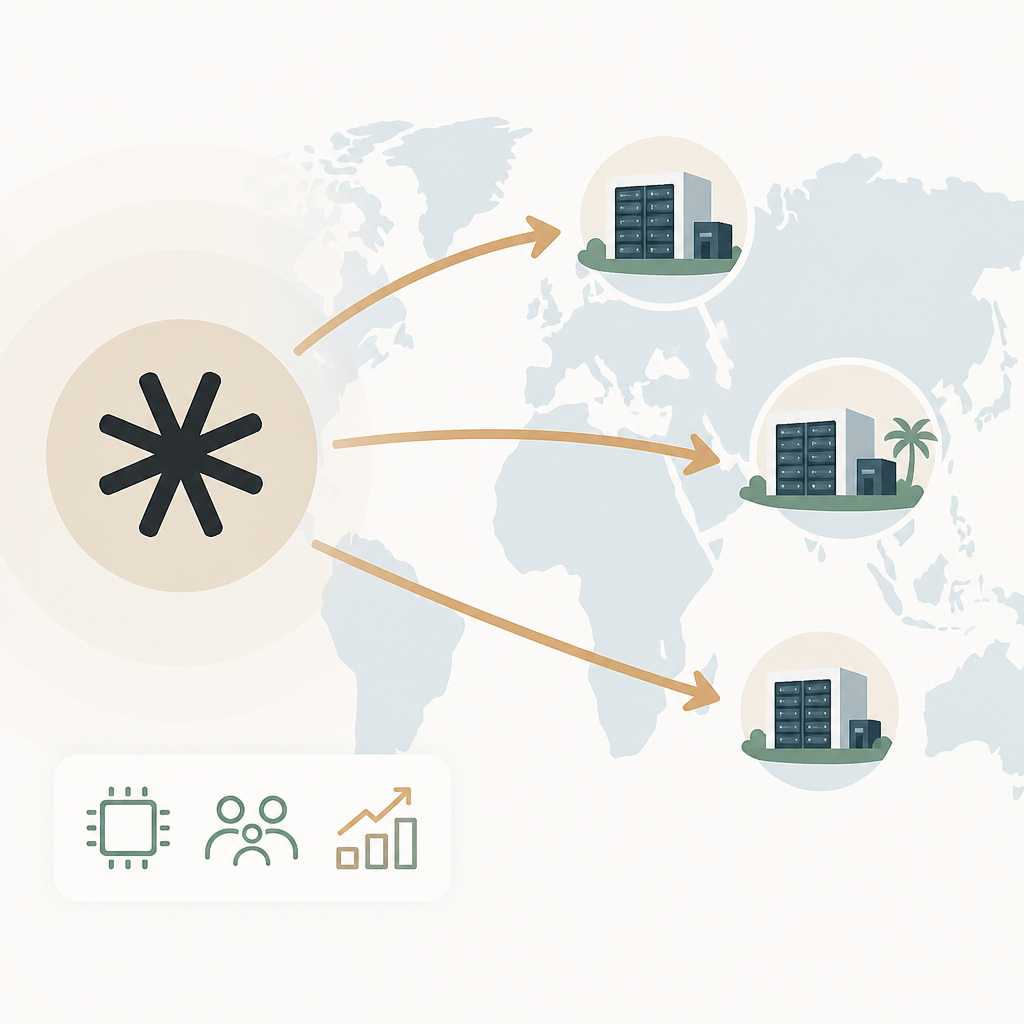
The recent history of global infrastructure proves the point. Conflict in the Middle East exposed the fragility of concentration, with Amazon data centers in the region reportedly targeted early in the war. That is a warning shot for every AI lab that still treats compute as if it were just another cloud SKU. Geographic dispersion is how you reduce single-point failure risk, protect continuity, and keep product performance from being hostage to one power market, one regulatory regime, or one geopolitical flashpoint. Anthropic is not overreacting. It is learning from the failure modes already visible in the market.
The counter-argument
The strongest case against this strategy is that overseas expansion adds complexity at the worst possible time. Australia has copyright-law uncertainty that could expose AI firms to litigation, and Japan faces power constraints that are becoming the defining limit on data center growth across Asia-Pacific. Labor is also tight. Engineering and technical roles in data centers are in demand, and salaries are rising. From that angle, Anthropic is spreading itself across jurisdictions that are expensive, legally messy, and still constrained by the same physical bottlenecks.
That critique is real, but it does not defeat the strategy. It only sets the terms. Anthropic does not need Australia and Japan to be frictionless; it needs them to be better than the alternatives for specific workloads and expansion phases. The company is not abandoning the U.S. or pretending power constraints disappear overseas. It is building a portfolio of capacity across stable markets so that no single legal regime, grid failure, or procurement delay can choke growth. In infrastructure, optionality is a feature. Waiting for perfect conditions is how you lose the race.
What to do with this
If you are an engineer, PM, or founder, treat compute geography as a product decision. Map where your workloads can run, where power is available, where regulation is durable, and where your supply chain is least exposed. Then build partnerships before demand forces your hand. Anthropic’s move shows that the winners in AI will not just ship better models; they will secure the physical capacity to serve them at scale, in more than one country, before scarcity becomes a crisis.
// Related Articles