Anthropic’s survey turns AI anxiety into policy
I break down Anthropic’s first public AI survey and turn its findings on jobs, trust, and regulation into a copy-ready template.

Anthropic’s first public AI survey turns public fear into a policy template.
I’ve been reading AI research posts for a while now, and most of them annoy me in the same way: they either talk to power users only, or they pretend the public is one giant blob of vibes. This one felt different, but also a little messy in the useful way. Anthropic finally asked regular people what they think about AI, not just Claude users or the usual online crowd, and the answers are not subtle. People want the upside. They want cures, accessibility, and boring everyday help. But they are also staring straight at job loss, dependency, and misinformation.
That mix is the part I keep coming back to. It’s not “AI good” or “AI bad.” It’s “show me the benefit, and don’t make me eat the risk alone.” That’s a much more practical signal for anyone building products, policy, or internal AI adoption plans. I pulled the survey apart below and turned it into something you can actually use. The source is Anthropic’s Results from first Anthropic Public Record, published June 12, 2026.
The public is not asking for sci-fi, it’s asking for relief
Get the latest AI news in your inbox
Weekly picks of model releases, tools, and deep dives — no spam, unsubscribe anytime.
No spam. Unsubscribe at any time.
“Nearly half (48%) of Americans ranked curing diseases like cancer or Alzheimer’s as one of their top three hopes for AI.”
What this actually means is that people are not mainly fantasizing about AI writing poetry or replacing every office task. They want relief from real pain. Disease, disability, and easier daily life beat out the more abstract “AI will transform everything” pitch.
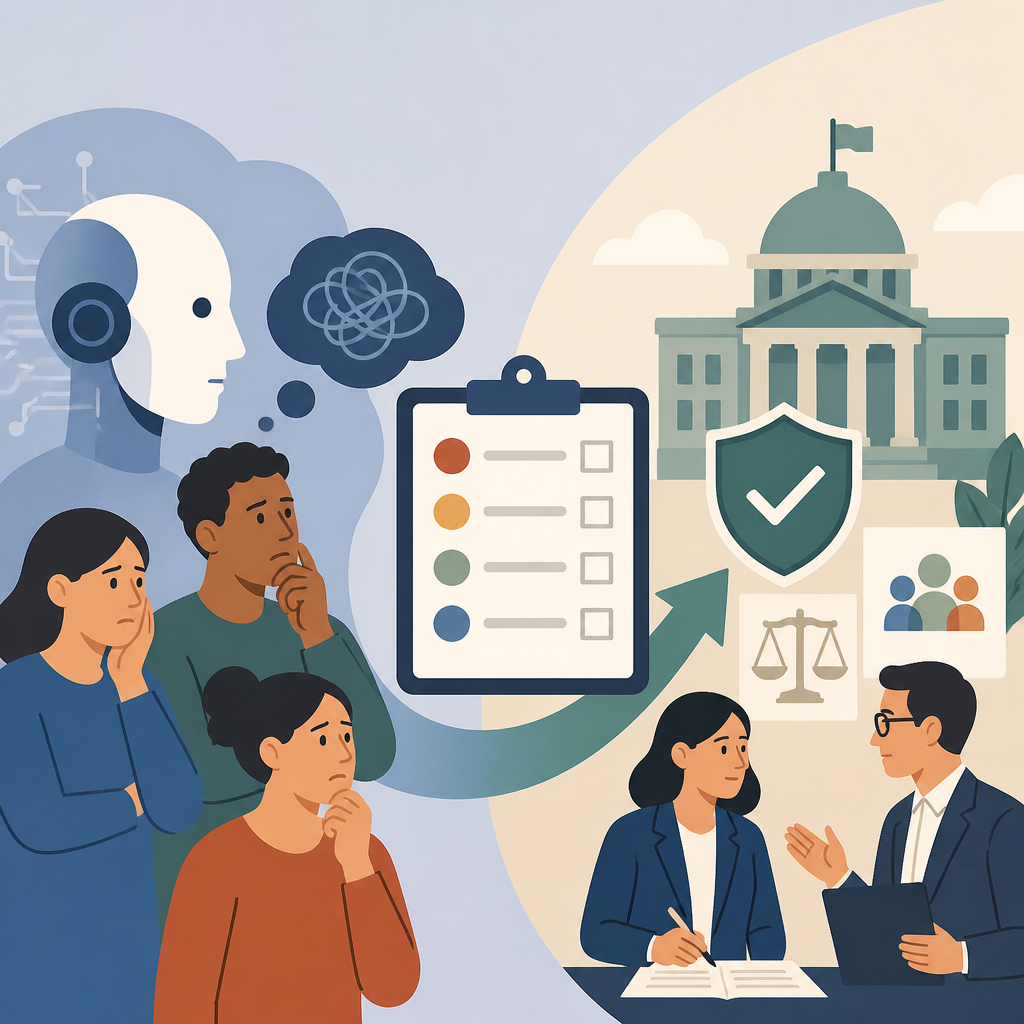
I like this because it cuts through a lot of builder self-talk. We love to frame products as intelligent, agentic, or autonomous. The public frame is simpler: does this help me, my family, or someone I know?
Anthropic says the top hopes were curing disease at 48%, helping people with disabilities at 36%, and then a tie at 23% for technological progress and making life easier. Therapy and loneliness were near the bottom of the list. That matters. People are not begging AI to imitate human companionship. They’re asking for practical gains.
How to apply it: if you’re pitching AI internally or externally, stop leading with abstract capability. Lead with a specific human problem. If your product helps with accessibility, medical admin, scheduling, search, or repetitive work, say that plainly. If you can’t name the concrete benefit, the public probably won’t care.
- Translate features into outcomes people can feel.
- Use one job-to-be-done per pitch, not a laundry list.
- Avoid “AI as companion” framing unless you have a very strong reason.
Job loss is the fear that keeps showing up in every room
“AI-induced job loss was the most common fear in every state, held by 64% of Americans.”
What this actually means is that job anxiety is not a niche concern from one political tribe or one coastal city. It is the default fear. Anthropic says it showed up everywhere, and the spread was surprisingly tight: Democrats at 67%, Republicans at 62%, and state-level concern from Iowa at 71% down to Mississippi at 57%.
I’ve run into this exact thing when teams want to roll out AI assistants at work. Leadership talks about productivity. Employees hear replacement. And honestly, the employees are not being paranoid. If you introduce automation into a workflow and the first visible result is fewer hands needed, people will do the math.
Anthropic also found something I think builders should pay attention to: concern rises with education. Postgraduate respondents were nearly 10 points more worried than those with a high school education or less. That’s not a random detail. The people who understand the work best are often the first to see where AI can bite.
How to apply it: if you’re introducing AI in a company, don’t pretend job fear is irrational. Name the tasks, name the guardrails, and say what will not be automated. If the answer is “we don’t know yet,” then say that too. People can handle uncertainty better than spin.
- Explain which tasks are augmented, not just which are automated.
- Put retention, reskilling, or role redesign in the rollout plan.
- Show how human review stays in the loop for high-risk work.
Usage changes fear, but not in the simplistic way people think
“People who use AI at work every day are notably less worried about job loss than people who don’t use AI at all: 54% versus 70%.”
What this actually means is that hands-on exposure matters. The people using AI every day are less afraid of it replacing them, probably because they’ve already seen where it helps and where it falls flat. That doesn’t mean the fear disappears. It just gets more specific.
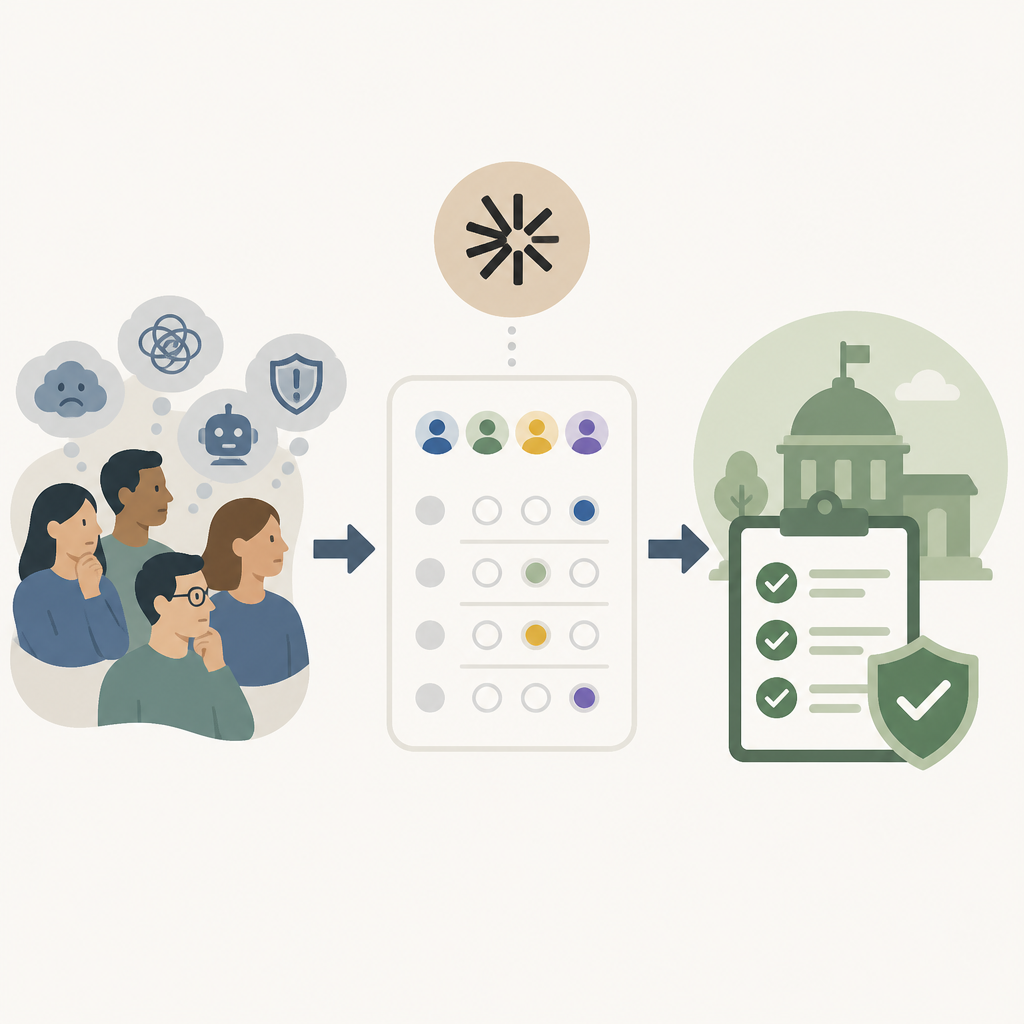
I’ve seen this in my own work. The first time a team gets access to an AI tool, everyone imagines the worst and the best at the same time. After a few weeks, the tone changes. People stop talking about magic and start talking about quality, reliability, and where the tool actually saves time. That shift is useful because it replaces mythology with evidence.
Anthropic’s pattern is consistent across concerns: daily users are less worried about job loss and less worried about dependency. That can mean familiarity breeds confidence. It can also mean people discover the tool’s limits and stop treating it like a threat to every part of their job.
How to apply it: if you want adoption, don’t force a big bang rollout. Start with narrow, visible wins. Let people touch the tool in low-risk workflows first. Give them enough experience to see both the upside and the failure modes.
Americans want AI in the workplace, but only on their terms
“On most tasks, a majority of Americans did not want AI involved in their jobs.”
What this actually means is that capability and permission are not the same thing. People may think AI can do research or data analysis fairly well, but that does not mean they want it inserted into their own job by default.
Anthropic says 75% of Americans judged AI as good as or better than humans at research, and 44% said the same for service and support. But even where capability looked strong, nearly half still wanted no AI involvement in their own work. That’s the part a lot of product teams miss. “Can do” is not “should do.”
I’ve seen this gap wreck otherwise decent internal launches. Teams demo a tool, everyone nods, and then nobody uses it because the rollout ignores trust, control, and context. People don’t want a black box dropping into tasks they already own.
How to apply it: make AI opt-in where possible, and make the control obvious. Let users choose the level of assistance. Let them inspect outputs. Let them reject suggestions without punishment. If the product touches core work, the user needs to feel like the owner, not the passenger.
Dependency is real, but mostly as a fear of what might happen
“Of the 56% of Americans who expressed some worry over dependence, only roughly 1/5 would feel significant disruption if AI became unavailable.”
What this actually means is that a lot of people are worried about becoming dependent before they actually are dependent. That’s not irrational. It’s a signal that people can already imagine a future where they lose a skill, a habit, or some mental friction they used to rely on.
Anthropic calls cognitive dependency an anticipatory fear, and that sounds right to me. The survey also says educators were especially likely to report seeing cognitive atrophy firsthand in their students. That’s the kind of detail I trust more than generic hand-wringing, because it points to a real setting where people are noticing a change.
There’s another odd but important finding here: among those who were not worried about dependency, a higher share said they would feel significant disruption if AI disappeared tomorrow. So the fear is not a clean proxy for actual reliance. People often worry about a thing before it becomes part of their routine.
How to apply it: if you’re building AI into a workflow, design for graceful degradation. Ask what happens if the model is unavailable, wrong, or too slow. If your product makes people forget how to do the underlying task, that’s not a small UX issue. That’s a real operational risk.
People want the government in the room, not just the vendors
“71% of Americans say the government should be involved in the development and regulation of AI.”
What this actually means is that the public does not trust companies to self-police here. That trust gap is huge. Only 15% said they trust AI companies to make decisions about how the technology is developed and used, which is lower than the federal government, state and local government, and international bodies, and far below independent experts.
I’m not surprised. If a company’s growth depends on shipping faster, people will assume safety gets negotiated down unless there is some external pressure. That’s just human behavior. And Anthropic’s numbers show this skepticism is bipartisan, which is worth underlining because it removes the usual partisan escape hatch.
The survey also asked where government should act. Privacy and child safety drew the strongest support. That tells me people are not asking for vague “AI oversight.” They want specific protections in places where the harm is easy to imagine.
How to apply it: if you’re building policy or enterprise governance, focus on specific domains first. Privacy, child safety, liability, and auditability are easier to explain than broad AI ethics language. If you can’t explain the rule in one sentence, it probably won’t survive contact with reality.
- Write governance around concrete harms, not abstract principles.
- Assign owners for privacy, safety, and incident response.
- Document who is accountable when AI causes damage.
Accountability beats hype, every time
“Americans converged on two answers: hold AI companies legally liable for harm and prioritize safety over growth.”
What this actually means is that people want consequences. They are not asking nicely for better behavior; they want the legal and economic structure to force it. That is a much harder message for builders to hear, because it means “move fast” is not a satisfying answer when something goes wrong.
Anthropic says 47% picked legal liability among their top three actions, and 44% picked safety over growth. Independent watchdogs with real power and slowing development for safety followed behind. I think that ordering matters. People are not just asking for slower progress. They want a system where the party that causes harm cannot shrug and move on.
If you’re writing an internal AI policy, this is the part to steal. The policy should not just say “use AI responsibly.” It should say who approves it, who reviews it, who can shut it down, and who answers if it causes harm. Otherwise it’s just decorative text.
The template you can copy
# AI rollout policy template inspired by Anthropic Public Record

## 1) What this AI is for
We are using AI to help with:
- [specific task 1]
- [specific task 2]
- [specific task 3]

We are not using AI to:
- fully replace human judgment in [high-risk area]
- make final decisions about [employment / finance / health / legal / safety]
- automate any workflow without a named human owner

## 2) Why we are using it
The goal is to improve:
- speed on repetitive work
- access for users who need assistance
- consistency in low-risk tasks

The goal is not to:
- cut headcount by default
- hide responsibility behind the model
- ship faster at the expense of safety

## 3) Human control
Every AI-assisted workflow must have:
- a named human owner
- a way to review outputs before use
- a way to reject or edit outputs
- a fallback process if the model is unavailable

## 4) Risk rules
If a workflow touches privacy, children, employment, money, health, or legal decisions:
- it needs explicit approval
- it needs documented review steps
- it needs logging and auditability
- it needs a rollback plan

## 5) What we tell users and employees
We will say plainly:
- what the AI does
- what it does not do
- where humans stay responsible
- what data it uses
- how to report errors or harm

## 6) Measurement
We will track:
- error rates
- user override rates
- time saved
- incidents or complaints
- whether people feel more or less confident using the workflow

## 7) Review cadence
This policy will be reviewed every [30/60/90] days and updated when:
- model behavior changes
- regulations change
- we see harm, confusion, or overreliance

## 8) Plain-English promise
AI may assist our work, but people remain accountable for the outcome.
If you want the shortest version of this whole survey, it’s this: people like the upside, fear the downside, and do not trust vendors to police themselves. That’s not an argument for slowing everything down forever. It’s an argument for being honest about tradeoffs and building systems that can take a punch.
The original source is Anthropic’s Results from first Anthropic Public Record. I’ve reworked the findings into a developer-friendly breakdown and added the template above; the numbers and survey claims come from Anthropic, while the framing and policy template are mine.
// Related Articles
- [IND]
ChatGPT grew from chatbot to platform
- [IND]
OpenAI Files Confidential IPO After $122B Round
- [IND]
Government access orders should govern frontier model access
- [IND]
Claude Code, Cursor, and Copilot set the 2026 bar
- [IND]
Anthropic’s Claude Design launch exposed partner risk
- [IND]
Marketing Skills packs SEO workflows into reusable agent prompts