ChatGPT grew from chatbot to platform
ChatGPT has expanded from a 2022 chatbot into a multilingual app, search tool, and agent platform with hundreds of millions of users.

ChatGPT has grown from a 2022 chatbot into a multilingual AI platform with search, apps, and agents.
ChatGPT launched on November 30, 2022, and by February 2026 it had reached 900 million weekly active users. That is a huge jump from the 100 million monthly active users it hit just two months after release.
| Milestone | Date | Why it matters |
|---|---|---|
| Initial release | November 30, 2022 | ChatGPT entered the public market as OpenAI's consumer chatbot |
| 100 million monthly active users | Two months after launch | Showed unusually fast adoption |
| ChatGPT Plus | February 2023 | Introduced a $20 per month premium tier |
| Windows app launch | October 15, 2024 | Expanded ChatGPT beyond the browser and mobile apps |
| 900 million weekly active users | February 2026 | Gave a sense of ChatGPT's scale at maturity |
From chatbot to daily utility
Get the latest AI news in your inbox
Weekly picks of model releases, tools, and deep dives — no spam, unsubscribe anytime.
No spam. Unsubscribe at any time.
OpenAI built ChatGPT on GPT models, turning a text generator into a product that writes code, summarizes documents, answers questions, and creates images. The service now accepts text, audio, and image prompts, which makes it feel less like a single app and more like a general interface for AI work.
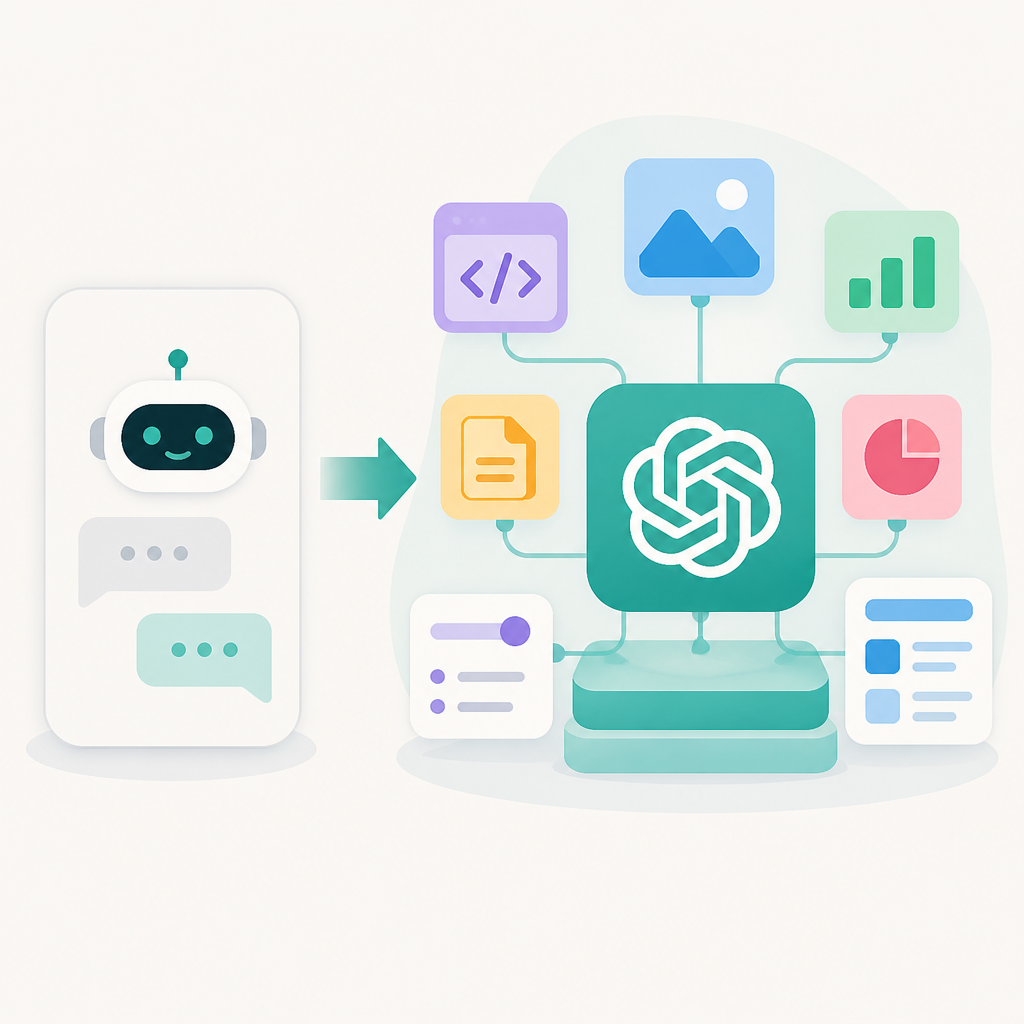
The product also moved quickly beyond basic chat. OpenAI added memory, conversation recall, moderation systems, and support for interactive tasks such as a Linux terminal and text-based games. Those additions matter because they changed ChatGPT from a novelty into something people can return to for repeated work.
- Text, audio, and image inputs are all supported.
- Memory lets users save details across chats.
- ChatGPT can write code, translate text, and summarize long material.
- It can simulate simple environments, including a terminal and chat rooms.
The adoption numbers tell the same story. Reaching 100 million monthly active users in two months put ChatGPT in rare company. Hitting 900 million weekly active users by February 2026 shows that the product became part of everyday software habits, not just a demo people tried once.
OpenAI kept adding paid tiers and new surfaces
ChatGPT's business model is freemium, with a free tier and paid plans layered on top. ChatGPT Plus arrived in February 2023 at $20 per month, and OpenAI later introduced a Pro tier at $200 per month in December 2024. In August 2025, ChatGPT Go launched in India at ₹399 per month.
"We think ChatGPT is incredibly limited, but good enough at some things to create a false impression of greatness." — Sam Altman, OpenAI CEO, in a February 2023 tweet thread
That quote aged well because OpenAI kept shipping features that made the product more useful while leaving its limits visible. The company added iOS and Android apps in 2023, brought ChatGPT to Windows through the Microsoft Store on October 15, 2024, and then moved into search, research, and browser-like behavior.
OpenAI also used ChatGPT as a distribution layer for adjacent products. The GPT Store launched in January 2024 with more than 3 million GPTs at launch, and ChatGPT Search rolled out from October to December 2024 to answer queries with fresh web results. In 2025, OpenAI added Deep Research, image generation updates, and agent-style features such as Operator and Atlas.
- GPT Store launched in January 2024.
- OpenAI said the store opened with more than 3 million GPTs.
- ChatGPT Search rolled out from October to December 2024.
- Deep Research arrived in February 2025 and took 5 to 30 minutes per report.
Language support became a political issue too
One of the more interesting parts of ChatGPT's growth is how local language work became a public policy issue. OpenAI met Icelandic President Guðni Th. Jóhannesson in 2022, then worked with 40 Icelandic volunteers in 2023 to improve ChatGPT's Icelandic conversation skills as part of the country's effort to preserve the language. That is a very different kind of AI deployment than a generic product launch in Silicon Valley.
OpenAI also pushed into translation and government workflows. In December 2023, the Albanian government decided to use ChatGPT to translate European Union documents and analyze what had to change for EU accession. The article also notes that ChatGPT, based on GPT-4, outperformed Bing, Bard, and DeepL Translator in some Japanese-to-English tests in 2023.
These examples matter because they show where ChatGPT can be useful without pretending it is perfect. It can help with language access, document triage, and rough first drafts. It still does not match human expert performance in machine translation, and that gap remains important for legal, diplomatic, and cultural work.
- Icelandic fine-tuning involved 40 volunteers.
- Albania used ChatGPT for EU document translation in December 2023.
- ChatGPT beat Bing, Bard, and DeepL in some Japanese-to-English tests.
- As of 2024, no machine translation service matched human expert performance.
The real story is product expansion, not one model
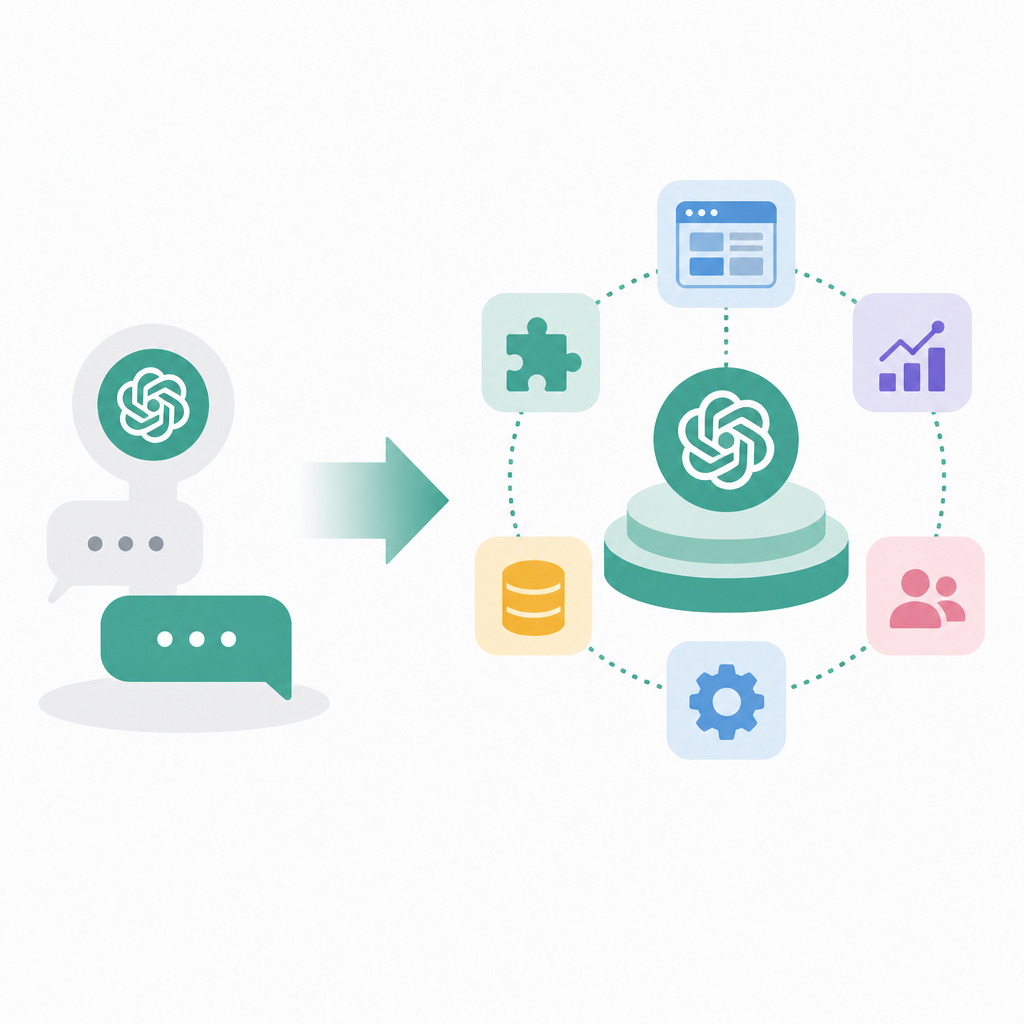
ChatGPT is no longer just a chatbot wrapped around a single prompt box. It now includes search, research, image generation, apps, phone access, memory, and agent-like features that can take actions online. That is a broader product strategy than the original release, and it explains why the service keeps pulling in users even as rivals from Anthropic, Google Gemini, and Microsoft pressure the market.
The important comparison is not just feature count. It is scale, speed, and distribution. A Windows app, mobile apps, web search, a paid Pro tier, and language-specific work all give OpenAI more ways to keep ChatGPT in front of users. That matters more than any single model version because product access is what turns AI capability into habit.
OpenAI's challenge now is simple to state and hard to solve: keep improving reliability while expanding into more tasks. If ChatGPT keeps shipping agent features and search-backed answers, the next question is whether users will trust it with more work that used to live in browsers, office suites, and support desks.
What comes next for ChatGPT
ChatGPT's next phase will probably be judged less by raw model quality and more by how often it can complete real tasks without human cleanup. If OpenAI can make search, memory, and agent actions dependable enough for everyday work, ChatGPT will keep pulling users away from point tools. If it cannot, the product will remain powerful, but still best used as a fast assistant rather than an authority.
For developers and product teams, the takeaway is clear: ChatGPT is now a platform with distribution, pricing tiers, and local-language strategy, not just a chatbot demo. The next competitive edge will come from reliability, integrations, and trust, especially in areas where one wrong answer costs real money or time.
// Related Articles
- [IND]
Huang’s open-letter playbook for open-weight AI
- [IND]
32 firms back open-weight AI in DC letter
- [IND]
Huang usa il suo primo post su X per difendere l’IA aperta
- [IND]
Black Duck’s Coverity gets better at AI-era triage
- [IND]
Anthropic’s Opus 5 makes the AI race cheaper
- [IND]
OpenAI’s distillation playbook explains the Kimi panic