Anthropic should stop pricing like a monopoly and ship Claude faster
Anthropic is right to restore Claude faster, but wrong to act like higher pricing can outrun product reliability.

Anthropic should restore Claude quickly, but it should not use pricing power to compensate for reliability gaps.
Anthropic’s reported move to bring Claude Fable 5 back within days, after a sudden retreat from a price hike, is not a sign of confidence. It is a sign that the company has learned the hard way that users will not pay more for a model that is unavailable, unstable, or politically inconvenient to keep scarce. In a market where developers can switch between OpenAI, Google, xAI, and open-weight models with a few API changes, product quality and uptime matter more than prestige pricing. If Claude is good, it should win on performance and consistency, not on a managed sense of exclusivity.
Pricing power only works when users believe supply is dependable
Get the latest AI news in your inbox
Weekly picks of model releases, tools, and deep dives — no spam, unsubscribe anytime.
No spam. Unsubscribe at any time.
AI pricing is not software licensing from a decade ago, where buyers tolerated annual increases because alternatives were slow to adopt. Claude’s value to teams is tied to daily usage, not procurement theater. When a model is missing or access is constrained, the customer does not experience “premium positioning”; they experience broken workflows. That is why a rapid reversal on price or availability reads less like strategic flexibility and more like a company discovering that trust is a product feature.

The market has already shown what happens when vendors try to charge ahead of reliability. OpenAI’s ChatGPT and API business grew because users could count on access, even when the company changed models, limits, or packaging. By contrast, any signal that Anthropic is testing price elasticity before it has fully stabilized availability invites a simple response from customers: move budget elsewhere. In inference-heavy products, switching costs are real but not fatal, and the first thing teams cut is the vendor that looks least predictable.
Model quality is not enough if the business feels brittle
Anthropic’s strongest argument has always been that Claude is a serious model for coding, reasoning, and long-context work. That argument still matters. But buyers do not purchase benchmark charts, they purchase a dependable service. If a company is asking customers to trust it with production workloads, then every operational wobble becomes part of the product story. A model that is excellent in demos but awkward in delivery is still a weak business asset.
There is also a strategic cost to acting as if scarcity itself is value. Scarcity can create short-term buzz, but it teaches customers to build around substitutes. Developers are pragmatic: if one model is temporarily unavailable, they route prompts to another. Once that fallback is in place, it stays. Anthropic should be trying to become the default layer in those systems, not the premium option teams keep on a short leash because they expect the company to change terms again.
The real competition is not hype, it is switching friction
Anthropic is not competing only against rival frontier labs. It is competing against the growing ease of multi-model orchestration. Teams now bake fallback logic into their stacks, route tasks by cost, and benchmark continuously. That means the old playbook of “raise price after users are hooked” is much weaker than it looks. If the model is one option in a router, any aggressive pricing move pushes traffic away immediately.
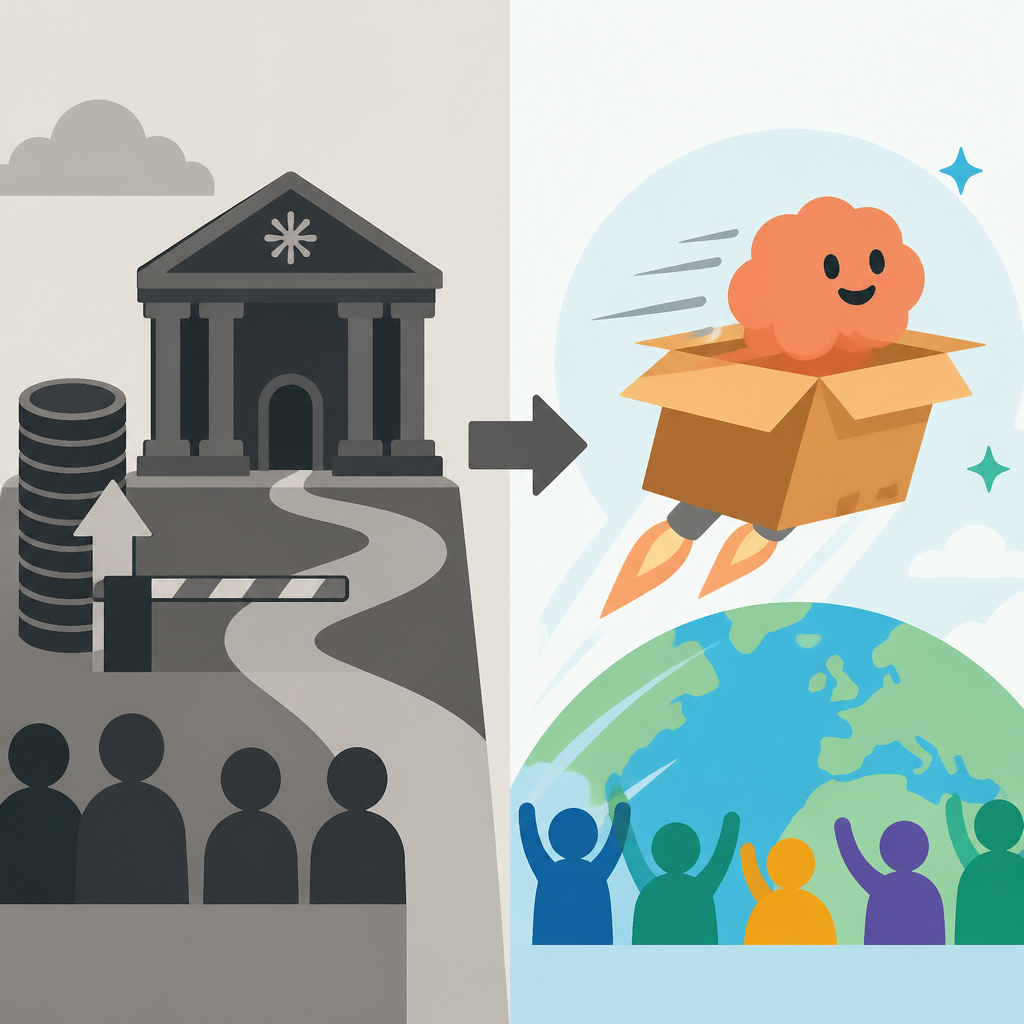
That is why the reported retreat matters more than the original hike. A company that reverses course this quickly signals that it has overestimated its leverage. In practice, leverage in AI comes from three things: quality, reliability, and developer habit. Anthropic has quality. It still has to prove that it can match that with stable access and predictable commercial terms. Without that, the company is not building pricing power, it is burning goodwill.
The counter-argument
There is a strong case for higher prices. Frontier model development is expensive, compute remains costly, and the best models absorb enormous training and inference spend. From that view, Anthropic is behaving rationally by trying to capture more of the value it creates. If Claude is genuinely better for coding or reasoning, then underpricing it would be a mistake that subsidizes heavy users at the company’s expense.
There is also a brand argument. A premium price can signal premium quality, and some enterprise buyers do associate higher cost with stronger support, better safety posture, and more serious roadmap commitment. In a crowded market, underpricing can make a model look interchangeable, which is the last thing a frontier lab wants.
That argument fails at the point where pricing outruns trust. Anthropic can charge more, but only after it proves that customers can rely on the service at scale and that the price is attached to a stable offering rather than a temporary scarcity play. If the company raises prices or restricts access before the platform feels dependable, it is not signaling quality. It is signaling that customers should expect more friction for the same workflow, and that is exactly how teams start migrating away.
What to do with this
If you are an engineer or PM building on Claude, treat vendor stability as a first-class requirement. Put fallback models in place, measure cost per task across providers, and do not anchor your workflow to a single model unless the business can tolerate sudden pricing or access changes. If you are a founder, sell reliability to your own customers the same way you expect it from Anthropic: no hidden scarcity, no surprise pricing, and no dependence on a single supplier’s mood. In AI, the companies that last are the ones that make trust boring.
// Related Articles