Anthropic’s watermarking move is the right default for AI text
Anthropic should watermark AI text by default, because provenance is now a product requirement, not a nice-to-have.

2026 marks the point where AI text provenance stops being optional and becomes product infrastructure.
Anthropic is right to watermark text and files generated by its models, because AI output now needs a built-in provenance layer, not a promise that users will behave well.
Provenance is no longer a policy footnote
Get the latest AI news in your inbox
Weekly picks of model releases, tools, and deep dives — no spam, unsubscribe anytime.
No spam. Unsubscribe at any time.
The immediate trigger is regulatory, not philosophical. The EU AI Act’s Transparency Code now requires AI companies to mark AI-generated or edited content in a way that other systems can identify. That changes the burden on model vendors: if your text can be used in search, publishing, support, or code review, then traceability is part of the product, not an optional add-on.

Anthropic’s decision to apply watermarking at the model level matters because it avoids the usual fragmentation problem. If the marker lives in Claude, Claude Code, Claude API, and other surfaces, then provenance survives product sprawl. That is the right architecture for a company whose output is copied, pasted, summarized, and repackaged across dozens of workflows every day.
Watermarking is useful even when it is imperfect
The strongest objection is that text watermarks are easier to strip than image or audio markers. Anthropic itself says the watermark may persist through some editing, which is a careful admission that the system is not a lock. That is true, and it is still not a reason to skip the feature.
Most compliance and trust systems are not designed to stop every bad actor. They are designed to raise the cost of deception and give downstream tools a signal to work with. A watermark that survives ordinary copying, pasting, and light editing is enough to help platforms, reviewers, and enterprise systems distinguish raw human writing from model output in the common case. That is where the value is.
Model-level marking is better than user-level labeling
Anthropic’s approach is stronger than asking users to self-report AI use, because self-reporting fails the moment incentives change. We have already seen this pattern across AI content platforms: creators and companies will label honestly when it is convenient, then omit labels when the label reduces reach, credibility, or conversion. A technical marker removes that dependency on good faith.
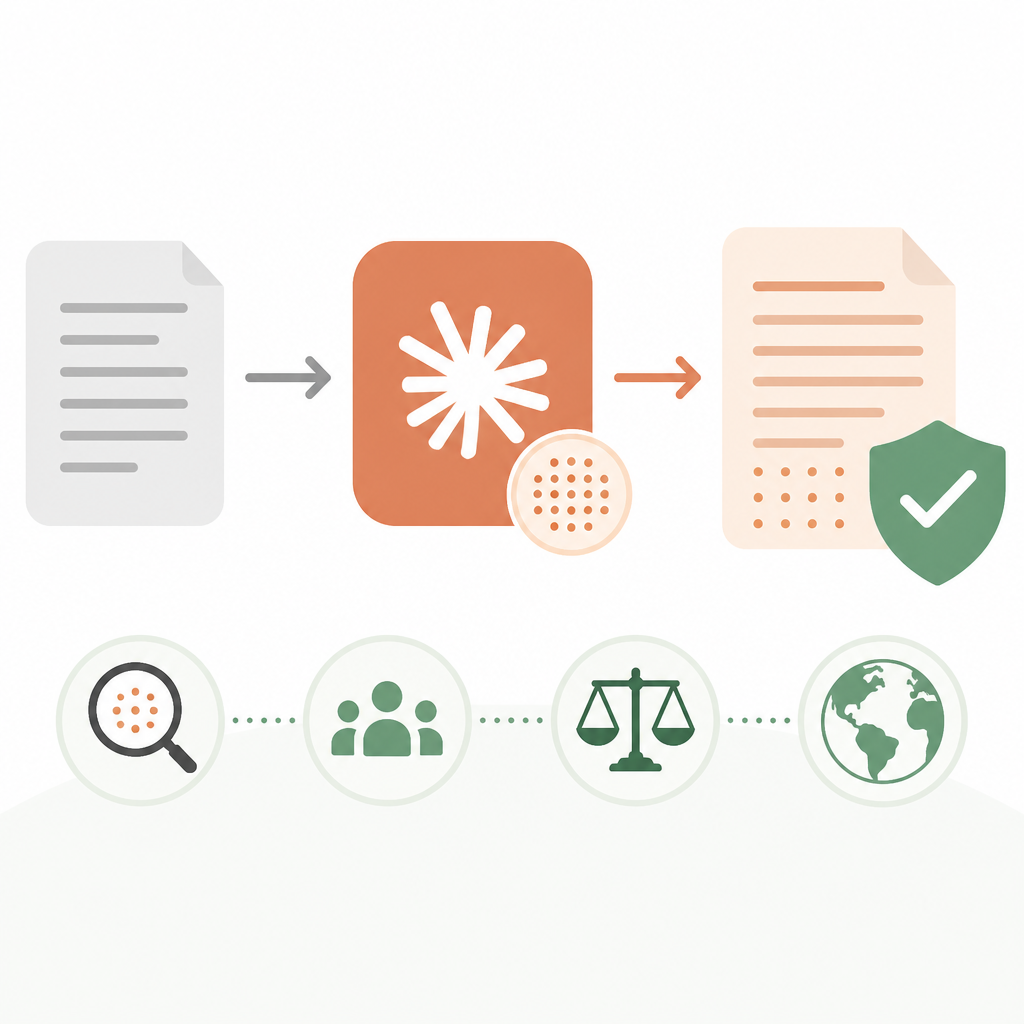
There is also a practical reason to prefer model-level controls. The watermark travels with the text when copied and pasted, and Anthropic says it will apply across products including Claude, Claude Code, Claude Cowork, and Claude Tag. That consistency matters for enterprise adoption. Security teams, compliance teams, and platform operators need a signal that does not disappear the moment content leaves the original app.
The counter-argument
Critics will say watermarking normalizes surveillance, burdens legitimate users, and creates a false sense of safety. They will also argue that if the mark can be removed, sophisticated bad actors will simply strip it, while ordinary users inherit the friction. That critique is serious, because any provenance system can be misused or overtrusted.
But the conclusion does not follow. A watermark is not a surveillance tool by itself; it is a disclosure mechanism. The real abuse risk comes when companies or regulators treat provenance as a substitute for moderation, verification, or legal enforcement. Anthropic’s watermark should be judged as one layer in a broader trust stack, not as a stand-alone solution. On that standard, it is necessary, and the absence of such a layer would be worse.
What to do with this
If you build products on top of LLMs, treat provenance as a shipping requirement now. Engineers should preserve metadata where possible, PMs should define where AI disclosure appears in the workflow, and founders should assume enterprise buyers will ask how your system marks synthetic text, not whether it does. The practical move is simple: design for traceability first, then optimize for usability around it.
// Related Articles
- [IND]
FPT’s OpenAI Select status is a channel play, not a moat
- [IND]
5 banking workflow patterns SAS Viya keeps governed
- [IND]
Wall Street backs Nvidia’s AI financing push
- [IND]
Claude Code Is No Longer the Clear Front-Runner
- [IND]
Anthropic Builds Its Own Chip Team for Claude
- [IND]
Anthropic backs dedicated data centers with Macquarie, GIC