Bitcoin’s CLARITY Act now faces a 60-vote test
1 Senate delay turns the CLARITY Act into a September cloture fight that could shape Bitcoin market rules.
What does the Senate delay mean for Bitcoin’s CLARITY Act?
The Senate pushed the CLARITY Act to September, making 60 votes the next hurdle.
1. The September cloture test
Get the latest AI news in your inbox
Weekly picks of model releases, tools, and deep dives — no spam, unsubscribe anytime.
No spam. Unsubscribe at any time.
The biggest shift is procedural: Senate Republicans now need 60 votes to end debate before the bill can move to final passage. That raises the bar from simple momentum to a formal threshold that can stop the measure even if it has broad support.
This matters because the chamber chose not to finish the bill before the August recess. The CLARITY Act is still alive, but its next step is no longer a straight vote. It is a cloture motion, which means the debate itself becomes the obstacle.
- Target: 60 votes
- Timing: before September
- Next step: cloture to end debate
2. Why the delay matters for Bitcoin
The bill is central to Bitcoin regulation in the U.S., so any pause affects how quickly market-structure rules can move forward. A delay does not kill the effort, but it slows the path for lawmakers trying to define how digital assets are supervised.
For Bitcoin holders and crypto firms, the practical takeaway is uncertainty. The legislation remains in play, yet the Senate now has to show it can gather enough support to keep the bill moving after recess.
- Bitcoin reference price in the report: $65,052.00
- Policy focus: market structure
- Status: delayed, not dropped
3. What Republicans have to prove
Republicans need more than a majority-friendly narrative. They have to assemble a coalition that can survive a procedural vote, and that means persuading senators who may not be ready to back the bill outright. The count matters as much as the policy language.
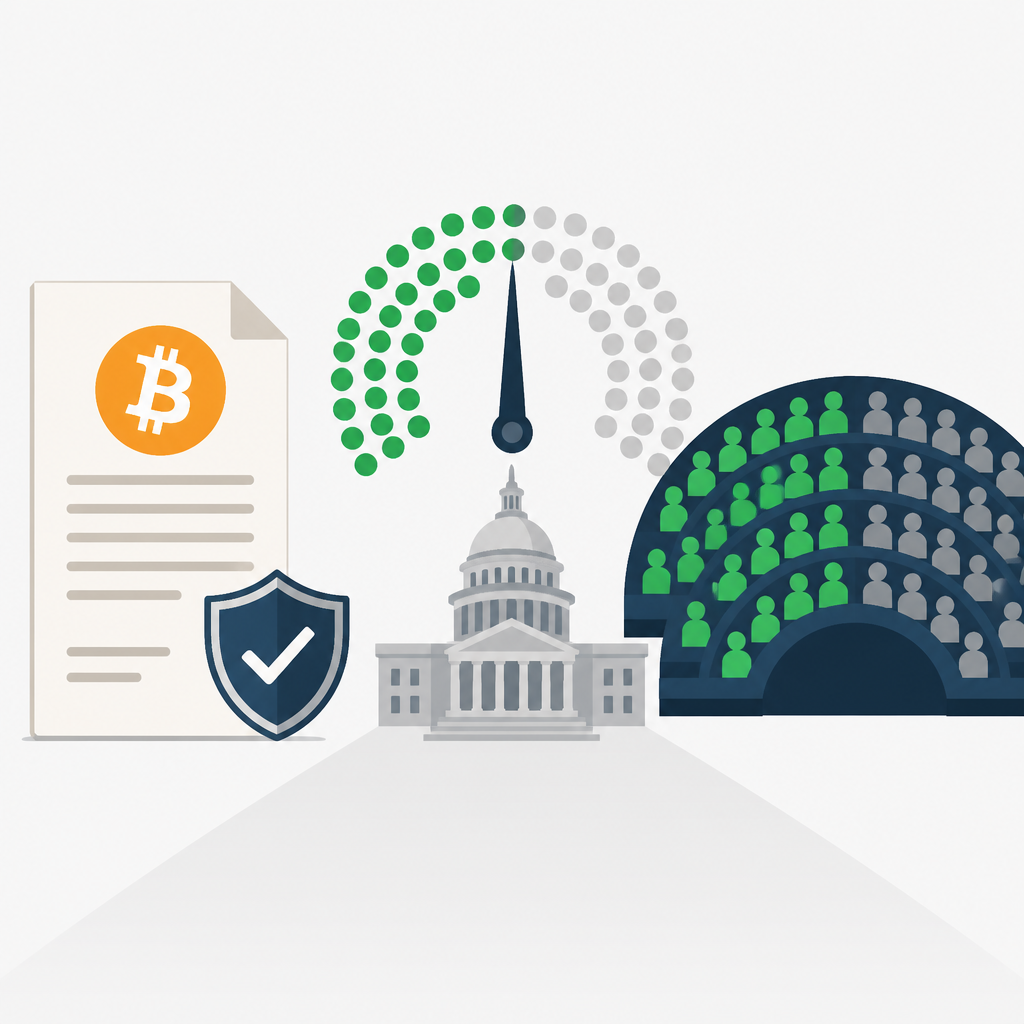
In practice, this turns the CLARITY Act into a whip-count exercise. If supporters cannot reach 60, the bill stalls even before final passage is on the table. If they do, the measure can move into the next phase of Senate consideration.
Motion to invoke cloture -> 60 votes needed -> debate ends -> final vote can follow4. What the recess changes
The August recess gives opponents and skeptics time, which is not ideal for a bill that needs momentum. It also means the Senate returns to a more crowded calendar, where the CLARITY Act will have to compete with other priorities instead of riding a fast track.
That delay can cut both ways. Supporters get more time to line up votes, but they also lose the urgency of an immediate floor decision. The result is a slower, more uncertain route to any market-structure fix.
- No final action before recess
- September becomes the next decision point
- Floor time may be tighter after lawmakers return
5. What this means for crypto policy watchers
If you track crypto regulation, this is a reminder that procedure can matter as much as policy text. A bill may have a clear topic and visible support, but Senate rules can still force a second, harder test before anything becomes law.
For now, the best read is simple: the CLARITY Act is still active, but its path depends on whether Senate Republicans can convert interest into a 60-vote coalition once lawmakers return in September.
How to decide what this means for you
If you are a Bitcoin investor, watch the cloture vote first, not the final passage headline. That is the real gatekeeper. If you follow crypto policy, focus on whether Republicans can hold together a cross-party bloc strong enough to clear 60 votes.
If you are a general reader, the key point is that the bill has not failed. It has just entered a slower phase where Senate procedure may decide its fate before the policy debate does.
// Related Articles
- [CHAIN]
Pepeto's DeFi push is a distraction from Ethereum's real upside
- [CHAIN]
AI agents will not save Web3; they will expose its weakest systems
- [CHAIN]
Panda AI launches Golden Presale for AI blockchain
- [CHAIN]
Layer 2 vs Layer 3: $38B TVL trade-off
- [CHAIN]
Layer 2 Blockchain Development Setup Guide
- [CHAIN]
Layer 2s cut crypto fees, but bridges still decide the risk