California’s Claude deal cuts agency AI costs in half
I break down California’s Anthropic deal and give you a copy-ready template for rolling out discounted Claude in government workflows.

California’s Claude deal shows how to roll out discounted AI in government.
I've been watching government AI rollouts for a while, and honestly, most of them feel like they were written by procurement people who have never had to ship a real workflow. The pitch is always the same: “we’re modernizing,” “we’re improving efficiency,” “we’re exploring responsible use.” Then you get the actual implementation and it’s a pile of pilot programs, vague guardrails, and a vendor deck that somehow never answers the only question that matters: what do workers do on Monday morning?
This California-Anthropic partnership is different enough to be worth dissecting. Not because it’s flashy. It isn’t. It’s interesting because it ties three things together that usually get separated: lower pricing, training, and actual workflow support. That’s the part I care about. If you only discount software, agencies buy it and still don’t know how to use it. If you only do training, people go back to their desks and keep doing everything the old way. California is at least trying to bundle the whole mess into one program.
And yes, I’m skeptical. I’ve seen enough “AI transformation” programs to know that a discount is not a strategy. But a discount plus internal enablement plus a shared services portal? That starts to look like something agencies can actually adopt without turning every department into a one-off science project.
What triggered this breakdown was Yahoo’s repost of Kamina Bashir’s report on the Anthropic deal, which says California state agencies, cities, and counties get Claude at a 50% discount. The article also says Anthropic is pairing that pricing with free workforce training, technical assistance, and workflow help. I’m not going to pretend Yahoo is the original source here; it’s the wrapper. The original reporting is attributed to BeInCrypto, and the state announcement came from Governor Gavin Newsom’s office on June 29, 2026.
That matters, because the real story isn’t “California likes Claude.” The real story is that a state government is trying to normalize AI procurement through a centralized portal, and that’s a much more practical move than the usual press-release theater.
Discounts are boring, which is why they matter
Get the latest AI news in your inbox
Weekly picks of model releases, tools, and deep dives — no spam, unsubscribe anytime.
No spam. Unsubscribe at any time.
“California has signed a first-of-its-kind agreement with Anthropic that gives state agencies, cities, and counties access to its Claude assistant at a 50% discount.”
What this actually means is simple: California is cutting the unit cost of trying AI. That sounds small, but in government procurement, cost friction is half the battle. If every department has to justify full-price seats, the adoption conversation dies in committee. Half-price changes the math enough that more managers can say yes without needing a miracle budget cycle.
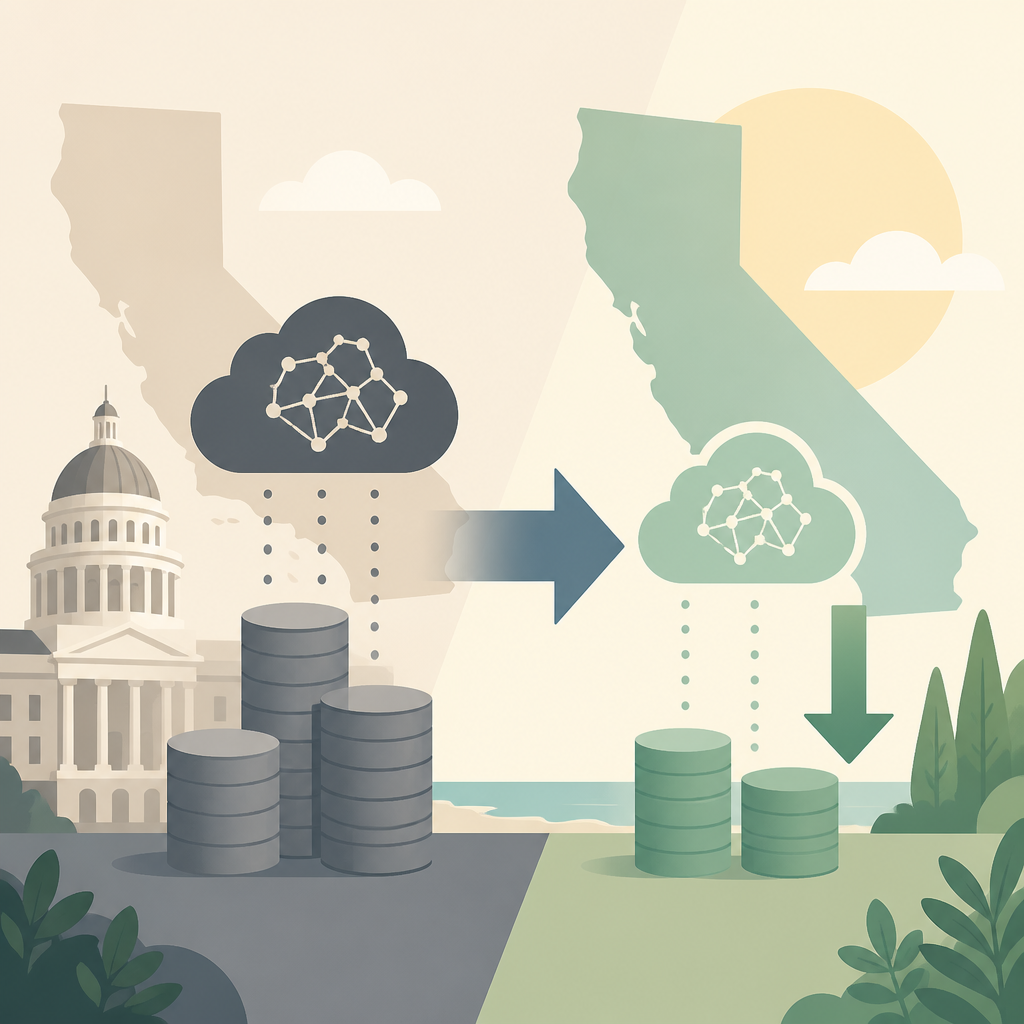
I’ve run into this exact problem in enterprise teams. The product is fine. The workflow use case is clear. But the price becomes the excuse to do nothing. A discount doesn’t guarantee adoption, but it removes the easiest objection. That’s useful because the hardest part of AI adoption is rarely model quality. It’s getting people to test it on real work instead of treating it like a demo toy.
California’s move is also a signal to vendors: if you want public-sector volume, you probably need a pricing model that matches public-sector buying behavior. Governments don’t buy like startups. They buy through layers, with approvals, audits, and budget owners who hate surprises. A 50% discount is basically Anthropic saying, “We’re willing to meet you where the paperwork lives.”
How to apply it: if you’re rolling out AI in an organization, stop starting with “which model is best?” Start with “what price point makes experimentation easy enough that teams will actually try it?” Then package that with a limited, visible buying path. If your users need six forms and a prayer, they’ll keep using spreadsheets and email.
Training is the part everyone skips, then regrets
“It pairs the discounted access with free workforce training, technical assistance, and workflow help from Anthropic developers.”
This is the part I like. Not because training is glamorous. It’s the opposite. It’s the unsexy part that determines whether people use AI for real work or just ask it to write polite emails. The article says Anthropic is providing workforce training, technical assistance, and workflow help. That’s a stronger package than “here’s a login, good luck.”
I’ve seen too many organizations buy AI tools and then act shocked when adoption stalls. Of course it stalls. Nobody taught the staff how to use the thing in a way that maps to their actual job. Training isn’t a lunch-and-learn with a few prompts on a slide. It has to be tied to the work: case review, document drafting, code scanning, resident support, policy summaries, procurement review.
California’s use case is especially telling because public-sector teams tend to be overloaded and process-heavy. They don’t need abstract “AI literacy.” They need concrete patterns: how to summarize a case file, how to draft a response, how to triage incoming requests, how to identify code issues, how to route work faster without losing accountability.
How to apply it: build training around tasks, not features. I’d structure it like this:
- One session for “what this tool is good at”
- One session for “what not to trust it with”
- One session for department-specific workflows
- One follow-up clinic where staff bring real examples
If you skip the clinic, people learn the tool in theory and misuse it in practice. And then leadership blames the model instead of the rollout.
Centralized access beats scattered pilot chaos
“The service will be available through the California Department of Technology's new Statewide Information Technology Shared Services portal.”
That portal detail is the real operational move. California isn’t just saying “use Claude.” It’s creating a centralized entry point for AI tools with transparent pricing for state business needs. That’s a procurement and governance play, not just a product deal.
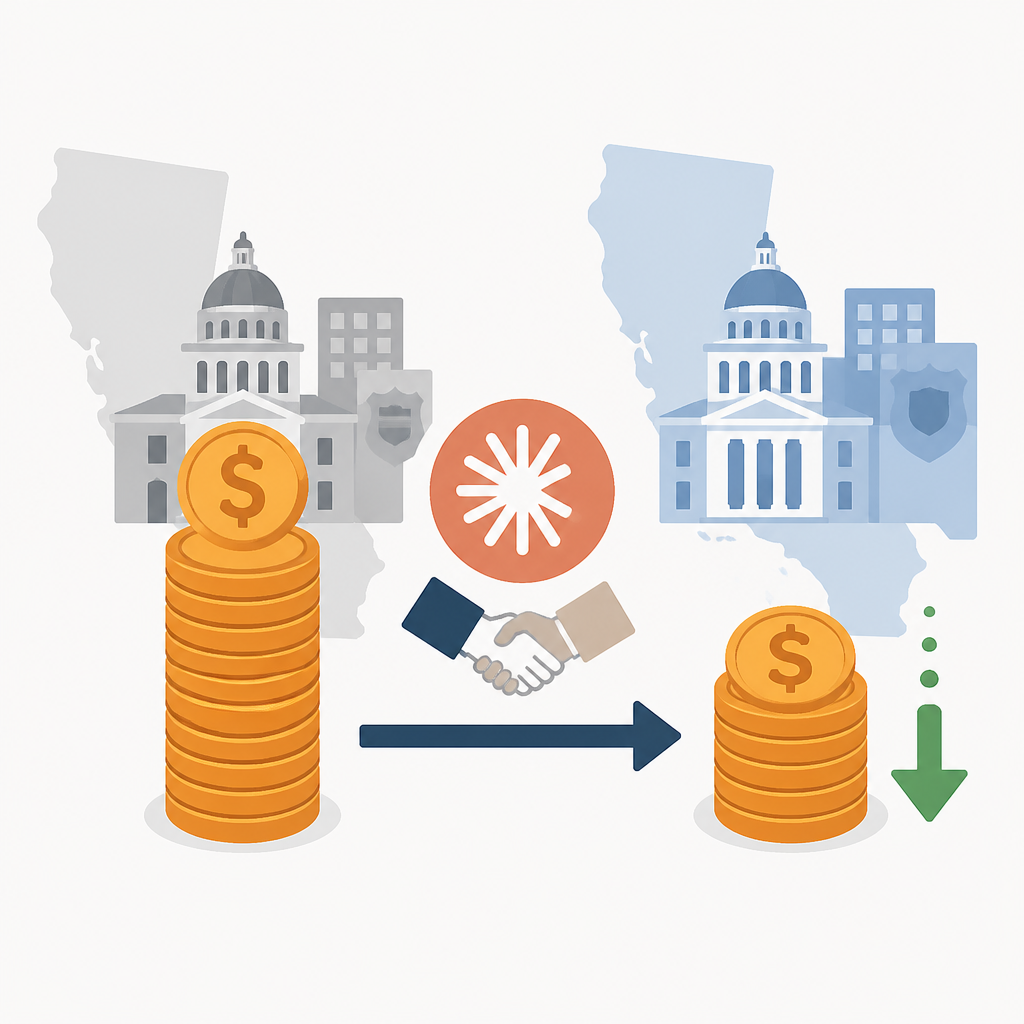
What this actually means is that agencies don’t have to negotiate every purchase from scratch. They can go through a shared service path, which should reduce duplicate vendor work and make it easier to standardize access. In plain English: fewer random side deals, fewer shadow pilots, fewer departments reinventing the wheel because they couldn’t find the approved form.
I’ve been in organizations where every team had its own AI experiment, its own budget line, its own security review, and its own interpretation of policy. It’s a mess. People waste months just arguing about whether they’re allowed to try the tool. A shared portal at least gives the bureaucracy one place to land.
That said, centralized access can become a bottleneck if it’s too rigid. If the portal turns into a gatekeeper that takes 90 days to approve a simple use case, adoption will still stall. The trick is to make the shared path faster than the unofficial path. If the “approved” route is slower than buying a random SaaS subscription, people will go around it.
How to apply it: if you’re designing an internal AI program, create one intake path, one pricing model, and one security review track for common use cases. Then define a fast lane for low-risk workflows. Centralization only works when it reduces friction instead of adding another layer of managerial fog.
California is trying to make AI look like operations, not headlines
“Newsom framed the move as efficiency reform, not headcount reduction.”
That framing matters because public-sector AI stories usually collapse into one of two bad narratives: either it’s hype, or it’s job cuts. Newsom is explicitly pushing a third story, which is that AI should help workers move faster and deliver better results. The article quotes him saying, “AI should not replace the human work of government; it should help our workers move faster, solve problems more effectively, and deliver better results for Californians.”
That’s a politically safer message, but it’s also a more usable one for managers. If your rollout is framed as “replace people,” your staff will resist it, and honestly, they should. If it’s framed as “reduce busywork,” you can actually get buy-in. Nobody joins government because they love repetitive drafting and manual triage.
I’ve seen this mistake in private companies too. Leaders announce AI and immediately talk about headcount efficiency. Then they wonder why no one volunteers to test it. People don’t want to be the first case study in their own replacement. If you want adoption, talk about throughput, service quality, and fewer garbage tasks. That’s the honest pitch.
How to apply it: when you introduce AI internally, lead with work quality metrics, not staffing language. Use phrases like:
- reduce response time
- cut repetitive review work
- improve triage accuracy
- free staff for higher-value cases
That’s not spin. It’s the only framing people can actually act on without panic.
The real test is whether agencies use it for actual work
“Several agencies are already using the assistant.”
The article says California already has agencies using Claude, including the Department of Technology, the Office of Emergency Services, the DMV, the Department of Health Care Services, Engaged California, and an internal tool called Poppy. That’s important because it means the partnership is not starting from zero. It’s formalizing usage that already exists.
What this actually means is the state is trying to move from scattered usage to sanctioned usage. That’s a big difference. Shadow adoption proves demand. A formal deal proves the organization is ready to operationalize it. Those are not the same thing, and I’ve watched teams confuse them constantly.
The use cases listed in the article are the right kind of boring: cyber defense, scanning, patching code, customer service, internal workflows, public input. Those are the places where AI can save time without pretending to be magic. If the DMV can cut wait times, if health services can move internal paperwork faster, if emergency teams can scan and patch with less manual drag, that’s a real operational win.
How to apply it: pick one workflow with high volume and low ambiguity. Don’t start with the flashy demo. Start with the task everyone hates and already does badly because it’s repetitive. Then measure before-and-after time, error rate, and staff satisfaction. If you can’t measure those, you’re not rolling out AI. You’re decorating.
Policy matters, because AI procurement without guardrails turns ugly fast
“The partnership extends California's AI agenda, which began with a 2023 executive order and produced Senate Bill 53.”
That line tells me California is trying to build a policy spine around the buying decision. The article connects the deal back to a 2023 executive order and Senate Bill 53. So this isn’t a one-off vendor announcement. It’s part of a longer state effort to define how AI gets used in government.
I care about that because AI without policy usually turns into a mess of inconsistent approvals, unclear accountability, and weird security exceptions nobody wants to own later. Public agencies need rules, but they also need rules that don’t freeze everything. That balance is hard, and most organizations fail on one side or the other.
If you’re building this kind of program, you need to answer a few questions up front: Who can use the tool? For what kinds of data? What needs human review? What gets logged? Who audits outputs? Who owns mistakes? If you don’t define that, the rollout becomes a liability disguised as innovation.
How to apply it: write the policy before the enthusiasm gets ahead of you. Keep it short, specific, and tied to actual workflows. Then revisit it after the first month of usage. The point is not to make policy feel noble. The point is to keep people from doing dumb things with a powerful tool.
The template you can copy
# Government AI rollout template for a discounted vendor program

## 1) Program goal
We are adopting [AI tool] to reduce manual work in [department/workflow] while keeping human review in place for decisions that affect residents, customers, or regulated processes.

## 2) Access model
- Vendor: [vendor name]
- Product: [product name]
- Buying path: [shared services portal / approved procurement route]
- Pricing: [discounted rate / standard rate / pilot rate]
- Eligible teams: [list departments, agencies, or units]

## 3) Approved use cases
Use the tool for:
- drafting internal summaries
- triaging requests
- summarizing long documents
- scanning code or text for issues
- creating first-pass responses for staff review

Do not use the tool for:
- final decisions without human review
- sensitive actions without approval
- unreviewed public-facing statements
- workflows that require legal or regulatory judgment

## 4) Training plan
Week 1:
- tool basics
- approved use cases
- data handling rules

Week 2:
- department-specific workflow session
- examples from real tasks

Week 3:
- office hours and live clinics
- review of first outputs

## 5) Governance checklist
Before launch, confirm:
- data classification rules are written
- human review requirements are clear
- logging and audit ownership are assigned
- security review is complete
- procurement owner is named
- escalation path exists for bad outputs

## 6) Success metrics
Track:
- time saved per workflow
- number of staff using the tool
- reduction in queue time
- error rate before and after
- staff satisfaction

## 7) First 30 days
- launch with one high-volume workflow
- collect examples of good and bad outputs
- run weekly office hours
- revise policy based on actual usage
- decide whether to expand, pause, or narrow scope

## 8) Internal announcement copy
We are introducing [AI tool] through [approved access path] to help staff reduce repetitive work in [workflow]. The tool is intended to support, not replace, human judgment. Staff should use it only for approved tasks and follow data handling and review rules.
I’d use this exact structure if I were rolling out a vendor-backed AI program in a public agency, university, or enterprise department that hates chaos. It’s not fancy. That’s the point. The best internal AI program I’ve seen was boring in the right ways: clear access, clear use cases, clear review, clear training, clear metrics.
And if you want the original reporting that kicked this off, start with the Yahoo repost of Kamina Bashir’s article, which points back to BeInCrypto’s coverage of the California-Anthropic partnership. The original piece is theirs; this breakdown is mine, built from the reported details and shaped into something you can actually use.
// Related Articles
- [IND]
Anthropic talks custom chip plans with Samsung
- [IND]
FeaturedCustomers ranks 21 MLOps vendors by customer success
- [IND]
Booz Allen + OpenAI make secure AI deployable
- [IND]
Tokenized securities will not replace public markets anytime soon
- [IND]
Equity tokenization platform features that matter most
- [IND]
Fable 5解禁后只剩更窄的能力