OpenAI’s distillation playbook explains the Kimi panic
4 takeaways show why OpenAI’s 2024 distillation tools made model copying a normal AI practice, not a new scandal.
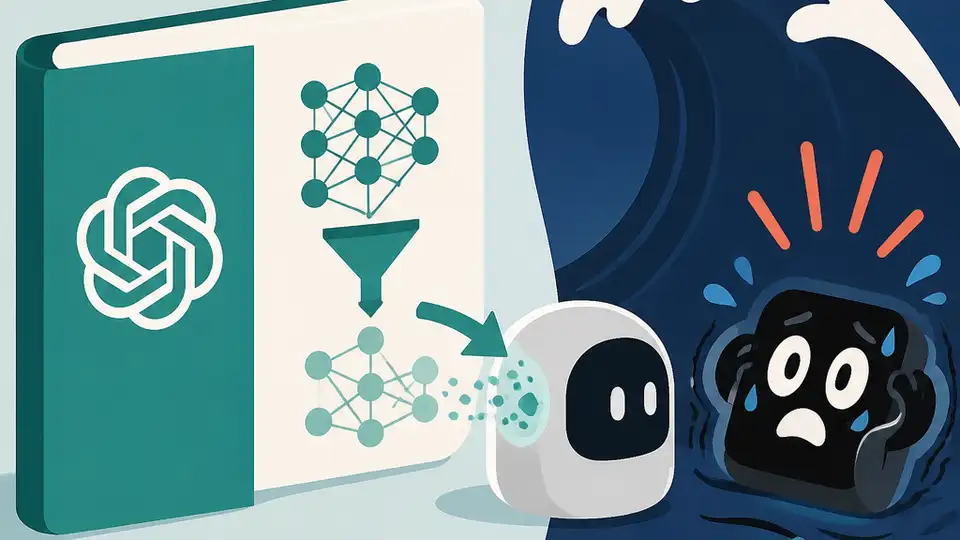
What does OpenAI’s 2024 distillation rollout say about the Kimi panic?
OpenAI’s 2024 distillation tools made model copying a normal AI practice.
| Item | What it does | Why it matters |
|---|---|---|
| OpenAI distillation tools | Use GPT-4o outputs to fine-tune smaller models | Makes model transfer a documented workflow |
| GPT-4o mini | Receives distilled training signals | Shows how smaller models can close the gap |
| GPT-4o | Acts as the teacher model | Provides the higher-quality outputs for tuning |
| Model distillation | Compresses knowledge from a larger model | Can bring efficient models near frontier performance on narrow tasks |
1. OpenAI’s distillation tools
Get the latest AI news in your inbox
Weekly picks of model releases, tools, and deep dives — no spam, unsubscribe anytime.
No spam. Unsubscribe at any time.
The clearest point in the source is that OpenAI formally shipped model distillation tools in 2024. Developers could use GPT-4o outputs to fine-tune GPT-4o mini, which puts the practice inside an official product path instead of treating it like a hidden trick.

This matters because the article’s core argument is not about a one-off controversy. It is about a method that has already been normalized by one of the most visible AI labs, and that changes how people should read accusations of model copying.
- Teacher model: GPT-4o
- Student model: GPT-4o mini
- Training signal: GPT-4o outputs
- Use case: fine-tuning smaller models
2. Model distillation itself
Model distillation is the broader technique underneath the news. A larger model generates outputs, and those outputs are then used to train a smaller model so it can perform better on targeted tasks. The source says this can help smaller, more efficient models reach advanced-model performance in specific areas.
That framing is important because it separates technical practice from social panic. If a company uses distillation, the question is not whether the method exists. The real questions are what data was used, whether the workflow was disclosed, and how far the resulting model goes beyond the teacher.
- Goal: compress knowledge from a larger model
- Benefit: better performance from a smaller model
- Limit: gains are usually task-specific
- Risk: confusion over what counts as copying
3. GPT-4o as the teacher model
In this setup, GPT-4o is the source of the higher-quality outputs. That makes it the teacher model, the one whose behavior is being translated into a smaller system. The source highlights that OpenAI explicitly allowed developers to use those outputs for tuning GPT-4o mini.
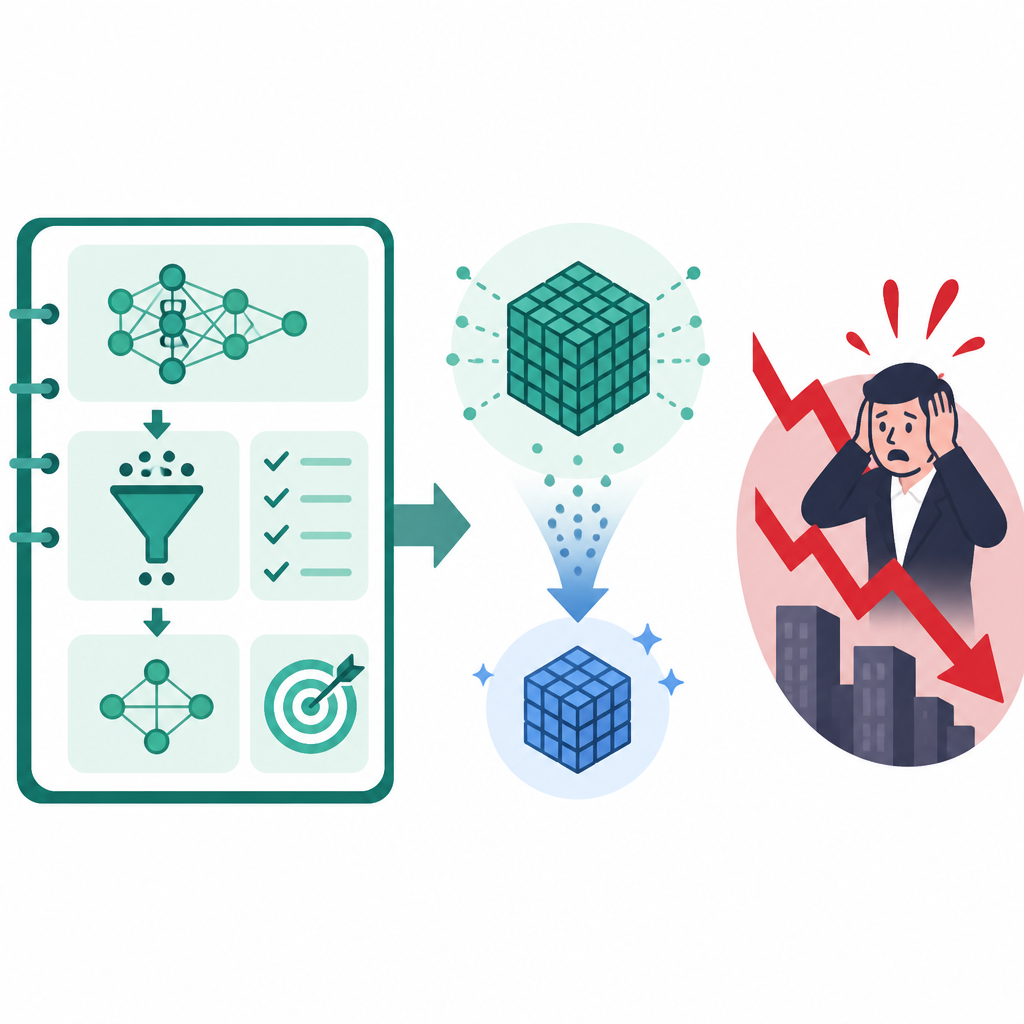
That detail is easy to miss, but it is the heart of the story. If a leading lab publicly supports this workflow, then distillation is not a fringe tactic. It is a standard engineering choice for teams trying to reduce cost while keeping quality high enough for production work.
- Role: teacher model
- Output type: responses used for tuning
- Practical effect: smaller model gets stronger behavior
- Business effect: lower serving cost
4. GPT-4o mini as the student model
GPT-4o mini is the example of the student model in the source. It is smaller and more efficient, but with distilled training it can perform much better than a plain small model. That is why the article cites OpenAI’s own language about bringing smaller models closer to advanced-model performance on specific tasks.
This is the part that makes the economics matter. A smaller model is cheaper to run, easier to deploy, and often enough for narrow use cases. Distillation gives teams a way to trade generality for efficiency without starting from scratch.
- Role: student model
- Strength: efficiency
- Tradeoff: less general capability than a frontier model
- Best fit: targeted tasks and lower-cost deployment
5. Why the “Kimi panic” looks overblown
The source’s bigger message is that the Kimi panic sits inside a long-established AI practice. If OpenAI itself has documented distillation, then the debate should not pretend the method is strange or illegitimate. The real issue is how the method is used, described, and judged.
That does not end the controversy, but it does change the frame. Instead of treating distillation like a shocking breach, readers should see it as a common engineering approach with clear technical and ethical questions attached.
- Distillation is common, not new
- Official documentation changes the context
- Debate should focus on disclosure and boundaries
- Panic often outruns the technical facts
How to decide
If you care most about the technical method, the key takeaway is that distillation is now a mainstream AI workflow. If you care about the business angle, the important point is that smaller models can inherit useful behavior from larger ones and cut serving costs.
If you are tracking the Kimi debate, the best reading is simple: ask what was trained, what was disclosed, and how closely the student model depends on the teacher. That is where the real story lives.
// Related Articles
- [IND]
Gemini 3.5 Flash lets you buy speed
- [IND]
RISC-V is past the hobby phase and should be treated as a real platfo…
- [IND]
Nvidia and OpenAI discuss a $250B AI backstop
- [IND]
Claude Opus 5 posts the lowest safety audit score
- [IND]
Anthropic expands Claude partnership with Cognizant
- [IND]
Windsurf’s Cascade turns IDE edits into agent work