China Is Winning the AI Cold War by Building the Stack, Not the Demo
China is pulling ahead in AI by building the full stack, while the U.S. obsesses over model benchmarks.

1.6 million Ascend chips show China is building AI power, not just models.
China is winning the AI cold war because it is building the full stack of power while the United States keeps arguing over model rankings.
For more than two decades on the Army Staff, I watched a simple truth repeat itself: nations do not stay aligned because of one superior weapon, but because their training, supply chains, doctrine, and industry all point in the same direction. That is why Huawei’s Ascend processors and DeepSeek’s model tuning matter more than another benchmark chart. Beijing is not chasing a clever demo. It is building a system that can attract developers, lock in customers, and keep scaling after the headlines move on.
The first argument: scale beats spectacle
Get the latest AI news in your inbox
Weekly picks of model releases, tools, and deep dives — no spam, unsubscribe anytime.
No spam. Unsubscribe at any time.
Huawei’s plan to double Ascend production in 2026 toward 1.6 million chips is not a footnote. It is the kind of industrial number that changes a market. AI does not run on press releases or benchmark slides. It runs on silicon, power, cooling, networking, and enough volume to make adoption cheap. Once a company can deploy at scale, it can shape the behavior of startups, ministries, and cloud buyers far beyond its borders.
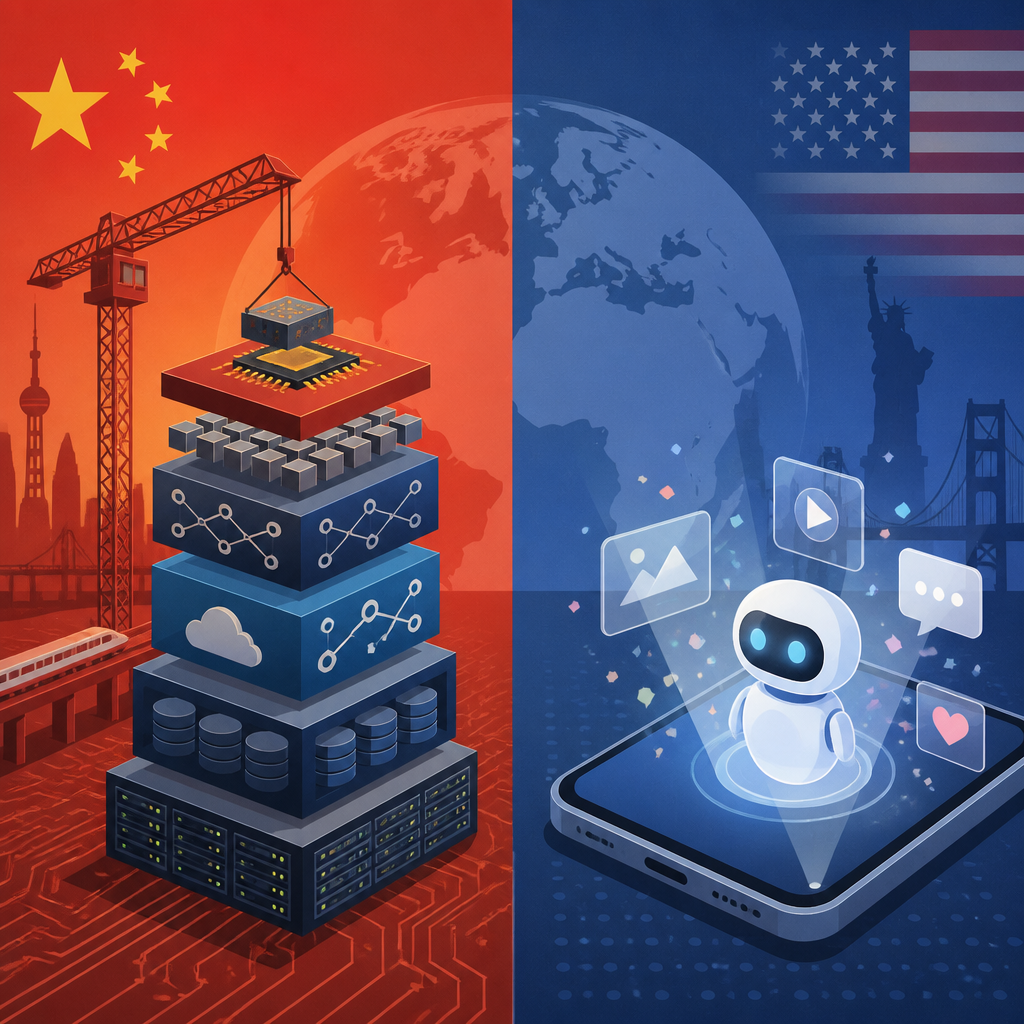
DeepSeek’s decision to tune its newest models specifically for Huawei silicon proves the point. That pairing creates a self-reinforcing loop: chips get better support because models are built for them, and models spread because the hardware is available and affordable. This is how platforms win. The strongest platform is not the one with the prettiest score on a leaderboard. It is the one that developers can afford to use every day.
The second argument: ecosystems outlast individual models
By February 2026, Chinese open-source models were drawing more weekly token traffic on the world’s largest model marketplace than American models, and four of the five most-used systems globally were built in China. That is the number Washington should fear. Usage is the real signal of power in AI. When more people build on your models, your standards spread, your tooling improves, and your influence compounds. Benchmarks matter less than dependency.
The same pattern is already visible outside China. Banks in Singapore, telecom carriers in Indonesia, and government platforms in Malaysia are running on Chinese models and Huawei hardware. One venture capital partner has said most American startups now build on Chinese base models because they are cheaper to run. That is not an abstract strategic concern. It is the beginning of lock-in. Once firms build products, workflows, and compliance systems around one stack, switching becomes expensive and politically awkward.
The counter-argument
The strongest case for the United States is that raw innovation still matters. America leads in frontier research, top-tier universities, cloud platforms, and the most valuable AI companies. It also has advantages China lacks: deeper capital markets, stronger alliances, and a more open startup culture. On top of that, Washington can still slow Beijing with export controls, chip restrictions, and pressure on allied suppliers.
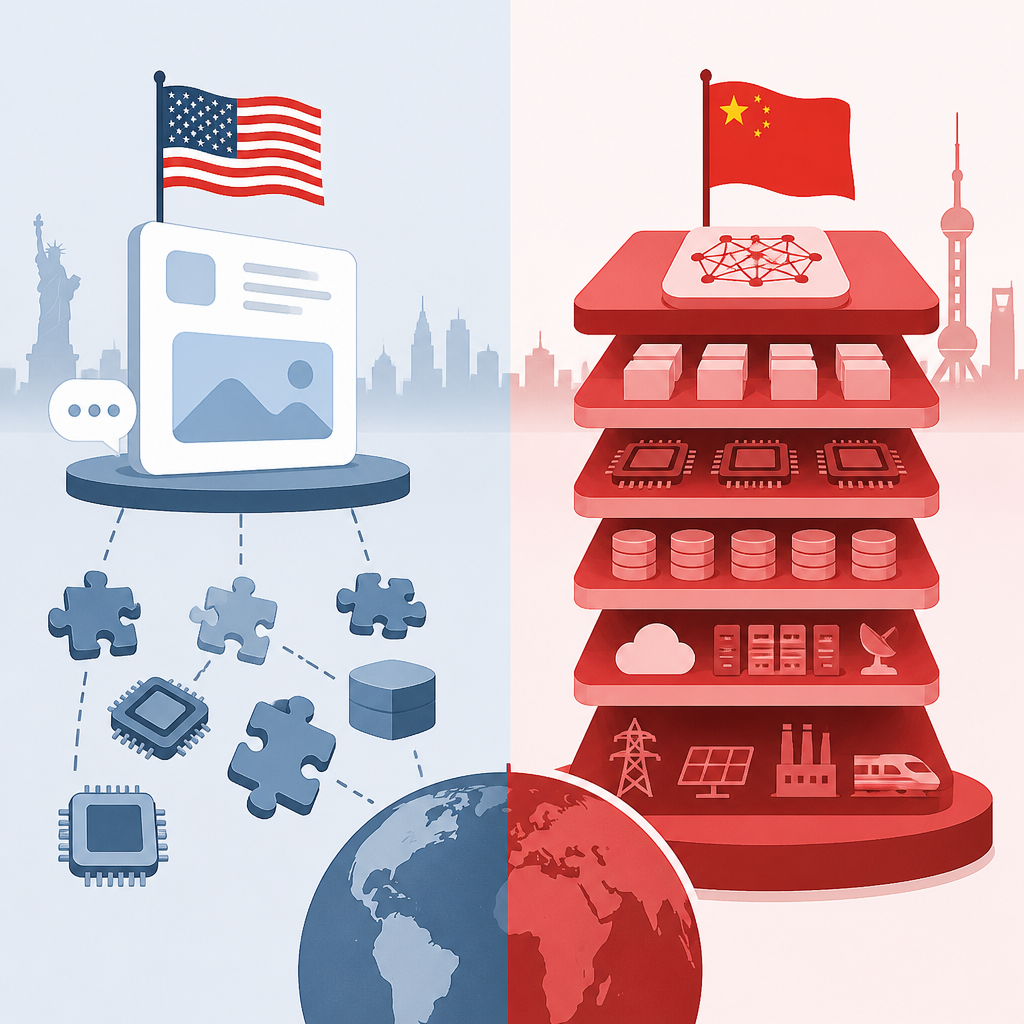
That argument is serious, and it is not wrong. America still has more room to invent the next breakthrough. But it misses the time horizon that decides industrial contests. Export controls delay, they do not decide. Research leadership matters, but only if it turns into adoption. A superior model that remains a lab trophy loses to a cheaper, easier, widely deployed stack. China understands that AI power comes from energy, chips, infrastructure, and distribution working together. America keeps acting as if the best model wins by itself.
What to do with this
Engineers, PMs, and founders should stop treating model quality as the finish line and start designing for deployment, cost, and ecosystem pull. Build on abundant compute, optimize for integration, and choose tools that your customers can actually afford to run at scale. If you are in the United States, the answer is not just better research. It is faster chip manufacturing, cheaper power, denser data centers, and a serious push to make American AI the easiest stack to adopt, not merely the smartest one in a benchmark race.
// Related Articles
- [IND]
OpenSearch’s vector search benchmark in 5 parts
- [IND]
Vector Databases That Work in Production
- [IND]
EU AI Act hits business systems on Aug. 2, 2026
- [IND]
US AI law in 2026: what teams must track
- [IND]
WebX 2026’s agenda centers on stablecoins and AI
- [IND]
GPT-5.6 Is OpenAI’s Best Coding Model, But the Real Story Is ChatGPT …