Claude outages are a reliability problem, not a footnote
Claude’s repeated outages show reliability is now a core product issue, not a side note.

Claude’s repeated outages show reliability is now a core product issue, not a side note.
Claude’s June 23 outage proves Anthropic has a reliability problem, and users should treat it as a product risk, not a temporary hiccup.
On Monday, the outage hit the chat interface, Claude Code, Claude Cowork and the API at once, which means the failure reached across consumer use, developer workflows and enterprise access. TechRadar reported more than 7,000 US reports on Downdetector at the peak, and Anthropic’s status page acknowledged an elevated error rate before later calling the incident resolved. That is not a minor blip. It is a broad service interruption that touched the full stack of Claude usage.
First argument: outages at this scope break trust fast
Get the latest AI news in your inbox
Weekly picks of model releases, tools, and deep dives — no spam, unsubscribe anytime.
No spam. Unsubscribe at any time.
When an AI assistant goes down, the damage is not limited to annoyance. Teams build workflows around it, then discover that a single service can halt coding, drafting, research and support in one shot. Claude Code going dark matters because it is no longer just a chat tool; it is part of the production path for engineers who rely on it for day-to-day work. Once a tool becomes embedded in the workflow, reliability becomes part of the product promise.
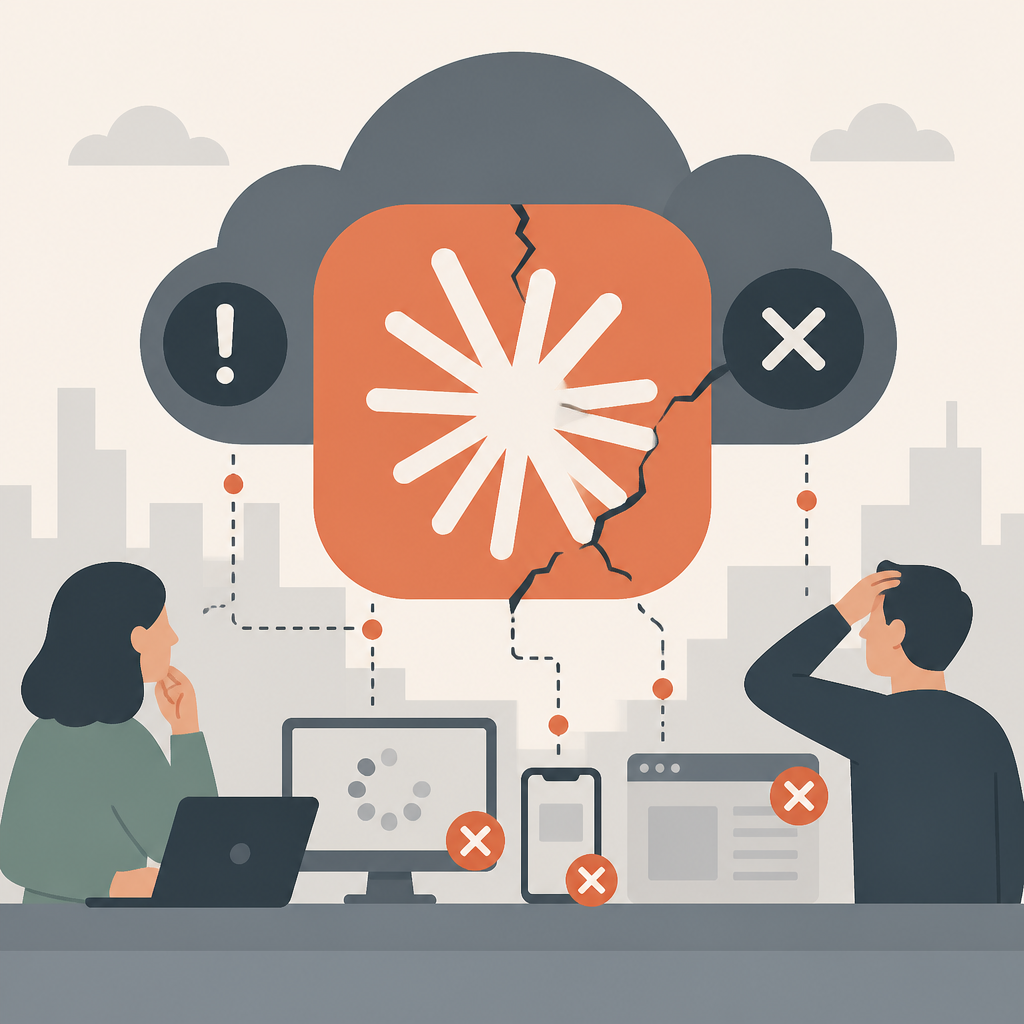
The June 23 incident was especially damaging because it was not isolated to one model or one feature. TechRadar noted that the outage affected all Claude platforms except Claude for Government, and that makes the failure feel systemic rather than accidental. Users do not care whether the root cause sits in inference, routing or load balancing. They care that the service they pay for, or depend on, stopped working across the board.
Second argument: repeated incidents expose a maturity gap
This was not the first notable Claude disruption this month. TechRadar pointed back to a significant outage on June 2 and said the new one was bigger. That matters because one outage can be forgiven as an operational mistake, but two in three weeks signals a pattern. Patterns are what customers notice, and patterns are what enterprise buyers use when they decide whether a platform is dependable enough for serious work.
Anthropic’s own status updates also tell a story. The company first reported a fix had been implemented and later said the issue was resolved, yet users were still seeing delays and partial recovery after the supposed fix. That gap between status messaging and real-world behavior is exactly where confidence erodes. If the status page says one thing while users are still stuck waiting for responses that never finish, the company has a communication problem as well as an infrastructure problem.
The counter-argument
The fair defense is that outages happen to every major AI provider. These systems are complex, demand-heavy and still scaling under intense usage. A spike in traffic can expose weak points even in a well-run platform, and the fact that Anthropic restored service within hours shows the incident was handled, not ignored. From that view, one bad day should not be treated as proof that Claude is fundamentally unreliable.
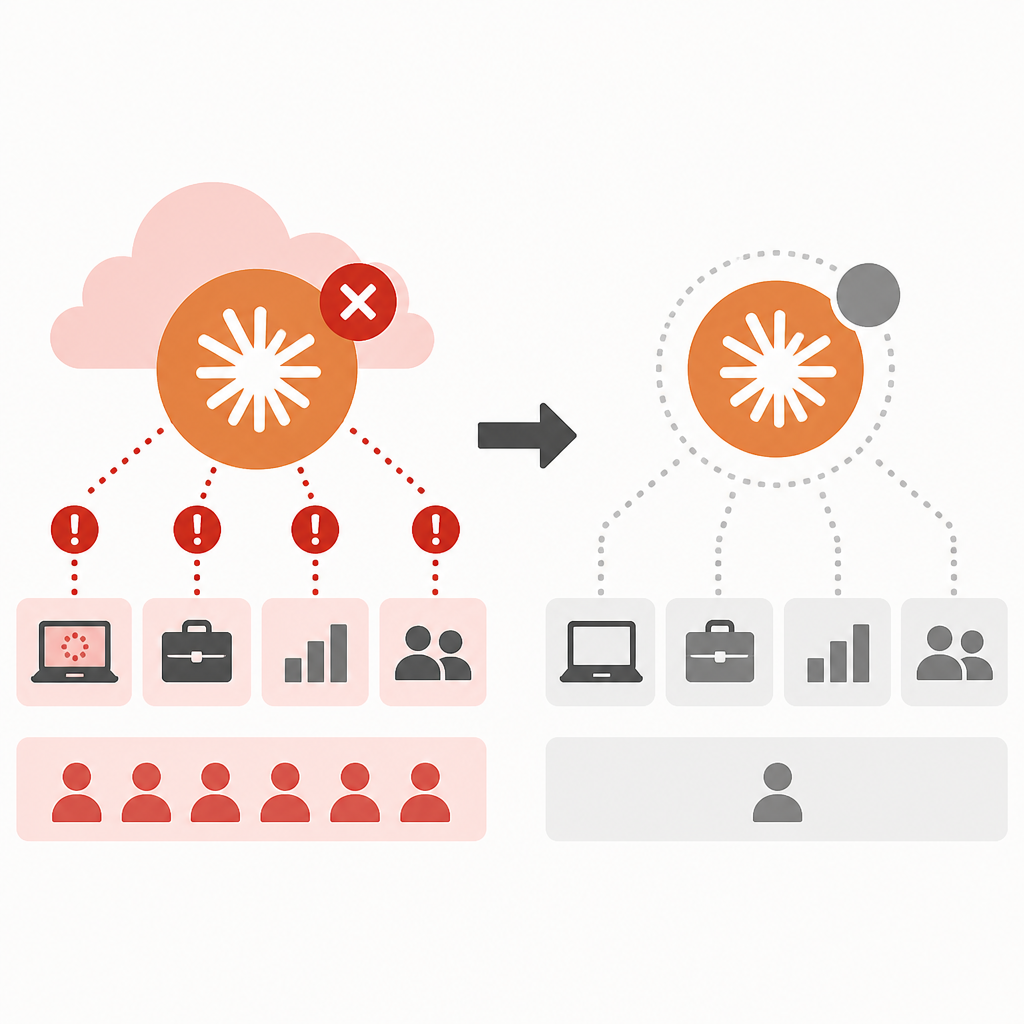
That argument has merit, but it stops short of the real issue. Users do not buy AI systems on technical sympathy; they buy them on uptime and consistency. If a platform is down across chat, code and API, the operational impact is too broad to dismiss as normal growing pain. The limit is clear: occasional downtime is acceptable, repeated broad outages are not. Anthropic has crossed into the second category.
What to do with this
If you are an engineer, PM or founder building on Claude, stop treating it as a single point of dependency. Add fallback models, cache critical outputs, and design workflows so a Claude outage does not freeze your team. If you are buying AI for a product or company, ask vendors for uptime history, incident transparency and recovery times, not just benchmark scores. Reliability is now part of model quality, and the teams that plan for outages will ship faster than the teams that assume the assistant will always be there.
// Related Articles