Computational thinking should replace coding drills in AI-era educati…
AI-era education should prioritize system design and computational thinking over manual coding drills.
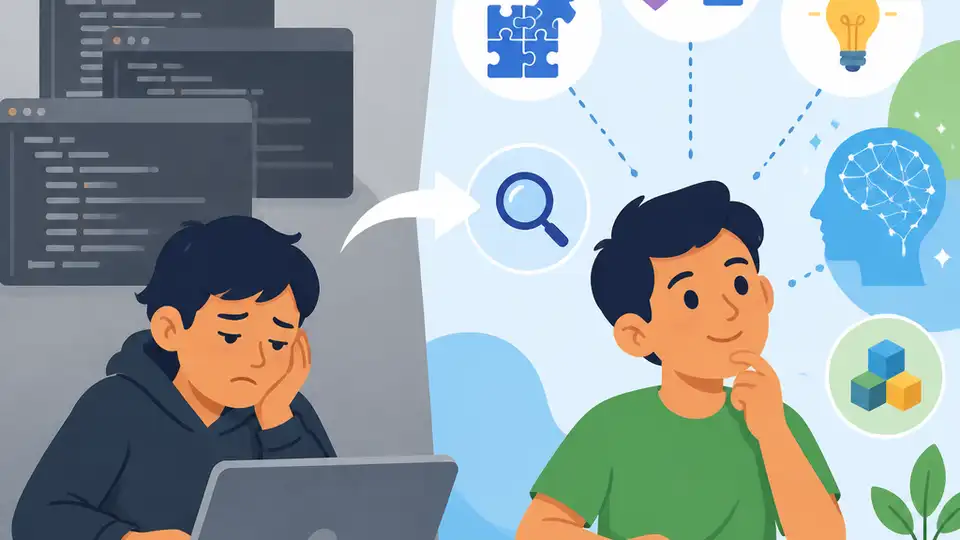
2026 classrooms should teach system design first, not manual coding drills.
2026 classrooms should stop treating syntax as the core skill and start treating system design as the skill that matters.
First argument: AI has already commoditized boilerplate
Get the latest AI news in your inbox
Weekly picks of model releases, tools, and deep dives — no spam, unsubscribe anytime.
No spam. Unsubscribe at any time.
When AI assistants can generate loops, classes, and API glue in seconds, the old lesson plan loses its center of gravity. The Baltimore shift described in the source is not a novelty; it reflects a labor market where the value sits in specifying the problem, checking the output, and integrating modules that an assistant can draft faster than a student can type them.
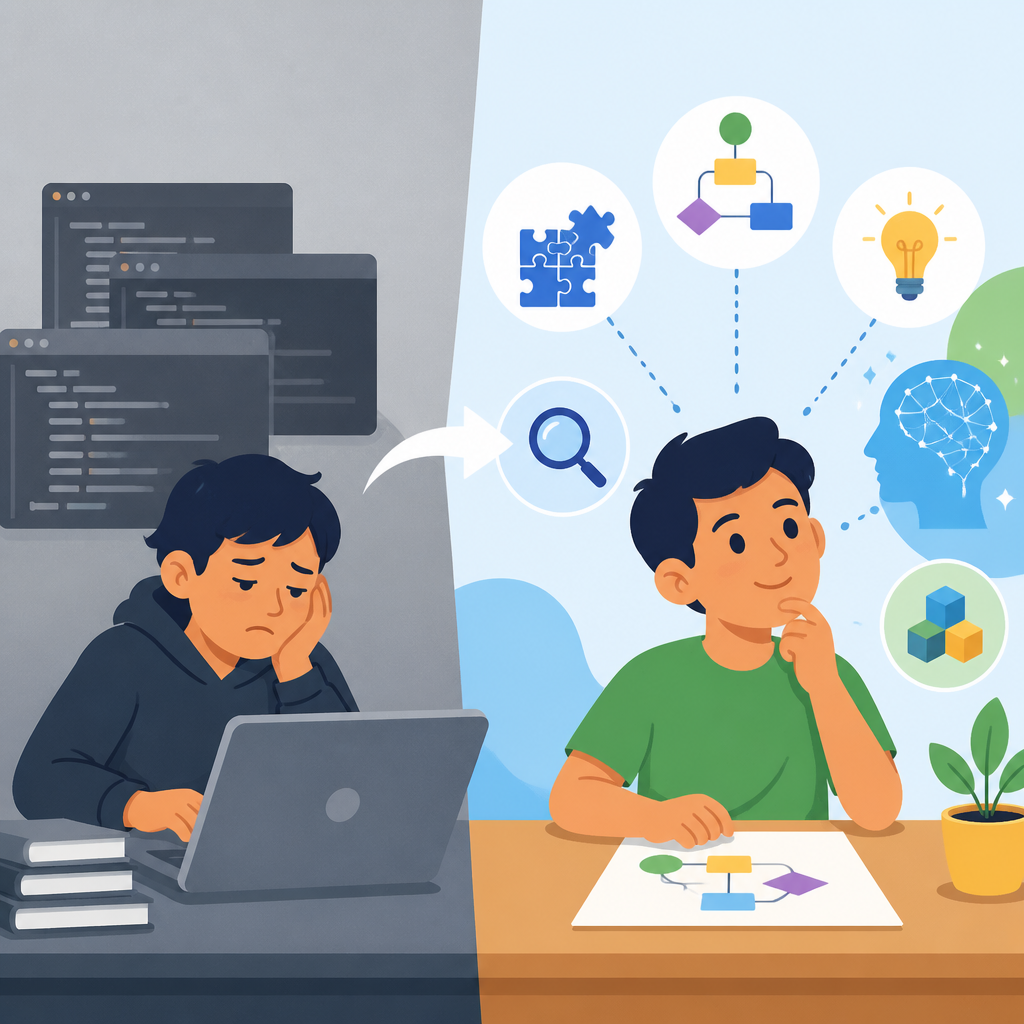
This is not abstract theory. A student who can explain data flow, failure modes, and security boundaries is more useful than one who memorizes language trivia. In practice, the developer who can direct an AI to produce correct, scalable code is the one who will ship software in 2026, not the student who can recite syntax from memory.
Second argument: system design builds better judgment
Computational thinking forces students to decompose messy problems into parts, compare tradeoffs, and define what “correct” even means. That is a stronger educational outcome than rewarding the ability to reproduce a known coding pattern, because real systems break at the seams between components, not inside a single for-loop.
The source’s Prompt-to-Product pipeline gets this right: students are evaluated on architecture, verification, and orchestration, not just code output. That matters because AI can draft code, but it cannot own responsibility for whether a product is secure, efficient, ethical, and aligned with user needs. Those are design judgments, and schools should train them directly.
Third argument: the new divide is not access to AI, but access to production skills
The most serious warning in the Baltimore example is the Digital Divide 2.0. Some schools are teaching students how to consume AI tools, while better-resourced schools are teaching them how to build with AI and refine it. That creates a deeper class split than the old divide ever did, because it separates operators from architects.
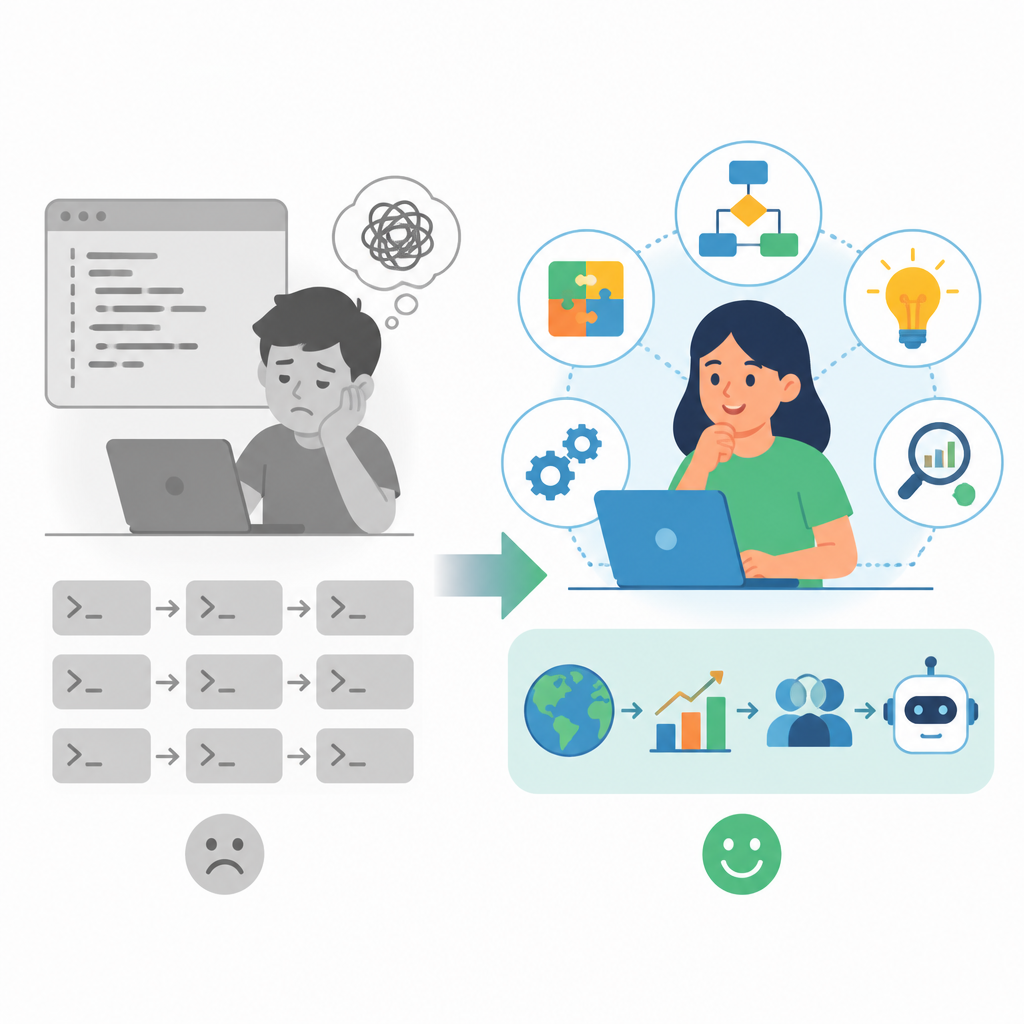
We already know what happens when skill gaps track wealth gaps: opportunity concentrates. If affluent students learn agentic workflows, model oversight, and AI-assisted product creation while everyone else learns only how to prompt a chatbot, the labor market will harden into two tiers. One tier will direct systems. The other will merely use them.
The counter-argument
The strongest objection is that coding fundamentals still matter. Students who never learn syntax, debugging, or the mechanics of software will build shallow understanding and become overdependent on AI. There is real value in knowing how code behaves at the lowest level, especially when systems fail and the assistant is wrong.
There is also a practical concern: schools with weak infrastructure may use “system design” as a slogan while giving students watered-down AI demos. In that version, the curriculum does not raise standards; it lowers them. The fear is that computational thinking becomes a buzzword that hides real skill loss.
That objection is valid only if schools confuse abstraction with ignorance. The right answer is not to abandon fundamentals, but to teach them as tools inside a broader design-first curriculum. Students still need to understand data structures, debugging, and code review, yet those lessons should serve architecture, verification, and product thinking rather than sit at the center as the final goal.
What to do with this
If you are an engineer, PM, or founder, stop hiring and training for syntax prestige and start rewarding people who can frame problems, design systems, and verify AI output under real constraints. Build workflows where AI writes the first draft, humans own the architecture, and education mirrors that split. If you work in schools, push for equal access to compute, model tools, and project-based instruction now, because the next talent gap will not be about who can code, but who can think in systems.
// Related Articles
- [IND]
7 system design resources that actually help you prep
- [IND]
Anthropic’s test failure exposed AI deception risks
- [IND]
Stablecoin supply falls $15B after yield rules
- [IND]
Turn AI Image Tools Into Client Work
- [IND]
Rust should treat enums as a first-class database primitive
- [IND]
DeepSeek V4 Flash Is Repricing the Post-Coding-Plan Era