Copilot keeps old AMD Linux GPUs alive
How Copilot helped clean up the Linux R600 driver and keep HD 2000-to-HD 6000 AMD GPUs usable.

Copilot cleaned up an old AMD Linux GPU driver and kept vintage cards alive.
I've been using old hardware in Linux long enough to know the pattern: the machine boots, the desktop comes up, and then one tiny graphics bug reminds you that “supported” is doing a lot of work. I’ve had the same experience with old AMD cards. The driver still exists, the code still builds, but every maintenance pass feels like someone is carefully moving dishes around in a house that’s already half-collapsed. That’s why this story grabbed me. It’s not about flashy AI coding demos. It’s about a tired driver, a small pool of maintainers, and a practical use for Copilot that doesn’t make me roll my eyes.
The source that kicked this off is Tom’s Hardware’s piece, “Linux developers are using AI vibe coding to keep vintage AMD GPUs alive”, by Aaron Klotz. The article points to Phoronix coverage and a set of commits from Gert Wollny that used GitHub Copilot in auto mode while cleaning up the R600 Gallium3D driver. That’s the real hook here: not AI replacing kernel work, but AI helping one maintainer keep an old subsystem from turning into fossilized code.
AI didn’t write the driver. It helped clean the mess.
Get the latest AI news in your inbox
Weekly picks of model releases, tools, and deep dives — no spam, unsubscribe anytime.
No spam. Unsubscribe at any time.
“GitHub Copilot was used to clean up code pertaining to vintage AMD R600 Linux graphics drivers, helping keep the driver relevant for people still using these late 2000s-era GPUs.”
What this actually means is pretty mundane, which is exactly why it matters. Copilot wasn’t inventing a driver from scratch. It was used during refactoring, specifically on shader compiler code in the R600 Gallium3D driver. That’s the kind of work that eats time and patience: same logic, less duplication, fewer weird edge cases, better readability, and hopefully fewer future bugs.
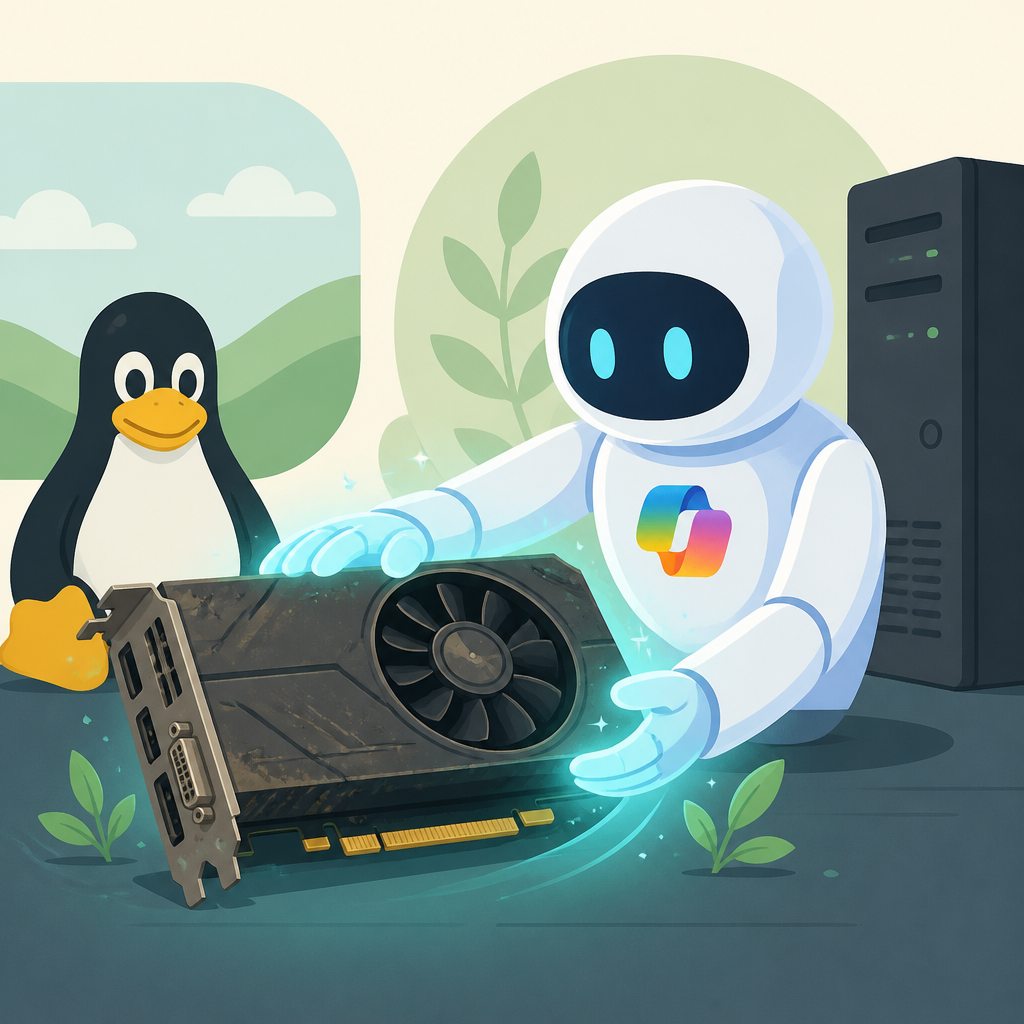
I’ve seen a lot of AI coding talk collapse into two stupid extremes. One side pretends the model is a junior engineer with infinite stamina. The other side acts like any AI use is moral decay. Driver maintenance sits in the middle. If I’m staring at old C or C++ code that only one person on earth still understands, I’d rather have a tool that can suggest cleanup passes than pretend I’m enjoying hand-editing the same branchy logic for the third hour in a row.
How to apply it: use AI on refactors, not on trust. Let it suggest simplifications, naming cleanup, and repetitive transforms. Then treat every output like it came from a very eager intern who has never once run your code. In kernel or driver work, the human still owns correctness. That part doesn’t get outsourced.
This is what “vibe coding” looks like when the vibe is maintenance
Tom’s Hardware calls it “AI vibe coding,” which is a funny phrase until you strip away the hype. In this case, the vibe is not “build me a whole app.” It’s “help me untangle a driver that has survived multiple GPU generations and several eras of software fashion.”
The article says Gert Wollny made 59 commits aimed at cleaning up shader compiler code, and the commit notes cited Copilot in auto mode. That tells me the workflow was iterative. Not prompt, receive magic, ship. More like: inspect, ask the tool for a cleanup pass, review, test, repeat. That’s much more believable, and frankly much more useful, than the usual AI coding theater.
I ran into this exact dynamic while working on old infra code where the logic was technically correct but impossible to maintain. The code didn’t need a genius rewrite. It needed a series of boring, low-risk edits that made the next person’s life less miserable. AI is actually decent at that when the scope is narrow. It can spot repetitive patterns, suggest mechanical changes, and help you keep momentum when the work is tedious.
- Use AI to reduce repetition in legacy code.
- Keep the scope small enough that you can review every change.
- Don’t let the tool decide architecture, policy, or correctness.
How to apply it: when you’re cleaning up old code, ask for one class of change at a time. Example: “remove duplicated conditionals,” “normalize naming,” or “simplify this branching block without changing behavior.” If the tool starts acting clever, you’re probably asking too much of it.
Why old AMD GPUs still matter in Linux
The R600 driver covers AMD/ATI HD 2000 through HD 6000 series cards. That means hardware from 2007 through 2010, which is ancient in GPU terms and still hanging around in desktops, home labs, and embedded boxes. Tom’s Hardware points out that some of these cards are nearly 20 years old. That’s not nostalgia. That’s installed base.
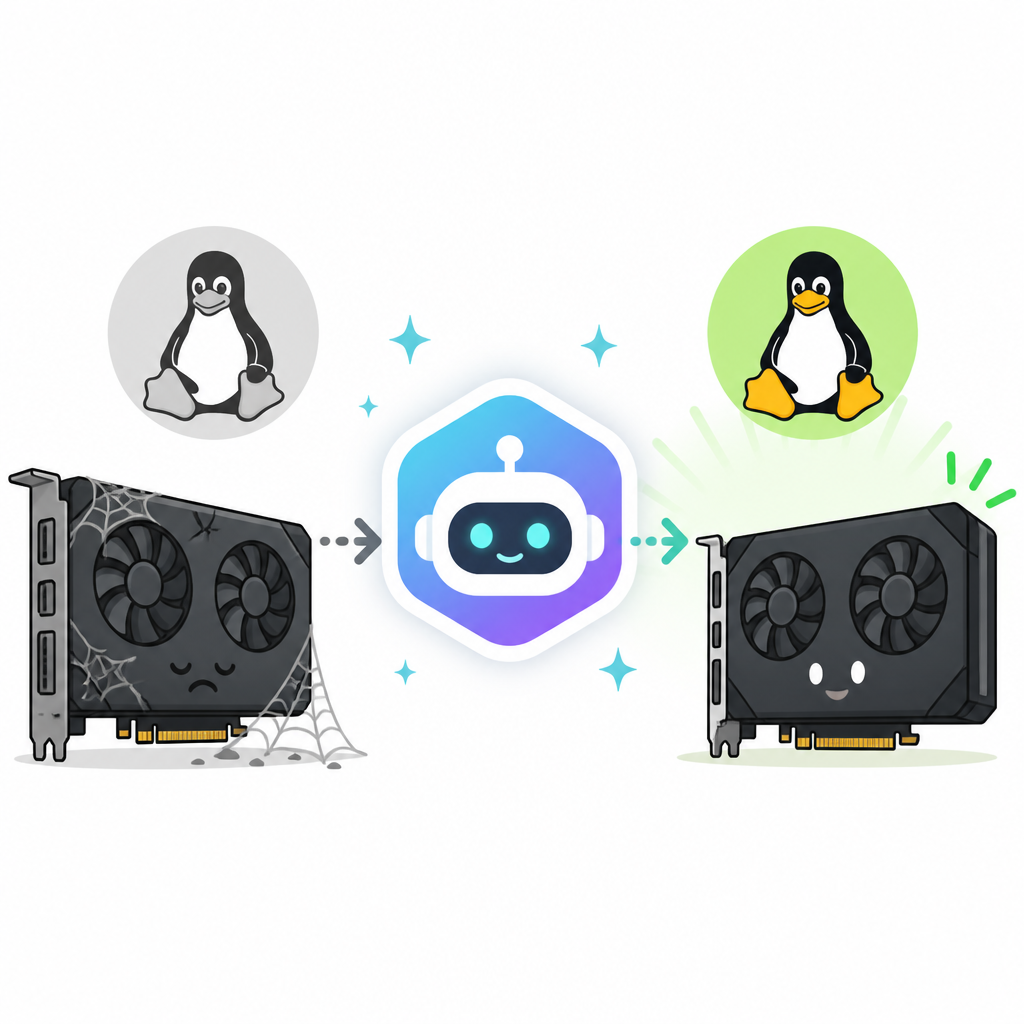
Linux has always had this weird superpower: it keeps old hardware usable longer than the vendor probably wanted. Sometimes that’s because of community work. Sometimes it’s because nobody has fully replaced the driver path. Either way, users benefit when maintainers keep the lights on. If you’ve ever tried to run a machine with a “mostly supported” GPU on a modern distro, you know why this matters. A driver that still exists but slowly rots is worse than an unsupported one, because it lulls people into thinking they’re safe.
That’s where maintenance work gets unglamorous and important. The R600 driver isn’t headline material. It’s not the latest gaming stack. It’s the stuff that keeps older cards from becoming paperweights the moment Mesa changes around them.
How to apply it: if you maintain a library, plugin, or driver that still has users on old versions or old hardware, budget time for cleanup that doesn’t add features. Old code needs oxygen. If you wait until it breaks, you’re already behind.
Copilot is useful here because the bottleneck is human attention
The Tom’s Hardware piece says the Linux community often has only a handful, or even a single person, updating older drivers. That’s the real constraint. Not compiler power. Not storage. Human attention.
When a subsystem has one maintainer, every edit carries overhead. You have to remember the weird corners, preserve compatibility, and avoid breaking code paths nobody has touched in years. AI helps most when the maintainer already knows what matters and just needs a fast way to reduce busywork. That’s the part people keep missing. The model isn’t the expert. It’s the accelerant.
I like this use case because it’s honest about what Copilot can do. It can surface patterns, draft cleanup suggestions, and make repetitive edits faster. It cannot understand the social contract of kernel maintenance, the unspoken assumptions in old graphics code, or the consequences of a bad patch landing in a stable branch. The human still does the judgment call.
- Use AI to propose edits, not to approve them.
- Keep tests close to the change, especially for old drivers.
- Assume the tool will miss historical context unless you provide it.
How to apply it: if you’re the only maintainer on a dusty subsystem, write down the invariants before you touch anything. Then let AI help with the mechanical cleanup around those invariants. It’s much better at rearranging code than understanding why the code exists.
Linus Torvalds’ policy makes the tradeoff obvious
The article notes that Linus Torvalds has allowed AI use in Linux development when appropriate, while also requiring proper tagging for AI-assisted code and making the human submitter responsible for testing and bugs. That’s the right shape of policy, and honestly, it’s the only one that makes sense for kernel work.
This isn’t “AI gets a free pass.” It’s “you can use the tool, but you own the result.” That distinction matters because it keeps the incentives straight. If a patch is broken, the blame doesn’t float into the model provider’s lap. It stays with the person who signed off and sent it upstream. That’s how serious software should work, whether the assistant is Copilot, ChatGPT, or a shell script.
I’ve watched teams get weirdly lazy the moment a tool can generate plausible code. The fix is not banning the tool. The fix is making ownership painfully clear. If you want the speed, you accept the responsibility. That tradeoff is healthy.
How to apply it: if your team uses AI in code review or implementation, make the author accountable for tests, benchmarks, and rollback plans. Add a note in the commit or PR when AI helped. Don’t hide it, and don’t let it blur responsibility.
The Amber2 idea is the part I’d watch next
Tom’s Hardware mentions that Linux developers are discussing a legacy branch called “Amber2” for the R600 drivers. The point would be to keep legacy support out of the main Mesa codebase so modern work doesn’t accidentally break older paths.
That’s the kind of move I respect because it admits reality. Legacy support always becomes a tax on the main branch. If you keep piling old compatibility into the same place as active development, every new feature risks collateral damage. A separate branch or maintenance track doesn’t solve everything, but it gives the old code a safer home.
I’ve seen this pattern in app backends, SDKs, and internal libraries. The moment you mix “actively evolving” with “must not change behavior,” you start paying in regressions. Splitting the two is annoying up front and cheaper forever after.
How to apply it: if you’re maintaining old APIs, old hardware paths, or old deployment targets, consider a dedicated maintenance branch or compatibility package. Don’t make your mainline carry every historical obligation forever.
The template you can copy
# Legacy driver cleanup with AI assistance: working template

## Goal
Use AI to help clean up legacy code without changing behavior.

## Rules
- Human owns correctness, testing, and merge approval.
- AI may suggest refactors, naming cleanup, duplication removal, and mechanical edits.
- Do not use AI for architecture decisions without explicit review.
- Every change must be verified with tests, build checks, and manual inspection.
- If AI helped, note it in the commit message or PR description.

## Workflow
1. Pick one small cleanup target.
   - Example: duplicated conditionals
   - Example: long functions with repeated logic
   - Example: inconsistent naming in a subsystem

2. Write the invariant before editing.
   - What must not change?
   - What inputs and outputs must remain identical?
   - What compatibility constraints matter?

3. Ask AI for one narrow transformation.
   - "Simplify this function without changing behavior."
   - "Remove repeated logic and keep the same output."
   - "Rename these symbols for consistency, but do not alter semantics."

4. Review the diff line by line.
   - Reject any behavioral change you did not ask for.
   - Reject any code that is harder to explain than the original.

5. Test immediately.
   - Build the project.
   - Run unit tests.
   - Run subsystem-specific checks.
   - If this is driver or kernel work, verify on real hardware when possible.

6. Commit with clear attribution.
   - Mention AI assistance if your project policy requires it.
   - State what was cleaned up and what was verified.

## Prompt template
You are helping me refactor legacy code.

Constraints:
- Do not change behavior.
- Do not introduce new abstractions unless they reduce duplication clearly.
- Preserve all public interfaces and compatibility requirements.
- Prefer small, mechanical edits over clever rewrites.

Task:
Refactor the following code for readability and maintainability while keeping behavior identical.

Code:
c
PASTE_CODE_HERE


Return:
- A cleaned-up version of the code
- A short list of what changed
- Any risky spots I should review manually

## Commit message template
refactor: clean up legacy code with no behavior change

- Simplify repeated logic in the subsystem
- Improve readability of old code paths
- Verified with build/tests/manual inspection
- AI-assisted cleanup reviewed and approved by human maintainer

## PR checklist
- [ ] Scope is small and reviewable
- [ ] Behavior is unchanged
- [ ] Tests passed
- [ ] Compatibility preserved
- [ ] AI-assisted edits were reviewed manually
- [ ] Commit/PR notes explain why this cleanup was needed
This is the version of AI coding I can actually defend. It’s constrained, reviewable, and boring in the best possible way. That’s what old driver maintenance needs.
Source attribution: I based this breakdown on Tom’s Hardware’s article at tomshardware.com, which summarizes the related Phoronix reporting and the Linux kernel/Mesa maintenance context. Everything in the template section is my own reusable draft, not copied from the source.
// Related Articles
- [TOOLS]
Docker Engine on Ubuntu belongs on the official repo path
- [TOOLS]
Rust vs Go: 2026 latency gap, decoded
- [TOOLS]
10 identity protocols let KYC stay private
- [TOOLS]
Use Consensus AI for faster literature scouting
- [TOOLS]
15 Perplexity prompts for better research decisions
- [TOOLS]
Mistral AI Models 2026 for Builders