10 identity protocols let KYC stay private
I break down 10 Web3 identity protocols that let KYC stay private, reusable, and easier to wire into regulated apps.

Old KYC made users resend documents; these protocols turn it into reusable proofs.
I've been building around identity and compliance long enough to know when a workflow is quietly rotten. Traditional KYC always looked fine in a diagram. Upload passport, wait for review, get approved, move on. In practice, it was a mess. Every app wanted the same documents again. Every vendor kept another copy. Every new market meant another round of “please upload your ID, selfie, proof of address, and maybe your patience.” And the worst part? None of that data needed to be everywhere. It just kept leaking outward because that was the easiest integration path.
Then I started looking at zero-knowledge KYC and, honestly, it finally made the old flow look as clumsy as it is. Instead of handing over raw documents, a user can prove a fact: over 18, not sanctioned, unique human, accredited investor, resident of a certain jurisdiction. That’s the shift. The article that kicked this off for me was Tobi Opeyemi Amure’s FinanceFeeds roundup, which maps out the current crop of Web3 identity protocols. I’m using it as a starting point, not a gospel. The useful part is seeing how different teams solve the same ugly problem from different angles.
What zero-knowledge KYC actually fixes
Get the latest AI news in your inbox
Weekly picks of model releases, tools, and deep dives — no spam, unsubscribe anytime.
No spam. Unsubscribe at any time.
“Web3 identity protocols enable users to prove KYC compliance without sharing raw personal data.”
What this actually means is: the app gets an answer, but not your documents. That’s the whole point. A zero-knowledge proof lets a wallet prove a statement is true without revealing the underlying data. If I’m over 21, the verifier doesn’t need my birthday. If I passed a KYC check once, every dApp doesn’t need to store my passport again. If I’m a unique person, the app doesn’t need to know my legal name to stop me from sybilling the system.
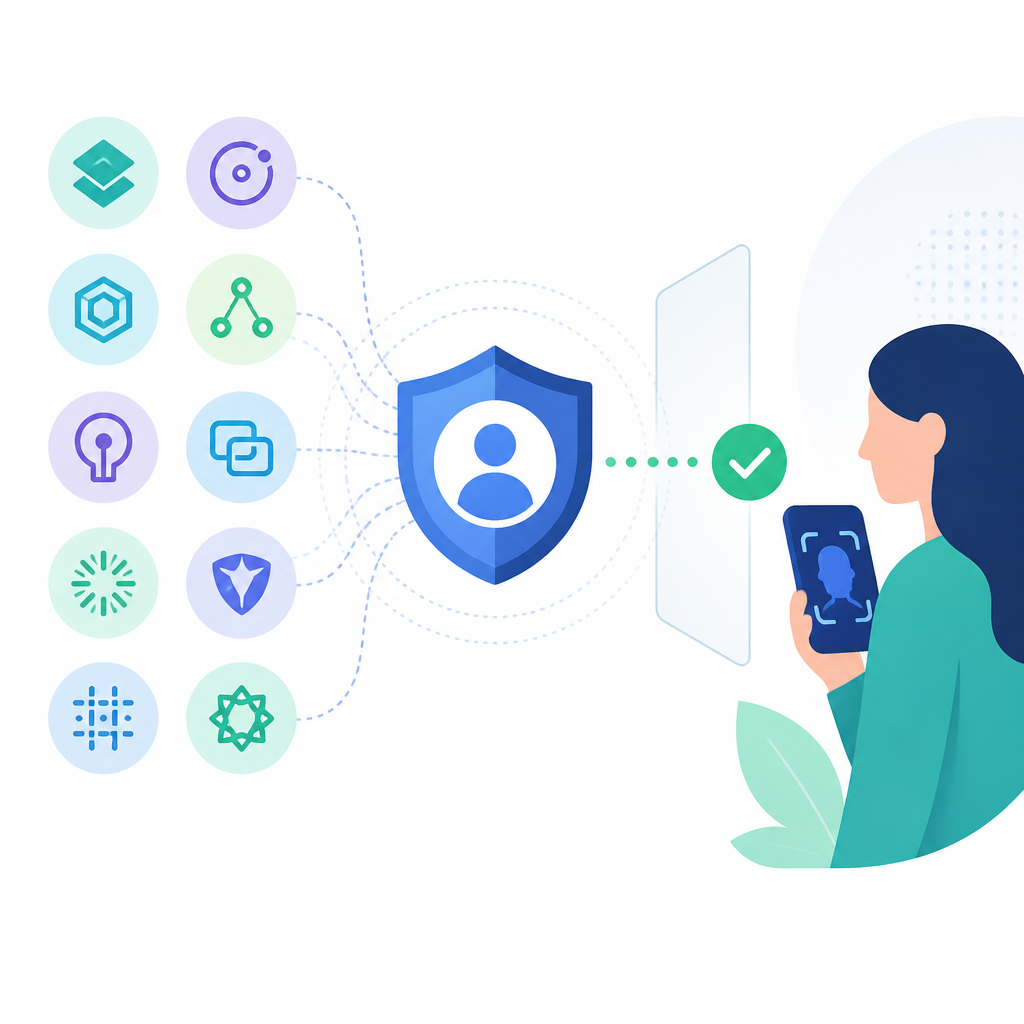
I ran into this problem hard when thinking about onboarding for tokenized assets. Compliance teams want certainty. Product teams want low friction. Users want to stop uploading the same file to the fifth vendor this month. The old model forces one side to lose. ZK identity at least gives both sides something usable: the verifier gets cryptographic assurance, and the user keeps the raw data closer to home.
There’s also a security angle people keep underplaying. Centralized KYC databases are juicy targets. If you build one giant pile of passports and driver’s licenses, you are basically volunteering for future incident response. ZK doesn’t remove risk entirely, but it changes the shape of it. You store less, expose less, and hand out less by default.
How to apply it: start by identifying which claims your app actually needs. Don’t say “KYC” like it’s one thing. Break it into age, residency, uniqueness, accreditation, sanctions status, and whatever else your policy requires. Then map each claim to a proof, not a document. If you can’t explain why you need the raw file, you probably don’t.
- Use proofs for eligibility, not full identity dumps.
- Keep the verification question narrow.
- Design for reuse across apps from day one.
World ID is built for uniqueness, not paperwork
FinanceFeeds says World ID, run by Tools for Humanity, uses zero-knowledge proofs and the Semaphore privacy layer to show a user is a unique human without revealing identity. It also mentions newer NFC passport verification and World ID 4.0 features like per-app nullifiers and SNARK-based verification.
What this actually means is that World ID is not trying to be your full KYC stack. It’s trying to answer one nasty question: is this a real unique person? That matters for airdrops, voting, rate limits, and anything else where one person should only count once. The Orb gets all the attention, but the more interesting part is the privacy model. The app should know “this wallet represents one human” and not much else.
I like this split because it avoids a common identity mistake: trying to make one protocol do everything. Uniqueness, legal identity, and compliance are not the same problem. If you cram them together, you get a blob that’s hard to trust and harder to explain to legal. World ID works best when you need Sybil resistance more than formal KYC.
How to apply it: use a uniqueness layer when your product is vulnerable to duplicate accounts or farming. Token distribution, DAO voting, and claim systems are the obvious examples. Don’t pretend uniqueness equals compliance. If your regulator expects identity checks, you still need a separate verification path.
Privado ID is the “I need this to work in production” stack
FinanceFeeds points to Privado ID, formerly Polygon ID, and its stack built with Iden3 and Circom. The article also mentions reusable credentials, selective disclosure, and developer tooling like Verifier SDK, Issuer Node, and Wallet SDK.
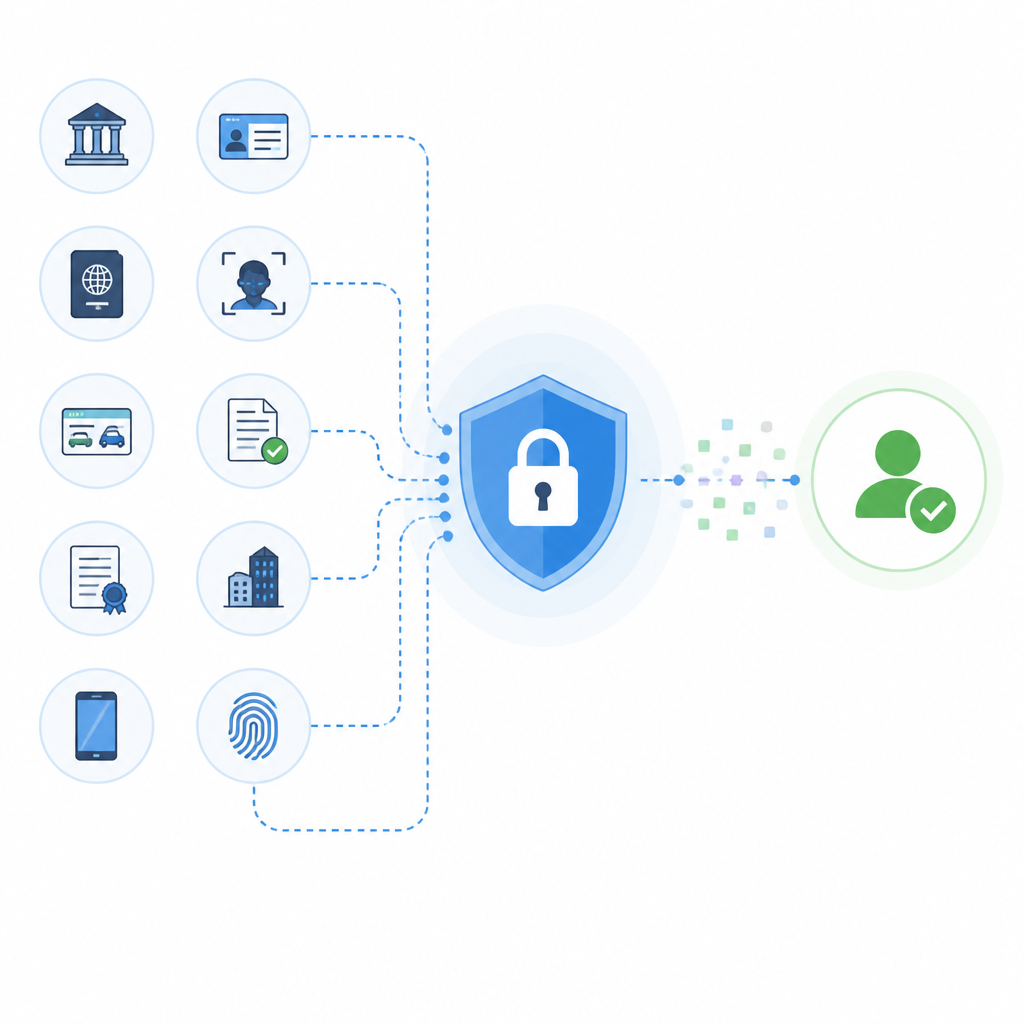
What this actually means is that Privado ID is aimed at teams that want real integration surfaces, not just a nice demo. I’ve seen a lot of identity projects stop at “look, a proof.” That’s cute. Production wants issuance, wallet storage, verification, and a way to fit into existing policy flows. The appeal here is the stack is opinionated enough to be useful. You can issue credentials, let users hold them, and later verify only the claims you care about.
This is also where selective disclosure matters more than the marketing copy ever admits. If a user already proved their age or residency, the verifier should not get the rest of the document. That’s not just privacy theater. It lowers liability and reduces the blast radius if something goes wrong. The more your app can accept a yes/no answer instead of a file upload, the less junk you store.
I ran into this pattern when thinking about regulated onboarding for DeFi access. The business wanted “KYC done.” The actual policy wanted “user is not in a blocked jurisdiction and meets minimum account requirements.” Those are different. A reusable credential can satisfy the policy without dragging a bunch of extra identity baggage through your system.
How to apply it: if you’re building an app with repeated verification, design around reusable credentials. Create a clean issuer/verifier split. Keep the wallet-side UX dead simple. And before you ship, write down exactly which claims are reusable and which must be rechecked on every session.
Human Passport is reputation, not government docs
FinanceFeeds describes Human Passport, formerly Gitcoin Passport, as a protocol that aggregates wallet history, social accounts, developer activity, and verified attestations into a privacy-preserving reputation score. It says the system holds more than 34 million zero-knowledge credentials across roughly 2 million users and has helped protect over $200 million in airdrops from Sybil attacks.
What this actually means is that not every identity problem needs a passport scan. Sometimes you need a trust signal. That’s a different beast. Airdrop systems, grants, and community gating often care less about legal identity and more about whether the same actor is pretending to be fifty people. Human Passport is interesting because it treats identity as a bundle of signals, not a single government-issued artifact.
I’ve always liked this approach for community systems because it reflects how trust really works online. Nobody knows you from one document. They infer from behavior, history, and attestations. The trick is doing that without turning the whole thing into surveillance soup. If you can score reputation while keeping the underlying signals private or minimally exposed, you get a much better tradeoff.
How to apply it: use reputation when the goal is anti-abuse, not legal onboarding. Grants, voting, and rewards programs are the obvious fit. Build your rules so they can tolerate imperfect identity, because reputation systems are probabilistic by nature. And be honest about what the score means. A trust score is not a legal identity check.
- Good fit: anti-Sybil controls, community access, rewards.
- Poor fit: regulated onboarding that needs formal identity proof.
- Best practice: combine reputation with a separate compliance check when needed.
zkPass turns Web2 logins into portable proofs
FinanceFeeds says zkPass uses its TransGate extension and zkTLS to turn logged-in Web2 sessions, bank accounts, exchanges, or existing KYC providers into portable zero-knowledge proofs. The article also notes a Compliance Suite aimed at GDPR- and CCPA-compliant KYC for fintechs and exchanges.
What this actually means is that zkPass tries to unlock the data you already have access to, instead of making users re-upload everything into a new system. That’s a very practical move. If someone already completed KYC with a bank, exchange, or payroll provider, why should they re-enter the same material just because they hit a Web3 app? The proof can travel, even if the raw data doesn’t.
I like zkPass because it feels like a bridge rather than a clean-room rewrite. A lot of teams are not starting from zero. They already have Web2 identity rails, browser sessions, and legacy compliance providers. zkPass is useful when you need to connect those systems to on-chain verification without forcing a full migration on day one.
How to apply it: use a Web2-to-Web3 proof layer when your users already sit inside existing identity providers. Don’t make them prove the same fact twice. The cleanest wins here are account age, exchange status, bank relationship, and KYC completion. If your workflow already depends on a browser session, this is one of the least painful ways to extract a verifiable claim from it.
Civic and idOS are the boring pieces I’d actually ship with
FinanceFeeds includes Civic as one of the older identity providers moving into ZK-enabled reusable KYC, and idOS as a reusable KYC layer for the stablecoin economy. The article says idOS lets users verify once with a licensed provider and reuse the credential across chains like Aleph Zero, NEAR, and Gnosis.
What this actually means is that not every useful identity product needs to be flashy. Civic matters because old systems still exist and someone has to bridge them into the new world. idOS matters because the stablecoin and payments use case is exactly where repeated verification becomes obnoxious fast. If I onboard once with a licensed provider, I should not have to rebuild my identity every time I touch a new app in the same ecosystem.
I’m putting these together because they solve the less glamorous part of the stack: continuity. One protocol helps you transition from traditional KYC. The other helps you reuse the result across apps and chains. That’s the kind of plumbing that actually gets adopted, because it reduces work for both compliance teams and users.
How to apply it: if you’re already tied to a legacy KYC vendor, don’t rip it out just to feel pure. Wrap it. Add a reusable credential layer on top. Keep the original provider where it makes sense, but stop forcing the user to repeat the same check in every product surface.
Self, Humanity, zkMe, and ONT ID fill the rest of the stack
FinanceFeeds also lists Self Protocol, Humanity Protocol, zkMe, and ONT ID. Self combines passport NFC checks with zero-knowledge proofs. Humanity emphasizes palm-based biometric verification and a broader proof-of-trust model. zkMe keeps checks on the user’s device and returns reusable proofs. ONT ID is built around W3C decentralized identifiers and verifiable credentials.
What this actually means is that the market is not converging on one identity shape. Some teams want biometrics. Some want passport-based verification. Some want standards-first DID plumbing. Some want everything on-device. That’s normal. Identity is messy because the requirements are messy. A token sale, a stablecoin app, and a DAO voting system do not need the same trust model.
I’ve found the useful way to think about these protocols is by where they put trust. On-device verification lowers backend exposure. Passport-based systems fit formal identity. Standards-based DID stacks help with portability and interoperability. Biometrics may help with uniqueness, but they also raise obvious questions about user comfort and retention. There’s no free lunch here, just different tradeoffs.
How to apply it: choose the protocol based on the claim, not the logo. If you need standards compatibility, look at DID and verifiable credential support. If you need uniqueness, look at proof-of-personhood. If you need reusable compliance for finance, look at credential portability and issuer tooling. If you need to integrate with existing onboarding, pick the bridge, not the dream.
The template you can copy
# Zero-Knowledge KYC selection template

## 1) What am I actually proving?
- [ ] Unique human
- [ ] Over age threshold
- [ ] Not in restricted jurisdiction
- [ ] Accredited / qualified investor
- [ ] KYC completed by licensed provider
- [ ] Other: ______________________

## 2) Which protocol fits the claim?
- Uniqueness / Sybil resistance: World ID, Human Passport
- Reusable compliance credentials: Privado ID, idOS, zkMe
- Web2-to-Web3 proof bridging: zkPass
- Legacy KYC bridge: Civic
- Passport / NFC verification: Self Protocol
- Standards-first DID / VC stack: ONT ID

## 3) What data should never leave the user?
- Passport image
- Driver’s license image
- Full name
- Address
- Date of birth
- Account numbers

## 4) What does the verifier need?
- A yes/no answer
- A claim with expiry
- A nullifier to prevent reuse
- A proof of uniqueness
- A proof of jurisdiction
- A proof of KYC completion

## 5) Integration checklist
- [ ] Define the exact policy rule in one sentence
- [ ] Map each rule to a proof, not a document
- [ ] Decide where proofs are issued
- [ ] Decide where proofs are stored
- [ ] Decide how long proofs stay valid
- [ ] Decide whether proofs are app-specific or reusable
- [ ] Decide how to revoke or refresh credentials
- [ ] Decide what gets logged on the backend

## 6) Product rule I use
If the app can work with a cryptographic claim, do not ask for the raw file.
If the app needs the raw file, write down why and who is allowed to see it.

## 7) Example policy mapping
Policy: only users over 18 in approved countries can access the app.

Required proof bundle:
- Age over 18
- Country / residency claim
- Valid KYC credential from approved issuer
- Optional nullifier for one-account-per-user flows

Verifier response:
- allow
- deny
- reverify
- manual review

## 8) Copy-ready decision note
We will accept zero-knowledge credentials for identity verification where the business rule can be expressed as a claim.
We will not require raw identity documents unless the claim cannot be verified otherwise.
We will prefer reusable credentials, selective disclosure, and app-scoped nullifiers over repeated document uploads.
We will log verification outcomes, not sensitive source documents.
That template is the part I’d actually hand to a product manager, a compliance lead, or an engineer before a kickoff. It forces the conversation away from “which vendor is best” and toward “what claim are we proving, and what data can we stop collecting?” That’s the real work. Everything else is just implementation detail.
FinanceFeeds’ original roundup is here: https://financefeeds.com/10-best-web3-identity-protocols-for-zero-knowledge-kyc-verification/. My breakdown is derivative of that source plus the linked project docs; the framing, tradeoff analysis, and copy-ready template are mine.
// Related Articles
- [TOOLS]
Use Consensus AI for faster literature scouting
- [TOOLS]
15 Perplexity prompts for better research decisions
- [TOOLS]
Mistral AI Models 2026 for Builders
- [TOOLS]
RustRover 2026.2 turns Rust setup into one file
- [TOOLS]
Geekbench 7 setup for realistic CPU and GPU tests
- [TOOLS]
Spark 4.2 turns AI search into SQL