DeepMind’s robot partner demo exposed a fake humanoid
1 fake humanoid demo from a Google DeepMind partner shows how easily robotics marketing can cross into deception.

A Google DeepMind partner posted a fake humanoid robot demo and then admitted it.
One viral robot clip, one public correction, and one uncomfortable lesson: a company selected for Google DeepMind’s Robotics Program in Europe posted a humanoid video that turned out to be an illusion. The episode is a useful read for anyone tracking robotics hype, because it shows how fast a polished demo can outrun the facts.
| Item | What happened | Key detail |
|---|---|---|
| Qualia video | Fake humanoid demo | Company later said the robot was not real |
| Google DeepMind tie-in | Program partner | Selected for Robotics Program in Europe |
| Public reaction | Backlash | Users called the clip misleading |
| Company clarification | Admission | Qualia said it builds training infrastructure, not hardware |
1. The clip that looked like a real robot
Get the latest AI news in your inbox
Weekly picks of model releases, tools, and deep dives — no spam, unsubscribe anytime.
No spam. Unsubscribe at any time.
The video from Qualia showed a sleek humanoid walking into a kitchen and washing dishes. The motion looked convincing enough that viewers immediately debated whether they were seeing a physical robot, an AI-generated scene, or some other kind of visual trick.
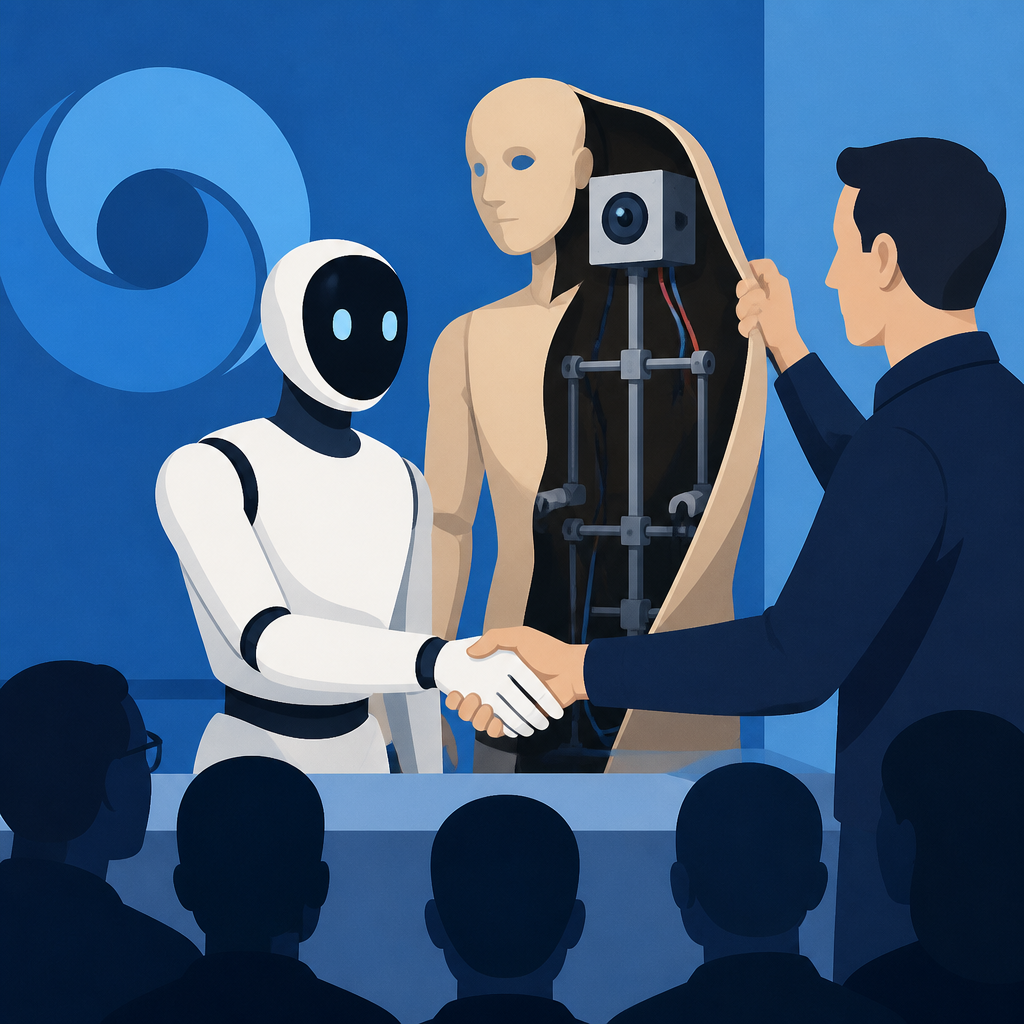
The company’s caption made the pitch sound serious: it said it trains embodied models that can put a robot on a real manual task and make it work on the floor, not in a demo. That wording helped the clip spread, because it sounded like evidence of working robotics rather than a promotional scene built to imply it.
- Setting: minimalist, wood-paneled kitchen
- Action: robot walks in and washes dishes
- Presentation: polished social video, not a technical paper
2. The Google DeepMind connection that raised the stakes
The reason the clip drew extra attention was the company’s newly announced link to Google DeepMind’s Robotics Program in Europe. That association gave the post a stronger air of legitimacy, even though the video itself did not show a real machine doing the work.
When a small robotics software company is tied to a major AI lab, people assume the demo has been vetted. In this case, the partnership made the confusion worse, because viewers expected a genuine systems demo, not a marketing image with a synthetic or staged humanoid.
- Partner status: selected for Google DeepMind’s Robotics Program in Europe
- Public effect: the affiliation amplified the clip’s credibility
- Risk: viewers may confuse software training work with hardware progress
3. The founder’s admission
After questions piled up online, founder Fabian Kerj clarified the situation directly. He said, “The humanoid is not a real robot,” and added that the company builds training infrastructure, not hardware. He later followed up by saying, “we are not building hardware. Yet.”
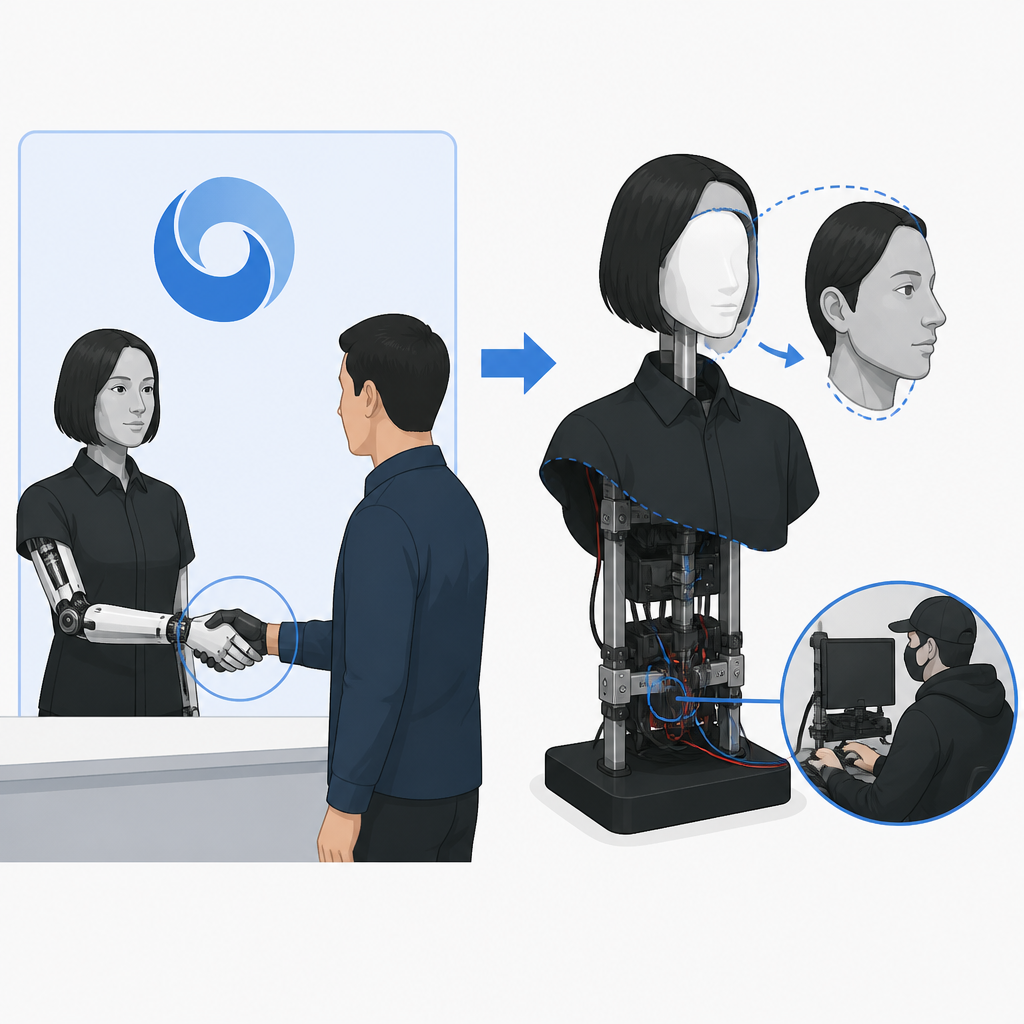
That admission changed the story from a showcase to a cautionary tale. The clip was not a breakthrough robot reveal, but a visual that created the impression of one. The founder also seemed to acknowledge the attention-grabbing tactic, writing, “Got your attention tho,” with a grinning emoji.
- Direct quote: “The humanoid is not a real robot”
- Business model: training infrastructure, not robots
- Follow-up: “we are not building hardware. Yet.”
4. The backlash from viewers
The response online was immediate and blunt. Some users called the post misleading, while others compared it to earlier robotics theatrics, including Tesla’s long-criticized humanoid reveal. The reaction shows how sensitive the audience has become to staged robot content.
That skepticism is not random. Robotics companies often rely on cinematic demos to attract talent, investors, and partners, but the line between prototype and performance can get blurry fast. Once a company crosses that line, the audience tends to stop asking what the robot can do and start asking whether there is a robot at all.
- Common complaint: the demo implied hardware that did not exist
- Broader issue: robotics marketing often outpaces product reality
- Comparison point: Tesla’s 2021 humanoid event used an actor in a bodysuit
5. Why this matters beyond one bad post
This episode matters because it sits inside a larger pattern in robotics: impressive visuals are easy to share, but hard evidence is harder to produce. If a company can gain attention by showing something that is not actually a robot, then the market has a trust problem, not just a demo problem.
For readers following AI and robotics, the useful takeaway is simple. A polished video, a major partnership, and a confident caption do not prove that a machine works. They only prove that a clip can travel fast before the details catch up.
How to decide what this story means
If you care about robotics research, treat this as a warning about presentation. The most useful signal is not how lifelike a demo looks, but whether the company can show repeatable hardware, clear specifications, and independent verification.
If you care about the business side, the story is about credibility. A startup can win attention with a striking video, but once it admits the robot is fake, the long-term cost may be trust. That matters even more when the company is linked to a brand like Google DeepMind.
// Related Articles
- [IND]
OpenAI’s distillation playbook explains the Kimi panic
- [IND]
Gemini 3.5 Flash lets you buy speed
- [IND]
RISC-V is past the hobby phase and should be treated as a real platfo…
- [IND]
Nvidia and OpenAI discuss a $250B AI backstop
- [IND]
Claude Opus 5 posts the lowest safety audit score
- [IND]
Anthropic expands Claude partnership with Cognizant