dockerd docs add proxy, registry, and bridge flags
Docker’s dockerd reference details daemon flags for proxying, insecure registries, bridge networking, IP forwarding, and init handling.

Docker updated the dockerd CLI reference with daemon flags for proxies, registries, and bridge networking.
Docker has expanded the dockerd reference with a dense set of daemon options that control outbound proxying, bridge behavior, registry trust, and container process handling. The page is a configuration guide for the Docker Engine daemon, not a feature launch, but it is the kind of reference developers use when production networking or registry access needs to be tuned.
| 項目 | 數值 |
|---|---|
| Document | dockerd CLI reference |
| Proxy flags | --http-proxy, --https-proxy |
| Bridge networking | --icc, --ip, --ip-forward |
| Registry access | --insecure-registry |
| Init handling | --init, --init-path |
What changed
Get the latest AI news in your inbox
Weekly picks of model releases, tools, and deep dives — no spam, unsubscribe anytime.
No spam. Unsubscribe at any time.
The reference spells out daemon-level flags for traffic routing and container startup behavior. Among the documented options are --http-proxy and --https-proxy for outbound requests, plus --init and --init-path for signal forwarding and process cleanup.

It also documents networking defaults that affect how containers talk to each other and to external systems. The page lists --icc for inter-container communication on the default bridge, --ip for host IP selection when publishing ports, and --ip-forward for system IP forwarding.
- --insecure-registry enables communication with registries that do not use standard trust settings.
- --ip defaults to 0.0.0.0 for port publishing from the default bridge.
- --icc defaults to true, so container-to-container traffic on the default bridge remains allowed unless changed.
- The reference ties these flags to Docker Engine daemon startup, where they shape network policy and container runtime behavior.
Why it matters
For operators, these flags are the difference between a container host that works in a lab and one that fits a locked-down network. Proxy settings matter behind corporate egress controls, while insecure registry support is often needed in private environments with legacy image stores.
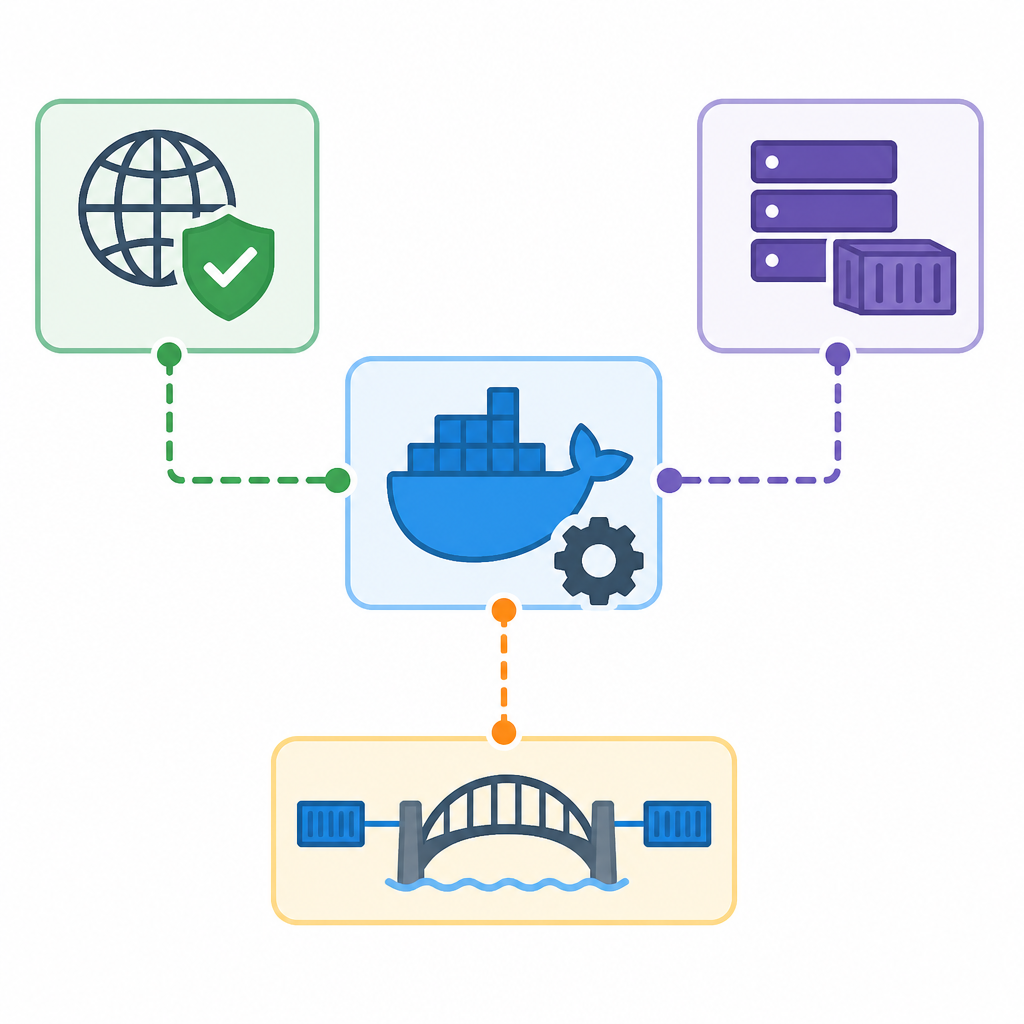
For developers, the init and bridge options reduce surprises in container behavior. If a service needs cleaner signal handling, or if default bridge communication must be restricted for security, the daemon-level reference is the source of truth.
The practical takeaway is simple: this page is less about new Docker features and more about the knobs that decide how Docker Engine behaves in real deployments. If you're debugging connectivity, registry access, or process cleanup, these are the settings to check first.
// Related Articles
- [TOOLS]
AWS Continuum turns AI coding into safer fixes
- [TOOLS]
Open-Generative-AI turns GitHub into a studio
- [TOOLS]
Why benchmark scores don’t predict your bill
- [TOOLS]
MCP Servers for Developers: 8 workflow gains in 2026
- [TOOLS]
Doubao turns a game prompt into a mini arcade
- [TOOLS]
Coding Plan turns Alibaba Cloud into IDE billing