Dometrain’s system design course turns theory into ops
I break down Dometrain’s advanced system design course into a copyable template for distributed systems, rollout safety, and multi-tenant ops.

A copyable system design playbook for distributed systems, rollout safety, and multi-tenant ops.
I’ve been through enough system design material to know when something is all whiteboard gloss and no operational spine. This one felt off in the usual way at first. It talks about distributed systems, and that can mean anything from “here’s a quorum” to “good luck, pray to the pager gods.” I’ve sat through both kinds. The annoying part is that a lot of courses stop right when the real work starts: what happens when retries multiply, one region goes weird, a schema changes, or one tenant starts eating the whole cluster.
What I wanted was a course that didn’t pretend the architecture ends at the diagram. I wanted the ugly stuff: leader election, outbox patterns, dead letters, canaries, error budgets, quotas, and the kind of multi-region choices that make product people suddenly discover their own tolerance for latency. Dometrain’s Hands-On: Advanced System Design is basically that. It’s not trying to impress me with buzzwords. It’s trying to make me build the parts that keep a system alive after the demo is over.
So I went through the course outline like I would any architecture playbook: what problem is each pattern actually solving, where does it break, and what would I steal for a real team? That’s what I’m breaking down here.
For context, the course is by Nick Chapsas, and the source page is the Dometrain course page itself. I’m not quoting viewer counts or star counts because none are provided on the source. I am using the course’s own curriculum and descriptions as the anchor for this breakdown.
Stop treating distributed state like a single database
Get the latest AI news in your inbox
Weekly picks of model releases, tools, and deep dives — no spam, unsubscribe anytime.
No spam. Unsubscribe at any time.
“You will start by tackling distributed state, exploring leader election among replicas, quorum reads and writes, and distributed locks.”
What this actually means is: once your system has more than one node, state stops being a neat local fact and becomes a coordination problem. If you don’t have a clear leader, a quorum rule, or a lock strategy, your app starts making contradictory decisions and calling it “eventual consistency” like that makes it fine.

I’ve run into this in systems where people assumed “we have a database” meant “we have coordination.” No. The database may help, but the application still needs a rule for who decides, who waits, and who backs off. That’s what leader election and quorum reads/writes are really for: making disagreement explicit instead of accidental.
The course’s first chapter, “Coordination, Consensus, and Quorum,” is a good tell. It starts with the mechanics instead of jumping straight to scale diagrams. That’s the right move. If you can’t explain how exclusive work gets assigned, you’re not designing a distributed system, you’re just multiplying failure modes.
How to apply it:
- Define which operations require a single writer and which can tolerate multiple readers.
- Pick a leader strategy early for exclusive jobs like scheduling, reconciliation, or cleanup.
- Use quorum rules only when you can explain what happens on partial failure.
- Document lock expiry, renewal, and failure recovery, because stale locks are how teams accidentally create outages.
In practice, I’d use this section to force one design question in every architecture review: “What happens if two nodes think they own the same work?” If the answer is hand-waving, the design is not ready.
Sagas are just damage control with a nicer name
“You will learn how to implement Sagas using both orchestration and choreography, build Event Sourcing systems with snapshots, and construct Change Data Capture pipelines.”
This is the part of the course where the architecture gets honest. Business workflows fail halfway through. Payments clear, inventory doesn’t, emails go out twice, and someone wants a rollback that isn’t actually a rollback. Sagas are the answer when a transaction boundary can’t cover the real-world workflow.
I like that the course separates orchestration from choreography instead of pretending they’re interchangeable. They aren’t. Orchestration gives you a controller with explicit steps. Choreography pushes the coordination into events and handlers. One is easier to reason about. The other can be easier to evolve, until it turns into event spaghetti and nobody knows who owns the process anymore.
Event sourcing and CDC fit into the same bucket for me: they’re both about treating change as data, not just state. Snapshots matter because replaying every event forever is cute until you have a real stream with years of history. CDC matters because operational systems rarely get redesigned from scratch; they get observed and mirrored.
I ran into this exact mess on a project where one team wanted “simple CRUD,” another wanted auditability, and ops wanted replay. The only way through was to admit we had multiple truths: the write model, the derived read model, and the history log. Once you accept that, the patterns stop sounding academic and start sounding like plumbing.
How to apply it:
- Use orchestration when workflow visibility and control matter more than loose coupling.
- Use choreography when independent services own their own reaction logic and the event flow is stable.
- Snapshot event-sourced aggregates once replay cost becomes painful, not when it’s theoretically possible.
- Introduce CDC when you need to mirror change without rewriting the source system.
If I had to summarize this chapter in one sentence, it would be: stop pretending distributed workflows are atomic, and start designing for compensation, replay, and derived truth.
Reliability is a budget, not a vibe
“You will also learn how to guarantee reliable processing using idempotency keys, the outbox pattern, deduplication windows, and dead-letter queues for poison messages.”
What this actually means is that retries are dangerous unless the system can recognize them. If you don’t make operations idempotent, every transient failure becomes a chance to duplicate side effects. That’s how you end up charging people twice, publishing duplicate events, or creating mystery records nobody can explain.
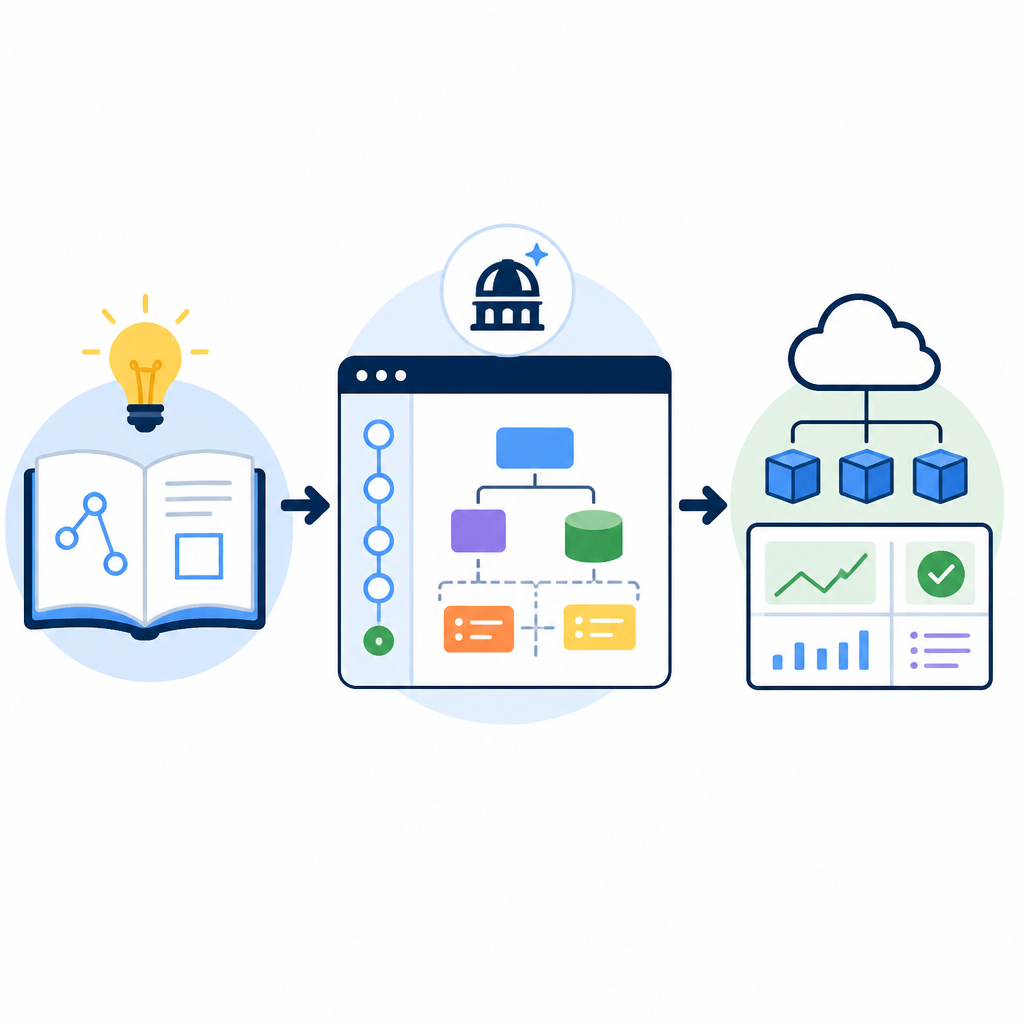
The course also pairs reliability with failure containment, which is where a lot of teams get sloppy. Circuit breakers, timeout budgets, and load shedding are not “advanced polish.” They’re how you stop one broken dependency from dragging everything else down with it. I’ve watched teams tune retries so aggressively that they accidentally built a denial-of-service machine against themselves. Very efficient, very dumb.
That’s why I like the sequence here: first make work safe to repeat, then make failure survivable. The outbox pattern gives you a way to publish events without pretending your database transaction also covered the message broker. Dead-letter queues keep poison messages from clogging the main pipeline. Deduplication windows give you a bounded memory of what already happened.
How to apply it:
- Add idempotency keys to any endpoint that can be retried by clients or workers.
- Use an outbox when the write model and message publication must stay in sync.
- Route poison messages to a dead-letter queue with clear replay procedures.
- Set timeout budgets from the top of the request chain down, not service by service in isolation.
The practical lesson here is simple: reliability is not one feature. It’s a set of guardrails that keep retries, failures, and backpressure from turning into chaos.
Multi-region is where architecture gets political
“We cover global scale by examining active-active multi-region deployments, resolving concurrent cross-region writes, and maintaining data residency.”
This is the chapter where the clean diagrams usually die. Multi-region sounds like a scaling story until you hit the real constraints: latency, conflicting writes, legal residency rules, and product teams who all want “local performance” without giving up global consistency. Pick your poison.
The course’s breakdown of active-passive versus active-active is useful because it refuses to blur them together. Active-passive is the safer story when availability matters more than write locality. Active-active is what you use when you need regional independence and can tolerate the complexity of conflict resolution. Those are not equivalent design choices, and I wish more teams admitted that out loud.
I’ve seen multi-region plans collapse because nobody owned the question of cross-region writes. If two regions can accept updates, then you need a deterministic rule for conflict handling. If data has to stay in a home region, then your routing and replication strategy must respect that from day one, not as an afterthought bolted on during compliance review.
How to apply it:
- Decide whether the system is region-primary or region-symmetric before you design replication.
- Write down conflict resolution rules for concurrent writes, even if you hope they never happen.
- Separate user routing from data placement so you can reason about latency and residency independently.
- Test failover with actual region-level assumptions, not just service restarts.
This chapter is the reminder I keep coming back to: global scale is not just more servers. It’s more policy, more tradeoffs, and more ways to make the wrong thing look fast.
Observability only matters when it changes behavior
“You will see how to safely deploy, evolve, and monitor these systems using backward-compatible contract evolution, canary releases, distributed tracing, and SLO-based alerting with error budgets.”
What this actually means is that telemetry should help you make decisions, not just decorate a dashboard. A lot of teams collect logs, metrics, and traces because they were told to, then never connect them to a release decision or an alert threshold. That’s not observability. That’s expensive journaling.
I like that the course includes tracing, correlation, and SLO-based alerting together. That’s the right stack. Traces tell you where the request went. Metrics tell you how the system is behaving over time. Logs tell you what happened when something weird occurred. SLOs tell you whether users are actually getting hurt.
The error budget angle matters because it changes the conversation. Instead of arguing about whether a deployment “feels safe,” you can ask whether the current error rate leaves room for risk. That’s much better than vibes and much worse for people who like shipping by intuition alone.
How to apply it:
- Instrument request paths with trace IDs and propagate them across service boundaries.
- Define one or two user-facing SLOs that map to actual pain, not vanity metrics.
- Alert on symptoms that consume error budget, not on every tiny blip.
- Use canary releases and automatic rollback so telemetry can influence rollout decisions.
I’ve found this is the section that separates “we have monitoring” from “we can operate this system.” If the data doesn’t change deployment, rollback, or incident response, it’s just noise with charts.
Rate limits and tenancy are the real product boundary
“You will also explore … per-tenant quotas and role-based access control.”
This part gets ignored until one customer becomes three customers, and then suddenly the shared platform is everyone’s problem. Multi-tenancy isn’t just a database layout question. It’s isolation, fairness, authorization, and cost control all at once.
The course’s later chapters on rate limiting, quotas, and multi-tenancy are where the architecture stops being abstract and starts looking like a business. Token buckets, shared counters, per-tenant sharding, noisy-neighbor bulkheads, RBAC, and policy-driven authorization are all ways of answering the same question: who gets to do what, and how much of the system can they consume before they start hurting everyone else?
I’ve seen teams build a “shared platform” and then discover that one tenant can dominate the cache, the queue, and the support queue. That’s not a scaling problem. That’s a governance problem with infrastructure symptoms. The course gets this right by tying quotas and authorization to the edge, not burying them in random service code.
How to apply it:
- Enforce tenant identity as early as possible, ideally at the gateway.
- Set quotas based on blast radius, not just plan tier marketing language.
- Use bulkheads to stop one tenant’s traffic from starving another tenant’s traffic.
- Keep authorization policy separate from business logic so you can change it without rewriting the app.
This is the stuff that makes a platform feel boring in the best way. Users don’t notice when tenancy is working. They only notice when it isn’t.
The template you can copy
# Advanced system design checklist I actually use

## 1) State and coordination
- [ ] Identify every operation that needs a single owner
- [ ] Decide leader election method for exclusive work
- [ ] Define quorum reads/writes if multiple replicas can answer
- [ ] Document lock expiry, renewal, and recovery
- [ ] Write down what happens if two nodes think they own the same job

## 2) Workflow reliability
- [ ] Use orchestration for explicit multi-step business flows
- [ ] Use choreography only when event ownership is clear
- [ ] Add compensation steps for partial failure
- [ ] Snapshot event-sourced aggregates once replay gets expensive
- [ ] Introduce CDC only when the source system must stay intact

## 3) Safe retries and messaging
- [ ] Make write endpoints idempotent
- [ ] Add idempotency keys to retriable operations
- [ ] Use an outbox for database + event publication consistency
- [ ] Define deduplication windows for at-least-once delivery
- [ ] Route poison messages to a dead-letter queue
- [ ] Document how dead-lettered work gets replayed safely

## 4) Failure containment
- [ ] Set timeout budgets across the whole call chain
- [ ] Add circuit breakers around flaky dependencies
- [ ] Define fallback behavior for degraded mode
- [ ] Use load shedding before the critical path collapses
- [ ] Test what fails open vs fails closed

## 5) Availability and recovery
- [ ] Decide primary-standby or active-active up front
- [ ] Test failover across availability zones
- [ ] Keep backup and point-in-time recovery procedures current
- [ ] Verify restore time, not just backup success
- [ ] Rehearse recovery with real data shapes

## 6) Network and trust
- [ ] Split public and private network boundaries
- [ ] Isolate the database in a data-layer boundary
- [ ] Put WAF and edge controls in front of public traffic
- [ ] Control outbound egress explicitly
- [ ] Use service-to-service mTLS for zero-trust communication
- [ ] Store secrets in a vault, not in app config

## 7) Multi-region design
- [ ] Decide how users route to the nearest region
- [ ] Define cross-region replication behavior
- [ ] Decide how concurrent writes are resolved
- [ ] Enforce data residency rules explicitly
- [ ] Separate read locality from write ownership

## 8) Real-time processing
- [ ] Use a stateful stream processor only when state matters
- [ ] Define windowing and aggregation rules
- [ ] Pick checkpointing strategy for exactly-once or effectively-once processing
- [ ] Document replay strategy for historical reprocessing
- [ ] Define how reference data enriches the stream

## 9) Progressive delivery
- [ ] Support blue-green or canary release flow
- [ ] Split traffic by weight, not hope
- [ ] Shadow production traffic for risky changes
- [ ] Add feature flags and a kill switch
- [ ] Automate rollback using health signals

## 10) Observability and operations
- [ ] Emit structured logs with correlation IDs
- [ ] Collect metrics that match user pain
- [ ] Trace requests across service hops
- [ ] Correlate logs, metrics, and traces
- [ ] Define SLOs and error budgets
- [ ] Alert on symptoms, not noise

## 11) Tenant control
- [ ] Enforce tenant identity at the edge
- [ ] Add per-tenant quotas and tiered limits
- [ ] Use fair queuing or prioritization where needed
- [ ] Prevent noisy-neighbor impact with bulkheads
- [ ] Separate RBAC from business rules
- [ ] Add policy-driven authorization for fine-grained access

## 12) Schema and contract evolution
- [ ] Require backward-compatible API changes
- [ ] Version routes only when necessary
- [ ] Upcast old event schemas during read or replay
- [ ] Run dual versions during migration
- [ ] Deprecate with a plan, not a blog post

## Release gate I use before shipping
If any of these are unknown, I do not call the design done:
- Who owns the work?
- What happens on retry?
- What happens on partial failure?
- How do we recover data?
- How do we observe user pain?
- What tenant or region boundaries exist?
- What breaks if this version rolls back?
This is the version I’d actually hand to a team before a design review. It’s not fancy. It just forces the questions that keep systems from turning into folklore.
One more thing: the course page is doing a lot of work here by bundling advanced patterns into one curriculum instead of scattering them across random talks. That makes it easier to see how the pieces fit together. Distributed systems are not one problem. They’re a pile of small ones that only look simple when someone else already solved them.
Source attribution: I based this breakdown on Dometrain’s course page for Hands-On: Advanced System Design. The structure and template above are my own synthesis, not a quote of the course material.
// Related Articles
- [TOOLS]
Baidu Wenxin turns search into a free agent
- [TOOLS]
OpenCode now supports DeepSeek, GLM, Qwen, GPT
- [TOOLS]
DeepSeek in Codex Will Cut AI Coding Costs Hard
- [TOOLS]
Token vs. word: why Chinese tokenization still matters
- [TOOLS]
OpenAI API Pricing Hits $0.05 to $180/M Tokens
- [TOOLS]
Usage limits belong in ChatGPT Enterprise and Edu controls