Tag
distributed systems
Distributed systems cover coordination across multiple nodes, consistency, fault tolerance, and scaling, showing up in microservices, event-driven design, transactional messaging, and chaos testing. They shape uptime, latency, and how software behaves at global scale.
18 articles
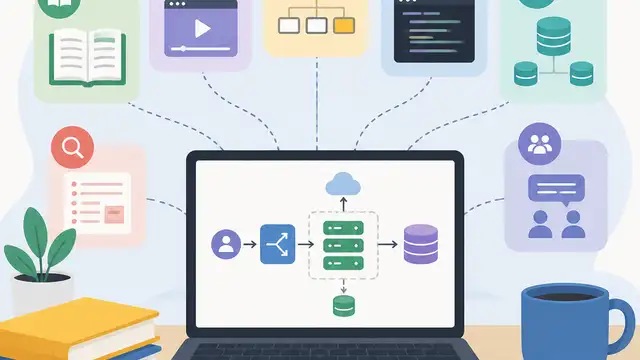
7 system design resources that actually help you prep
7 system design resources that help you prep faster, from free guides to paid courses, with clear tradeoffs for each.

System design finally clicks with one learning path
A blunt, practical breakdown of Azeem’s system design learning path, plus a copy-ready template you can reuse.

Distributed finance now powers U.S. payments and trading
FedNow, T+1 settlement, and CAT data pipes show how distributed systems now run core U.S. finance.

Dometrain’s system design course turns theory into ops
I break down Dometrain’s advanced system design course into a copyable template for distributed systems, rollout safety, and multi-tenant ops.

Namastack turns outbox pain into reliable events
I break down Namastack Outbox into a copy-ready Spring Boot reliability pattern for event-driven systems.

Five patching steps that fit distributed estates
A developer-friendly breakdown of five patch management moves that keep distributed systems visible, prioritized, tested, automated, and audited.

CRDTs keep replicas in sync without locks
CRDTs let distributed apps accept concurrent writes and still converge without coordination.

Post-Deterministic Systems for Autonomous Infra
This paper reframes distributed systems for autonomous agents by certifying semantically valid behavior, not identical execution traces.

2026 system design interview cheat sheet page
A one-page system design cheat sheet for 2026 interviews, with core concepts, trade-offs, patterns, and a copy-ready answer template.

Poor Partitioning Turns Spark Into a Tax
I break down why bad partitioning quietly burns money, time, and cluster health in distributed data jobs.

Why Distributed Systems Talks Beat Blog Posts for Real Learning
Distributed systems talks are the fastest way to learn the field’s real tradeoffs, not blog posts.

Why container design patterns matter more than orchestration
Container design patterns are the real unit of distributed-systems thinking, not orchestration alone.

Why Multi-Agent Coding Feels Like Distributed Systems
A Hacker News thread argues agentic coding needs staged gates, deterministic checks, and shared state, much like a distributed system.

Why Distributed Systems Solve Business Problems
Distributed systems are business tools, not just infra. They cut outage risk, support global growth, and simplify complex workflows.

Scaling Agentic AI Needs Better Data Plumbing
Agentic AI breaks at scale when data and events drift. Oracle argues transactional messaging and a converged database can keep systems consistent.

DistSim puts distributed systems on your laptop
DistSim packs 22 services, Docker containers, and chaos testing into a local lab for hands-on distributed systems practice.

Designing Data-Intensive Apps for Scale and Reliability
Partitioning, consistency, and observability decide whether data-heavy systems stay fast under load or fall over when traffic spikes.

Why Distributed Systems Feel So Weird
AWS explains why distributed systems break simple assumptions: every request crosses fault domains, and each step can fail independently.