Ethereum ecosystem coins ranked by market cap
Explore 5 Ethereum ecosystem coins by market cap, with prices, volume, and what each token is for.

These Ethereum ecosystem coins rank by market cap and show what each token is used for.
Forbes lists the top Ethereum blockchain coins by market cap, and the category gives readers a fast way to compare prices, charts, total market cap, and 24h volume across the biggest tokens in the ecosystem.
| Item | Market cap | 24h volume |
|---|---|---|
| Ethereum (ETH) | Varies by market data | Varies by market data |
| Chainlink (LINK) | Varies by market data | Varies by market data |
| Uniswap (UNI) | Varies by market data | Varies by market data |
| Aave (AAVE) | Varies by market data | Varies by market data |
| Maker (MKR) | Varies by market data | Varies by market data |
1. Ethereum (ETH)
Get the latest AI news in your inbox
Weekly picks of model releases, tools, and deep dives — no spam, unsubscribe anytime.
No spam. Unsubscribe at any time.
Ethereum is the base asset of the network and the reference point for the whole category. It is the token most traders use to measure activity on the chain, from gas fees to DeFi settlement.
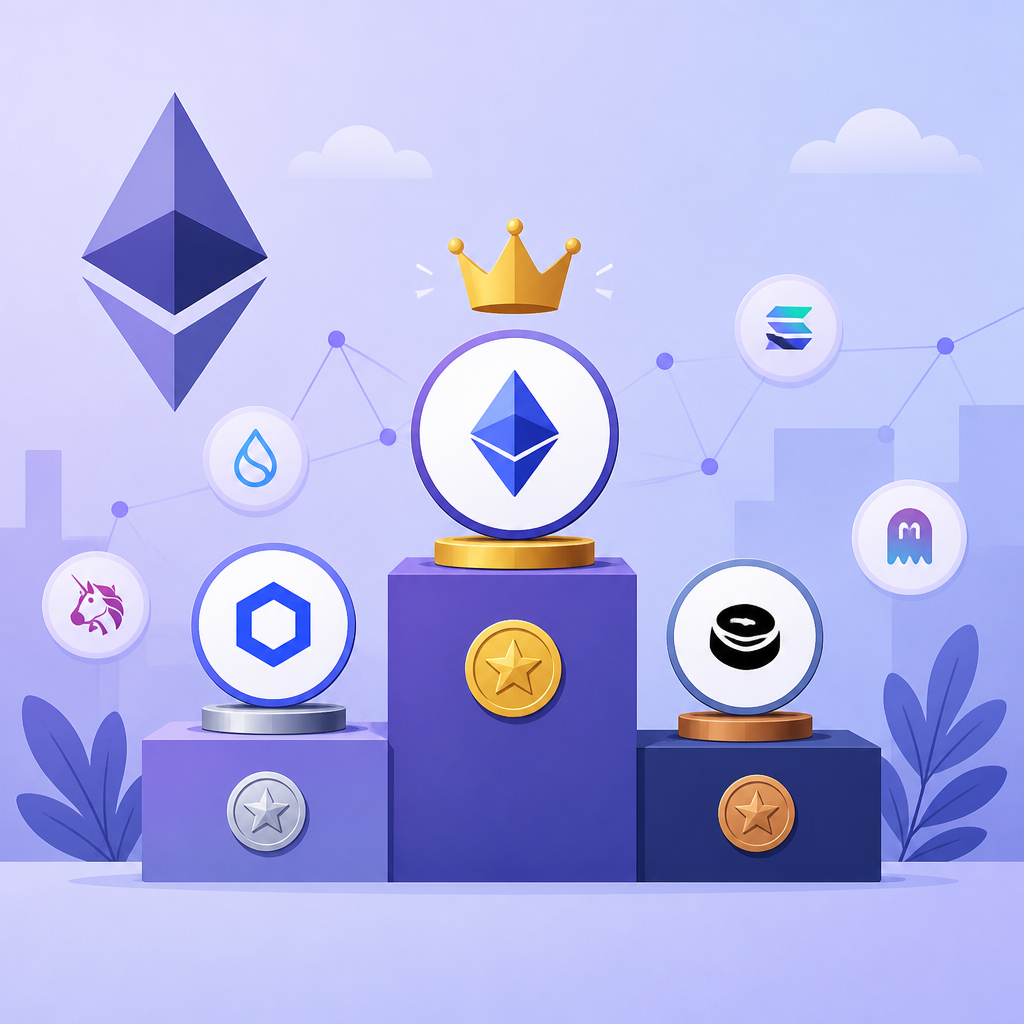
Because ETH sits at the center of the ecosystem, it tends to be the first coin readers compare against every other token in the list. If you want the broadest exposure to Ethereum activity, this is usually the starting point.
- Used for gas fees and transaction settlement
- Tracks network demand and on-chain activity
- Often the highest-liquidity asset in the category
2. Chainlink (LINK)
Chainlink connects smart contracts to off-chain data, which makes it a core utility token for DeFi and other apps. Its role is less about being money and more about making blockchain applications useful in the real world.
LINK often matters to readers who want exposure to infrastructure rather than a pure payment or governance token. In market-cap rankings, that utility angle can help explain why it stays near the top of Ethereum-related assets.
- Oracle network for price feeds and external data
- Commonly used by DeFi protocols
- Infrastructure token with broad ecosystem reach
3. Uniswap (UNI)
Uniswap is the governance token tied to one of the most used decentralized exchanges on Ethereum. It represents a stake in a major trading venue where users swap tokens without a centralized intermediary.
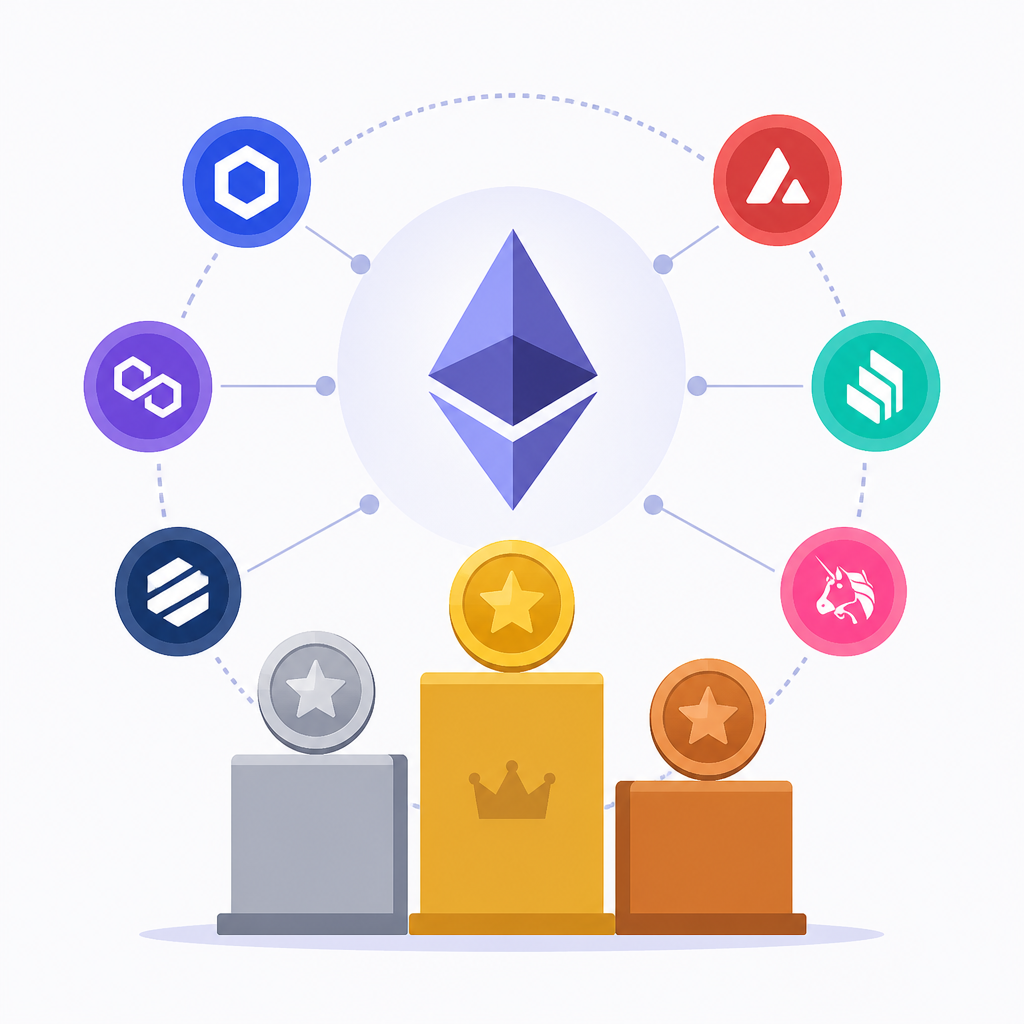
UNI is useful for readers who want to track activity in decentralized trading, since volume and market sentiment around DEX usage often show up in its price action. It is one of the clearest examples of an Ethereum token tied to a specific app category.
- Governance token for a major DEX
- Closely linked to swap activity and trading volume
- Popular among users tracking DeFi adoption
4. Aave (AAVE)
Aave powers a lending and borrowing protocol that helped define Ethereum DeFi. The token is tied to a platform where users can lend assets, borrow against collateral, and participate in protocol governance.
AAVE is often watched by readers who care about credit markets on-chain. Its place in the market-cap rankings reflects how important lending remains inside the Ethereum ecosystem.
- Lending and borrowing protocol token
- Used in DeFi credit markets
- Governance role for protocol decisions
5. Maker (MKR)
Maker is tied to the protocol behind DAI, one of Ethereum’s best-known stablecoins. MKR holders help govern risk parameters and system changes, so the token is closely linked to how the stablecoin is managed.
For readers comparing Ethereum ecosystem coins by market cap, MKR offers a different profile from trading or oracle tokens. It is more about monetary system design and stable asset infrastructure than about exchange activity.
- Governance token for the Maker protocol
- Linked to DAI stablecoin operations
- Focuses on risk management and system rules
How to decide
If you want the broadest read on Ethereum activity, start with ETH. If you care more about app-level usage, LINK, UNI, AAVE, and MKR each reflect a different part of the ecosystem, from data feeds to trading to lending to stablecoin governance.
For a market-cap screen, the best choice depends on whether you want network exposure, DeFi infrastructure, or protocol-specific utility. That makes the Forbes category useful as a quick ranking tool and as a map of where value sits inside Ethereum.
// Related Articles
- [CHAIN]
AI agents will not save Web3; they will expose its weakest systems
- [CHAIN]
Panda AI launches Golden Presale for AI blockchain
- [CHAIN]
Layer 2 vs Layer 3: $38B TVL trade-off
- [CHAIN]
Layer 2 Blockchain Development Setup Guide
- [CHAIN]
Layer 2s cut crypto fees, but bridges still decide the risk
- [CHAIN]
Clarity Act edits could reshape stablecoin rules