Ethereum L2s Shift Toward Payments and Stablecoins
Base and Arbitrum now hold over 80% of Ethereum L2 DeFi TVL as smaller rollups lose deposits and users.

Ethereum layer 2 activity is concentrating around Base and Arbitrum while smaller rollups lose users and deposits.
Ethereum’s layer 2 market is entering a tighter, more selective phase. Base and Arbitrum now control more than 80% of layer 2 DeFi total value locked, while smaller networks such as Linea have seen deposits fall sharply over the last six months.
The shift matters because it shows that cheaper rollups are no longer enough on their own. Teams now need a clear product, a real user base, and a reason to exist beyond being another Ethereum-compatible chain.
| Metric | Value | What it signals |
|---|---|---|
| Base + Arbitrum DeFi TVL share | More than 80% | Liquidity is concentrating in a few major L2s |
| Linea bridge deposits | $976 million in Nov. 2025 | Earlier peak before the decline |
| Linea bridge deposits | $367 million in May 2026 | Large drop in capital committed to the network |
| Dencun upgrade | 2024 | Lowered rollup data posting costs |
General-purpose rollups are losing the easy pitch
Get the latest AI news in your inbox
Weekly picks of model releases, tools, and deep dives — no spam, unsubscribe anytime.
No spam. Unsubscribe at any time.
The recent shutdown of Zero Network added another warning sign for the market. The problem is not that layer 2s no longer work technically. It is that too many of them sell the same promise: lower fees, Ethereum compatibility, and little else.
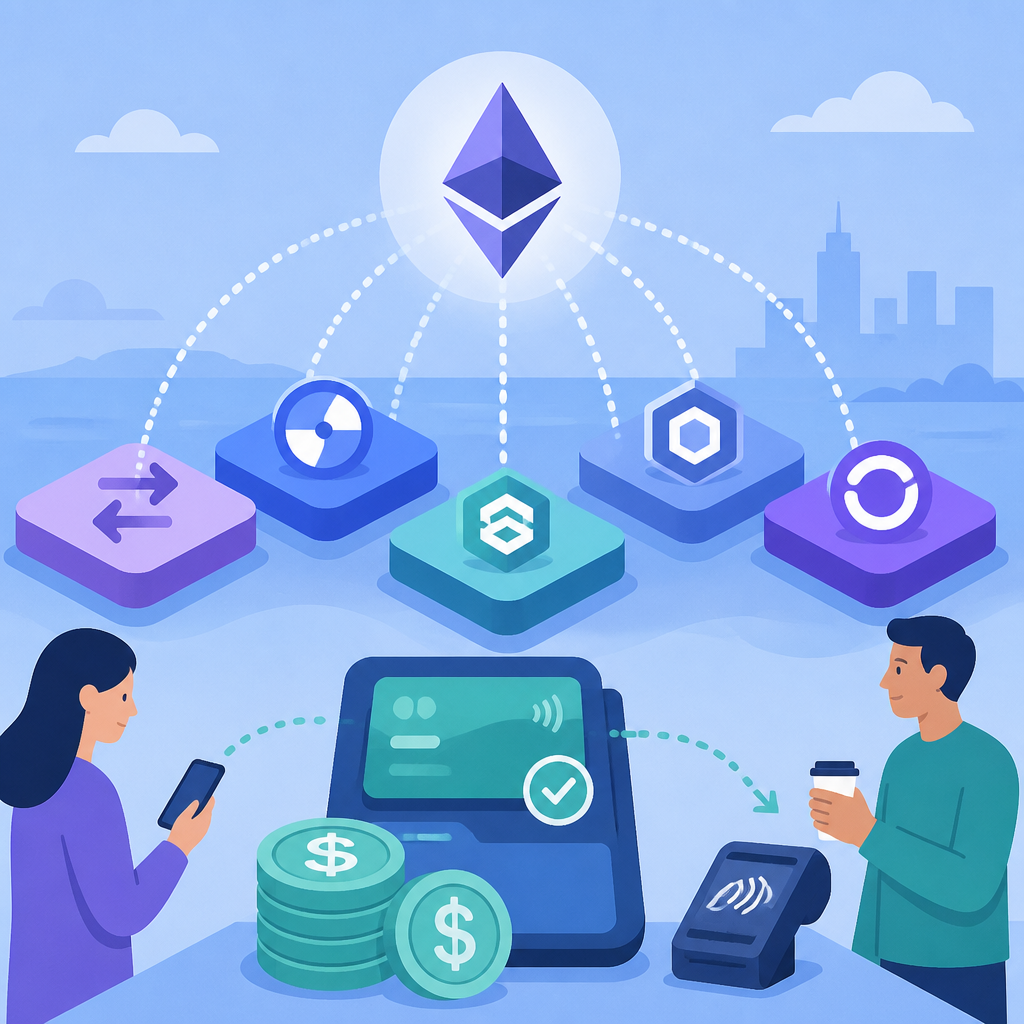
Ben Fisch, co-founder and CEO of Espresso Systems, put it plainly: “We're in a consolidation phase for general-purpose layer twos, not layer twos broadly.” That distinction matters. The market is not rejecting layer 2s. It is rejecting copy-paste chains that do not solve a specific need.
Rollups were supposed to make Ethereum cheaper and more usable by moving transactions off mainnet, bundling them, and settling compressed data back on Ethereum. That architecture still matters. What changed is the buying behavior around it.
- Cheaper deployment no longer guarantees adoption
- Generic chains face direct competition from better-known networks
- Applications with specific demand have a much clearer reason to launch
Base and Arbitrum keep pulling ahead
Base and Arbitrum now dominate DeFi activity across Ethereum layer 2s. Their combined share of more than 80% of DeFi TVL is a strong signal that liquidity wants scale, distribution, and familiar venues.
That concentration also explains why smaller chains are struggling to hold deposits. Networks including Linea, World Chain, Starknet, and Mantle have all seen weaker bridge inflows. In Linea’s case, the fall from $976 million to $367 million is the kind of drop that changes how investors and builders read the network’s momentum.
“I think only a few L2s with clear financial demand will be able to sustain themselves over time.” — Alice Hou, former Messari research analyst
Hou’s point is blunt and useful: the issue is not whether the chain is fast enough or cheap enough. The issue is whether it has enough activity to justify its existence. If the answer is no, then lower costs only slow the decline.
Cheaper rollups still need real demand
Ethereum’s Dencun upgrade in 2024 reduced the cost of posting rollup data through blobs, which made operating many layer 2s less expensive. Messari research cited in the report says data availability costs now make up only a small share of expenses for many OP Stack chains.
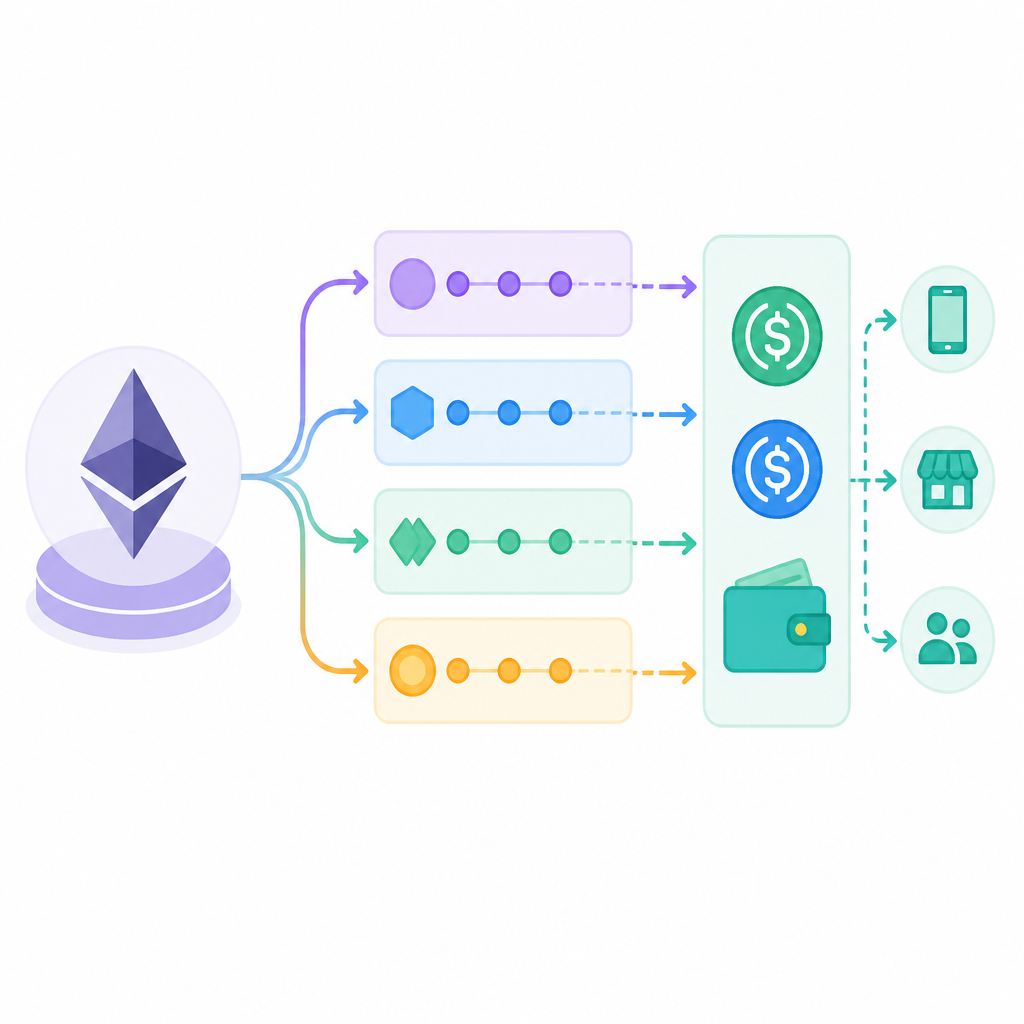
That should have made life easier for new networks, and in one narrow sense it did. But cheaper infrastructure does not create users. It only lowers the bill for serving them. Alice Hou said, “From an operator perspective, it is definitely cheaper to run an L2 today.” She added that the real challenge is still “generating enough sustained demand to make the network worth operating.”
This is where the market has become more selective. Teams can no longer assume that being Ethereum-compatible is enough. They need a reason for users to care, and that reason usually shows up in payments, stablecoins, tokenized assets, or some other financial workflow with repeated activity.
- Lower fees help operators, but they do not create product-market fit
- Financial apps have clearer on-chain demand than generic infrastructure
- Distribution now matters more than raw technical deployment speed
Payments and tokenized assets look more durable
The most interesting part of this shift is where the surviving demand is showing up. Ben Fisch pointed to asset managers, stablecoin issuers, and tokenized deposit platforms as businesses that have a direct reason to use dedicated layer 2s. They are not experimenting with blockspace for its own sake. They are trying to move money, settle assets, or reach users at lower cost.
That is why Coinbase’s Base matters so much. It has a built-in customer base, a direct distribution channel, and a clear bridge into Ethereum’s DeFi ecosystem. The network is not winning because it is a better abstraction of Ethereum. It is winning because it starts with an audience.
Fisch summed up the product problem this way: “If you want to succeed, you need to build out a differentiated application.” That is the real filter now. The best layer 2s are becoming application networks with a reason to exist, while the weaker ones are fading into infrastructure clutter.
For builders, that means the next wave of Ethereum scaling will probably look less like a race to launch and more like a race to own a specific financial use case. For investors, it means TVL and bridge deposits matter more than marketing around throughput or fees.
What this means for Ethereum builders
The market is telling builders to stop treating layer 2s as interchangeable. A chain built for general traffic has a hard time competing when the same users can already stay on Base or Arbitrum. A chain built for a specific product, on the other hand, can justify itself with measurable demand.
That makes the next few quarters important for anyone shipping on Ethereum. If a new rollup cannot point to payments volume, stablecoin flows, tokenized assets, or another repeatable use case, it will probably struggle to hold deposits once the first wave of curiosity fades.
The cleanest takeaway is simple: Ethereum layer 2s are not disappearing, but the market is choosing winners faster. The question now is which networks can prove they are products, not just chains.
Related reading: How Dencun changed rollup economics.
// Related Articles
- [CHAIN]
Layer 2 Is Ethereum’s Real Product, Not a Detour
- [CHAIN]
Ethereum’s price should be read as network demand, not just speculati…
- [CHAIN]
Ethereum’s shake-up turns ETH into a cleaner bet
- [CHAIN]
Bitcoin’s price page explains the market in one view
- [CHAIN]
Web3 Banking Guide for Fintech Teams
- [CHAIN]
10 prediction market builders that can ship Polymarket-style apps