Fund tokenization services turn funds into on-chain rails
A practical breakdown of fund tokenization services, from legal setup to custody, compliance, and secondary trading.

This guide shows how fund tokenization services turn funds into investable on-chain products.
I've been looking at fund tokenization pitches for a while now, and honestly, most of them read like someone took a deck full of buzzwords and glued it to a custody diagram. Every vendor says the same thing: lower costs, faster settlement, better access, more transparency. Fine. But when I try to map that into an actual operating model, things get messy fast. Who’s issuing the tokens? What’s the legal wrapper? Where does compliance live? What happens when an investor wants out, and what if the transfer rules are stricter than the marketing slide suggests?
That’s the part that keeps bothering me. Fund tokenization is not one product. It’s a stack of legal, technical, and operational decisions that all have to work together, or the whole thing becomes a very expensive demo. I pulled this apart after reading Antier’s guide on how to invest in tokenized funds platforms, and I want to show you the version that actually matters if you’re building, evaluating, or buying into one of these services.
What follows is not a sales pitch. It’s the architecture I wish more teams would explain plainly before asking anyone to wire money into a tokenized fund.
1. Stop thinking “token.” Start thinking “fund operating system.”
Get the latest AI news in your inbox
Weekly picks of model releases, tools, and deep dives — no spam, unsubscribe anytime.
No spam. Unsubscribe at any time.
“It is an integrated system encompassing legal structuring, smart contract logic, compliance tooling, institutional custody, and secondary market infrastructure.”
That line from Antier’s article is the right starting point, because it kills the lazy version of the story. A fund token is not the product. The product is the whole machine behind it.
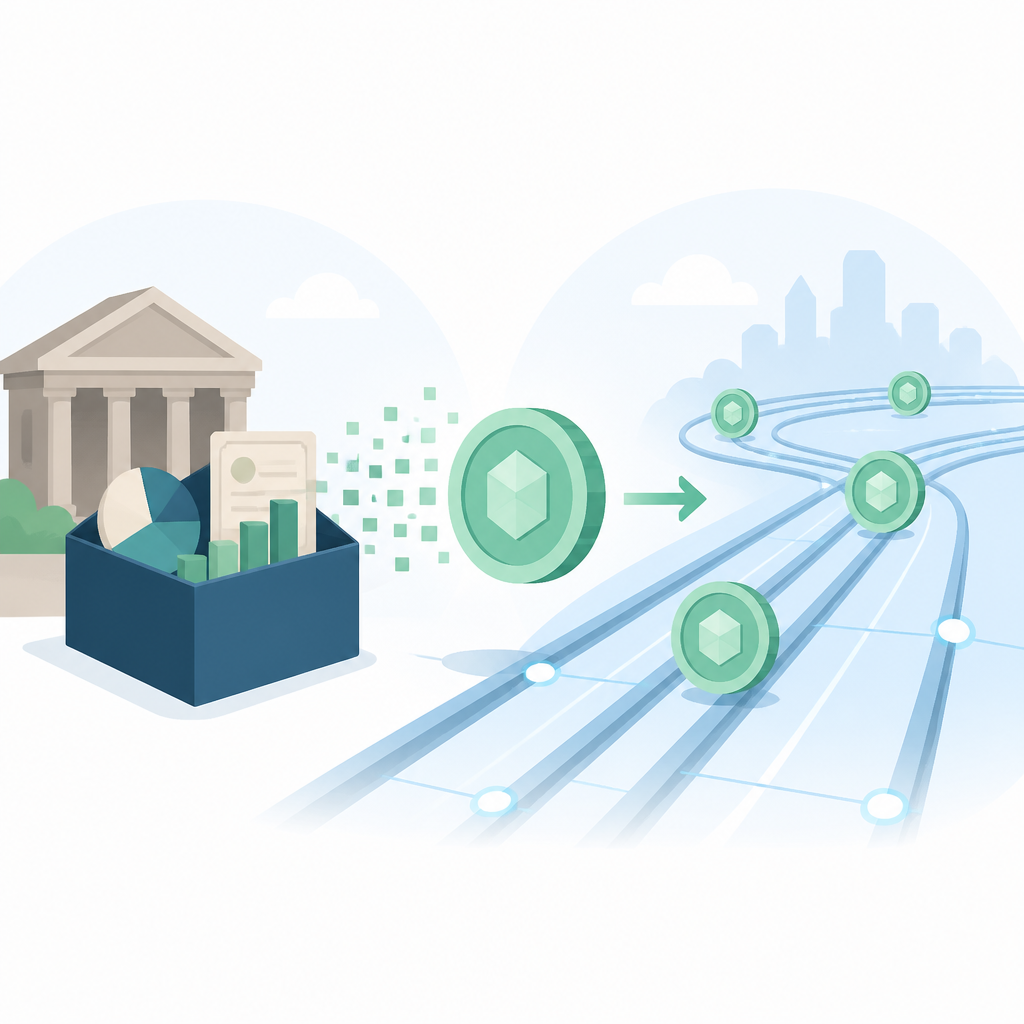
What this actually means is that tokenization only works when the legal wrapper, the on-chain rules, the investor onboarding flow, the custody model, and the trading venue all agree on what the asset is and who can touch it. If one piece disagrees, you get friction. If two pieces disagree, you get a mess. If three pieces disagree, you get a regulator asking awkward questions while your sales team keeps saying “but the token is live.”
I ran into this pattern when reviewing tokenized treasury and private credit setups. The token itself looked clean. The smart contract was neat. But the legal structure still behaved like a traditional closed-end vehicle, and the transfer restrictions were so strict that the supposed secondary market was basically a waiting room with better branding.
How to apply it: before you evaluate a fund tokenization service, ask for the full operating map. I mean all of it. Don’t accept a smart contract demo without the issuance entity, transfer policy, KYC/AML path, custody flow, and redemption mechanics. If a vendor can’t draw the whole chain on one page, they probably haven’t built the whole chain.
- Ask who issues the token and under what legal entity.
- Ask how investor eligibility is enforced after minting.
- Ask what happens on transfer, redemption, suspension, or default.
2. Legal structure is not paperwork. It is the product boundary.
Most tokenization writeups hide the legal part in a paragraph near the end, like it’s a footnote. That’s backwards. The legal wrapper decides what the token can represent, who may hold it, and how much flexibility the platform really has.
What this actually means is that tokenization services are usually building on top of existing fund structures, not replacing them. That can be a trust, a special purpose vehicle, a feeder fund, a limited partnership, or some other jurisdiction-specific setup. The token is just the digital representation of a claim inside that structure. If the structure is weak, the token doesn’t rescue it. It just makes the weakness easier to distribute.
I’ve seen teams try to solve legal ambiguity with better UX. That never works. You can make onboarding prettier, but you can’t click your way out of securities law. If the fund is meant for qualified investors only, the platform has to prove that restriction is enforced everywhere the token moves.
How to apply it: when you assess a tokenized fund platform, read the legal wrapper before you read the roadmap. If the documentation does not clearly explain jurisdiction, investor class, transfer restrictions, redemption rights, and dispute handling, pause. Also check whether the service has named legal counsel or published structure docs. If they won’t name the wrapper, they’re asking you to trust vibes.
- Confirm the jurisdiction and fund vehicle type.
- Check whether the token is a security, a claim, or a unit in a regulated vehicle.
- Verify whether secondary transfers are allowed at all, and on what basis.
3. Smart contracts only matter if they enforce the boring rules
Tokenization vendors love showing mint and burn flows. I get it. It looks clean in a demo. But the real value of smart contracts in fund tokenization is not the mint animation. It’s the enforcement of boring, annoying constraints that humans usually handle badly.
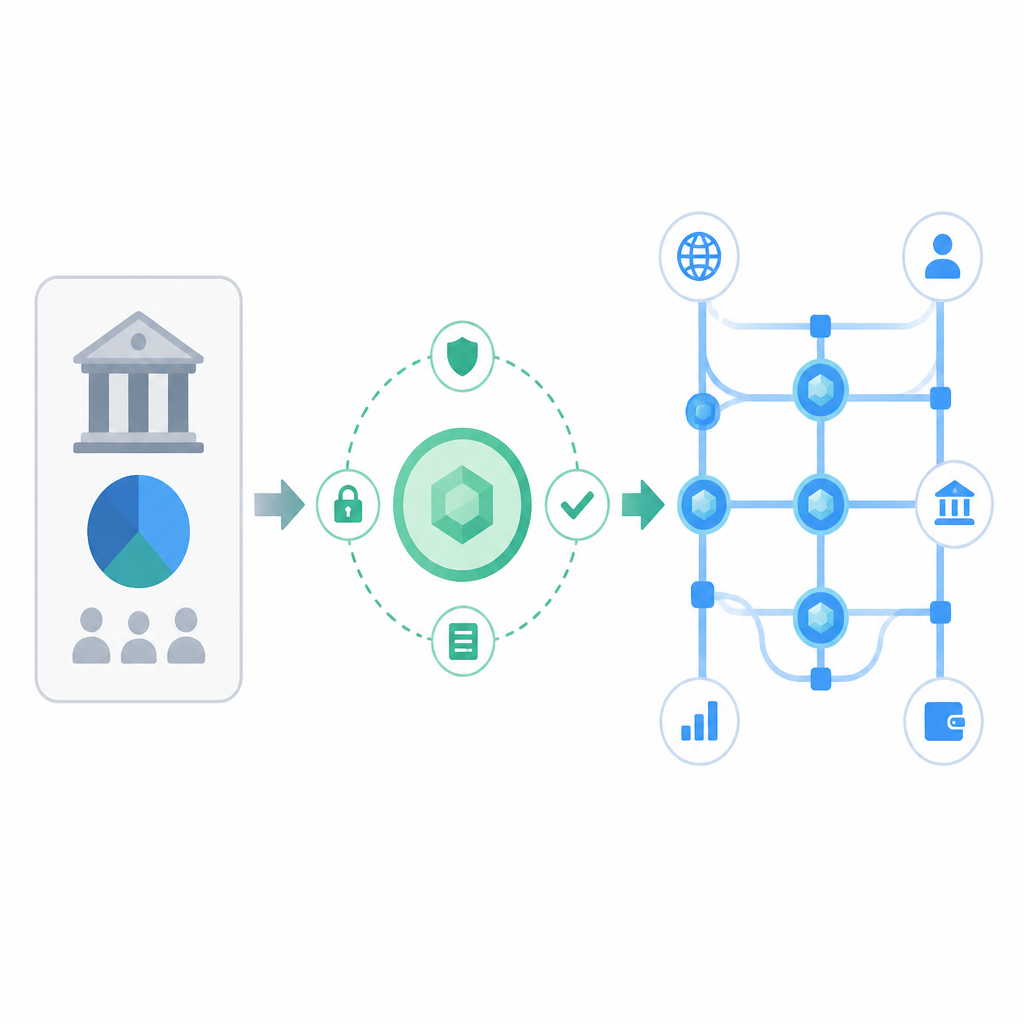
What this actually means is that smart contracts should encode the fund’s operational rules: transfer restrictions, whitelist checks, cap tables, lockups, distribution logic, and maybe even corporate actions. If the contract can’t stop an ineligible wallet from receiving a token, then it’s not doing the job. It’s decoration.
I ran into this when evaluating a tokenized private fund prototype. The team had a polished interface and a nice dashboard, but the transfer logic was basically “we’ll check compliance off-chain.” That’s not enough. Off-chain checks are useful, sure, but if the token can move first and get reviewed later, you’ve already created a problem.
How to apply it: ask for the contract’s rule set, not just its ABI. You want to know how minting is authorized, how transfers are approved, whether compliance data is checked on-chain or via oracle, and how exceptions are handled. If the service uses permissioned transfers, ask how that permission is revoked, updated, and audited.
For the technical side, I’d want to see a clear relationship with the underlying chain, whether that’s Ethereum, a permissioned EVM, or a platform like Ethereum. If the team says “we’re chain-agnostic” but can’t explain finality, gas, or compliance hooks, I translate that as “we haven’t decided yet.”
4. Custody is where the real trust model lives
Every tokenized fund pitch eventually hits custody, because somebody has to hold the keys and somebody has to answer for them. This is where institutional buyers get serious and retail-friendly slides stop mattering.
What this actually means is that fund tokenization services need a custody model that fits the asset class and the investor base. That could mean qualified custodians, multi-party computation wallets, segregated omnibus accounts, or a hybrid setup with on-chain controls and off-chain controls. The point is not to sound fancy. The point is to reduce the chance that one compromise, one bad signer, or one operational mistake takes down the whole book.
I’ve seen teams assume custody is just a wallet vendor decision. It’s not. Custody affects governance, recovery, transaction approval, audit trails, and investor confidence. If the platform can’t explain key management in plain English, I don’t care how good the token economics look.
How to apply it: map the custody chain from investor wallet to fund wallet to treasury wallet to transfer agent. Then ask where approvals happen, who can freeze assets, and what recovery looks like if a signer is lost. If the platform uses a provider like Fireblocks or another institutional custody layer, ask how that integrates with fund controls rather than assuming the brand name solves everything.
- Identify who controls minting and burning keys.
- Check whether custody is segregated per fund or pooled across products.
- Ask how recovery, freeze, and emergency suspension work.
5. Compliance is not a dashboard. It’s a control plane.
A lot of tokenization platforms show compliance as a neat dashboard with green checks and tidy badges. Nice UI. Wrong mental model. Compliance in tokenized funds is not a report; it’s a live control plane that decides whether a transaction can happen at all.
What this actually means is that onboarding, sanctions screening, investor accreditation, jurisdiction checks, and transfer validation need to be baked into the system. The platform has to know who the investor is, whether they still qualify, and whether a transfer would violate the fund’s rules. If that sounds strict, good. Securities don’t become less regulated because they’re on-chain.
I like to think of this as the difference between after-the-fact monitoring and pre-trade enforcement. After-the-fact monitoring is useful for audit. Pre-trade enforcement is what keeps you out of trouble in the first place. Tokenized funds need both, but they cannot rely on the first one alone.
How to apply it: look for KYC/AML integrations, accreditation workflows, sanctions screening, and jurisdiction gating. If the platform supports token transfers, ask whether every recipient is checked before the transfer finalizes. If it supports secondary markets, ask how compliance rules travel with the token instead of disappearing once the trade hits the book.
For reference, compliance tooling often connects to identity and screening providers, and the platform should be able to explain that stack clearly. If the vendor mentions a partner like Chainalysis, that’s useful, but it still doesn’t replace a proper policy design.
6. Secondary markets are useful only if liquidity is real
This is where a lot of tokenized fund marketing gets a little too confident. “Secondary market access” sounds great until you ask who is actually buying, how often they trade, and whether the fund rules even permit it.
What this actually means is that secondary trading is not magic liquidity. It is a controlled exit path. For some funds, that’s enough. For others, it barely moves the needle. The real question is whether the tokenized structure improves transferability without breaking the fund’s restrictions.
I’ve seen teams confuse “there is a venue” with “there is liquidity.” Those are not the same thing. A venue can exist with thin volume, narrow eligibility, and limited settlement windows. That still may be better than nothing, but it should not be sold like a public market.
How to apply it: ask what the actual exit path is. Is there a permissioned ATS? A private bulletin board? A redemption window? A matching engine? Can the token be traded only among verified investors? If the platform claims secondary trading, ask for the rules that govern price discovery, settlement, and transfer approval.
Also, check whether the secondary market is integrated with the fund’s NAV or valuation policy. If the token trades far away from the underlying asset value, you’ve created a pricing problem that will eventually become a governance problem.
7. If you’re investing, underwrite the stack, not the slogan
If I were investing in a fund tokenization service, I would not start with the pitch deck’s growth chart. I’d start with the stack. The stack tells you whether the company understands what it’s actually building.
What this actually means is that diligence should cover the legal structure, the contract architecture, custody, compliance, market access, and operational resilience. You want to know whether the platform can survive regulatory scrutiny, wallet failures, transfer disputes, and investor service requests without improvising every answer.
My rule of thumb is simple: if the service can’t explain how a tokenized fund is created, controlled, transferred, and unwound, then it doesn’t have a product yet. It has a narrative. And narratives are cheap.
How to apply it: build an investment checklist around control points. Who can mint? Who can freeze? Who can redeem? Who can approve transfers? How are records reconciled? What happens if the chain is congested or the compliance provider is down? That’s the stuff that matters when the glossy demo is gone.
For broader context, it helps to compare this with the way tokenization is being framed by firms like Antier, but keep your own diligence independent. Vendor material is a starting point, not a conclusion.
The template you can copy
# Fund Tokenization Services Due Diligence Template

Use this checklist before investing in or building a tokenized fund platform.

## 1) Legal structure
- Jurisdiction:
- Fund vehicle type:
- Investor eligibility:
- Transfer restrictions:
- Redemption rights:
- Legal counsel named? (yes/no)

## 2) Token model
- What does the token represent?
- Is it a security, unit, claim, or certificate?
- Mint authority:
- Burn authority:
- Freeze/suspend authority:
- Can transfers happen only to whitelisted wallets? (yes/no)

## 3) Smart contract controls
- On-chain transfer checks:
- Off-chain compliance checks:
- Lockup period:
- Corporate actions supported:
- Audit completed? (yes/no)
- Audit firm:

## 4) Custody
- Custody provider:
- Key management model:
- Segregated or pooled custody:
- Recovery procedure:
- Emergency freeze procedure:
- Signer approval policy:

## 5) Compliance stack
- KYC provider:
- AML/sanctions screening provider:
- Accreditation workflow:
- Jurisdiction gating:
- Ongoing monitoring:
- Transfer-time compliance checks:

## 6) Secondary market
- Is secondary trading allowed? (yes/no)
- Venue type:
- Buyer eligibility rules:
- Settlement method:
- NAV/valuation policy:
- Liquidity assumptions:

## 7) Operational resilience
- Chain dependency:
- Oracle dependency:
- Compliance provider dependency:
- Downtime fallback plan:
- Incident response owner:
- Reconciliation process:

## 8) Investment questions
- What problem does tokenization solve here?
- What is better than the traditional fund version?
- What breaks if the chain or compliance stack fails?
- Who is the real buyer of this product?
- What is the exit path for investors?

## Decision rule
If the team cannot explain the full path from issuance to transfer to redemption in plain English, do not invest yet.
That’s the version I’d actually use in a meeting. It forces the conversation away from hype and toward the stuff that keeps these platforms alive.
Source attribution: I broke this down from Antier’s article at https://www.antier.com/blogs/how-to-invest-in-tokenized-funds-platforms-yield-security-and-regulatory-landscape/. The structure and checklist here are my own synthesis of that source and standard product diligence practice.
// Related Articles
- [CHAIN]
Anthropic’s Riot deal shows AI compute now costs billions
- [CHAIN]
Bitcoin’s CLARITY Act now faces a 60-vote test
- [CHAIN]
Pepeto's DeFi push is a distraction from Ethereum's real upside
- [CHAIN]
AI agents will not save Web3; they will expose its weakest systems
- [CHAIN]
Panda AI launches Golden Presale for AI blockchain
- [CHAIN]
Layer 2 vs Layer 3: $38B TVL trade-off