Google DeepMind turns science into tools
Google DeepMind’s science tools show how Google is packaging AI for researchers who want precision, not hype.

Google DeepMind is packaging AI into science tools for researchers.
I've been watching Google’s AI messaging for a while, and honestly, it’s usually where the company gets too abstract. Big promises, broad language, a lot of “responsible AI” phrasing, and not much I can actually build around. This Google DeepMind page felt different, but not because it suddenly became exciting. It felt different because it finally pointed at something concrete: science tools, experiments, and a very specific claim about expanding the scale and precision of discovery.
That’s the part I care about as a developer. Not the branding. Not the umbrella words. I want to know what’s being built, what problem it’s meant to solve, and how much of it I can reuse without inheriting a pile of marketing sludge. The page on blog.google does not give me a giant product spec, which is annoying, but it does give me a useful signal: Google DeepMind is being framed as the place where research-grade AI gets turned into tools people can actually use.
And that’s worth unpacking, because if you’re building with AI right now, you’re probably tired of “AI for everything” pages that say nothing. This one at least tells me where Google wants to put its weight: science, experimentation, and responsible deployment. That’s enough to break down what’s real here and what I’d copy into my own work.
Source anchor: the original post is the Google Keyword page for Google DeepMind. The page doesn’t show view counts, bookmarks, or stars, so I’m not going to invent any.
They’re not selling “AI,” they’re selling scientific throughput
Get the latest AI news in your inbox
Weekly picks of model releases, tools, and deep dives — no spam, unsubscribe anytime.
No spam. Unsubscribe at any time.
“Gemini for Science: AI experiments and tools for a new era of discovery”
What this actually means is simple: Google is trying to position AI as infrastructure for research work, not as a chat toy. That line about “experiments and tools” matters more than the headline name. I read that as a shift from demo mode to workflow mode. The goal isn’t to wow me with a model card. The goal is to help researchers run more experiments, inspect more data, and move faster without lowering the bar on precision.
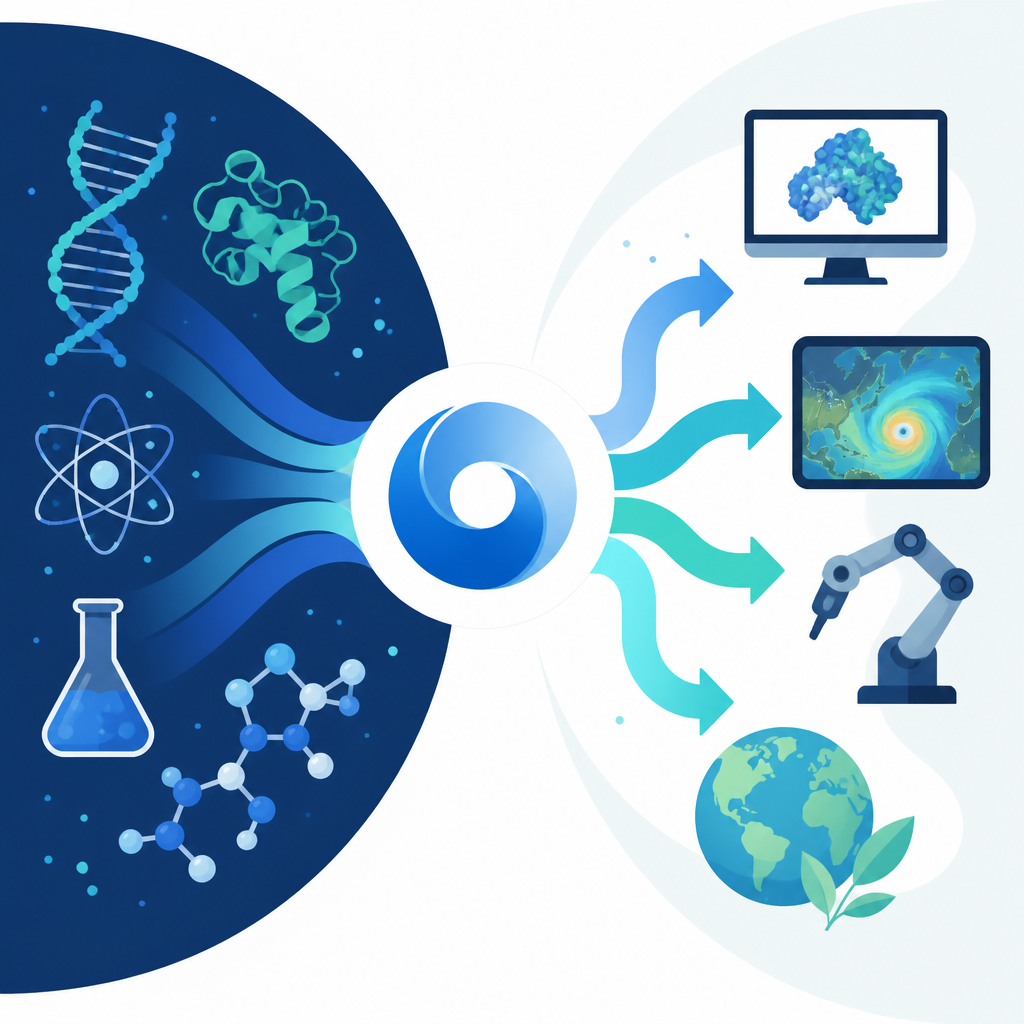
I’ve seen this mistake a lot in AI products. Teams build a clever interface, then realize the real users want repeatability, traceability, and fewer dead ends. Scientists are even less forgiving than software teams. If the output can’t be checked, cited, or reproduced, it doesn’t matter how slick the UI is. So when Google says “new era of discovery,” I translate that into “we’re trying to make AI useful inside a process that already has rules.”
That is a much harder problem than shipping a chatbot. It also explains why Google keeps attaching the word “research” to everything here. They’re not just trying to sell a model. They’re trying to make the model feel like part of a lab bench.
How I’d apply this: if I were building an internal AI tool for engineers, analysts, or scientists, I’d stop asking “how do I make this impressive?” and start asking “how do I make this increase throughput without making results untrustworthy?” That changes the whole design. You add citations, logs, versioning, and review steps before you add flashy UX.
- Design around repeatable tasks, not generic conversation.
- Expose sources, inputs, and assumptions by default.
- Measure fewer wasted cycles, not just user delight.
“Responsible” is doing a lot of work here
The page says Google is building AI responsibly “to benefit everyone.” That line is doing heavy lifting, and I don’t mean that as a compliment. I’ve heard enough AI positioning to know that “responsible” can mean almost nothing unless it shows up in the product. Still, I’m not dismissing it. If you’re shipping AI into science, healthcare, education, or enterprise workflows, responsibility isn’t optional decoration. It’s the product constraint.
What I take from this page is that Google wants Google DeepMind to be the public-facing proof that its AI stack can be used without turning every use case into a trust problem. That matters because the moment you put AI in a research workflow, you’re dealing with real consequences. Bad suggestions waste time. Bad outputs can distort experiments. Bad automation can create false confidence. That’s not a UI issue. That’s a systems issue.
I ran into this exact problem when I built a research assistant prototype for a team that wanted literature summaries. The model was great at sounding right and terrible at knowing when it was missing context. Users loved the first pass and then immediately hit the wall when they asked for sources, comparisons, and uncertainty. We had to rebuild the experience around evidence, not eloquence. The model got less magical and more useful, which is usually the right trade.
How to apply it: treat “responsible” as a set of implementation rules. If your AI system can’t explain where a claim came from, can’t show confidence boundaries, and can’t be reviewed by a human, then you don’t have a responsible system yet. You have a convincing one.
- Always keep a path back to source material.
- Separate generation from verification.
- Make uncertainty visible instead of hiding it behind polished prose.
Google DeepMind is a wrapper for several different bets
The page doesn’t read like a standalone product announcement. It reads like a container for a bunch of connected bets: DeepMind, Gemini, Google Research, and science-facing experiments. That matters because the real story here is organizational, not just technical. Google is telling us that the lab, the model stack, and the product layer are all being pulled into the same story.
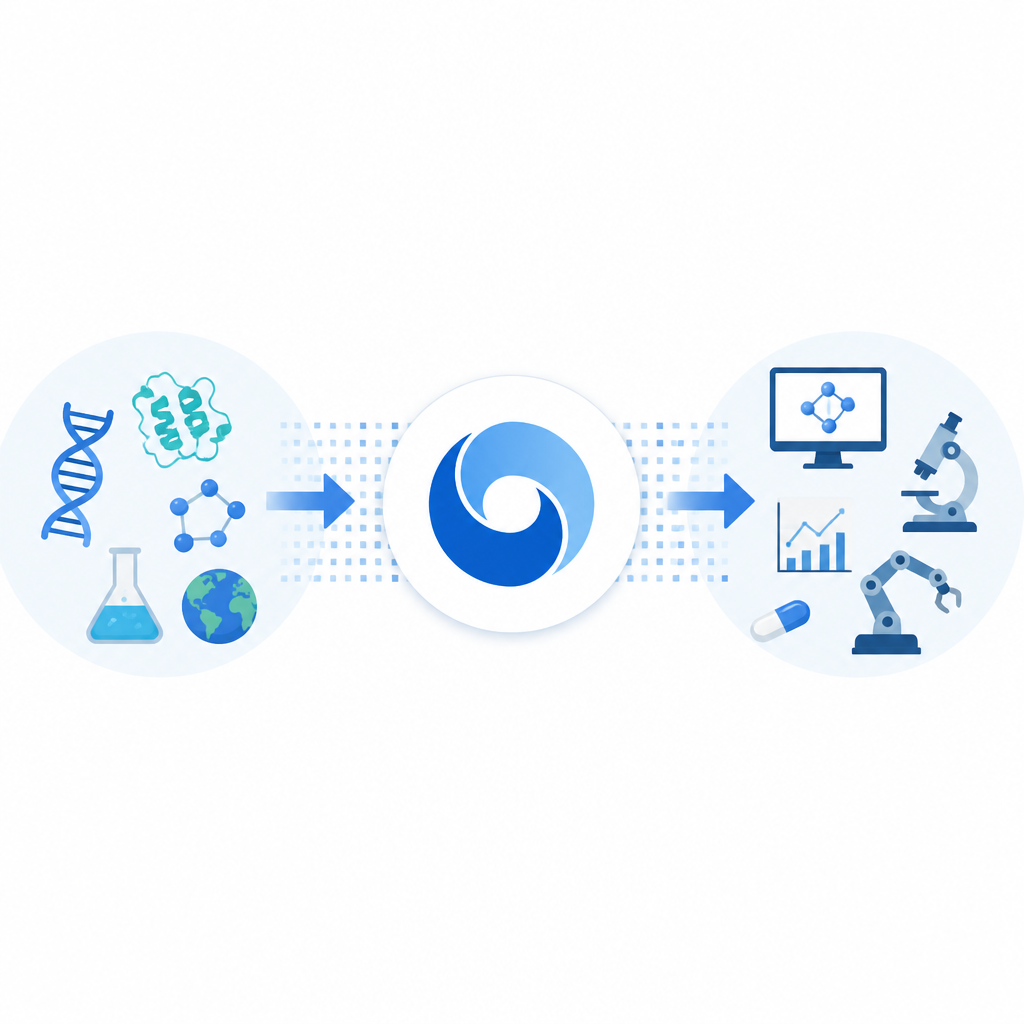
What this actually means is that Google wants to reduce the distance between research output and usable tooling. That’s a very Google move, and it’s not always a good one. When the company gets this right, you get strong infrastructure, broad distribution, and enough compute to do real work. When it gets this wrong, you get a pile of overlapping names and no clear path for developers.
I’ve dealt with that confusion in my own teams. Once you have separate model research, product engineering, and platform teams, each group starts describing the same thing differently. One says “capability.” Another says “workflow.” Another says “surface.” By the time it reaches users, the original intent is buried. Google’s page is trying to clean up that mess by putting one label over the whole stack: Google DeepMind.
If I were mapping this into my own org, I’d use the same trick. One name for the initiative. One owner for the experience. One set of evaluation criteria. Otherwise you end up with a lot of impressive work that nobody can explain in a sentence.
Science tools are the least sexy AI product category, which is why they matter
I actually like that this page points to science. It’s not the most clickable category, but it’s one of the best places to test whether AI is genuinely useful. Science punishes hand-wavy systems. It rewards precision, consistency, and the ability to sift through a lot of noise. If AI can help there, it can probably help in a lot of other places too.
The page’s wording about “expanding the scale and precision of scientific exploration” is the key phrase. Scale means more work, more experiments, more candidates, more search space. Precision means fewer dumb mistakes, better targeting, and tighter results. That’s a very developer-friendly framing, because it maps directly to system design: throughput on one side, error control on the other.
When I build tools, I often see teams obsess over scale and ignore precision. They want more output, more automation, more generated content. Then they get buried in cleanup. Science flips that around. If the system can’t be precise, scale just multiplies garbage. Google’s page is telling me they understand that tradeoff, at least on paper.
How to apply it: if you’re designing an AI feature, define both sides of the equation. What are you scaling? What are you constraining? If you can’t answer both, you’re probably building a demo, not a tool.
- Pick one workflow where precision matters more than speed.
- Measure error rates before you measure usage.
- Use AI to narrow search, not just generate more text.
The public page is sparse, and that’s actually informative
One thing that annoyed me, and also helped me, is how little this page actually says. There’s no deep technical breakdown, no model spec, no architecture diagram, no neat list of benchmarks. That absence is useful. It tells me Google wants the page to function as a banner, not a manual.
What this actually means is that I should not confuse the page with the product. The page is a signal of direction. The real detail lives elsewhere, probably across Google Research posts, Gemini announcements, DeepMind publications, and whatever science-facing tooling they decide to surface next. If you’re a developer, that’s the right way to read it. Don’t overfit to the landing page. Read it as an index.
I’ve made the same mistake with internal platform launches. Leadership posts a polished summary, and everyone treats it like a spec. It isn’t. It’s a direction marker. If you treat it like a spec, you end up building the wrong thing and then acting surprised when the details don’t match.
How to apply it: when a company page is vague, map the ecosystem around it. In this case, the relevant links are the DeepMind site, Google Research, Gemini, and the broader Keyword blog. That’s where the actual substance lives.
What I’d copy from this, and what I’d ignore
Here’s my honest read: the strongest idea here is not “Google DeepMind.” It’s the framing. Google is trying to put AI inside a domain where usefulness can be measured, not just admired. That’s the part worth stealing. If you’re building with AI, pick a domain with real constraints and real feedback loops. That’s where the model stops being a novelty and starts becoming infrastructure.
What I’d ignore is the brand fog. You do not need a giant umbrella name unless you’re Google. You also don’t need to claim you’re building for “everyone” unless you can prove it with actual distribution and access. Most teams should be narrower. Pick a task, pick a user, pick a verification method, and ship that.
If I were turning this page into a playbook, I’d keep four rules: focus on a domain with high signal, make outputs reviewable, surface uncertainty, and measure whether the tool actually reduces work. That’s the real lesson hiding under the corporate wrapper.
The template you can copy
# AI tool positioning template for a research-grade workflow

## One-line promise
We help [specific users] use AI to [specific task] with [verification or control mechanism].

## What this tool is for
- Input: [data, documents, experiments, requests]
- Output: [summaries, candidates, predictions, plans]
- Constraint: [citations, human review, reproducibility, confidence thresholds]

## Product rules
1. Never present generated output as final without a review path.
2. Show sources, assumptions, and confidence where possible.
3. Optimize for fewer wasted cycles, not just more output.
4. Keep the workflow narrow enough that errors are visible.
5. Make it easy to compare model output against ground truth.

## UX pattern
- Step 1: User submits a task
- Step 2: System gathers context and shows what it used
- Step 3: Model produces a draft or ranked set of options
- Step 4: Human verifies, edits, or rejects
- Step 5: System logs the decision and the reason

## Evaluation checklist
- Does this reduce time to first useful result?
- Can a human trace the answer back to inputs?
- Are errors easy to spot before they spread?
- Does the tool improve precision, not just volume?
- Would I trust this in a high-stakes workflow?

## Copy-ready positioning paragraph
We’re building AI tools for [domain] that improve [workflow] without hiding uncertainty. The system is designed to surface sources, support review, and increase precision so teams can move faster without losing trust.
That block is the part I’d actually reuse. It turns the vague “AI responsibly to benefit everyone” idea into something you can ship without pretending you’ve solved ethics in a blog post.
Source attribution: the original material is the Google Keyword page at https://blog.google/innovation-and-ai/models-and-research/google-deepmind/. My breakdown is original commentary built from that page and the linked Google properties, not a reproduction of Google’s internal documentation.
// Related Articles
- [RSCH]
Test-Time Harnesses Transfer Skills Without Retraining
- [RSCH]
DreamFly improves aerial VLN with memory and planning
- [RSCH]
AVA-Encoder turns films into editable knowledge graphs
- [RSCH]
Sparse Autoencoders Don’t Behave Like Feature Bags
- [RSCH]
ConVAWG generates controlled VAWG dialogues
- [RSCH]
Surgical WAM uses video to train robot control