Google’s June 2026 AI updates put live translation first
Google’s June 2026 AI updates center on Gemini 3.5 Live Translate, Android 17, and new tools for agents, research, and learning.

Google’s June 2026 AI updates center on live translation, mobile AI, and new developer tools.
Google packed June 2026 with a wide set of AI launches, but one theme keeps showing up: make AI feel useful in the moment, not after the fact. The biggest headline is Gemini 3.5 Live Translate, which can detect more than 70 languages and keep speech flowing with natural tone.
That same month, Google also pushed AI deeper into Android 17, Google Home, NotebookLM, and the Gemini API. The result is a release cycle that feels less like a single product launch and more like Google trying to wire AI into everyday tasks across phones, laptops, classrooms, and meetings.
| Update | What Google said | Why it matters |
|---|---|---|
| Gemini 3.5 Live Translate | Supports 70+ languages and near-real-time speech translation | Makes live calls and travel conversations less awkward |
| Gemma 4 12B | Runs locally with 16GB of memory | Brings private AI workflows to more laptops |
| NotebookLM upgrade | Available globally to Google AI Ultra subscribers and some Workspace accounts | Turns loose notes into structured research |
| Colonial Williamsburg archive | Includes over 150 primary sources and articles | Shows how Google is mixing AI with cultural education |
Live translation is the clearest signal in the batch
Get the latest AI news in your inbox
Weekly picks of model releases, tools, and deep dives — no spam, unsubscribe anytime.
No spam. Unsubscribe at any time.
If you only track one June update, make it Live Translate. Google says the audio model automatically detects more than 70 languages, preserves the speaker’s natural intonation, and removes the weird pauses that usually make machine translation sound robotic.
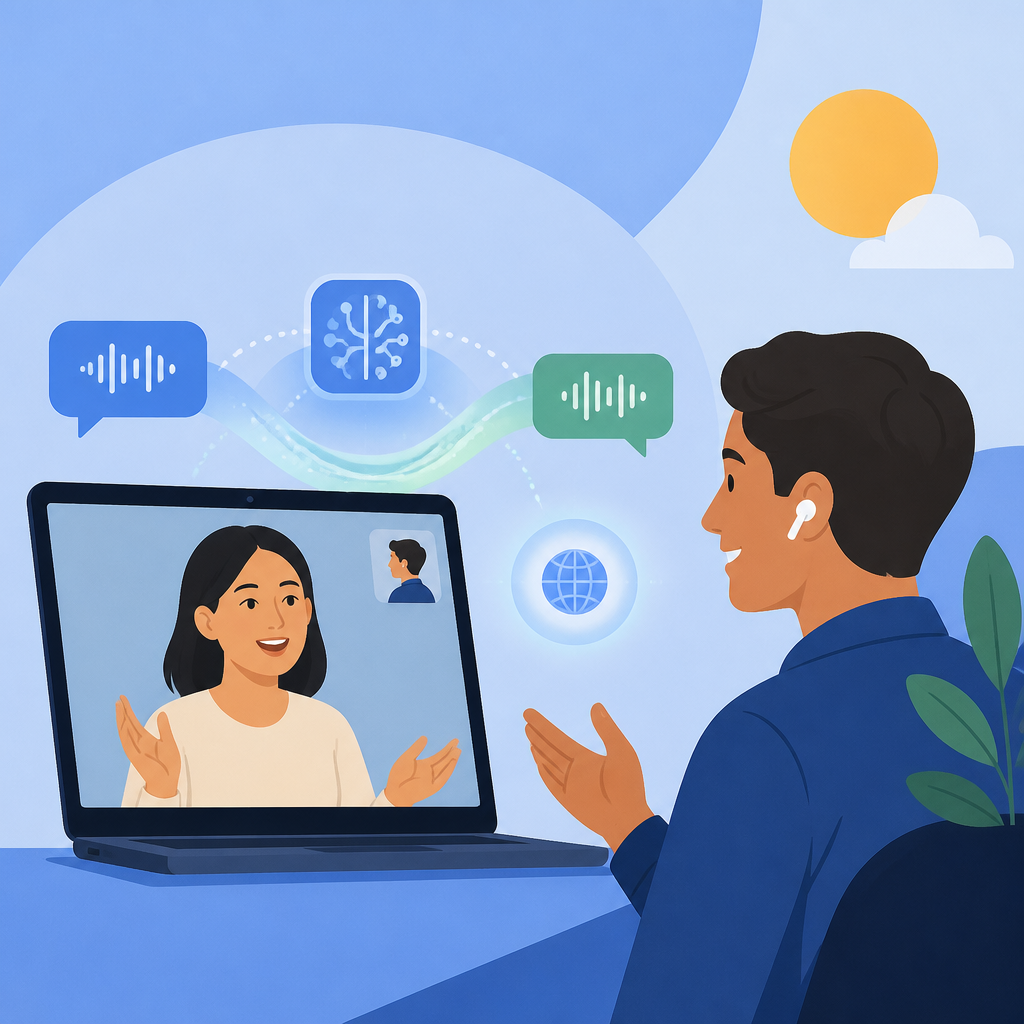
That matters because translation quality is no longer just about word accuracy. In a phone call, timing and tone decide whether a conversation feels usable or clunky. Google is clearly aiming at the moments where people actually need translation: customer calls, cross-border meetings, airport help desks, and travel conversations.
Google also gave the feature a practical distribution plan. Live Translate is rolling out in the Gemini Live API, Google AI Studio, and the Google Translate app. That is a strong signal that Google wants developers to build with it, while regular users get the consumer version in the app they already know.
“You can now have fluid, near-real-time conversations during multilingual calls, meetings or travel, removing language barriers in seconds.”
The quote above is the cleanest summary of Google’s intent. It is also a reminder that Google is not treating translation as a side feature anymore. It is trying to make live voice translation feel like a default layer on top of communication.
- More than 70 languages are detected automatically.
- Natural intonation is preserved instead of flattened.
- Awkward pauses are removed from the translated speech flow.
- The feature ships across API, studio, and consumer app surfaces.
Google is pushing AI closer to the device
June was also about local AI. Google introduced Gemma 4 12B, an open model that runs on a laptop with just 16GB of memory. That number matters because it puts the model in the range of mainstream developer machines instead of only high-end workstations.
Google says Gemma 4 12B combines a unified architecture with vision and native voice processing in one system. In plain English, it is built to do more on-device work without sending everything back to the cloud. That can help with privacy, latency, and offline use, which are all real concerns for developers building agentic workflows.
Google also folded computer use into Gemini 3.5 Flash. The model can see screens, reason about what it sees, and take action across desktop, mobile, and browser environments. Google is pitching this for long-horizon automation, software testing, and knowledge work.
- Gemma 4 12B runs locally on 16GB laptops.
- Gemini 3.5 Flash adds computer-use actions across multiple environments.
- Google AI Studio gets a faster path for experiments and prototypes.
- The message is consistent: more AI work happens on the device, not only in the cloud.
Android 17 and the Pixel Drop show where Google wants AI to live
Google’s mobile story in June was broad, but the pattern is easy to read. Android 17 adds floating app windows, Screen Reactions for picture-in-picture recording, better foldable gaming layouts, and the ability to lock a missing phone with biometrics.
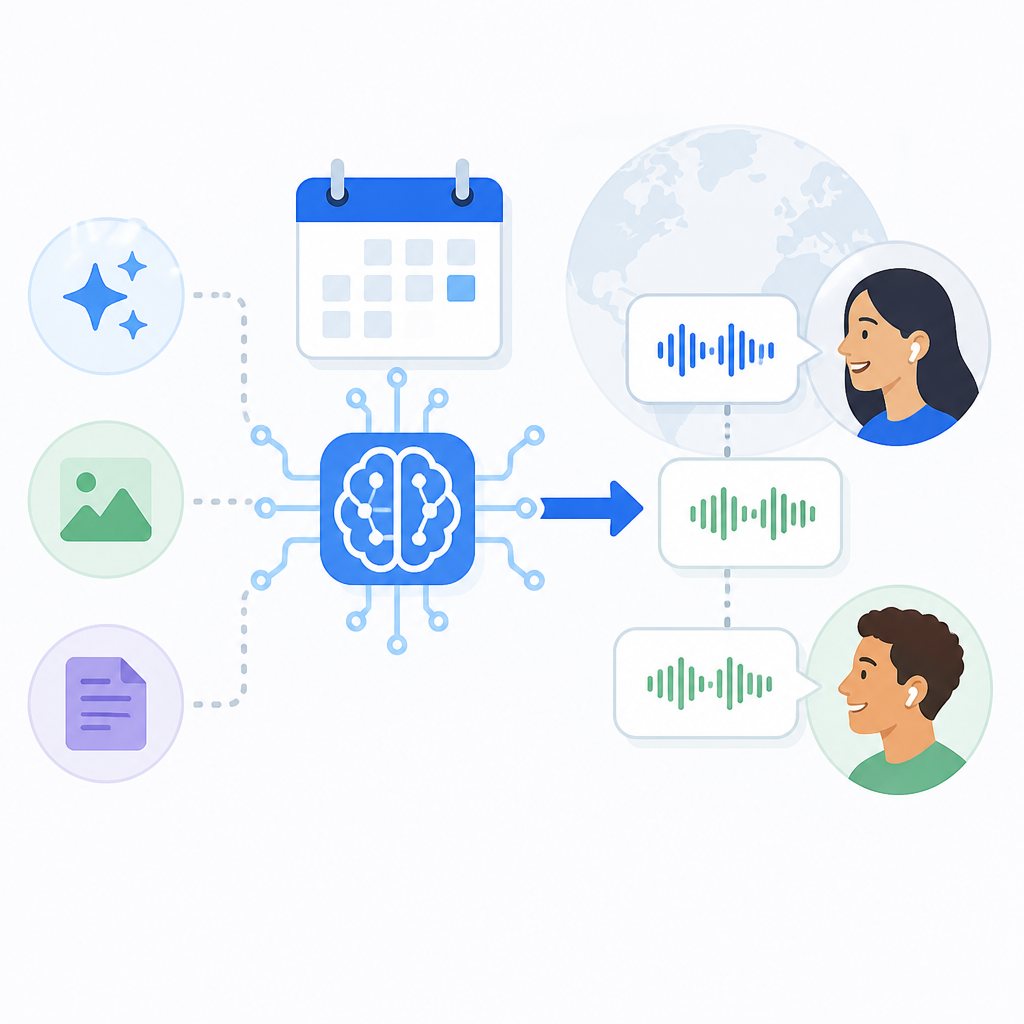
The June Pixel Drop layers on more consumer-facing AI features, including screen recording reactions, AI-powered video and music creation, floating app bubbles, expanded real-time voice translation, custom voicemail greetings, and emergency notifications. Google is clearly testing how much AI users will accept when it is tied to small, concrete tasks instead of abstract “smartness.”
That strategy also shows up in the new Google Home Speaker, which is built for Gemini. Google says it can understand natural speech, handle multiple requests at once, answer complex questions, and remember recent context. That is a big step away from the old smart-speaker model of rigid commands and one-shot answers.
- Android 17 starts on Pixel devices first, then expands to eligible Android phones through 2026.
- The Pixel Drop adds voice translation and media creation tools.
- Google Home Speaker is aimed at conversational control, not command syntax.
- Google is making AI feel like part of the interface, not a separate app.
NotebookLM, education, and research got more serious
Google also spent June upgrading its knowledge tools. NotebookLM now includes advanced reasoning, a secure cloud computer for running code, and the ability to generate charts, spreadsheets, and slide decks. That turns it into more than a note organizer; it is closer to a research workspace that can turn raw material into something presentable.
The company says the updated version is available globally for Google AI Ultra subscribers and select Workspace accounts. That global rollout matters because it puts the tool in front of serious users who need repeatable output, not just curiosity-driven demos.
Google also expanded learning features inside the Gemini app, where students can upload class notes, take a baseline quiz, and get lessons tailored to their gaps. On the education side, Google Classroom and Chromebooks got updates for teachers and learners, including curriculum-backed activities and free standardized test prep.
One of the more interesting items in the roundup is Google’s study in Sierra Leone, where teacher shortages are severe. Google paired that research with a free teacher training guide and playbook. That gives the company a way to argue that AI in education should be measured against classroom realities, not just product demos.
For readers who want a broader view of Google’s AI push, this month fits the same pattern we covered in our recent breakdown of Google’s Gemini model updates: more capability, more surfaces, and a stronger push toward practical use cases.
Google is mixing product launches with public-facing proof
Not every June announcement was about productivity. Google also highlighted a digital collection with Colonial Williamsburg, which includes more than 150 primary sources and articles, plus a custom NotebookLM for exploring the archive. The timing lines up with America’s 250th birthday, and the goal is obvious: show that AI can help people interrogate historical material instead of just summarizing it.
Google also announced Refik Anadol’s Dataland, billed as the world’s first museum dedicated entirely to AI arts. Powered by Google Cloud and Gemini, it uses neural networks as an artistic medium. That is less about utility and more about cultural positioning, but it still matters because Google is trying to normalize AI as part of creative work, not only office work.
Put together, the June batch says Google wants AI to feel ordinary. Translation should happen inside calls. Research should happen inside notebooks. Home assistants should talk like people. Phones should lock themselves when they go missing. The company is no longer selling AI as a single product; it is spreading it across the places where people already spend time.
The next question is whether users will actually adopt these features at the same pace Google ships them. If Live Translate becomes the default way people handle multilingual conversations, it could become one of the most practical AI tools Google has released this year. If it stays a demo feature, June 2026 will read like another busy month in the company’s long AI rollout.
// Related Articles
- [MODEL]
Mistral Small 2603: 256K context for $0.15 in
- [MODEL]
Doubao Seed 2.1 Pro 不是追赶者,而是 Agent 时代的均衡强者
- [MODEL]
ACE-Step 1.5 makes local music generation a real product, not a demo
- [MODEL]
Sora’s 30-seat electric aircraft clears VTOL tests
- [MODEL]
OpenAI自研芯片不是秀肌肉,而是对英伟达的真实威胁
- [MODEL]
K3s v1.34.9 lands with Kubernetes 1.34.9