Sora’s 30-seat electric aircraft clears VTOL tests
Sora Aviation finished subscale VTOL tests for its 30-seat S-1 electric aircraft and is aiming for a full-scale prototype flight in 2028.

Sora Aviation finished subscale VTOL tests for its 30-seat S-1 electric aircraft.
Sora Aviation has pushed its 30-seat electric aircraft one step closer to reality. The company says it completed several months of subscale vertical take-off and landing testing in Wales, and it is now aiming for a full-scale prototype flight in 2028.
This matters because most electric aviation headlines still center on four- or five-seat air taxis. Sora is trying to prove that a much larger aircraft can move through the same development path without getting lost in the engineering weeds.
| Metric | Value | Why it matters |
|---|---|---|
| Passenger capacity | 30 seats | Much larger than most eVTOL concepts in development |
| VTOL test campaign | Several months | Long enough to gather repeated flight data, not a one-off demo |
| Test site | Snowdonia Aerospace Centre, Wales | Where Sora evaluated hover, stability, and control |
| Planned full-scale prototype flight | 2028 | The next major milestone on the path to certification |
A bigger electric aircraft changes the problem
Get the latest AI news in your inbox
Weekly picks of model releases, tools, and deep dives — no spam, unsubscribe anytime.
No spam. Unsubscribe at any time.
The electric aircraft sector has spent years proving that small aircraft can take off vertically, land vertically, and stay controllable in between. Sora’s S-1 changes the conversation by aiming for 30 seats, which puts it in a completely different class of technical difficulty.
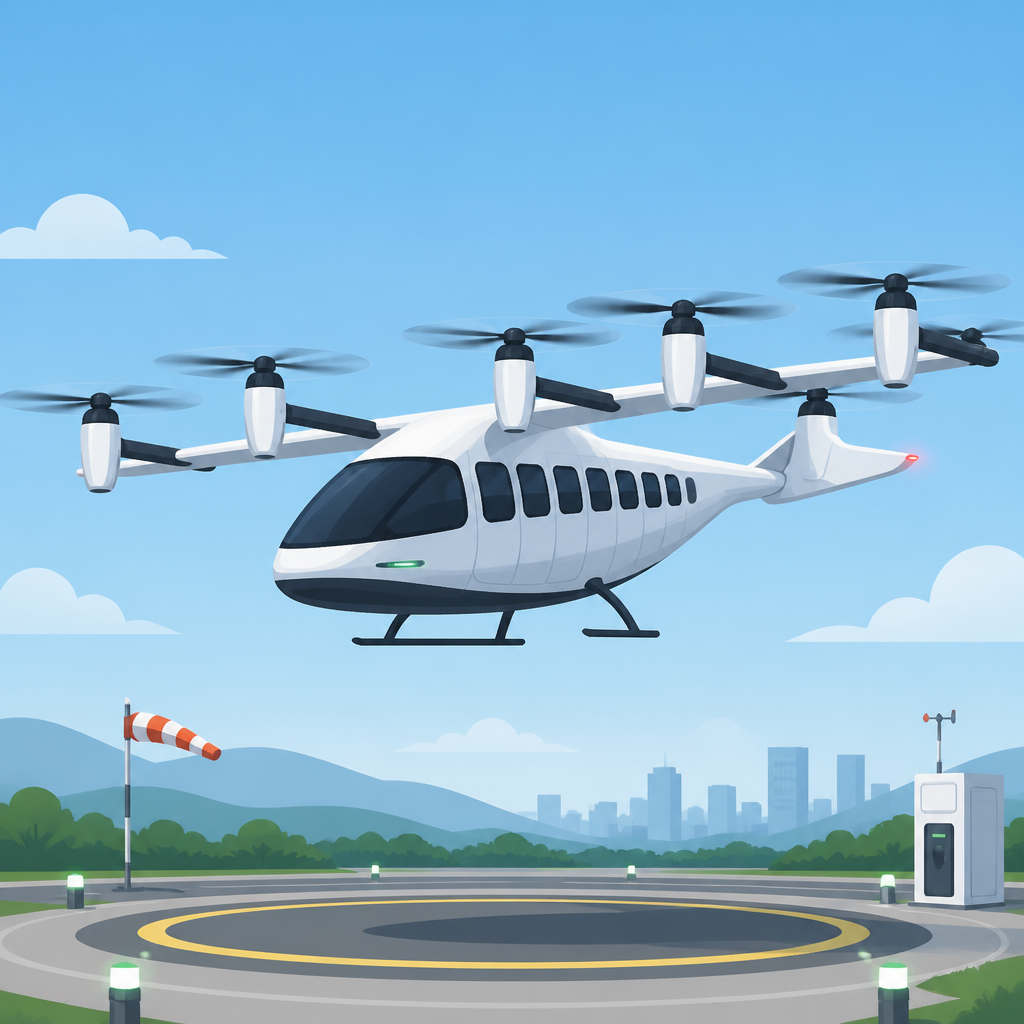
That size brings heavier structural loads, more demanding flight-control logic, and tougher propulsion integration work. It also raises the bar for certification, because regulators will want to see repeatable behavior across a much wider operating envelope than a tiny demonstrator can cover.
Sora says the subscale aircraft was built to mirror the future S-1’s aerodynamic layout, center of gravity, and rotor arrangement. In other words, this was not a toy version of the aircraft. It was a data-gathering tool designed to behave like the real machine in the ways that matter most.
The company conducted the tests at the Snowdonia Aerospace Centre, where engineers evaluated hover performance, stability, control response, and transition-related behavior during repeated VTOL operations.
- Hover behavior was checked under repeated takeoff and landing cycles.
- Stability data was compared against simulation models.
- Control response was measured to see how closely the aircraft matched predictions.
- Transition-related behavior was examined before the company moves to a full-scale build.
Sora is using the old aircraft playbook, but with electric hardware
Aircraft companies have used scaled demonstrators for decades because they expose problems early. A model can show where the aerodynamics get messy, where the control laws need work, and where the assumptions in the simulation do not match the real world.
That is exactly how Sora describes this campaign. The company says the demonstrator is part of a wider verification program that combines computational modeling, laboratory testing, wind tunnel campaigns, and representative flight trials.
Furqan Afzal, CEO of Sora Aviation, said the tests show the company’s development process is maturing:
“This milestone demonstrates the maturity of our development approach and the strength of the engineering foundations underpinning the S-1 programme,” said Furqan Afzal, CEO of Sora Aviation.
He added that Sora has “deliberately invested in a rigorous test and validation strategy that combines simulation, laboratory testing, wind tunnel campaigns and representative flight demonstrators.” That is the kind of language you want to hear from a company building a larger aircraft, because the failure modes are expensive and public if they show up too late.
Dr Luke Bowen, Sora Aviation’s chief technology officer, made the same point from the engineering side. He said flight testing is one of several tools the company uses to build confidence in the design, and that the latest data is helping refine the models before the next stage of development.
The numbers show why this milestone matters
Sora is not alone in chasing electric flight, but its target is unusual. Most of the industry has focused on compact urban air mobility vehicles, while Sora is aiming at a much larger passenger aircraft that could carry more people per trip and potentially fit different routes and economics.
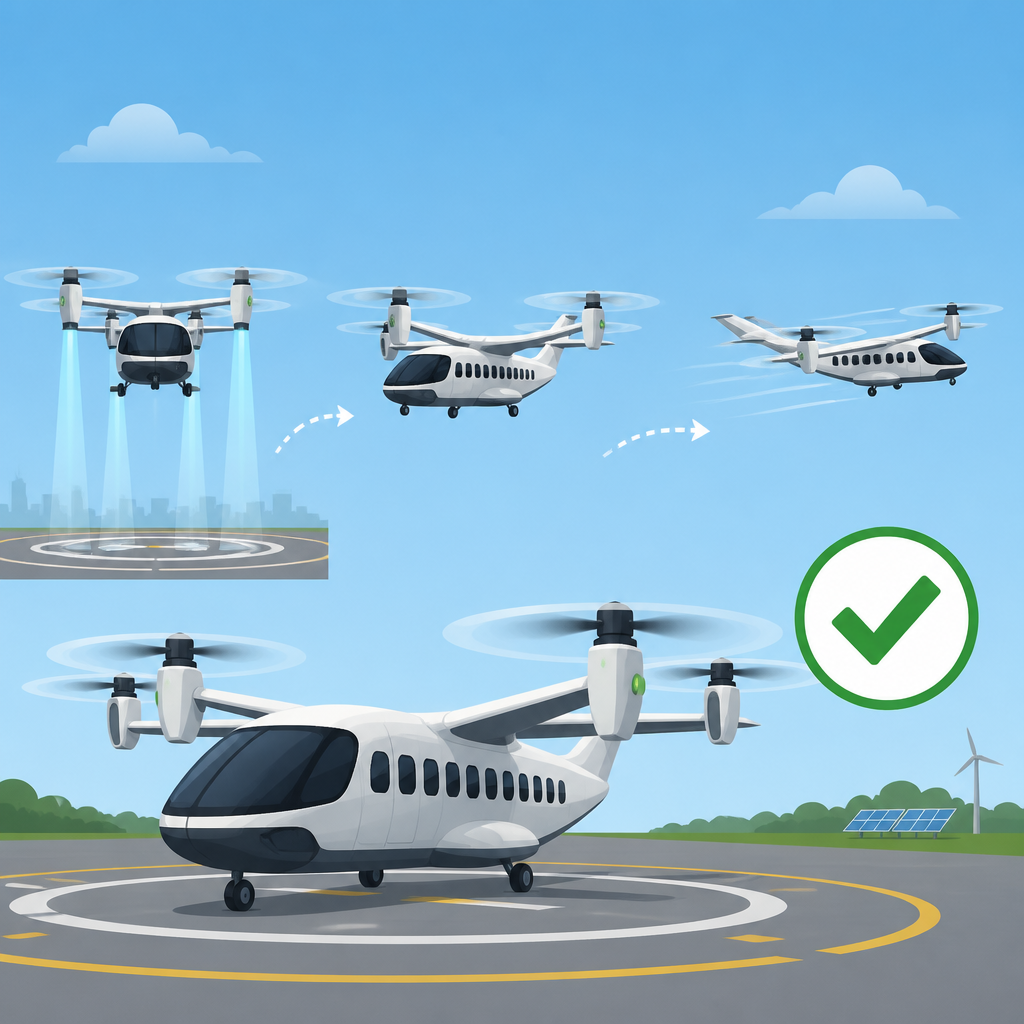
That makes the comparison with other eVTOL efforts pretty stark. A 30-seat aircraft is not a slightly larger taxi. It is an aircraft that has to behave more like a transport platform, even if it is still built around electric propulsion and VTOL operations.
- BETA Technologies is flying a five-seat class aircraft, the CX300, in demonstration work.
- Joby Aviation is focused on a five-seat air taxi architecture.
- Archer Aviation is also working in the small urban air mobility category.
- Sora’s S-1 targets 30 seats, which puts it well above the cabin sizes most public eVTOL programs are pursuing.
That gap matters because economics change with size. More seats can improve route efficiency, but only if the aircraft can stay within weight, energy, and certification limits. If it cannot, the extra capacity becomes dead weight and extra complexity.
The broader industry is still wrestling with battery density, charging infrastructure, and operating costs. Those issues do not disappear just because the airframe gets larger. In fact, they tend to get sharper.
The next step is harder than the test flights
The subscale campaign is a good sign, but it does not tell us whether the S-1 will enter service on schedule. Sora still has to finish detailed design, build the full-scale prototype, fly it, and then work through certification with regulators.
The company’s stated target is a 2028 prototype flight, and that date is now the real marker to watch. If Sora keeps hitting intermediate engineering milestones, the project starts to look less like a concept rendering and more like a serious aircraft program.
There is still a long gap between a successful demonstrator and a commercial aircraft carrying paying passengers. But this test campaign shows that Sora is treating the problem like an aircraft company, not a slide deck company. That distinction will matter when the industry decides which electric aviation programs can survive the jump from prototype hype to actual production.
For now, the question is simple: can Sora turn a promising subscale VTOL campaign into a full-size aircraft that flies on time in 2028, or will the jump from 30-seat ambition to certified hardware prove harder than the company expects?
// Related Articles
- [MODEL]
Anthropic’s IPO talks skip valuation for now
- [MODEL]
Gemini 3.7 Flash arrives with faster coding gains
- [MODEL]
August 2026 model rankings: Claude leads text, Kimi coding
- [MODEL]
Qwen3.8-Max pushes Alibaba into the top tier
- [MODEL]
Qwen3.8-Max proves that agentic work is the real frontier
- [MODEL]
Google Earth Should Not Ship AI Image Generation