Immutable X cuts NFT game fees on Ethereum
Immutable X uses Ethereum Layer 2 tech to push NFT gaming toward zero gas fees, faster trades, and lower friction.

Immutable X is an Ethereum Layer 2 built to make NFT gaming cheaper, faster, and easier to use.
Immutable X is trying to solve one of crypto gaming’s biggest annoyances: paying too much to move digital items around. Built by Immutable and powered by StarkWare technology, the network targets zero gas fees for NFT minting and trading while keeping assets tied to Ethereum security.
The pitch is simple, but the numbers matter. Immutable X claims support for up to 9,000 transactions per second, charges no gas fees for NFT activity, and sits inside a market where IMX once posted a 428% yearly surge in the source material. That mix explains why it keeps showing up in Web3 gaming discussions.
| Metric | Immutable X claim | Why it matters |
|---|---|---|
| Transaction speed | Up to 9,000 TPS | Higher throughput for game actions and NFT trades |
| Gas fees | Zero gas fees for NFT activity | Lower friction for players and collectors |
| Token performance | 428% yearly surge | Shows how much attention IMX attracted in the market |
Why Web3 games keep hitting friction
Get the latest AI news in your inbox
Weekly picks of model releases, tools, and deep dives — no spam, unsubscribe anytime.
No spam. Unsubscribe at any time.
Traditional blockchain games run into the same three problems over and over: fees, speed, and onboarding. If a player has to think about gas before every trade, the game feels more like a wallet exercise than entertainment.
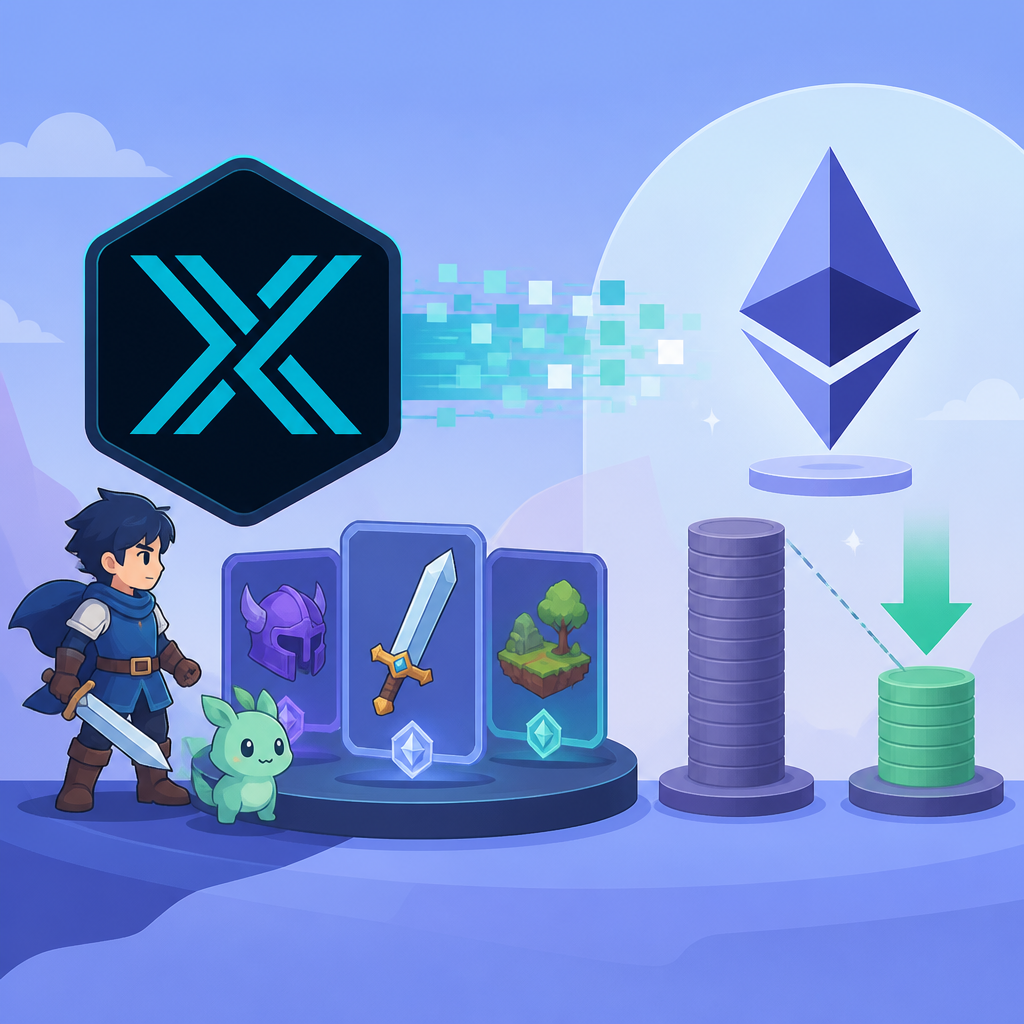
That is where Immutable X tries to separate itself from older on-chain game setups. Instead of making every move live on Ethereum mainnet, it shifts NFT activity to a Layer 2 environment designed for scale. The result is a cleaner path for minting items, buying skins, and moving collectibles without the usual cost spikes.
For developers, the appeal is just as practical. A game economy only works if players can use it often enough to care. High fees and slow confirmations kill that loop fast.
- Gas fees can turn small purchases into bad deals.
- Slow settlement makes gameplay feel clunky.
- Complex wallets scare off first-time users.
- Cheap item transfers help secondary markets stay active.
How Immutable X handles the scaling problem
Immutable X uses StarkWare's StarkEx tech to batch and verify transactions off Ethereum mainnet. That matters because it keeps the user-facing experience light while still anchoring the system to Ethereum’s security model.
The company’s own docs describe Immutable X as an Ethereum scaling solution built for NFTs, and that focus shapes the product. It is not trying to be a general-purpose chain for every kind of app. It is tuned for games, collectibles, and marketplaces where lots of small transactions happen all day.
“We are building the infrastructure for the next generation of games on Ethereum.” — Robbie Ferguson, co-founder of Immutable
That quote gets at the core of the project: Immutable X is infrastructure first, token second. If the pipes work, games can worry less about blockchain plumbing and more about retention, economies, and content.
There is also a strategic reason this matters now. Web3 games do not win because they mention NFTs in a trailer. They win when players forget the chain is there at all. Lower fees and faster confirmation are the kind of boring wins that actually move adoption.
IMX versus the usual Ethereum pain points
The main comparison is not against another token. It is against the default Ethereum experience, where fees can spike and simple actions can feel expensive. Immutable X tries to remove that tax from gameplay.
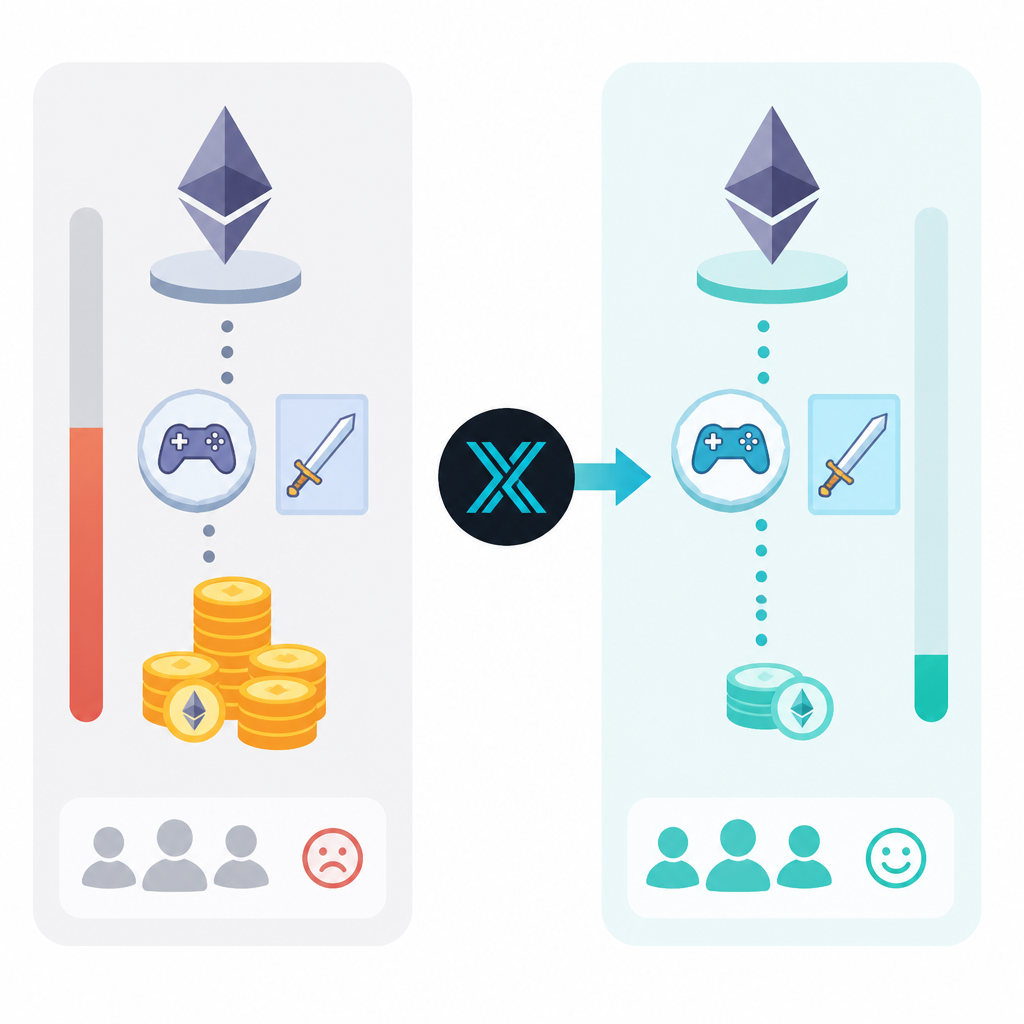
Here is the practical difference:
- Ethereum mainnet: strong security, but higher fees and limited throughput for frequent game actions.
- Immutable X: zero gas NFT transactions, higher throughput, and a focus on game assets.
- Generic Layer 2s: broader use cases, but often less tuned for NFT-heavy apps.
- Game-specific chains: can be faster, but may trade off Ethereum compatibility.
That tradeoff is why Immutable X still gets attention. It tries to keep the Ethereum connection while removing the cost structure that makes casual gaming on-chain awkward. For studios, that can mean fewer abandoned sign-ups. For players, it can mean fewer wallet pop-ups and less fee shock.
The IMX token adds another layer, but the token does not create value on its own. Its value depends on whether the network stays useful for actual games, actual marketplaces, and actual users who care about owning digital items.
What to watch next
Immutable X makes sense when the product is an NFT-heavy game or marketplace that needs low fees more than general blockchain flexibility. It makes less sense for teams that want a broad smart-contract platform with many unrelated app types.
The key question now is whether more studios will build games where on-chain ownership feels invisible instead of technical. If that happens, Immutable X has a real shot at staying relevant. If users still treat blockchain as the main event, the tech will keep sounding better than the play experience.
For developers evaluating it today, the takeaway is blunt: test the fee model, test the onboarding flow, and test how often players need to touch a wallet. Those three checks tell you more than token hype ever will.
// Related Articles
- [CHAIN]
Anthropic’s Riot deal shows AI compute now costs billions
- [CHAIN]
Bitcoin’s CLARITY Act now faces a 60-vote test
- [CHAIN]
Pepeto's DeFi push is a distraction from Ethereum's real upside
- [CHAIN]
AI agents will not save Web3; they will expose its weakest systems
- [CHAIN]
Panda AI launches Golden Presale for AI blockchain
- [CHAIN]
Layer 2 vs Layer 3: $38B TVL trade-off