Layer 2 is changing blockchain payments for banks
Layer 2 blockchain systems are making payments faster, cheaper, and easier to audit for banks, fintechs, and regulators.

Layer 2 blockchain systems are making financial transactions faster, cheaper, and easier to audit.
Cross-border payments can still take days to settle, and that delay ties up capital while compliance teams chase paper trails. Layer 2, or L2, is trying to fix that by moving transaction processing off the main chain and recording the result later on the base network.
| Topic | What the article says | Why it matters |
|---|---|---|
| Settlement speed | Traditional payments can take days | Funds stay locked up longer |
| L2 processing | Transactions are processed separately, then recorded on-chain | Higher throughput with base-chain security |
| Transaction batching | Thousands of transactions can be grouped | Lower cost per payment |
| Regulatory oversight | Compliance rules can be embedded into processes | Easier auditing and verification |
Why financial institutions keep hitting the same wall
Get the latest AI news in your inbox
Weekly picks of model releases, tools, and deep dives — no spam, unsubscribe anytime.
No spam. Unsubscribe at any time.
The article from Electronic Payments International starts from a familiar complaint: legacy finance is slow, expensive, and overloaded with intermediaries. That matters most when money crosses borders, where settlement can stretch into days and reconciliation eats up staff time.
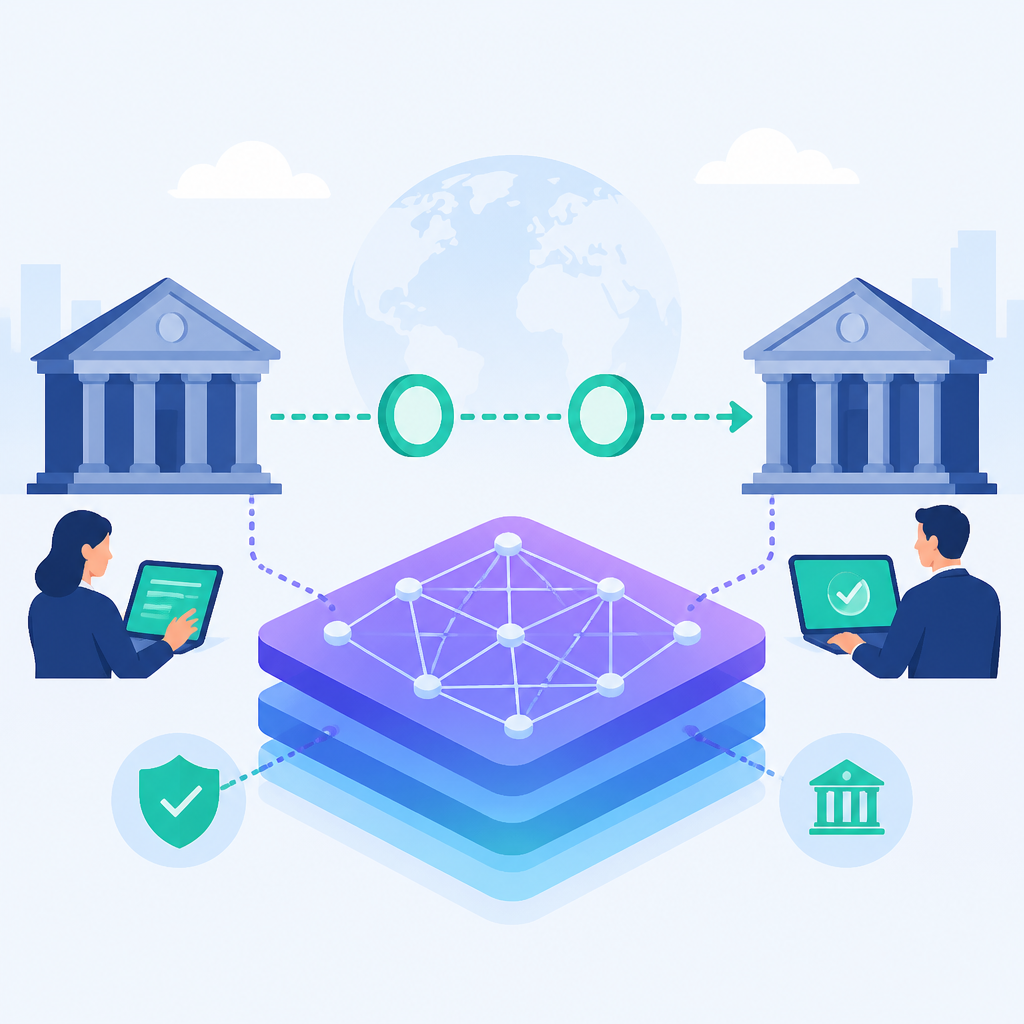
That pain point is why blockchain got so much attention in the first place. The promise was simple: a shared ledger could reduce disputes, improve visibility, and cut down on duplicated recordkeeping. The problem was that early public chains were often too slow for institutional use.
L2 tries to close that gap without asking banks to throw out their existing systems. Instead of putting every transaction directly on the main chain, it processes activity elsewhere and then writes the outcome back to the base layer.
- Less time spent waiting for settlement
- Lower dependence on intermediaries
- Cleaner transaction records for audits
- Better fit for high-volume financial activity
What Layer 2 actually changes
In simple terms, L2 is a processing layer built on top of a blockchain. The article breaks it into three common approaches: roll-ups, state channels, and sidechains. Each one handles transactions differently, but all aim to improve throughput while keeping the security model tied to the underlying chain.
Ethereum is the clearest reference point here because most L2 discussion in finance has grown around its scaling stack. Roll-ups bundle transactions before posting them to the base chain. State channels let parties transact privately and settle later. Sidechains run independently but stay connected to the main network.
“Layer 2 is the answer to Ethereum’s scaling problem.” — Vitalik Buterin, A rollup-centric Ethereum roadmap
That quote matters because it gets to the heart of the issue. L2 is not a separate bet against blockchain security. It is a way to keep that security while making the system fast enough for real financial workloads.
The article also makes a practical point that gets lost in a lot of crypto commentary: throughput is not the only metric that matters. Banks need compliance, auditability, and integration with existing payment rails. A faster system that cannot pass a regulator’s review is still a dead end.
Where the numbers start to matter
The strongest argument for L2 is economic. If a network can group thousands of transactions instead of processing each one individually, the cost per transfer drops sharply. That is especially useful in markets where transaction volume is high and margins are thin.
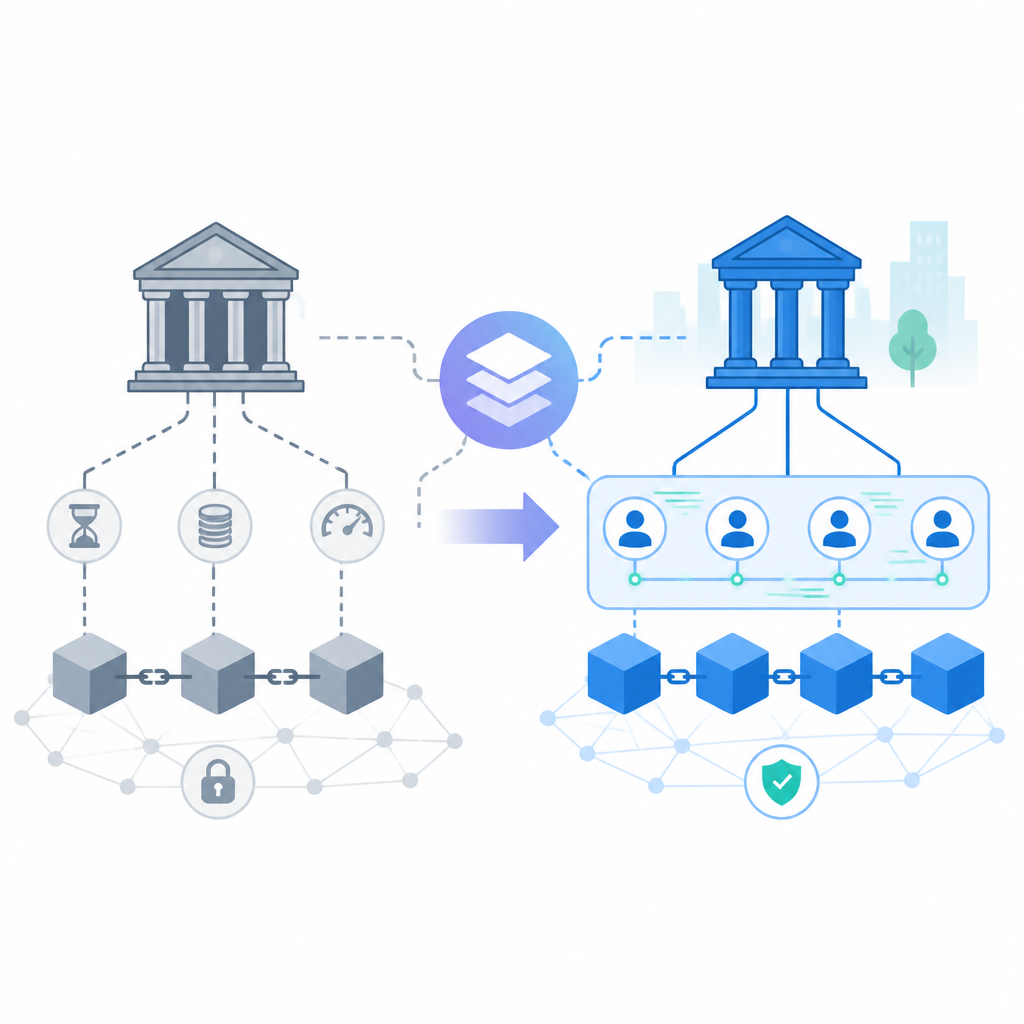
Tokenized assets are one of the clearest use cases. By representing assets digitally, financial firms can speed up issuance, trading, and settlement. The article also points to fund administration, cap table management, and insurance payouts as places where smart contracts can remove manual steps.
- Thousands of transactions can be batched together
- Settlement can happen faster than on legacy rails
- Manual reconciliation shrinks when records are shared
- Compliance checks can be written into the workflow
That last point is where regulators enter the picture. The article says L2 can help with faster verification of financial records, more efficient auditing, and better transaction visibility. In other words, the same infrastructure that speeds up payments can also make oversight less painful.
Prune Payments co-founder Ibraheem Kabir, who wrote the piece, argues that L2 is becoming a core part of payment infrastructure rather than a side experiment. That is a fair read of the market, especially as more firms look for ways to modernize without triggering a full systems overhaul.
Why cross-border payments may feel the biggest impact first
Cross-border payments are where L2 has the most obvious upside. Today’s process often includes multiple banks, multiple checks, and multiple points of delay. Each extra handoff adds cost and makes it harder to see where a payment is stuck.
With shared blockchain infrastructure, the article says payments can move with more transparency and real-time tracking. Automated compliance also becomes easier when the rules are part of the transaction flow rather than an after-the-fact review step.
That does not mean every bank will move overnight. Integration is still a real problem because legacy payment systems and blockchain platforms are built on different architectures. The article is honest about that friction, and that honesty is what makes the argument more believable.
For financial institutions, the near-term play is likely selective adoption: use L2 where settlement speed, auditability, or cost pressure is highest, then expand if the economics hold up.
What banks should watch next
The most useful takeaway from the article is that L2 is not just about making blockchain faster. It is about making blockchain practical for finance, where speed has to coexist with compliance and operational control.
If L2 adoption keeps moving in that direction, the next battleground will be integration quality. Banks will want to know which L2 designs fit their risk models, which ones can support reporting requirements, and which ones can survive real transaction volume without becoming expensive to maintain.
My read: the winners will be the institutions that treat L2 as infrastructure, not a pilot project with a crypto label. The question now is which payment networks will move first, and which regulators will be comfortable enough to let them scale.
For more on the wider payments shift, see our coverage of payment infrastructure modernization and blockchain in finance.
// Related Articles
- [CHAIN]
Ethereum.org’s app list turns discovery into a map
- [CHAIN]
Celestia’s Fibre push targets 1 Tb/s blockspace
- [CHAIN]
AI utility tokens are still just presale marketing, not infrastructure
- [CHAIN]
Web3 identity adds DIDs, VCs, and AI agent wallets
- [CHAIN]
Sleepagotchi bets on private AI wellness and SLEEP token
- [CHAIN]
Fund tokenization services turn funds into on-chain rails