Sleepagotchi bets on private AI wellness and SLEEP token
Sleepagotchi is building a private AI wellness app that keeps health data on-device while tying premium features to its SLEEP token.

Sleepagotchi is building a private AI wellness app that keeps health data on-device and ties premium features to SLEEP.
Sleepagotchi says it has raised $6.5 million, passed 2 million users, and pulled in more than $100,000 in a three-week beta. That is a serious amount of traction for a project that started as a sleep-to-earn mini-game and is now trying to turn wellness into a tokenized product.
| Metric | Figure | Why it matters |
|---|---|---|
| Funding raised | $6.5 million | Shows investor backing for the pivot into AI wellness |
| Beta revenue | Over $100,000 | Suggests users will pay for health features |
| User count | More than 2 million | Gives the platform a base for monetization |
| Beta period | Three weeks | Highlights early demand during testing |
Sleepagotchi’s pitch is simple: keep health data local
Get the latest AI news in your inbox
Weekly picks of model releases, tools, and deep dives — no spam, unsubscribe anytime.
No spam. Unsubscribe at any time.
The core idea is a lot less flashy than the token talk around it. Sleepagotchi wants an AI health coach that runs on the user’s phone, reads data from wearables, and keeps sensitive biometrics off a corporate cloud.
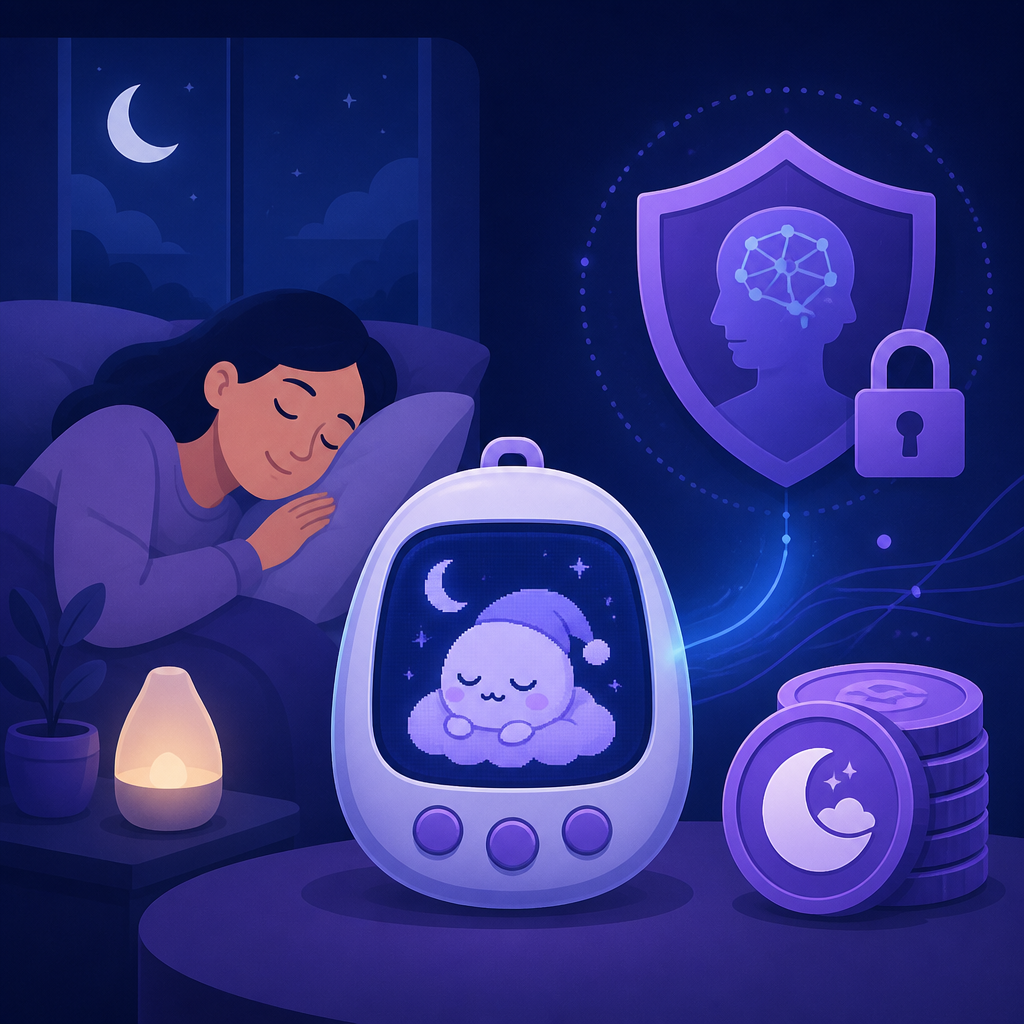
That matters because health apps usually trade convenience for privacy. The more data they collect, the more they can personalize advice, but the more exposed users become if something leaks or gets sold. Sleepagotchi is trying to split that tradeoff by making the phone the main processing layer.
CEO Kenny Wood described the product direction in an interview with crypto.news: “What we noticed is that sleep is at the root of all health problems. If a user has problems with their sleep, it affects everything, including their mood and overall health.”
He added that the company expanded from a sleep-monitoring game into a broader wellness app that analyzes data from wearables and phones to generate AI-driven insights. That shift is the real story here. Sleepagotchi is not trying to be another dashboard for step counts and heart rate graphs. It wants to interpret signals and recommend action.
- Sleep coach for rest patterns
- Wellness coach for fatigue and recovery
- Meal planner for nutrition suggestions
- Shopping agent for ingredient and supplement orders
The product uses four agents, all running on-device
Sleepagotchi says its system uses four digital agents that pass state data to one another in real time. The sleep coach studies rest patterns, the wellness coach checks for fatigue, the meal planner suggests food changes, and the shopping agent can turn those suggestions into purchases.
That design is interesting because it cuts against the usual AI app playbook. Most consumer AI products send prompts and personal data to a remote server. Sleepagotchi says the data stays on the phone, which means the app can still be personalized without building a giant centralized data store.
Wood said the company originally considered a data marketplace where users could sell their health data to researchers, but the plan did not survive contact with regulation and platform rules. “We had the idea of giving the user the ability to sell their data, but we quickly found that it was unworkable and unfeasible, and there are laws pertaining to this,” he said.
That change is telling. A lot of Web3 health ideas start with data ownership and end with legal friction. Sleepagotchi is taking the less glamorous route: keep the data local, keep the utility high, and avoid making user privacy depend on a tokenized marketplace that may never clear compliance.
“What we noticed is that sleep is at the root of all health problems,” Kenny Wood told crypto.news.
The token only matters if the economics make sense
The SLEEP token is not the product by itself. It is the payment and coordination layer for premium AI features, staking, and marketplace activity. Basic coaching stays free, but users who want more intensive analysis will need tokens once they use up their daily allotment.
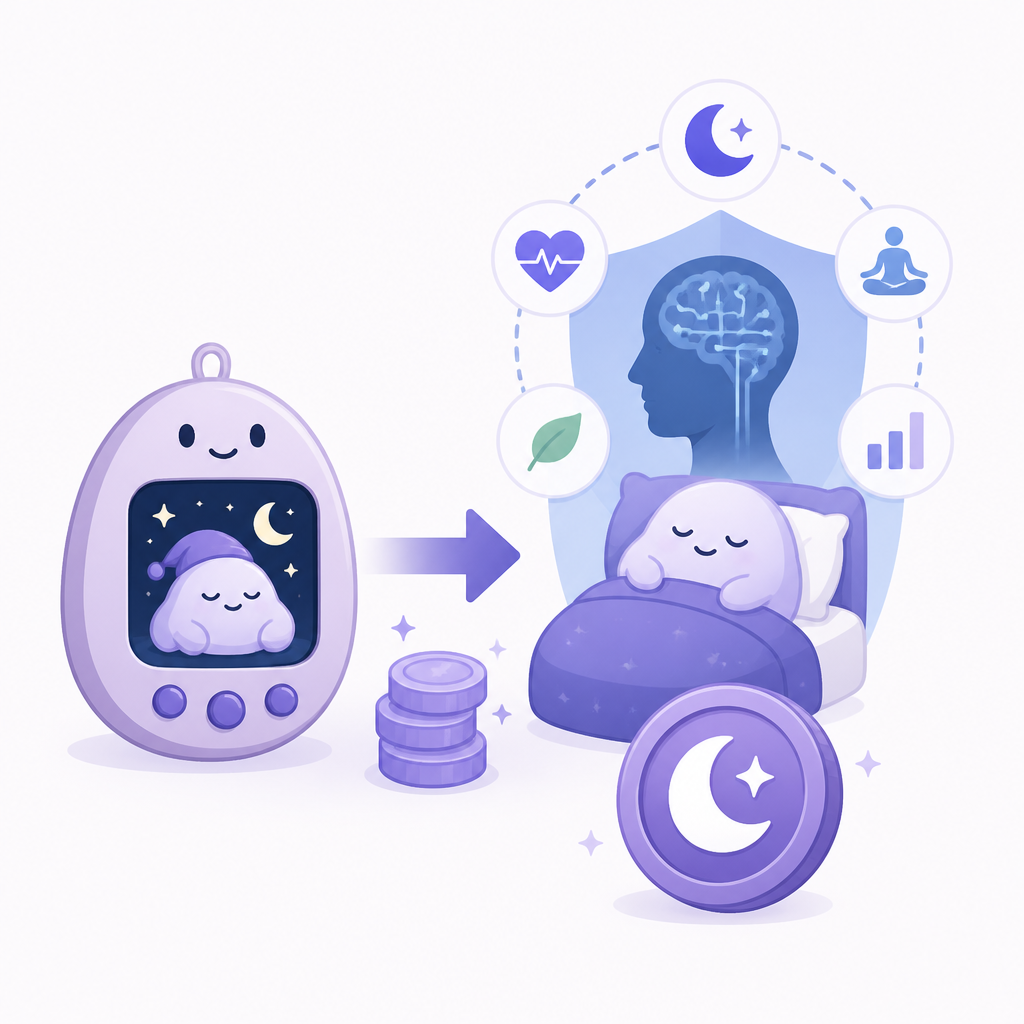
That structure is practical. AI inference costs money, even when the model runs partly on-device, and the token gives Sleepagotchi a way to ration expensive requests without turning the whole app into a subscription wall. In Wood’s words, “The actual infrastructure for AI is pretty strong as it is and can handle a lot of users, so the blockchain can just focus on handling the transactions and staking side of things.”
That sentence says a lot about the company’s priorities. The blockchain is not being asked to do heavy computation. It is there to handle payments, staking, and access control while the AI does the actual health work on the device.
- Free daily health insights for casual users
- Paid token credits for extra AI queries
- Staking for marketplace participation
- Listing fees and business partner bonds
Sleepagotchi is mixing health, commerce, and gaming economics
There are several revenue streams baked into the model. Premium subscriptions give the company predictable cash flow. Marketplace listing fees and staking bonds add a business-facing layer. Affiliate revenue from ingredient orders gives the shopping agent a direct commerce angle.
That blend makes Sleepagotchi feel closer to a consumer platform than a pure crypto protocol. It is trying to make health advice actionable, then monetize the action. If the app tells you to buy leafy greens, and the shopping agent helps you do it, the platform can earn from that transaction.
Sleepagotchi also has a decent distribution story for a Web3 project. It says it has integrated with WHOOP, Oura, Apple Watch, Cudis, and Pulse. On the crypto side, it has ties to Solana, Soneium, Bonk, MOOAR, and Square Enix.
That mix matters because wellness apps live or die on distribution. A smart product with no device integrations is just a demo. A token with no consumer use is just a chart. Sleepagotchi is trying to sit in the middle, where the app has a reason to exist even if the token market turns cold.
For readers tracking the broader Web3 health space, this is also a useful contrast with projects that promise data monetization first and product second. Sleepagotchi is doing the reverse. It is building a health app people might actually use, then wrapping token mechanics around the parts that cost money.
The real test is whether users want tokenized wellness
Sleepagotchi has two numbers that matter more than the rest: 2 million users and $100,000 in three-week beta revenue. Those are the clearest signs that the company may have found a consumer hook beyond crypto-native curiosity.
But the next phase is harder. Users have to trust that on-device processing is enough, that the app’s recommendations are actually useful, and that paying with tokens feels natural instead of awkward. If those pieces line up, Sleepagotchi could become one of the few Web3 products that people use for the utility first and the token second.
The bigger question is whether this model can scale without turning into another app that promises privacy while quietly pushing users toward paid tiers. If Sleepagotchi can keep basic coaching free, keep biometric data local, and make SLEEP useful for more than speculation, it has a shot at building a real consumer business. If not, it will join the long list of crypto health experiments that looked smarter on paper than in daily life.
My bet: the next meaningful signal will come from retention, not token price. If users keep coming back after the novelty wears off, Sleepagotchi will have something much stronger than a Web3 narrative.
// Related Articles
- [CHAIN]
AI utility tokens are still just presale marketing, not infrastructure
- [CHAIN]
Web3 identity adds DIDs, VCs, and AI agent wallets
- [CHAIN]
Fund tokenization services turn funds into on-chain rails
- [CHAIN]
The stablecoin boom is colliding with policy limits
- [CHAIN]
MoneyGram’s Solana validator move is a real institutional signal
- [CHAIN]
$12M DeFi Exploits, Wallet Update, and New Rules