Midjourney is building a body-scan spa
Midjourney says its ultrasonic CT spa will scan bodies in 60 seconds, with a San Francisco opening planned for 2027.

Midjourney says it will scan bodies with ultrasonic CT in a spa setting starting in 2027.
Midjourney says its first public scan spa will open in San Francisco in late 2027, and the company is aiming far beyond a novelty demo. It says the system can complete a full-body scan in 60 seconds, with a rollout target of 50,000 units and a long-term goal of one billion scans per month.
| Metric | Midjourney’s stated plan |
|---|---|
| First public center | San Francisco, late 2027 |
| Scan time | 60 seconds |
| Rollout target | 50,000 units over six years |
| Long-term usage goal | 1 billion scans per month |
| Third-generation scanner | Planned for 2028 |
| Operational target | More than 50,000 scanners by 2031 |
A spa, a scanner, and a very strange pitch
Get the latest AI news in your inbox
Weekly picks of model releases, tools, and deep dives — no spam, unsubscribe anytime.
No spam. Unsubscribe at any time.
The company behind the image generator Midjourney is pitching a consumer health service built around ultrasound, water, and a lot of compute. The idea is simple to describe and hard to pull off: step onto a platform, descend into a pool, and let a ring of underwater sensors build a body map slice by slice.
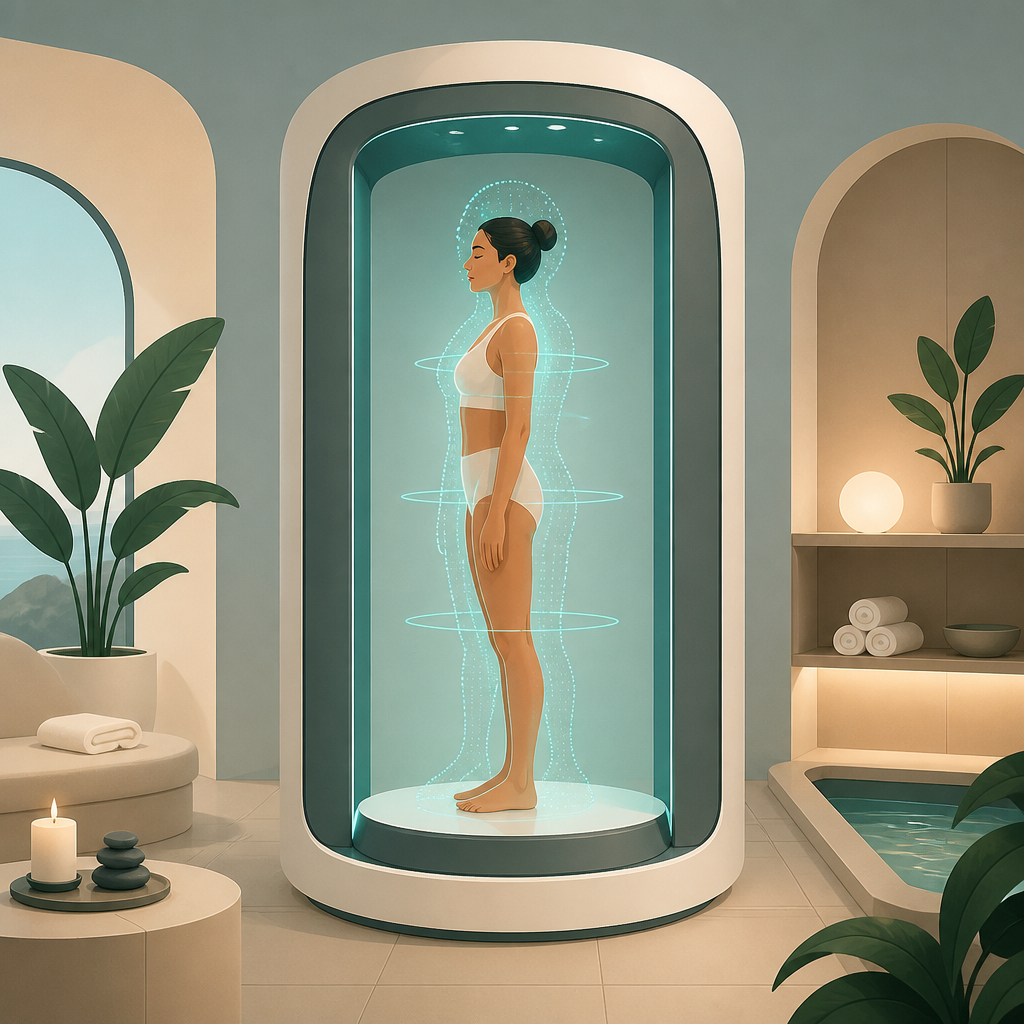
That alone would be enough to get attention, but the company is also wrapping the experience in a day-spa format. The first site is planned to include hot tubs, saunas, and cold plunges, which tells you exactly who Midjourney wants to win over: people who would never book an MRI unless a doctor forced the issue.
Midjourney says the point is accessibility. It wants something closer to a routine wellness visit than a hospital appointment, with body scans that are cheap enough to repeat often. That pitch matters because the value of imaging changes a lot when it stops being a rare event and becomes a regular check-in.
- Platform lowers at about 2 inches, or 5 centimeters, per second
- Each scan uses half a million tiny sensor elements
- The company says the system generates terabytes of data per second
- Midjourney compares one second of scan data to 500 hours of HD video
What the company says the machine actually does
Midjourney’s description reads like a blend of medical imaging and science fiction. The user stands on a platform that descends into water, while thousands of tiny squares act as both speakers and microphones. Those elements send ultrasonic waves through the body, record the returning ripples, and feed the result into a large compute cluster for reconstruction.
In the company’s telling, this is not a single snapshot but a continuous reconstruction process. The system listens, compresses, streams, and rebuilds the internal map in real time. Midjourney says the whole scan takes 60 seconds, which is fast enough to make frequent monitoring feel practical instead of disruptive.
“We’ve dreamed of something as powerful as MRI, and as casual as a trip to the spa, and we’re unveiling a path to that,” Midjourney said in its announcement.
The claim is bold because it tries to collapse two very different experiences into one product. MRI is powerful, but expensive and inconvenient. A spa is easy to book, but usually has nothing to do with diagnosis. Midjourney is betting that people will pay attention if those two ideas meet in the middle.
That bet also depends on trust. Medical imaging is not a place where vague promises survive long. If the company wants this to become more than a demo, it will need real validation, not just polished concept art and confident language.
The numbers are the part that matter most
Midjourney’s roadmap is packed with dates and scale targets, and those numbers are the real story. The company says the first center opens in late 2027, the next year brings a third-generation scanner with custom silicon, and 2031 is the point when more than 50,000 scanners should be running around the clock.
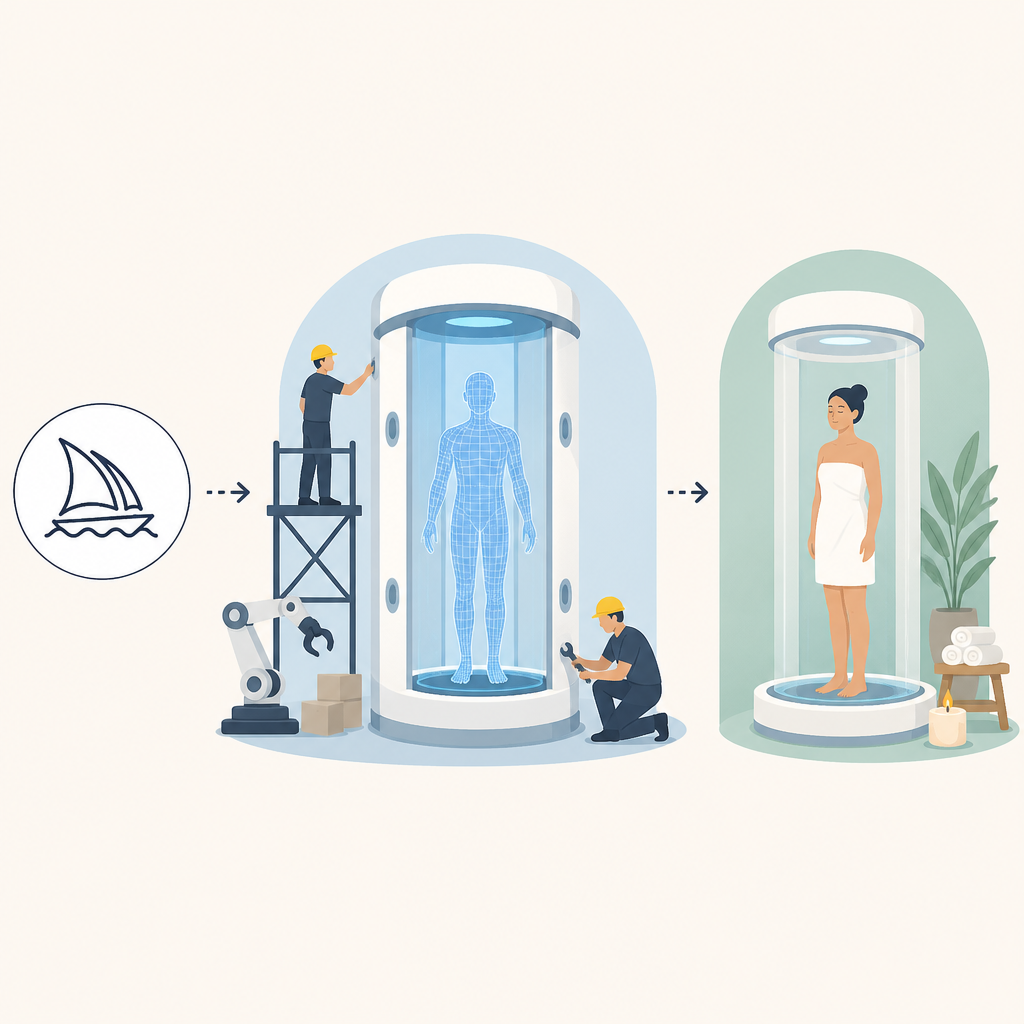
That is an aggressive timeline for any health tech company, let alone one that is also building a new imaging modality. The company says the next 12 months will be spent refining algorithms and hardware daily, while research trials test what the system can actually measure.
- 2027: first public spa in San Francisco
- 2028: third-generation scanner with custom silicon
- 2031: more than 50,000 scanners operating 24-7
- Six-year rollout goal: 50,000 units
There is also a regulatory wrinkle. Midjourney says it will start by offering detailed body composition maps, then submit regular test results to the FDA as it expands capabilities. That matters because diagnostic imaging is not just a product decision; it is a regulatory one.
For a useful comparison, look at the company’s own framing. Midjourney says the spa will have 10 scanners and more scanning capacity than all MRI scanners on Earth combined. That is a marketing claim, not a verified industry benchmark, but it shows the scale of ambition the company wants people to absorb.
The broader comparison is more grounded. Traditional MRI is expensive, clinic-based, and scheduled like a medical event. Midjourney’s version is meant to be walk-in friendly, spa-like, and frequent. If it works, the big shift is not the hardware itself; it is the idea that body imaging can become routine.
What has to happen before this becomes real
Midjourney’s plan still has a lot of open questions. The company has not shared pricing, has not explained how much a scan will cost at launch, and has not shown public clinical data yet. That is a big gap for a product that is trying to move from concept art into healthcare.
There is also a technical challenge hiding inside the pitch. High-resolution ultrasound imaging from a water-based platform sounds plausible in parts, but the full system depends on sensor density, signal quality, reconstruction software, and enough compute to turn raw echoes into something medically useful.
If Midjourney gets even part of this right, the real winner is not the spa itself. It is the idea of frequent, low-friction body scans that catch changes earlier and make monitoring less of a chore. If it misses, this will join the long list of AI-health concepts that looked cleaner on a slide deck than in a clinic.
For now, the safest take is simple: this is one of the most ambitious health-adjacent bets a consumer AI company has made, and the next 12 months will decide whether it becomes a product roadmap or a very expensive prototype.
If you want more on AI moving into health tools, read our coverage of AI assistants in clinical workflows and recent medical imaging systems.
// Related Articles
- [IND]
Cloudflare sets September 15, 2026 crawl defaults
- [IND]
Cloudflare’s new crawler rules shift power to publishers
- [IND]
Midjourney Is Right to Force Hollywood’s AI Cards Onto the Table
- [IND]
Midjourney should stay out of diagnosis and focus on body-composition…
- [IND]
Microsoft bets $2.5B on enterprise AI deployments
- [IND]
Microsoft’s $2.5B AI unit shows where enterprise AI is headed