Millions Raised for Zhipu-style Social World Model
Zhongtao Tech raised millions of yuan to scale its social simulator, aiming to train a social world model from millions of AI agents.

Zhongtao Tech raised a seed round to expand its social simulator and train a social world model.
Social intelligence startup Zhongtao Tech has raised several million yuan in angel funding, according to Founder Park. Backers include Inno Angel Fund, Tsinghua校友种子基金, 0xVC, and Chasing Capital. The money will go toward scaling its social simulator and preparing pretraining data for a social world model.
| 項目 | 數值 |
|---|---|
| Funding stage | Angel round |
| Amount raised | Several million yuan |
| Agents in simulator | 13.5 million+ |
| Countries covered | 100+ |
| Planned expansion | 100 million agents in H2 2026 |
What changed
Get the latest AI news in your inbox
Weekly picks of model releases, tools, and deep dives — no spam, unsubscribe anytime.
No spam. Unsubscribe at any time.
Zhongtao Tech was spun out of the School of Information at Renmin University of China and is framed by the company as a system for modeling human society, not just physical environments. The team says its simulator already runs more than 13.5 million human-like AI agents across 100+ countries.

The company’s pitch is that current AI is good at generating text and reasoning, but weak at social cognition. Zhongtao Tech wants to fill that gap by modeling intent, group behavior, and social response before an AI agent acts. Its system is built as a four-layer stack: individual psychology, interaction dynamics, group behavior, and social institutions.
- Agents have belief, desire, intent, emotion, and memory profiles.
- The simulator includes negotiation, deception, cooperation, and conflict scenarios.
- The company says it has published work on hypergraph-based misinformation simulation and multi-agent games.
- Its benchmark work is aimed at measuring social simulation, a niche with few public standards.
Why it matters
For developers, the practical use case is predeployment testing. Zhongtao says customers can simulate marketing plans, pricing changes, UI updates, and public-policy scenarios before launch, then compare likely reactions across different population segments. That could reduce the cost of market research and A/B testing when the decision carries high downside risk.
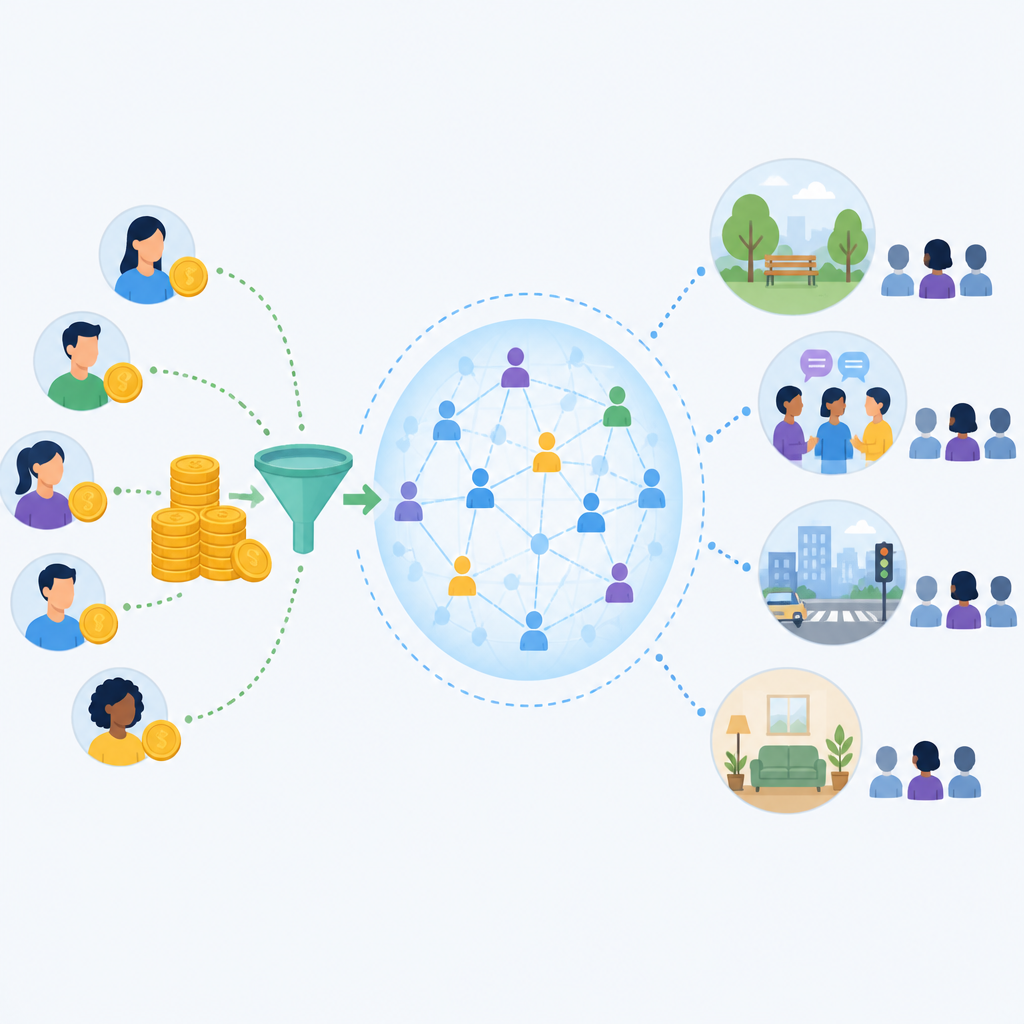
The bigger bet is data. Zhongtao argues that a social simulator can generate observable state data for variables that are hidden in the real world, such as trust, relationships, and intent. If that data can be scaled, it may become training fuel for a social world model that digital agents, robots, and enterprise systems can call when they need to understand people.
The company also points to recent Silicon Valley funding in the same niche, where Aaru, Humans&, and Simile.ai together raised more than $630 million in a short span. That signals that social intelligence is moving from theory into a funded product category, even if the market is still early and the standards are not settled.
The near-term question is whether social simulation can move from a useful decision tool to a foundation model for human behavior. Zhongtao Tech is betting that the answer starts with more agents, more data, and a tighter link between social science and AI engineering.
// Related Articles
- [IND]
Immich Docker Compose setup that avoids common errors
- [IND]
Anthropic’s Book Scanning Strategy Could Set a Pattern
- [IND]
Huang’s open-letter playbook for open-weight AI
- [IND]
32 firms back open-weight AI in DC letter
- [IND]
Huang usa il suo primo post su X per difendere l’IA aperta
- [IND]
Black Duck’s Coverity gets better at AI-era triage